
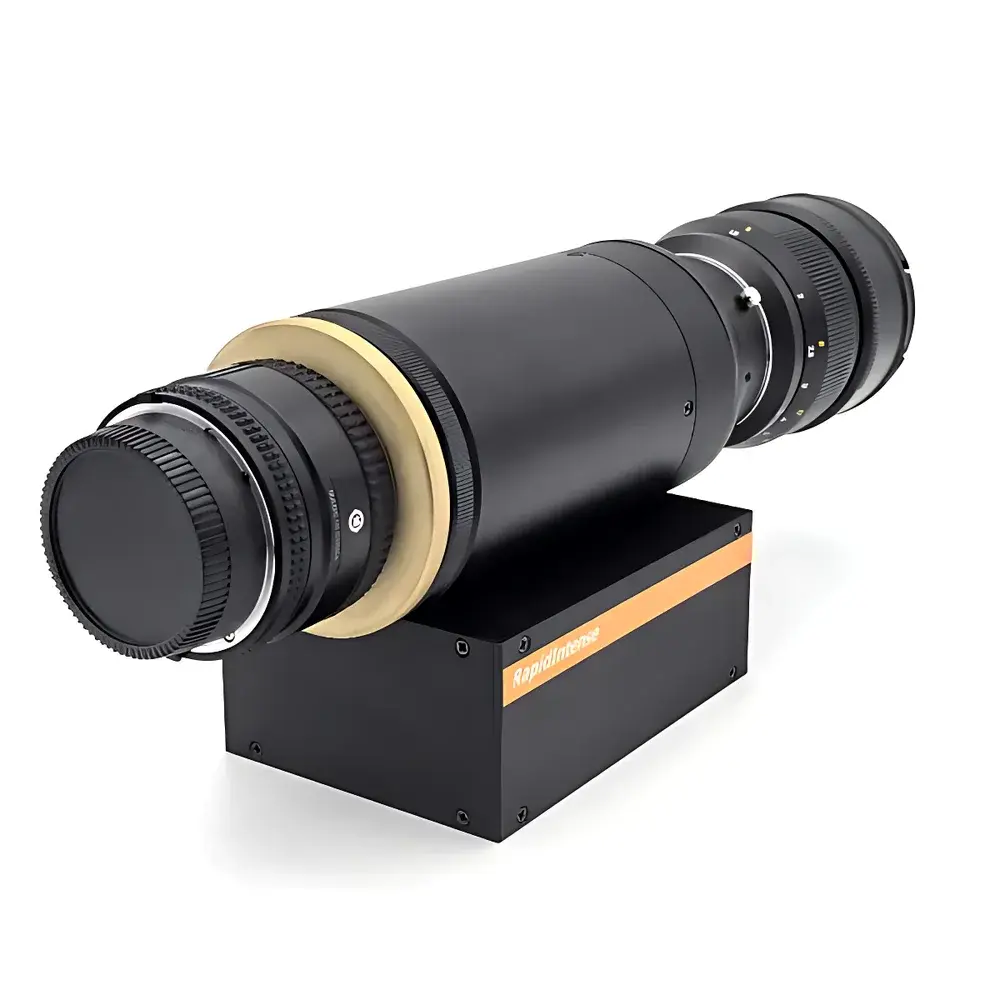
RapidImage Technology RapidIntense-H UV Image Intensifier
| Brand | RapidImage Technology |
|---|---|
| Origin | Beijing, China |
| Model | RapidIntense-H |
| Imaging Aperture | 25 mm |
| Minimum Gating Width | 5 ns |
| Photocathode Options | Gen 2 or Gen 3 (UV–Vis sensitive) |
| MCP Configuration | Single-stage |
| Phosphor Screen | P43 (decay time: ~5 ms, 100%→10%) |
| Max Frame Rate Support | ~200 Hz |
| Typical Applications | LII, LIF, OH-PLIF, UV-gated imaging |
| Compliance | Designed for integration into GLP-compliant optical diagnostics systems |
| Software Control | Integrated high-precision programmable signal generator with TTL output synchronization |
Overview
The RapidImage Technology RapidIntense-H UV Image Intensifier is a vacuum-sealed, gated microchannel plate (MCP)-based optical intensification module engineered for ultra-low-light and ultraviolet spectral imaging applications. It operates on the principle of photoelectron multiplication: incident photons (UV to visible, 185–900 nm depending on photocathode type) strike a high-quantum-efficiency photocathode, generating photoelectrons that are accelerated through a single-stage MCP under high voltage bias. Electron multiplication within the MCP pores yields gain factors of 10³–10⁴, after which electrons impact a P43 phosphor screen to produce intensified visible-light output. This intensified image is then relayed via high-fidelity optics to a downstream CCD or CMOS sensor. The device is specifically optimized for time-resolved laser-induced fluorescence (LIF), planar laser-induced fluorescence (PLIF), laser-induced incandescence (LII), and other combustion diagnostic modalities requiring precise temporal gating, high spatial fidelity, and operation in the ultraviolet band where conventional silicon-based sensors exhibit negligible quantum efficiency.
Key Features
- 25 mm standard input aperture—enables compatibility with large-format scientific cameras and flexible optical coupling
- Gating capability down to 5 ns full-width at half-maximum (FWHM), with sub-nanosecond jitter and programmable delay resolution of ≤100 ps
- Gen 2 or Gen 3 UV-enhanced photocathodes—offering broad spectral response from deep UV (185 nm) to near-IR (900 nm), with peak QE >25% at 250 nm (Gen 3)
- Single-stage MCP architecture—optimized for stability, linearity, and low intrinsic noise; gain remains stable over >10⁶ gate cycles
- P43 phosphor screen—provides high luminance and decay time of ~5 ms (100% → 10%), ideal for moderate-frame-rate applications up to 200 Hz
- Integrated programmable signal generator—synchronizes gate timing, trigger delays, and three independent TTL outputs for system-level coordination with lasers, data acquisition, and shutter control
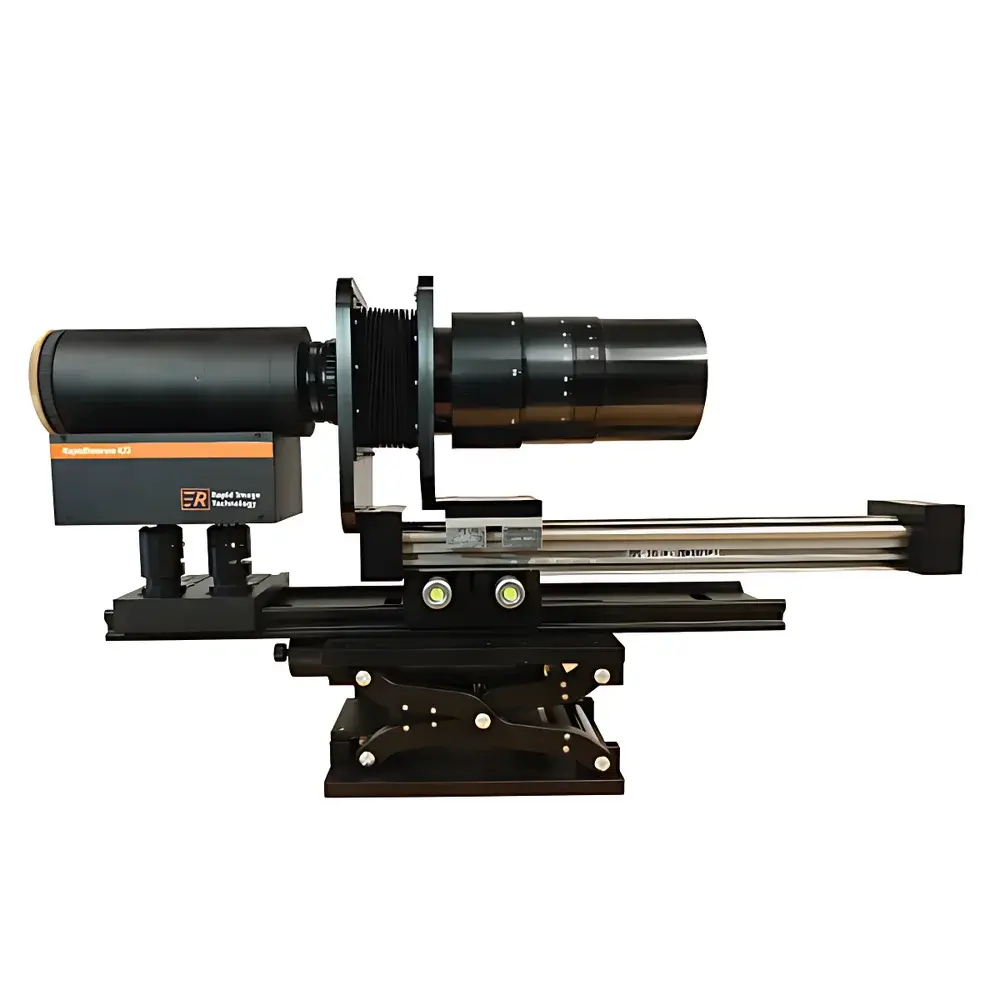
- Optimized relay lens interface—supports variable magnification ratios via modular lens assemblies to match diverse sensor formats (e.g., 1″ to 4/3″ sensors) without resolution loss
Sample Compatibility & Compliance
The RapidIntense-H is designed for integration into research-grade optical diagnostics platforms used in academic combustion labs, aerospace propulsion testing facilities, and industrial R&D environments. It interfaces seamlessly with standard C-mount, F-mount, and custom flange configurations. All vacuum housing components comply with ISO 8573-1 Class 2 cleanroom assembly standards. The device meets electromagnetic compatibility (EMC) requirements per EN 61326-1:2013 for laboratory use. While not certified as medical or safety-critical equipment, its timing architecture supports traceable timestamping and audit-ready logging when paired with compliant DAQ systems—making it suitable for GLP-aligned experimental workflows. For regulatory documentation, calibration certificates (including photocathode QE mapping and MCP gain uniformity reports) are available upon request.
Software & Data Management
Control is executed via the RapidImage MAX Control Suite—a cross-platform (Windows/Linux) application providing deterministic real-time gate parameter configuration. Users define absolute gate onset time (T₀ referenced to rising edge), pulse width, and inter-pulse intervals with ≤100 ps resolution. The software implements hardware-enforced safety limits to prevent MCP saturation or phosphor burn-in. All settings are stored in non-volatile memory and support version-controlled export/import for experiment reproducibility. Audit trails—including user ID, timestamp, parameter set hash, and firmware revision—are logged in CSV format compliant with 21 CFR Part 11 Annex 11 principles when deployed in validated environments. Remote operation via TCP/IP API enables integration into LabVIEW, Python (PyVISA), or MATLAB-based automation frameworks.
Applications
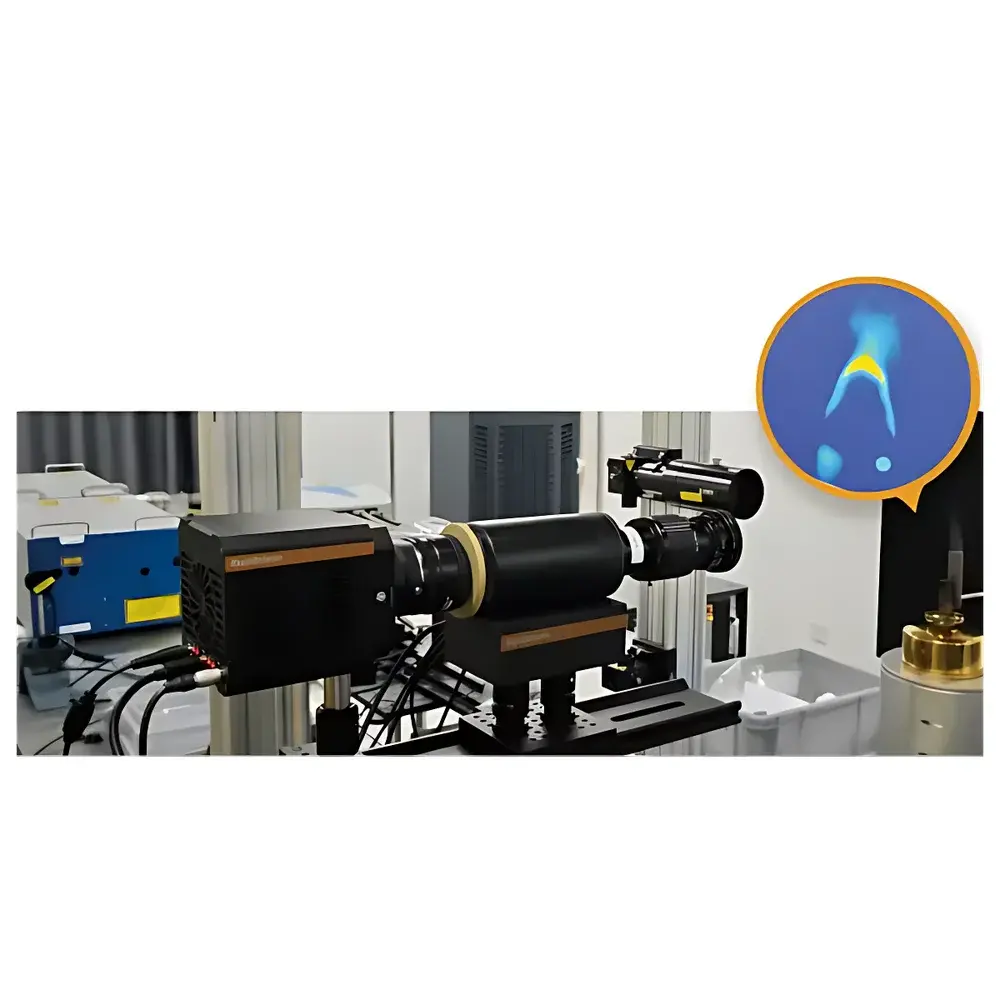
The RapidIntense-H serves as the core intensification stage in quantitative planar diagnostics. In OH-PLIF experiments, its 5 ns gate width suppresses flame background radiation, enabling high-contrast detection of hydroxyl radicals during transient combustion events. Paired with a 25 mm-format sCMOS camera and UV-8528 lens, it delivers diffraction-limited resolution (<15 µm at Nyquist) across fields of view up to 40 × 40 mm². In LII measurements, its Gen 3 photocathode provides sufficient sensitivity for nanosecond-scale soot incandescence capture without requiring laser energy amplification. It also supports UV-excited fluorescence imaging of acetone tracers (using Acetone Filter), CH radicals (CH Filter, 40 nm BW), and OH radicals (OH Filter, 20 nm BW)—all with minimal crosstalk due to precise spectral filtering alignment and low-intensity dark current (<0.01 e⁻/pixel/s at −20°C).
FAQ
What is the spectral response range of the Gen 3 photocathode option?
The Gen 3 GaAs photocathode offers effective quantum efficiency from 185 nm to 900 nm, with peak responsivity at ~800 nm and usable UV sensitivity down to 200 nm when coupled with MgF₂ entrance windows.
Can the RapidIntense-H be synchronized with external laser triggers?
Yes—it supports external TTL triggering with adjustable polarity, threshold, and hold-off time; gate width and delay are independently programmable relative to the external edge.
Is vacuum maintenance required by the end user?
No—the device is permanently sealed under ultra-high vacuum (UHV, <1×10⁻⁸ Torr) during manufacturing and requires no periodic pumping or maintenance throughout its rated service life (>5 years typical).
How does the P43 phosphor decay time affect frame rate limitations?
With a 100%→10% decay time of ~5 ms, P43 limits maximum sustained frame rates to ~200 Hz for full-frame readout; residual afterglow is negligible beyond 10 ms, ensuring temporal isolation between successive acquisitions.
Does the unit include factory calibration data?
Each unit ships with a certificate of conformance including measured photocathode QE curve, MCP gain uniformity map (±3% across active area), and gate timing characterization report.




