
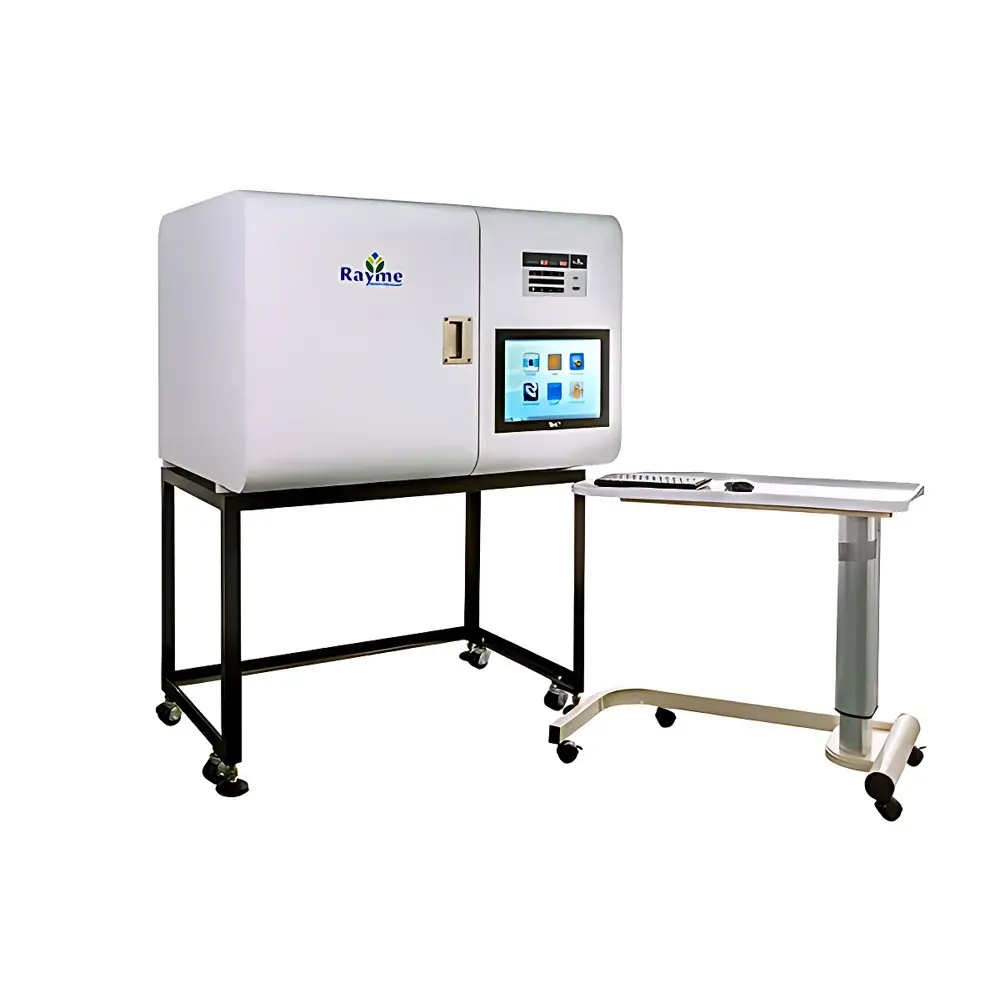
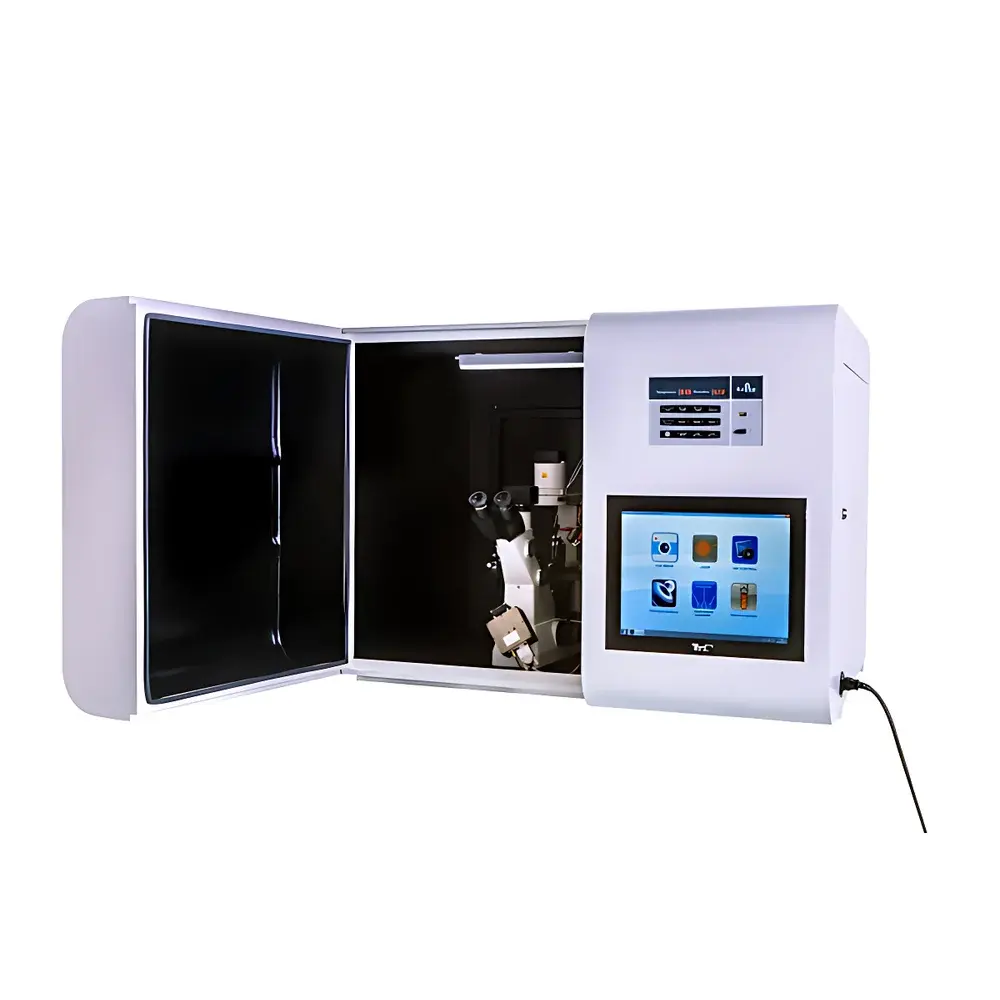
Raymetech RM-M01G Nanoscale Opto-Electrochemical Single-Cell Analyzer
| Brand | Raymetech |
|---|---|
| Model | RM-M01G |
| Origin | Jiangsu, China |
| Category | Domestic |
| Distribution Type | Authorized Distributor |
| Pricing | Upon Request |
Overview
The Raymetech RM-M01G Nanoscale Opto-Electrochemical Single-Cell Analyzer is an advanced life science instrument engineered for label-free, real-time, in situ interrogation of live single cells at subcellular resolution. It operates on the principle of nanoscale opto-electrochemical transduction—integrating functionalized nanoprobes with synchronized optical and electrochemical readout modalities to monitor dynamic biochemical events—including reactive oxygen species (ROS), enzyme activity, membrane potential, ion fluxes, and biomarker expression—within intact, unperturbed mammalian or plant cells. Unlike bulk lysate-based assays or fluorescence microscopy requiring exogenous dyes or genetic modification, the RM-M01G enables minimally invasive, quantitative detection directly inside organelles (e.g., nucleus, cytoplasm, plasma membrane) without compromising cellular viability or introducing fixation artifacts. Its architecture supports longitudinal tracking of individual cells over hours to days, making it suitable for kinetic studies of signal transduction, drug response, and stress adaptation under physiologically relevant conditions.
Key Features
- Single-cell resolution: Eliminates ensemble averaging by acquiring discrete, cell-specific datasets from individual viable cells—enabling detection of heterogeneous responses within clonal populations and improving early-disease biomarker sensitivity.
- Subcellular targeting capability: Precision nanomanipulation system allows controlled insertion and positioning of multifunctional nanoprobes across defined intracellular compartments with nanometer-scale spatial accuracy.
- Live-cell compatibility: Designed for non-destructive, long-term monitoring; maintains >95% cell viability post-probe insertion under standard culture conditions (37 °C, 5% CO₂), validated via parallel calcein-AM/propidium iodide staining and metabolic activity assays.
- Synchronized opto-electrochemical detection: Simultaneously records concurrent optical (e.g., fluorescence intensity, lifetime, spectral shift) and electrochemical (e.g., amperometric current, impedance change) signals from the same nanoscale interrogation site—enabling correlation of molecular binding events with functional electrophysiological outcomes.
- Pharmacodynamic co-monitoring: Integrates microfluidic drug delivery with real-time probe-based readout to quantify subcellular pharmacokinetic–pharmacodynamic relationships—such as localized Ca²⁺ release kinetics following GPCR agonist exposure or mitochondrial depolarization during chemotherapeutic challenge.
- Modular probe interface: Standardized nanoprobe coupling mechanism permits rapid exchange of functionalized probes (e.g., enzyme-immobilized carbon nanotubes, aptamer-conjugated quantum dots, redox-active polymer-coated electrodes) to adapt the platform across analyte classes without hardware modification.
- Ergonomic integration: Fully automated stage navigation, probe alignment, and data acquisition workflow reduce operator dependency; compliant with ISO 13485-aligned laboratory ergonomics guidelines for routine use in GLP-compliant core facilities.
Sample Compatibility & Compliance
The RM-M01G accommodates adherent and suspension cell types—including primary human hepatocytes, iPSC-derived neurons, tumor spheroids (≤150 µm), and plant protoplasts—on standard glass-bottom dishes or custom microfabricated substrates. Sample preparation requires no fixation, permeabilization, or transfection. Instrument compliance includes adherence to IEC 61000-4 electromagnetic compatibility standards and mechanical safety certification per ISO 13857. Data integrity protocols support audit trails aligned with FDA 21 CFR Part 11 requirements when operated with optional secure software licensing. All probe-based measurements are traceable to NIST-traceable electrochemical reference standards (Ag/AgCl, SCE) and calibrated optical power meters (NIST SRM 2031).
Software & Data Management
The proprietary Raymetech AnalytiX Suite v3.2 provides instrument control, multi-channel time-series synchronization, and event-triggered acquisition. Raw signal streams (optical + electrochemical) are stored in HDF5 format with embedded metadata (probe ID, timestamp, temperature, CO₂ level, user annotation). Built-in analysis modules include cross-correlation spectroscopy, drift-corrected baseline subtraction, and compartment-specific kinetic modeling (e.g., Michaelis–Menten fitting for enzyme activity). Export options include CSV, MATLAB .mat, and MIRIAM-compliant ISA-Tab for integration into FAIR-aligned repositories. Optional cloud backup and role-based access control (RBAC) enable multi-user collaboration while satisfying institutional data governance policies.
Applications
- Basic cell biology: Real-time monitoring of telomerase activity in nuclear extracts, mitochondrial ROS bursts during apoptosis initiation, or glucose transporter trafficking dynamics at the plasma membrane.
- Oncology research: Quantitative profiling of HER2 phosphorylation kinetics in single breast cancer cells pre- and post-trastuzumab treatment; detection of heterogeneous PD-L1 expression patterns in tumor-infiltrating lymphocytes.
- Drug discovery: High-content screening of compound libraries for on-target/off-target effects at subcellular resolution—e.g., lysosomal pH perturbation versus nuclear DNA damage induction in parallel.
- Agricultural biotechnology: In vivo assessment of drought-induced stomatal guard cell ion channel modulation in Arabidopsis thaliana; real-time tracking of pollen tube growth guidance cues in maize ovules.
- Food safety analytics: Detection of mycotoxin-induced oxidative stress signatures in human intestinal epithelial Caco-2 monolayers; quantification of bacterial endotoxin-triggered NF-κB activation kinetics in macrophage-like THP-1 cells.
FAQ
What sample preparation is required prior to analysis?
Minimal preparation is needed: cells are cultured to 70–80% confluence on compatible substrates; no labeling, fixation, or lysis is required.
Can the system be integrated with existing microscope platforms?
Yes—the RM-M01G features standardized optical port interfaces (C-mount, RMS-thread) and TTL synchronization outputs compatible with major inverted microscope systems (Olympus IX83, Nikon Ti2, Zeiss Axio Observer).
Is probe reuse supported?
Nanoprobes are designed for single-use per experiment to ensure signal fidelity and avoid cross-contamination; however, sterilizable probe holders and fluidic manifolds support high-throughput workflows.
Does the system comply with regulatory requirements for clinical assay development?
While intended for research use only (RUO), its metrological traceability, audit trail functionality, and SOP-driven operation support method validation under CLIA and ISO 15189 frameworks when deployed in qualified laboratories.
What training and technical support options are available?
Raymetech provides on-site installation qualification (IQ), operational qualification (OQ), and comprehensive user training (including probe handling, calibration, and data interpretation); remote diagnostics and annual preventive maintenance contracts are offered globally through authorized service partners.
Related Products




