
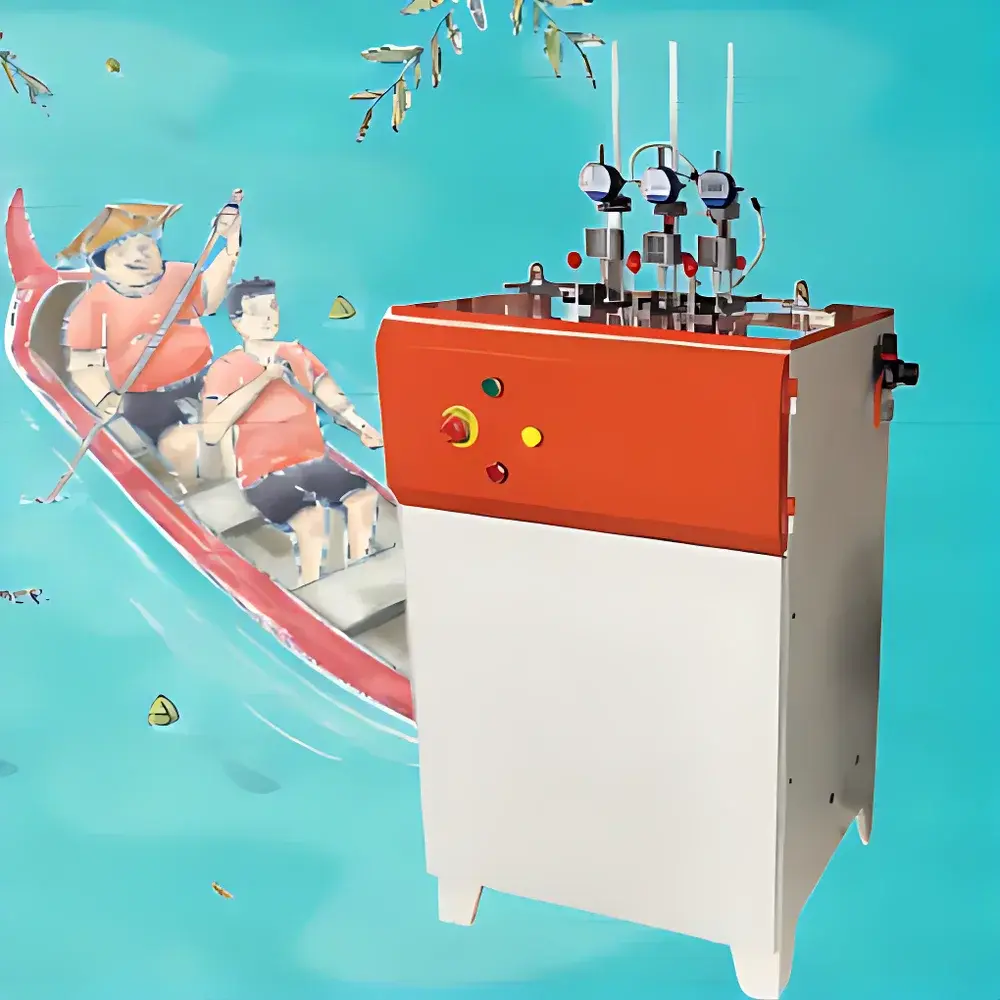
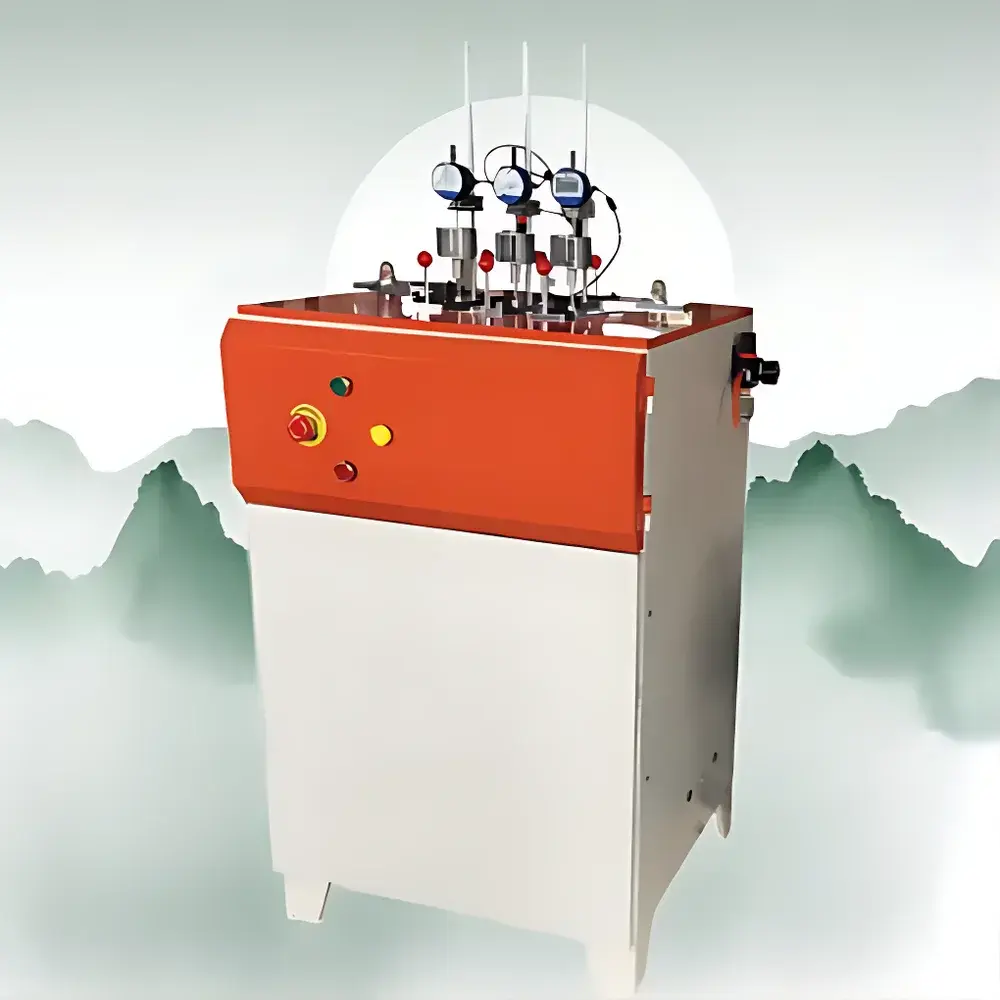

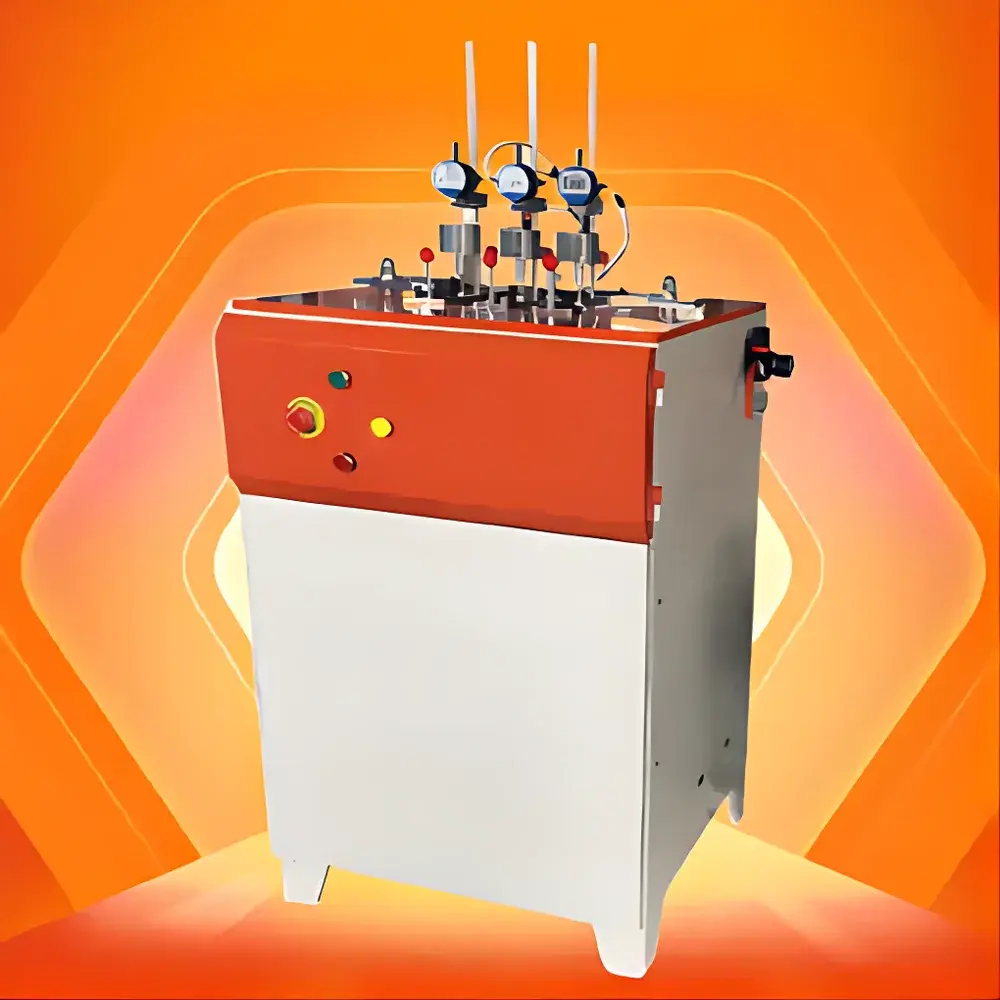

Red Sun HRWK-300 Rubber & Plastic Heat Deflection and Vicat Softening Temperature Tester
| Brand | Red Sun Instrument |
|---|---|
| Origin | Hebei, China |
| Model | HRWK-300 |
| Temperature Range | Ambient to 300 °C |
| Heating Rates | 50 °C/h and 120 °C/h |
| Deformation Measurement Range | −1.000 mm to +10.000 mm |
| Vicat Needle Tip Area | 1.00 ± 0.015 mm² |
| Sample Holder Thermal Expansion Coefficient | < 0.005 mm/100 °C |
| Compliance | GB/T 1633, GB/T 8802, GB/T 1634, ISO 306, ISO 75, ISO 2507, ASTM D 1525, ASTM D 648 |
Overview
The Red Sun HRWK-300 Rubber & Plastic Heat Deflection and Vicat Softening Temperature Tester is a dual-function thermal analysis instrument engineered for precision determination of two critical thermomechanical properties in polymeric materials: the Heat Deflection Temperature (HDT) under load and the Vicat Softening Temperature (VST). It operates on standardized principles defined by ISO 75 (for HDT) and ISO 306 (for VST), where a calibrated needle or flat-ended plunger applies a specified force to a conditioned specimen immersed in a thermally controlled silicone oil bath. As temperature rises at a defined linear rate, the instrument continuously monitors axial deformation via high-resolution digital displacement transducers. The VST is recorded as the temperature at which the needle penetrates 1.000 mm into the specimen surface under a prescribed load; the HDT corresponds to the temperature at which a cantilevered beam deflects 0.34 mm under flexural stress. The HRWK-300 integrates a patented upward-lifting sample holder mechanism—designed to eliminate mechanical hysteresis and thermal drift during loading/unloading cycles—ensuring reproducible positioning and minimizing operator-induced variability.
Key Features
- Patented upward-lifting sample holder with fully automated lift, load application, unloading, and return-to-zero sequencing—executed in a single motion without manual intervention
- Thermally stabilized sample support frame with effective coefficient of linear expansion < 0.005 mm/100 °C, mitigating measurement artifacts from structural thermal growth
- Dual heating rate capability: precisely regulated 50 °C/h and 120 °C/h ramp profiles compliant with ISO and ASTM test protocols
- High-accuracy displacement measurement system with ±0.001 mm resolution over a full range of −1.000 mm to +10.000 mm
- Vicat needle certified to ISO 306 specification: flat-tipped, nominal contact area 1.00 ± 0.015 mm², manufactured from hardened stainless steel with traceable calibration documentation
- Integrated thermal oil bath with uniformity ≤ ±0.5 °C across active test zone and programmable temperature hold functionality (e.g., 5-minute no-load equilibration per ISO 306)
Sample Compatibility & Compliance
The HRWK-300 accommodates standard geometries for both HDT and VST testing per international specifications: rectangular bars (80 × 10 × 4 mm) for rigid thermoplastics, arc-shaped pipe segments (e.g., PVC-U dn110 per GB/T 5836.1), and molded plaques meeting ISO 293 or ASTM D1928 requirements. All sample holders are designed to ensure ≥ 3 mm clearance between needle tip and specimen edge, preventing edge effects and non-uniform stress distribution. The system meets full regulatory alignment with GB/T 1633–2000, GB/T 8802–2001, GB/T 1634–2004, ISO 306:2020, ISO 75–1:2013, ISO 2507–1:2019, ASTM D 1525–21, and ASTM D 648–22. Its mechanical architecture supports GLP-compliant operation when paired with audit-trail-enabled software (see Software & Data Management).
Software & Data Management
Control and data acquisition are managed through a dedicated Windows-based application supporting multi-channel real-time monitoring of temperature, displacement, and load status. The software enforces protocol-driven test sequencing—including automatic initiation of heating ramps upon load confirmation, built-in validation checks for needle perpendicularity and specimen seating, and time-stamped event logging. Raw data files are saved in CSV and proprietary binary formats with embedded metadata (operator ID, calibration certificate IDs, environmental conditions). Optional 21 CFR Part 11 compliance package provides electronic signatures, role-based access control, and immutable audit trails for regulated environments. Export modules support direct integration with LIMS platforms via ODBC or REST API interfaces.
Applications
- Quality control of thermoplastic resins (PP, PE, ABS, PC, PS) and thermoset composites in automotive, construction, and packaging supply chains
- Material qualification for medical device housings requiring ISO 10993 biocompatibility dossier support
- R&D screening of polymer blends and filled systems to evaluate heat resistance improvements from additives (e.g., glass fiber, mineral fillers)
- Validation of processing parameters (e.g., annealing cycles) against end-use thermal performance thresholds
- Third-party certification testing laboratories performing accredited conformity assessments to IEC, UL, or CSA standards
FAQ
What standards does the HRWK-300 fully support?
It complies with GB/T 1633, GB/T 8802, GB/T 1634, ISO 306, ISO 75, ISO 2507, ASTM D 1525, and ASTM D 648 for both Vicat softening and heat deflection temperature determinations.
Is the 5-minute no-load thermal equilibration step automated?
Yes—the instrument initiates a precise 5-minute dwell at target start temperature before applying load, as required by ISO 306 Clause 8.3.
How is needle perpendicularity verified during operation?
The software performs an optical alignment check routine prior to each test sequence and logs any deviation exceeding ±0.5° from vertical orientation.
Can the system be integrated into a networked laboratory environment?
Yes—it supports Ethernet connectivity, DHCP/Static IP configuration, and secure remote monitoring via TLS-encrypted web interface.
What maintenance intervals are recommended for long-term accuracy?
Annual recalibration of displacement transducers and temperature sensors is advised; needle tip wear inspection should occur every 200 test cycles using certified gauge blocks and optical profilometry.






