
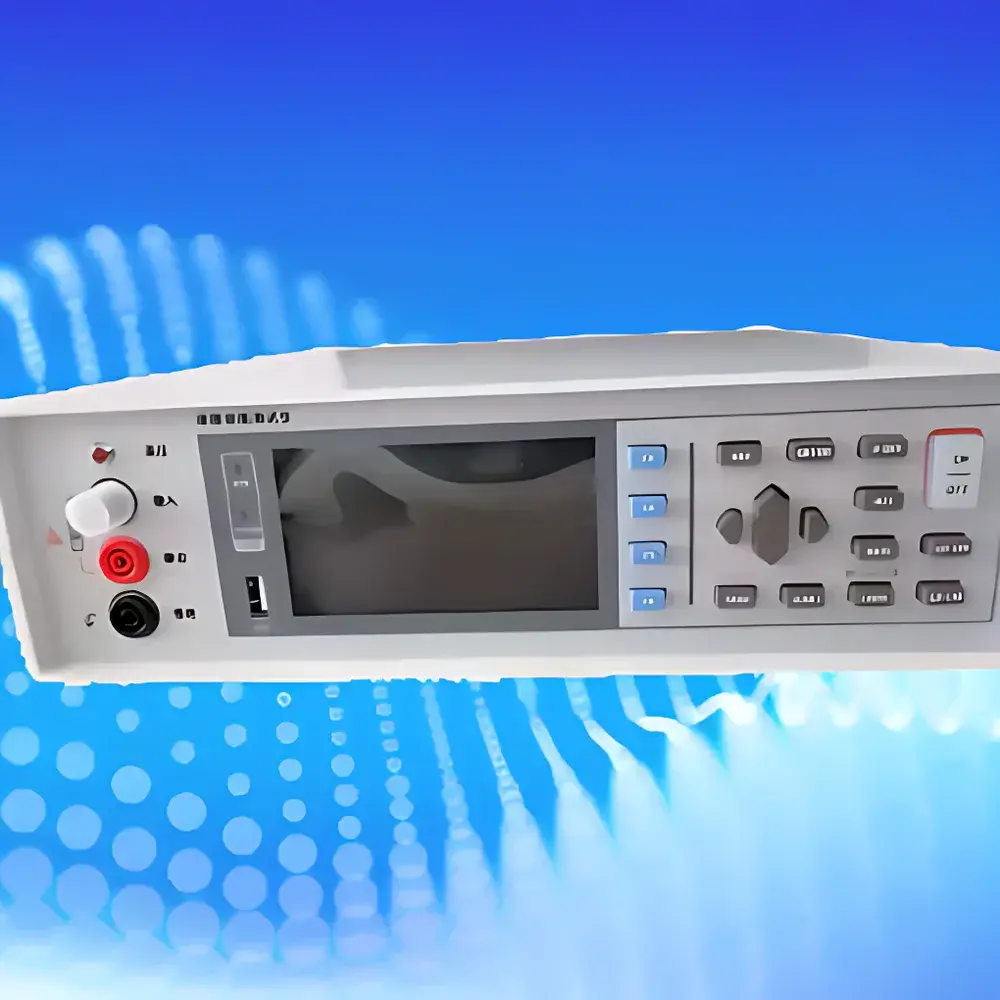
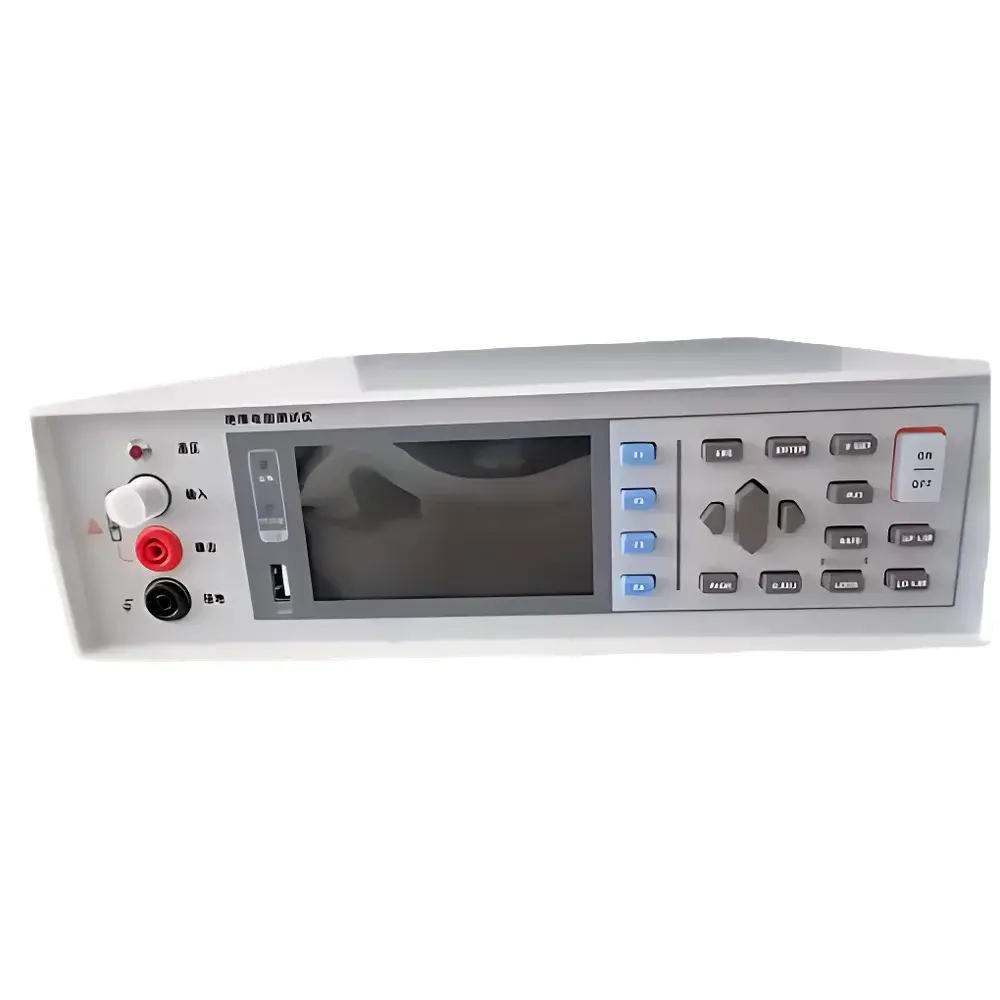
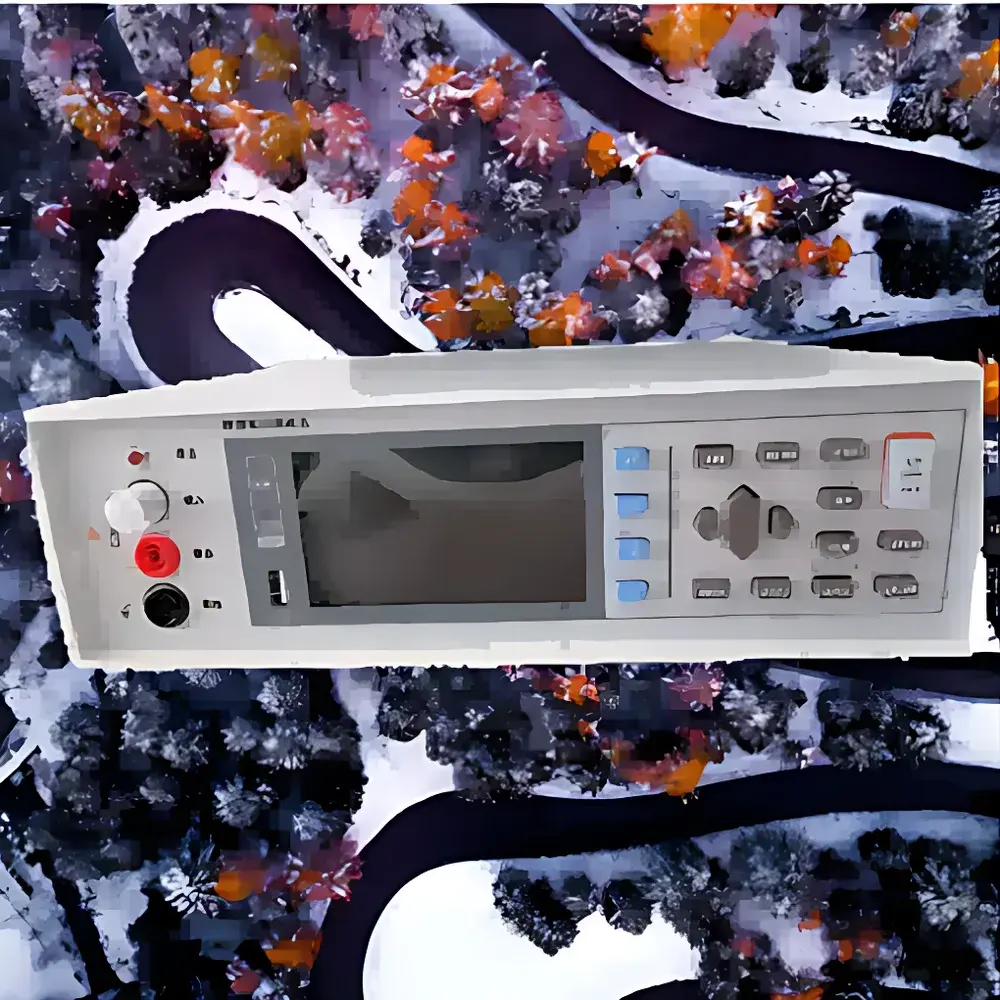
Red Sun Instrument HRDZT-380 Volume & Surface Resistivity Tester
| Brand | Red Sun Instrument |
|---|---|
| Origin | Hebei, China |
| Manufacturer Type | Authorized Distributor |
| Country of Origin | China |
| Model | HRDZT-380 |
| Application | Wood Moisture & Insulation Resistance Testing |
| Resistance Range | 10² Ω to 10¹⁶ Ω (extendable to 10²⁰ Ω via current extrapolation) |
| Resistivity Range | up to 10²² Ω·cm |
| Voltage Accuracy | ±0.5% ±1 V |
| Measurement Speed | Fast mode — 5 readings/sec |
| Display | 4.3″ high-resolution TFT LCD |
| Interface | Banana jacks, BNC connectors |
| Compliance Reference | GB/T 10580–2003, IEC 60260, ASTM D257, ISO 3915 |
Overview
The Red Sun Instrument HRDZT-380 Volume & Surface Resistivity Tester is a precision electrometric instrument engineered for the quantitative determination of volume resistivity (ρv) and surface resistivity (ρs) in solid insulating materials—including polymers, ceramics, composites, wood, and laminates—according to standardized DC voltage methods. It operates on the principle of applying a stable, user-selectable DC test voltage (typically 10 V, 100 V, or 500 V) across a defined electrode configuration and measuring the resulting steady-state leakage current after prescribed polarization times. The instrument calculates resistivity using geometric correction factors derived from electrode dimensions and sample thickness, per ASTM D257 and IEC 62631-3-1. Its design addresses the fundamental physical dependencies of resistive behavior: exponential sensitivity to temperature and humidity, time-dependent dielectric absorption, and surface contamination effects—making controlled environmental conditioning and strict procedural adherence essential for metrological traceability.
Key Features
- Wide dynamic resistance measurement range: 10² Ω to 10¹⁶ Ω, with extended calculation capability up to 10²⁰ Ω via low-current extrapolation (down to ~10−15 A)
- High-precision DC voltage source with ±0.5% ±1 V accuracy and programmable output levels (10 V / 100 V / 500 V)
- Configurable polarization timing: automatic sequential measurements at 1 min, 2 min, 5 min, 10 min, 50 min, and 100 min—supporting time-resolved resistivity profiling per ASTM D257 Annex A3
- Dual-mode operation: manual and auto-test modes with one-button initiation and built-in parameter recall
- Ten customizable test profiles—each storing voltage level, delay time, discharge delay, integration time, and display format—for repeatable testing across material families
- 4.3″ TFT LCD with dual-language interface (English/Chinese), 4- or 5-digit resolution, and real-time status indicators for over-range, under-range, and discharge completion
- Robust input terminals: insulated banana jacks and BNC connectors compatible with standard guarded electrode fixtures (e.g., ASTM D257 Type A, B, C electrodes)
- Temperature and humidity operating range: 0–40 °C, ≤80% RH (non-condensing); storage range: −10–60 °C, ≤80% RH
Sample Compatibility & Compliance
The HRDZT-380 is validated for use with flat, rigid, and homogeneous dielectric specimens conforming to electrode geometry requirements in ASTM D257, IEC 62631-3-1, and GB/T 10580–2003. Sample conditioning must precede measurement: thermal equilibration at 23 ±2 °C and relative humidity stabilization per IEC 60260 salt-solution protocols or mechanical vapor systems. Thickness measurement—performed prior to electrode application—is mandatory for volume resistivity calculation and must be averaged across the guarded electrode area. Surface resistivity assessment requires clean, contaminant-free surfaces; reported values reflect combined contributions from bulk conduction, interfacial charge transport, and adsorbed moisture layers—hence its limited role as a comparative quality indicator rather than an intrinsic material property. The instrument supports GLP-compliant documentation through structured reporting fields aligned with ISO/IEC 17025 requirements.
Software & Data Management
While the HRDZT-380 operates as a standalone benchtop unit without embedded PC software, its measurement protocol fully supports external data acquisition via analog/digital outputs (optional HANDLER interface). All test parameters—including applied voltage, polarization time stamps, raw current readings, and calculated ρv/ρs values—are retained in non-volatile memory with timestamped logging. Measurement reports comply with regulatory documentation standards: each record includes material identification, specimen geometry, electrode type and dimensions, conditioning history (temperature, RH, duration), test voltage, polarization intervals, and final resistivity values with uncertainty notes. For laboratories operating under FDA 21 CFR Part 11 or ISO 13485, external audit trails can be generated by integrating the device into validated LIMS environments using its TTL-level trigger and pass/fail signal outputs.
Applications
This tester serves critical QC/QA functions in polymer manufacturing, electrical insulation certification, aerospace composite qualification, and wood preservation R&D. Typical use cases include: verifying consistency of antistatic additives in packaging films; assessing moisture-induced degradation in fiber-reinforced laminates; screening dielectric integrity of PCB substrates; validating drying efficacy in kiln-dried timber (as a secondary correlative metric alongside capacitance-based moisture analysis); and detecting ionic contamination in cleanroom-grade elastomers. Its ability to capture time-dependent resistivity decay enables failure mode analysis in high-reliability applications—such as predicting long-term insulation performance in HVDC cable systems or evaluating space-grade polymer stability under thermal cycling.
FAQ
What is the minimum recommended sample thickness for volume resistivity measurement?
Per ASTM D257, thickness must be measured at multiple points across the guarded electrode area before metallization; for thin films (<0.5 mm), measurement must occur prior to electrode deposition to avoid mechanical distortion.
Can surface resistivity be measured on curved or irregular surfaces?
No—surface resistivity requires planar geometry with precisely defined electrode spacing (g) and guarded perimeter (P); non-planar samples yield non-compliant, non-reproducible results.
Why does resistivity change significantly with humidity—and how should conditioning be performed?
Water absorption increases ionic mobility in amorphous polymer regions; conditioning must follow IEC 60260 salt-solution RH tables or use calibrated humidity chambers—minimum 48 h at target RH unless material-specific standards specify longer durations.
Is the HRDZT-380 suitable for conductive or semiconductor materials?
Yes—the 10² Ω lower limit accommodates carbon-loaded polymers and doped ceramics; however, for materials below 10⁴ Ω, four-terminal (Kelvin) measurement is preferred to eliminate contact resistance error.
How is measurement uncertainty estimated for high-resistivity readings (>10¹⁴ Ω)?
Uncertainty derives primarily from voltage source drift, current amplifier noise floor, and electrode geometry tolerances; typical expanded uncertainty (k=2) is ±5% for ρv ≤10¹⁸ Ω·cm and ±12% above that threshold, per ISO/IEC 17025 validation reports.




