
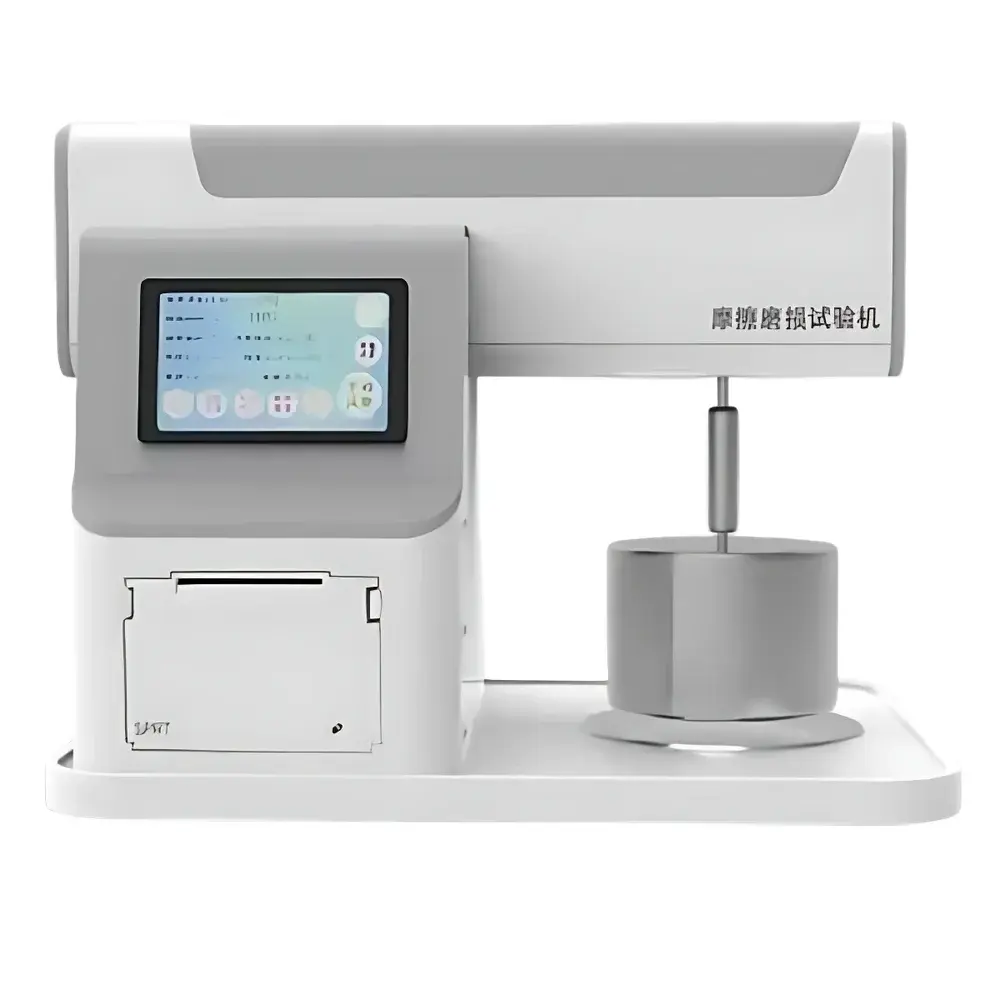
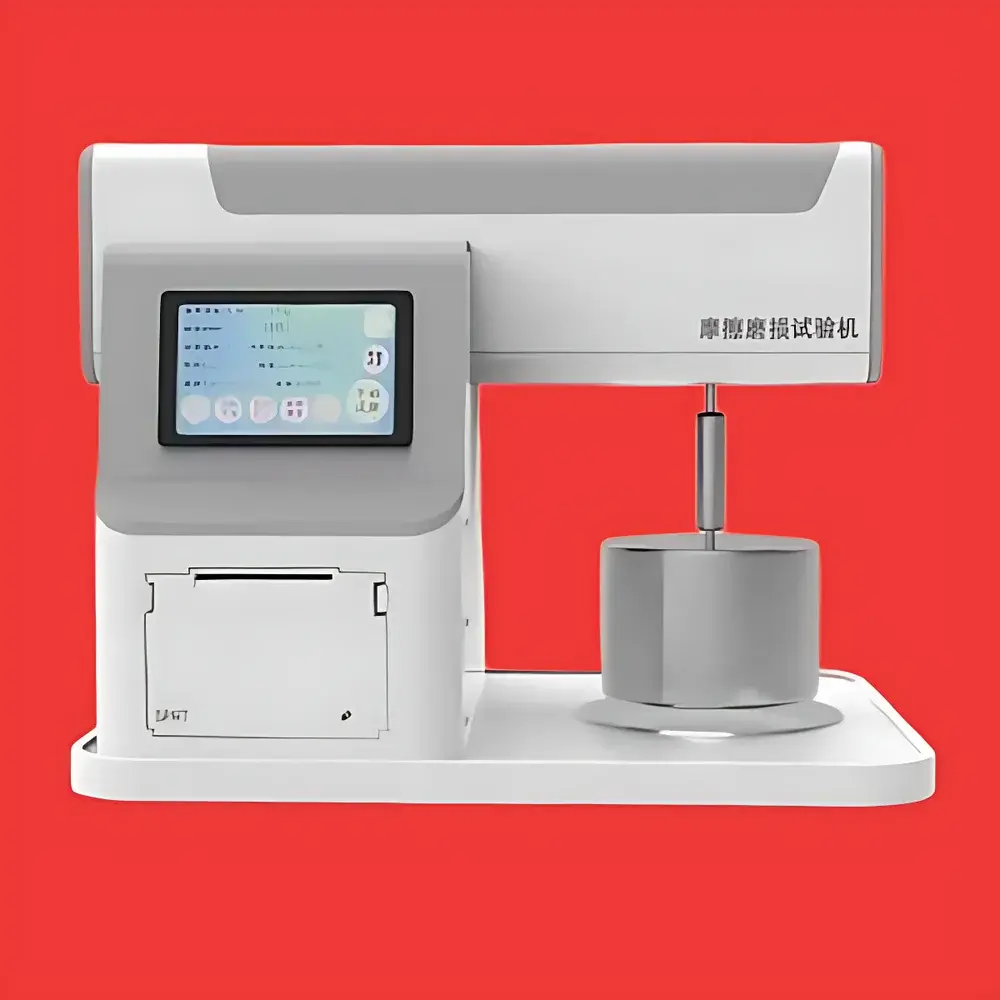
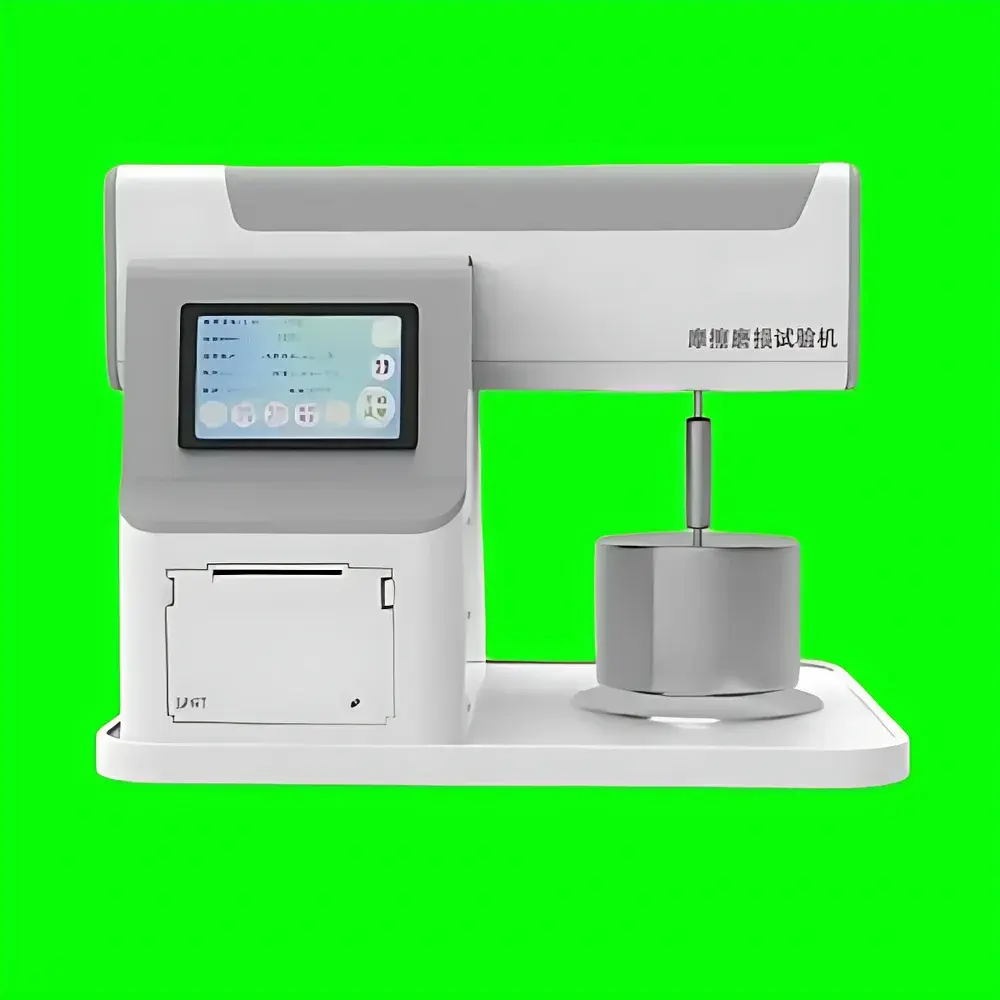
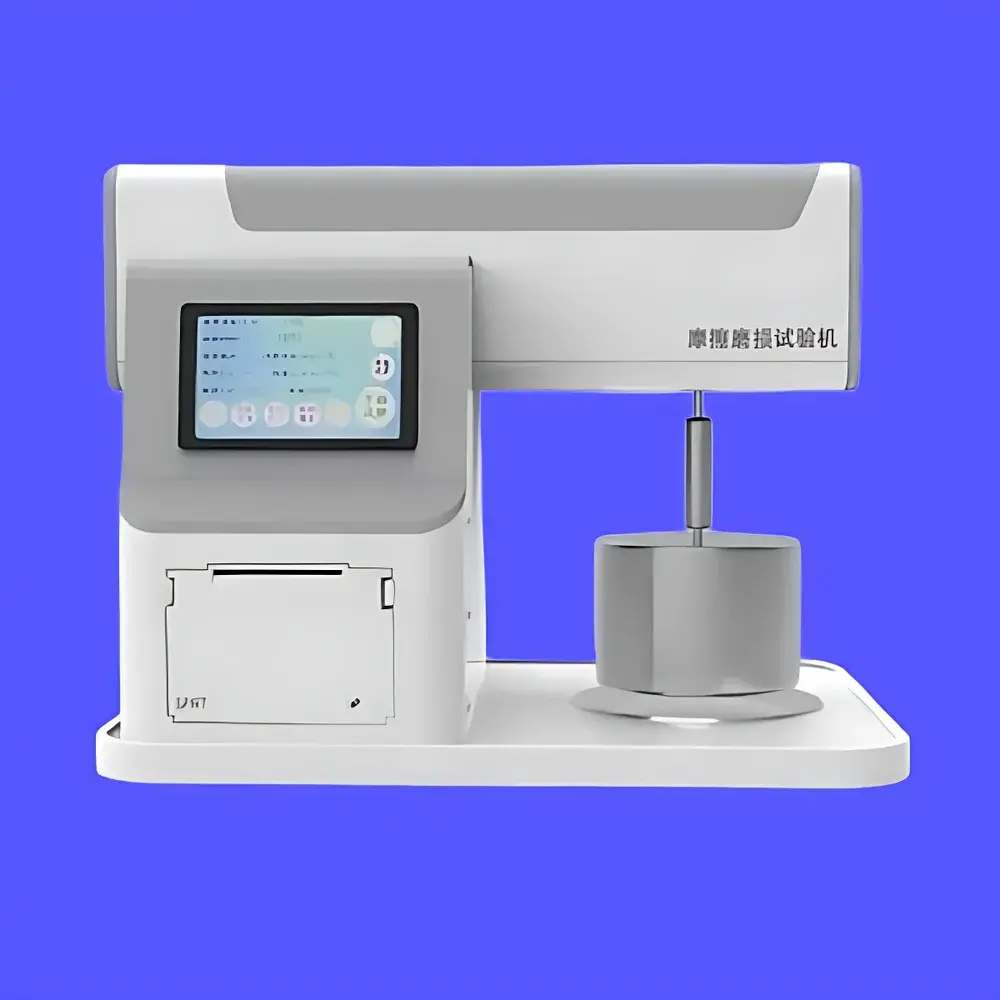
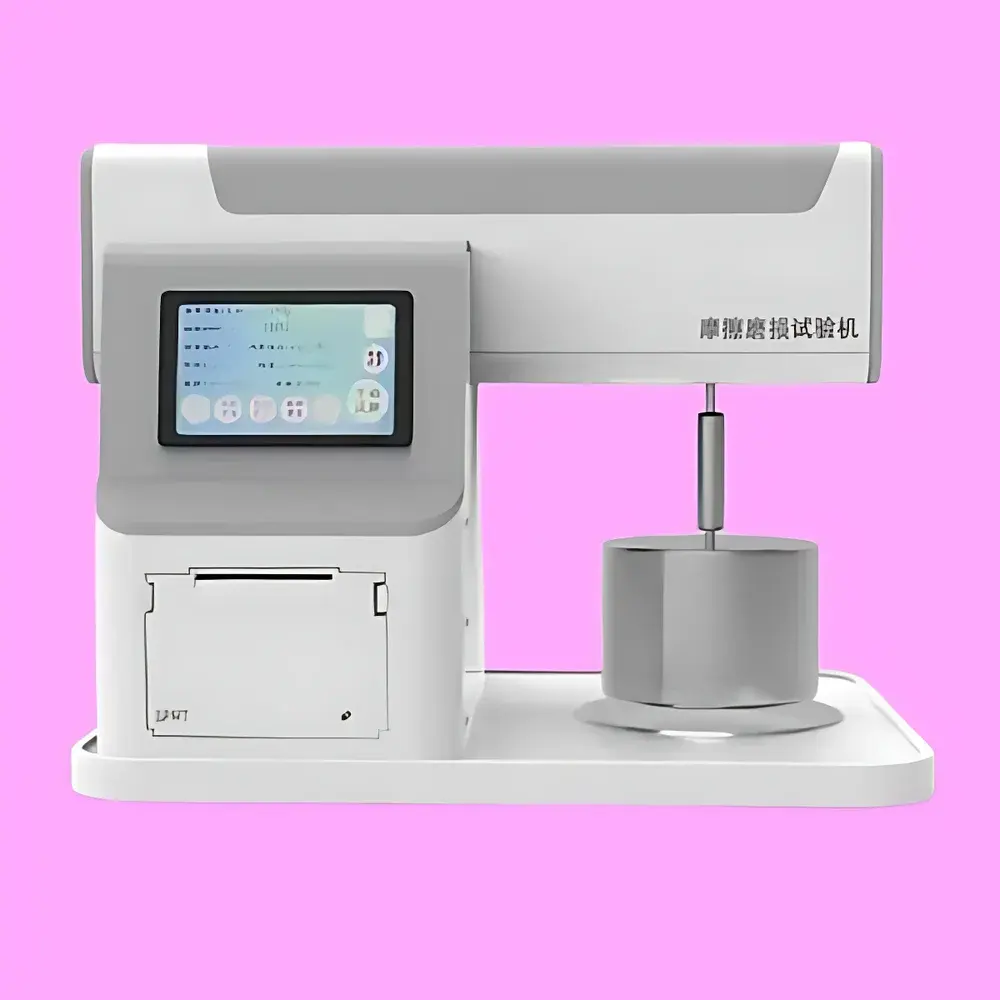
Red Sun Instrument M-200 Nylon Sliding Tribological Tester
| Brand | Red Sun Instrument |
|---|---|
| Origin | Hebei, China |
| Manufacturer Type | Authorized Distributor |
| Country of Origin | China |
| Model | M-200 |
| Instrument Type | Multi-Function Tribological Tester |
| Maximum Friction Force | 20 N |
| Friction Force Resolution | 0.4 mN |
| Maximum Operating Temperature | 45 °C |
| Maximum Test Load | 2000 N |
| Load Accuracy (≥10% FS) | ±2% |
| Load Repeatability (≥10% FS) | ≤2% |
| Friction Torque Range | 0–15 N·m |
| Torque Accuracy (≥10% FS) | ±3% |
| Torque Repeatability (≥10% FS) | ≤3% |
| Lower Specimen Shaft Speed | 200–400 rpm (stepless) |
| Upper Specimen Shaft Speed | 180/360 rpm |
| Axial Travel of Upper Specimen | ±4 mm |
| Time Control Range | 1 s – 9999 min |
| Revolution Count Range | 1 – 999999 |
| Specimen Dimensions | 30 mm × 7 mm × 6 mm |
| Counterface Ring | Ø40 × 10 mm, hardened 45# steel (HRC 40–45), surface roughness Ra ≤ 0.8 µm, concentricity < 0.01 mm |
| Normal Load Options | 196 N (±0.1%), extendable to 392 N |
| Standard Weights | One 4 kg + four 1 kg calibrated masses |
| Water Bath Integration | Yes |
| Power Supply | 120/230 V, 50/60 Hz, 2 A / 1 A |
| Dimensions (L×W×H) | 330 × 500 × 460 mm |
| Weight | 33 kg |
| Compliance Standards | ASTM D3514, D3885, D3886 |
Overview
The Red Sun Instrument M-200 Nylon Sliding Tribological Tester is a precision-engineered benchtop tribometer designed for controlled sliding friction and wear evaluation of polymer-based materials—particularly nylon and other high-performance thermoplastics—under aqueous lubrication conditions. It operates on the pin-on-disk (or block-on-ring) principle, where a stationary or reciprocating test specimen (e.g., nylon block) slides against a rotating counterface ring under defined normal load, speed, temperature, and environmental conditions. The system integrates a thermostatically regulated water bath to fully submerge specimens, enabling realistic simulation of hydrodynamic or boundary-lubricated service environments—critical for validating water-lubricated bearing materials used in marine propulsion systems, including ship, submarine, and naval vessel propeller shaft bearings. Real-time acquisition of friction torque, rotational speed, elapsed time, and cumulative revolutions ensures traceable, repeatable quantification of coefficient of friction (COF) and volumetric wear rate per ASTM and ISO tribological protocols.
Key Features
- Modular dual-shaft configuration supporting both unidirectional sliding (upper specimen fixed, lower ring rotating) and oscillatory modes via programmable axial displacement (±4 mm)
- High-resolution load application system with calibrated dead-weight loading (196 N standard, scalable to 392 N) and certified stainless-steel mass sets (4 kg + 4 × 1 kg)
- Stepless speed control of the lower specimen shaft (200–400 rpm) and selectable upper shaft speeds (180/360 rpm) for precise kinematic boundary condition definition
- Integrated water bath chamber with temperature stabilization up to 45 °C, ensuring consistent thermal and hydrodynamic boundary conditions during testing
- Digital torque transducer with 0–15 N·m range and ±3% full-scale accuracy (≥10% FS), coupled with 0.4 mN friction force resolution for sensitive low-load polymer interface characterization
- Real-time data logging and multi-curve visualization (time vs. friction torque, time vs. COF, revolutions vs. wear depth) via HX proprietary software platform
- Comprehensive timing and counting functions: programmable test duration (1 s–9999 min), revolution count (1–999999), and automatic termination triggers
Sample Compatibility & Compliance
The M-200 accommodates standardized nylon test specimens measuring 30 mm × 7 mm × 6 mm, secured in a precision-machined fixture with 94 mm internal clamp diameter. The counterface ring (Ø40 × 10 mm) is fabricated from heat-treated 45# steel (HRC 40–45) with surface finish ≤0.8 µm Ra and concentricity deviation <0.01 mm—ensuring geometric fidelity critical for ISO 20808 and ASTM D3702-compliant wear track analysis. The instrument meets mechanical and metrological requirements of ASTM D3514 (dry/wet abrasion of textiles), D3885 (flexing endurance of coated fabrics), D3886 (abrasion resistance of textile fabrics), AATCC Test Methods 119 and 120 (colorfastness to rubbing), FTMS 191 Method 5530 (abrasion resistance of leather), and FORD EFB 15J2 / BN 112-01 (automotive interior material wear). Its load and torque measurement subsystems conform to ISO 7500-1 (static calibration of force-proving instruments) and ISO 376 (calibration of force-measuring instruments).
Software & Data Management
The HX control and analysis software provides deterministic real-time acquisition at configurable sampling intervals (10–100 Hz), synchronized timestamping, and dual-channel analog input support for optional external sensors (e.g., temperature, acoustic emission). All raw datasets—including torque, speed, time, and revolution counters—are stored in binary format with embedded metadata (operator ID, test ID, calibration certificate IDs, environmental logs). Export options include CSV, XLSX, and PDF report generation with embedded plots, statistical summaries (mean COF, wear volume, standard deviation), and pass/fail flags against user-defined acceptance criteria. Audit trails record all parameter modifications, test starts/stops, and calibration events—supporting GLP-compliant documentation and FDA 21 CFR Part 11 readiness when deployed in regulated R&D or quality assurance laboratories.
Applications
- Quantitative wear mapping of nylon 6, nylon 66, and glass-filled polyamide composites under simulated seawater lubrication
- Friction coefficient benchmarking of polymer bearing materials for naval hydrodynamic bearing qualification per MIL-DTL-23377 and NATO STANAG 4176
- Accelerated life-cycle testing of water-lubricated stern tube bushings and rudder stock bearings
- Comparative tribological screening of solid lubricant additives (e.g., MoS₂, PTFE, graphite) in nylon matrices
- Validation of surface modification techniques (plasma treatment, laser texturing) on polymer tribopairs
- Research into tribochemical degradation mechanisms of engineering thermoplastics in humid or submerged environments
FAQ
What types of environmental conditions can the M-200 simulate beyond water immersion?
The system supports ambient air, inert gas (N₂/Ar) purged chambers (with optional retrofit), and temperature-controlled water bath operation up to 45 °C. Humidity control is not integrated but may be achieved externally via climate chambers.
Is the torque sensor calibrated traceable to national standards?
Yes—the factory calibration certificate includes NIST-traceable references and uncertainty budgets compliant with ISO/IEC 17025 requirements. Recalibration is recommended annually or after 500 operational hours.
Can the M-200 perform reciprocating motion tests?
It supports limited axial oscillation (±4 mm) of the upper specimen holder, enabling short-stroke reciprocating sliding. For dedicated linear reciprocation, a separate M-200R variant with servo-driven crosshead is available.
Does the software support automated pass/fail evaluation against ASTM thresholds?
Yes—users may define dynamic acceptance limits per test method (e.g., max allowable COF drift per ASTM D3702 Annex A1), with auto-flagging and report annotation upon threshold violation.
Are replacement counterface rings and fixtures available as spare parts?
Standard Ø40 × 10 mm 45# steel rings, nylon specimen holders, and calibration load kits are stocked globally through Red Sun’s authorized distribution network with lead times under 10 business days.



