
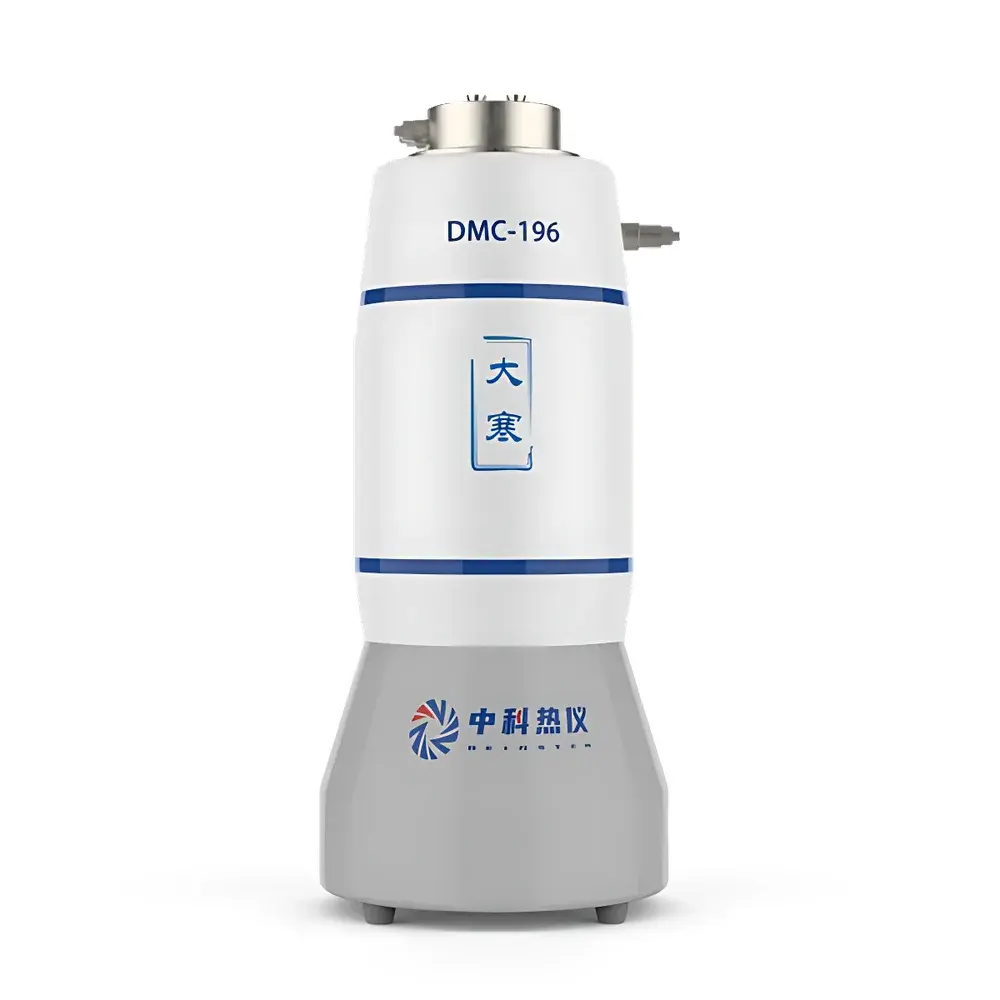
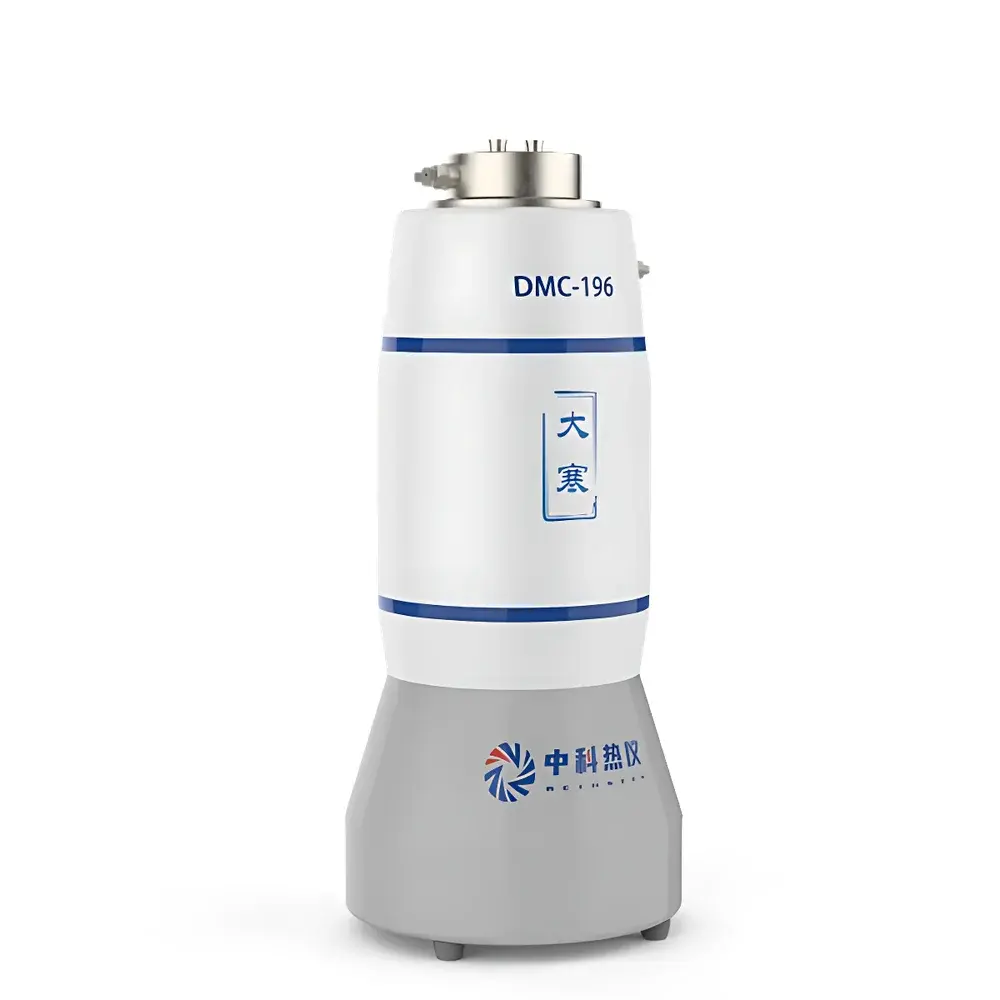
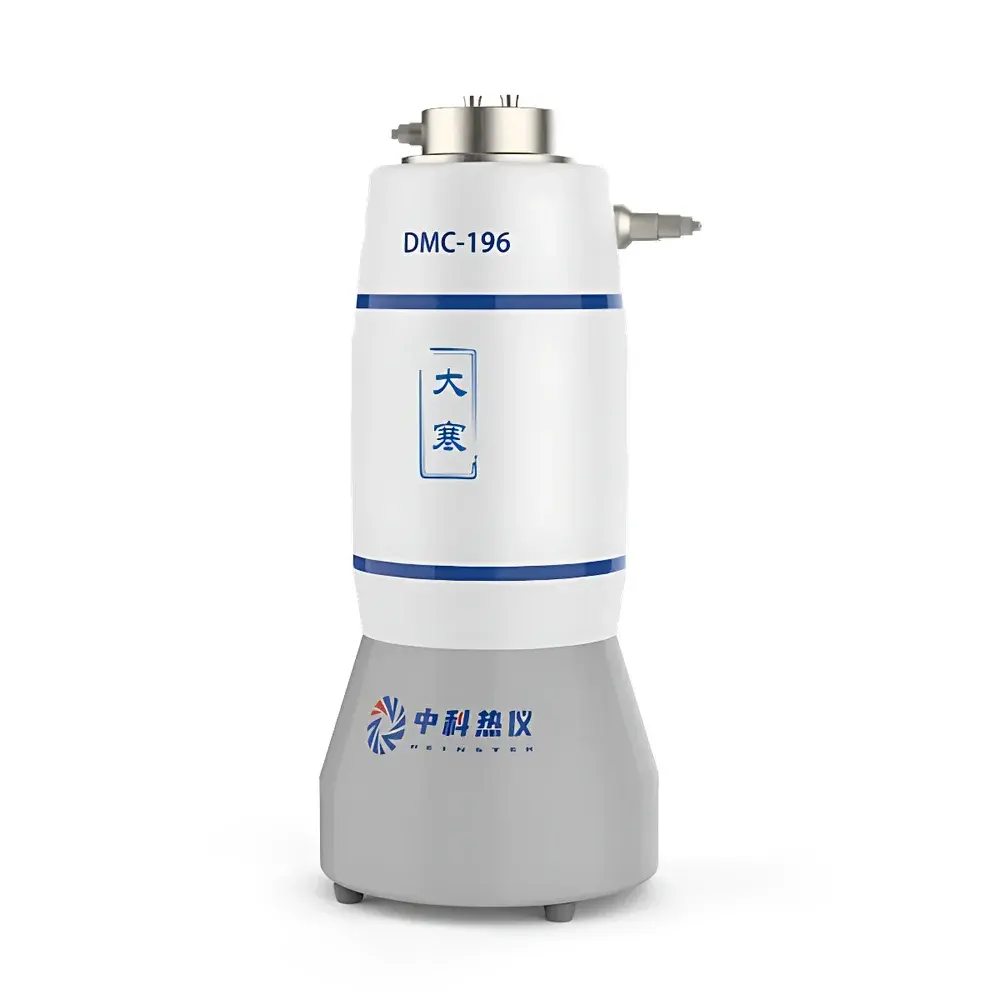
Reinstek DMC-196 Low-Temperature Microcalorimeter
| Brand | Reinstek |
|---|---|
| Origin | Anhui, China |
| Manufacturer Type | Original Equipment Manufacturer (OEM) |
| Model | DMC-196 |
| Measurement Mode | Isothermal Microcalorimetry |
| Instrument Type | Calvet-type Heat Flow Calorimeter |
| Key Features | Ultra-low temperature capability, high-sensitivity 3D thermopile sensor, dual-mode (DSC & IMC), high-pressure compatibility up to 350 bar |
| Temperature Range | −196 °C to 200 °C |
| Temperature Accuracy | ±0.1 °C |
| Temperature Stability | ±0.1 °C |
| Temperature Resolution | 0.1 µW (heat flow) |
| Temperature Scan Rate | 0.001–1 °C/min |
| Single-sample Test Duration | ~15 min |
| Calorimetric Cell Max Pressure Rating | 350 bar |
| Heat Capacity (typical) | ~10,500 J/K |
| Pressure Resolution | 0.1 µW (equivalent heat flow resolution under pressure coupling) |
| Outer Dewar Volume | Up to 12.5 mL |
| Inner Sample Cell Volume | Up to 12.5 mL |
| Peak-to-Peak Noise Level | 1 µW |
| Calorimetric Accuracy | ±0.1% |
| Calorimetric Precision | ±0.2% |
Overview
The Reinstek DMC-196 Low-Temperature Microcalorimeter is a high-precision, dual-mode calorimetric platform engineered for quantitative thermal analysis across an unprecedented temperature range—from liquid nitrogen temperatures (−196 °C) to 200 °C. It operates on the Calvet principle: a three-dimensional thermopile sensor array surrounds the sample chamber, enabling near-complete capture of heat flow regardless of transfer mechanism (conduction, convection, or radiation). This geometry delivers superior signal-to-noise ratio and intrinsic integration of total enthalpy change—distinct from differential scanning (DSC) approaches that rely on comparative reference–sample temperature differentials. The system integrates a resistive heating furnace, a liquid nitrogen–cooled cryogenic stage, vacuum-jacketed calorimetric modules, and modular sample cells. Its architecture is optimized for long-term stability, reproducibility, and minimal environmental drift—critical for extended isothermal microcalorimetry (IMC) experiments or high-resolution temperature-scanned calorimetry (DSC mode).
Key Features
- Calvet-type 3D thermopile sensor with 0.1 µW heat flow resolution and 1 µW peak-to-peak noise floor, enabling detection of sub-microwatt thermal events over hours or days.
- Dual operational modes: isothermal microcalorimetry (IMC) for kinetic and thermodynamic profiling of slow processes (e.g., catalytic turnover, protein folding, corrosion), and temperature-scanned DSC mode for phase transition analysis, glass transitions, and decomposition enthalpies.
- Vacuum-insulated calorimetric module minimizes condensation-induced thermal artifacts at cryogenic conditions and enhances thermal isolation during ultra-low-temperature operation.
- High-pressure compatibility: integrated pressure-rated sample cell supports static and dynamic experiments up to 350 bar, with real-time in situ pressure monitoring synchronized to heat flow data acquisition.
- Modular tube-style sample cell (up to 12.5 mL volume) enables in situ mixing (solid–liquid, liquid–liquid), gas adsorption (gas–solid, gas–liquid), dissolution, wetting, and heterogeneous reaction studies—all without sample transfer.
- Automated environmental control: integrated software-driven vacuum purge, inert gas filling (N₂, Ar), and precise atmosphere regulation for oxygen-sensitive or moisture-sensitive samples.
Sample Compatibility & Compliance
The DMC-196 accommodates diverse sample forms—including powders, gels, solutions, thin films, and porous monoliths—within its standardized or custom-fabricated sample cells. Its wide thermal range and pressure tolerance support applications aligned with ASTM E1269 (heat capacity by DSC), ISO 11357 (plastics thermal analysis), and USP <1031> (calorimetric characterization of pharmaceuticals). For regulated environments, the system’s data acquisition firmware supports audit-trail logging, user-access controls, and electronic signature compliance per FDA 21 CFR Part 11 when deployed with validated software configurations. All hardware components conform to IEC 61010-1 safety standards for laboratory equipment, and pressure vessels meet ASME BPVC Section VIII Division 1 requirements for design certification.
Software & Data Management
Control and analysis are executed via Reinstek’s proprietary CalorSoft™ v4.x platform—a Windows-based application supporting full instrument orchestration, method scripting, real-time visualization, and post-acquisition deconvolution. The software provides automated baseline correction, peak integration with uncertainty propagation, Cp/T curve derivation, and kinetic modeling (e.g., Arrhenius, isoconversional methods). Raw data are stored in vendor-neutral HDF5 format with embedded metadata (timestamp, calibration constants, pressure/temperature logs, operator ID), ensuring FAIR (Findable, Accessible, Interoperable, Reusable) data principles. Export options include CSV, ASCII, and direct MATLAB/Python API integration for advanced statistical modeling or machine learning workflows.
Applications
- Materials Science: Quantification of latent heat in shape-memory alloys, enthalpy of hydrogen absorption/desorption in metal hydrides, and low-temperature phase behavior in superconductors and quantum materials.
- Catalysis & Reaction Engineering: In situ measurement of adsorption/desorption heats under controlled pressure and temperature, catalyst deactivation kinetics, and exothermicity of Fischer–Tropsch or ammonia synthesis reactions.
- Pharmaceutical Development: Polymorph screening below 0 °C, cold-chain stability assessment, and crystallization thermodynamics of biologics formulations.
- Energetic Materials: Safety-relevant thermal runaway onset detection, decomposition enthalpy of propellants and explosives at cryogenic storage conditions, and pressure–temperature–heat release correlation under confinement.
- Geochemistry & Environmental Science: Hydration/dehydration thermodynamics of clays and zeolites, CO₂ mineralization enthalpies, and low-temperature microbial metabolic heat output in soil microcosms.
FAQ
What distinguishes Calvet-type calorimetry from conventional DSC?
Calvet geometry measures absolute heat flow via 3D thermopile integration, offering higher sensitivity, better accuracy for low-enthalpy events, and immunity to baseline drift caused by asymmetric sample–reference thermal resistance—unlike symmetric DSC designs.
Can the DMC-196 be interfaced with commercial gas sorption analyzers?
Yes—its analog/digital I/O ports and LabVIEW-compatible drivers enable synchronized acquisition with commercial volumetric or gravimetric sorption instruments, permitting concurrent measurement of adsorption isotherms and differential adsorption enthalpy (ΔHads).
Is the 350 bar pressure rating applicable during cryogenic operation?
The pressure vessel is rated for full 350 bar across the entire operating temperature range (−196 °C to 200 °C); however, material-specific pressure–temperature derating curves are supplied for each cell configuration to ensure mechanical integrity under combined thermal and stress loading.
How is temperature accuracy maintained at −196 °C?
Calibration employs NIST-traceable Pt100 sensors and fixed-point references (e.g., argon triple point at −189.34 °C), with active feedback compensation for thermal lag and sensor self-heating effects inherent to low-temperature operation.
Does the system support GLP/GMP-compliant validation protocols?
Yes—Reinstek provides IQ/OQ documentation templates, calibration certificates traceable to national metrology institutes, and optional third-party validation support for laboratories operating under ISO/IEC 17025, GMP, or FDA-regulated quality systems.



