
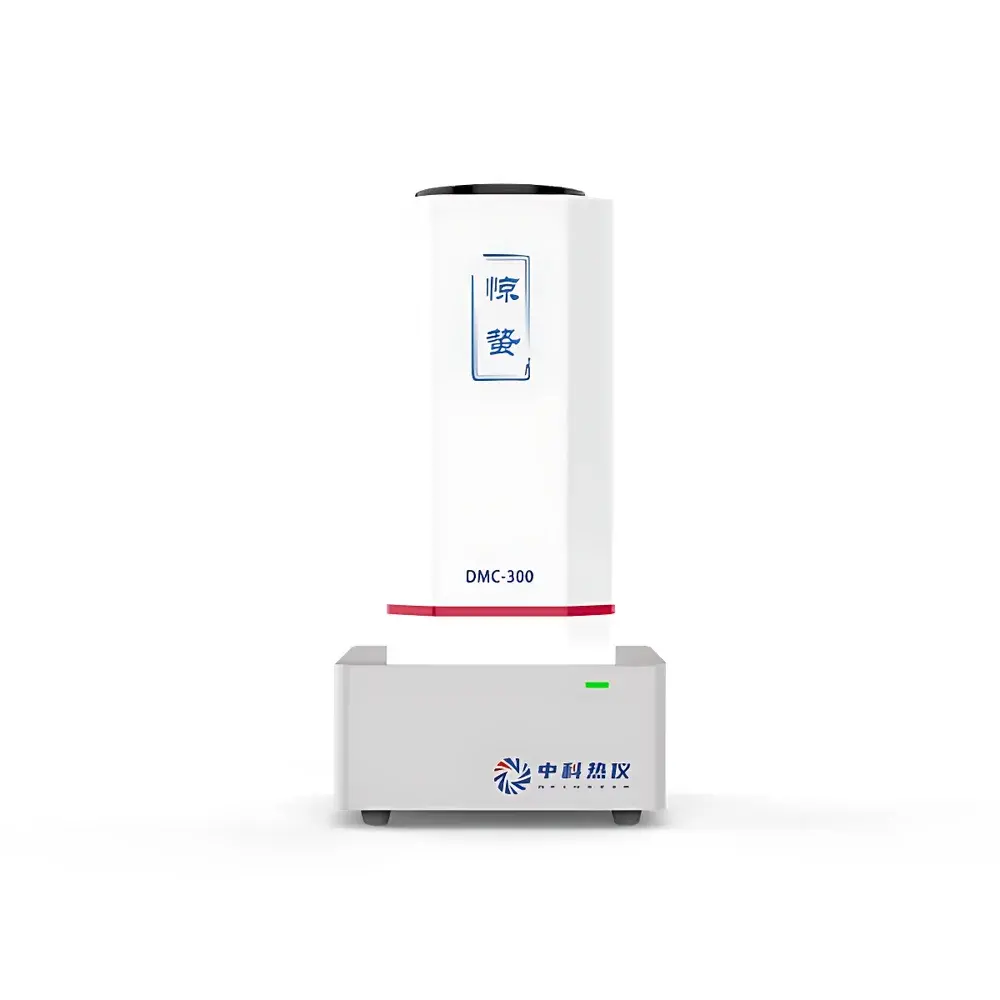
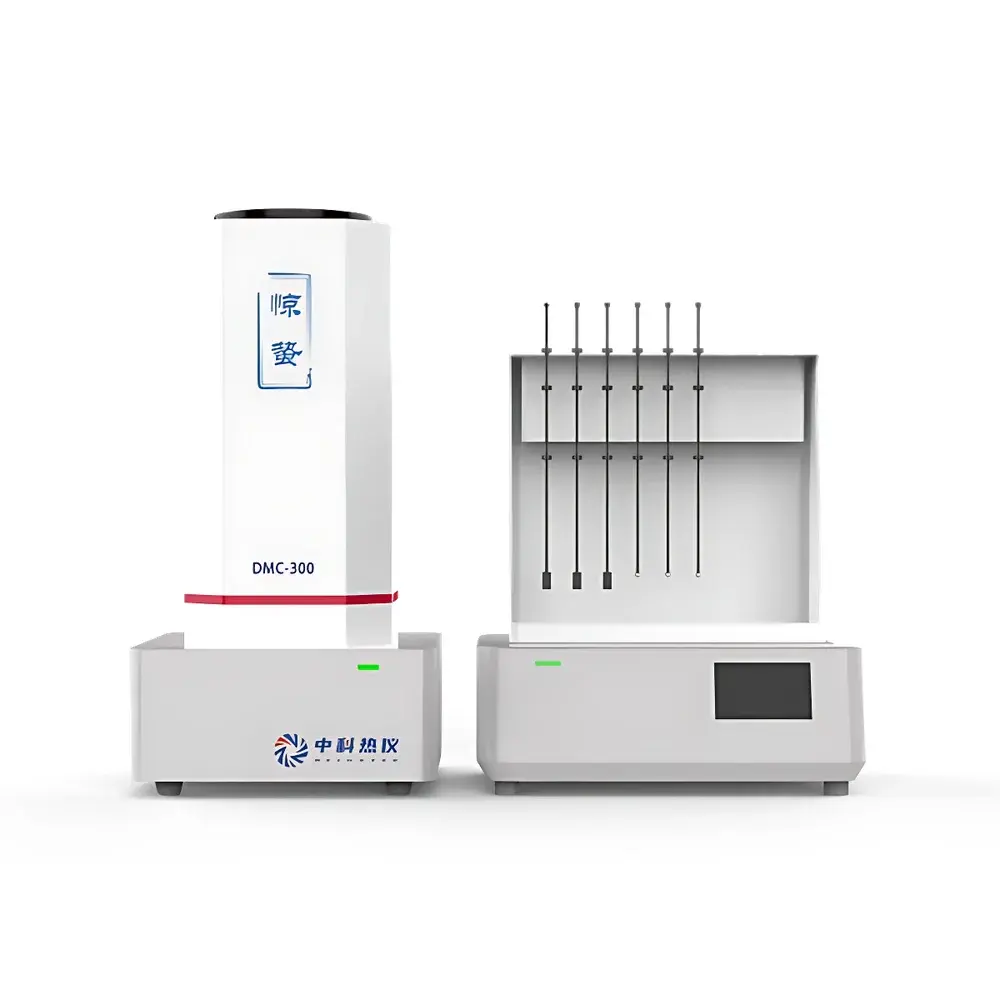
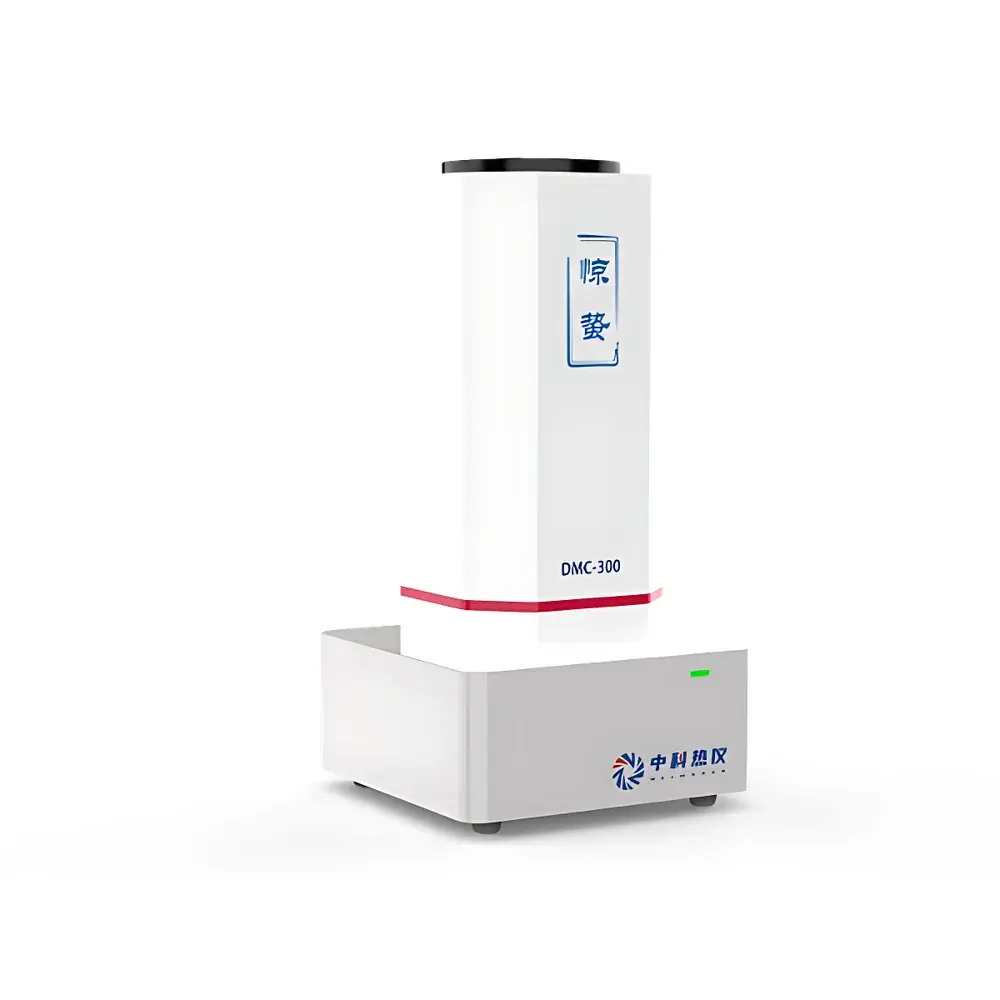
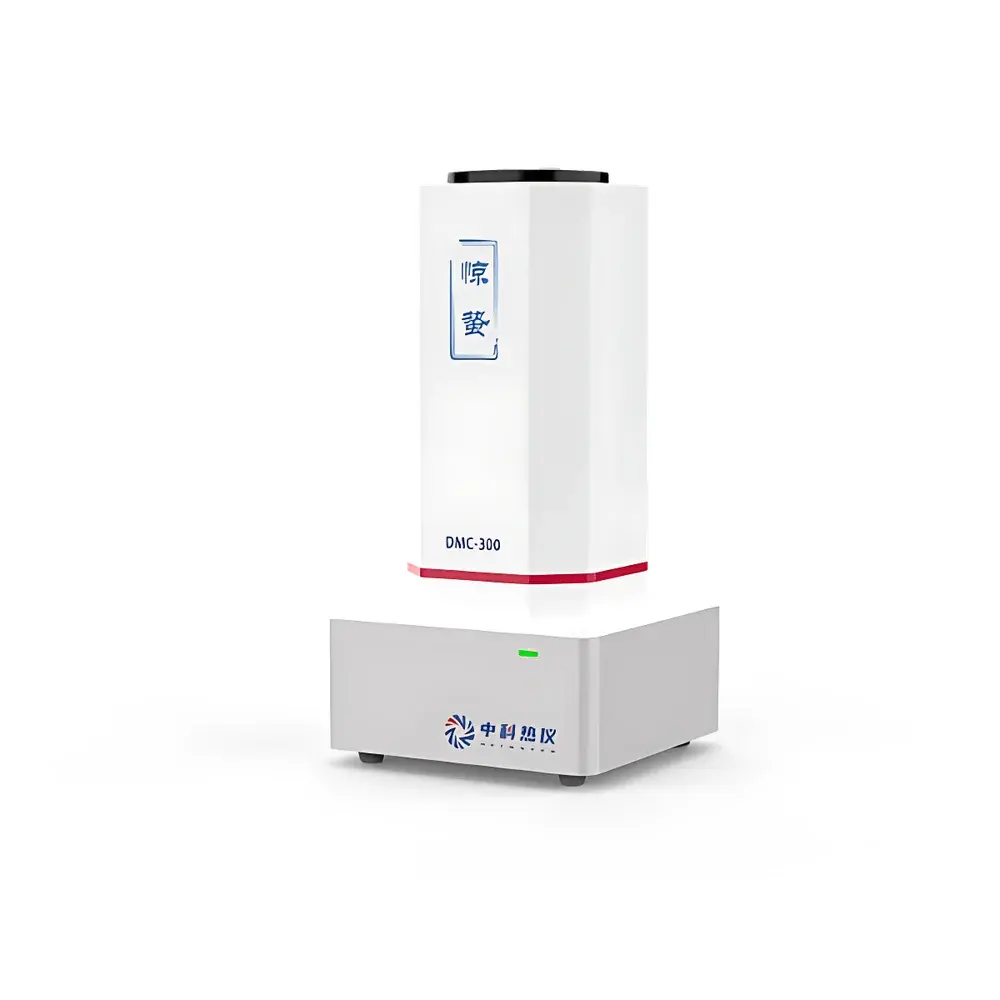
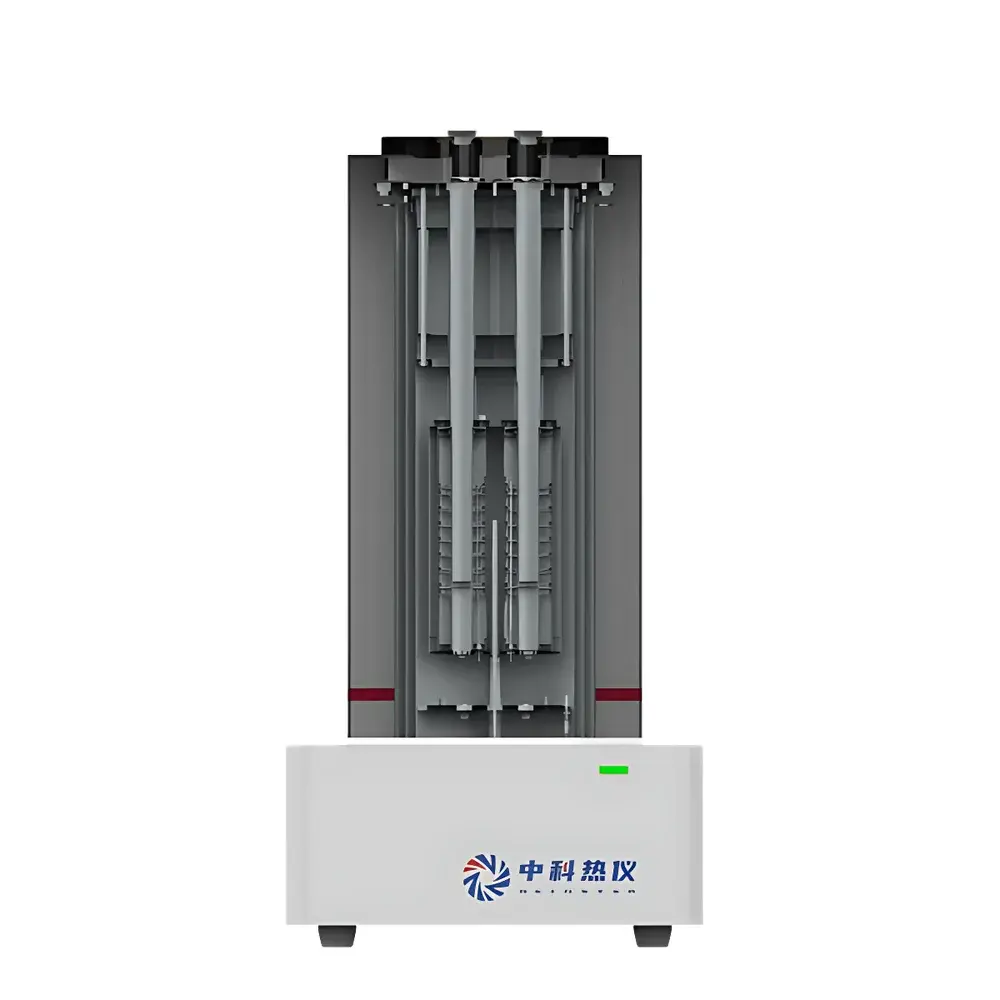
Reinstek DMC-300 Dual-Mode Microcalorimeter
| Brand | Reinstek |
|---|---|
| Origin | Anhui, China |
| Manufacturer Type | Direct Manufacturer |
| Instrument Type | Calvet-type Microcalorimeter |
| Measurement Modes | Isothermal Microcalorimetry (IMC) & Differential Scanning Calorimetry (DSC) |
| Sample Capacity | Up to 12.5 mL |
| Temperature Range | Ambient to 300 °C |
| Temperature Accuracy & Precision | ±0.1 °C |
| Temperature Scan Rate | 0.001–2 °C/min |
| Heat Flow Resolution | 0.1 μW |
| Baseline Noise (Peak-to-Peak) | ≤1 μW |
| Calorimetric Accuracy | ±0.2% |
| Calorimetric Precision | ±0.2% |
| Maximum Pressure Rating (High-Pressure Cell) | 100 MPa (1,000 bar) |
| Pressure Resolution | 350 bar (for integrated pressure tracking cells) |
| External Bath Volume | Up to 12.5 mL |
| Internal Bath Volume | 12.5 mL |
| Dimensions | 29 cm × 29 cm × 63 cm |
| Weight | 25 kg |
| Power Supply | 110–240 V, 50/60 Hz |
Overview
The Reinstek DMC-300 Dual-Mode Microcalorimeter is a high-sensitivity, Calvet-type heat-flow microcalorimeter engineered for quantitative thermodynamic and kinetic characterization of physical, chemical, and biological processes. It operates on the fundamental principle of three-dimensional thermopile sensing—where a spatially distributed array of thermocouples fully encloses the sample chamber, enabling near-complete capture of heat flux regardless of transfer mechanism (conduction, convection, or radiation). This architecture ensures exceptional signal-to-noise ratio and long-term baseline stability, making it suitable for both low-energy transient events (e.g., adsorption enthalpies, catalytic turnover, dissolution kinetics) and extended isothermal monitoring (e.g., cement hydration, polymer aging, microbial metabolism).
Unlike conventional DSC systems that rely on symmetric reference/sample pan configurations, the DMC-300 employs a true zero-reference, absolute heat-flow measurement approach. Its dual operational modes—Isothermal Microcalorimetry (IMC) and Differential Scanning Calorimetry (DSC)—are implemented within a single, unified thermal architecture. This eliminates mode-switching mechanical recalibration and preserves thermal inertia consistency across experiments. The instrument supports seamless transitions between temperature-ramp and constant-temperature protocols, including multi-step programs combining ramp-hold-ramp sequences—enabling comprehensive process mapping under thermodynamically controlled conditions.
Key Features
- Three-axis thermopile sensor with 0.1 μW heat flow resolution and peak-to-peak noise ≤1 μW—optimized for sub-microwatt-level exo/endothermic event detection.
- Dual-mode operation: IMC (isothermal) and DSC (scanning) modes share identical sensor geometry and calibration traceability—no hardware reconfiguration required.
- Modular, chemically resistant sample cells: standard stainless steel/C-276 alloy cells (12.5 mL), high-pressure variants (up to 100 MPa), and specialized configurations including mixing, fluid-circulation, and pressure-tracking cells.
- Integrated pressure monitoring capability: optional pressure-transducer-equipped cell caps enable simultaneous acquisition of temperature, heat flow, and pressure time-series data—critical for decomposition safety analysis and gas-solid reaction studies.
- Joule calibration kit included: enables in-lab electrical power calibration to verify and maintain calorimetric accuracy over instrument lifetime per ISO 11357-1 and ASTM E1269 guidelines.
- Active furnace with independent heating/cooling control ensures ±0.1 °C temperature accuracy and stability across ambient to 300 °C range, with programmable scan rates from 0.001 to 2 °C/min.
Sample Compatibility & Compliance
The DMC-300 accommodates heterogeneous sample formats—including solids, powders, gels, suspensions, and multiphase mixtures—in both static and dynamic configurations. Standard cells support batch-mode reactions; mixing cells enable automated semi-batch addition; fluid-circulation cells integrate with mass flow controllers (MFCs) or peristaltic pumps for continuous gas/liquid delivery—ideal for catalysis, adsorption isotherm determination, and oxidative stability testing. High-pressure cells utilize metal-sealed threaded closures compliant with ASME B16.5 Class 1500 standards and are qualified for use under GLP and GMP environments when paired with audit-trail-enabled software.
The system meets key regulatory and methodological benchmarks: calorimetric accuracy aligns with ISO 11357-4 (DSC) and ISO 19452 (isothermal microcalorimetry); pressure transducers comply with IEC 61508 functional safety requirements for hazardous process monitoring; data integrity conforms to FDA 21 CFR Part 11 when operated with validated software modules supporting electronic signatures and change-controlled audit trails.
Software & Data Management
Control and analysis are performed via Reinstek’s proprietary CalorSoft™ v5.x platform—a Windows-based application supporting real-time visualization, multi-parameter synchronization (T, q, P), and advanced curve-fitting algorithms (e.g., Avrami, nth-order, autocatalytic models). Raw data are stored in HDF5 format with embedded metadata (user ID, timestamp, cell ID, calibration history), ensuring FAIR (Findable, Accessible, Interoperable, Reusable) compliance. Export options include CSV, ASCII, and XML for integration with LIMS, MATLAB, or Python-based analysis pipelines. Optional 21 CFR Part 11 module provides role-based access control, electronic signature workflows, and immutable audit logs—validated for regulated pharmaceutical and materials safety laboratories.
Applications
- Energetic Materials Safety: Quantification of decomposition onset temperature, activation energy, and adiabatic time-to-explosion (TMRad) under controlled pressure conditions.
- Cement & Construction Chemistry: In-situ monitoring of hydration enthalpy profiles to assess early-age reactivity, admixture efficacy, and alkali-silica reaction kinetics.
- Heterogeneous Catalysis: Adsorption/desorption enthalpies, reaction enthalpies under flowing gas streams, and catalyst deactivation thermodynamics.
- Pharmaceutical Development: Polymorph stability assessment, excipient compatibility screening, and protein-ligand binding thermodynamics (via titration microcalorimetry add-on).
- Energy Materials: Methane clathrate formation/dissociation enthalpies, battery electrode side-reaction quantification, and thermal runaway propagation modeling.
- Food Science: Enzyme activity profiling, lipid oxidation induction periods, and starch gelatinization thermodynamics.
FAQ
What distinguishes Calvet-type microcalorimetry from conventional DSC?
Calvet geometry measures absolute heat flow via 3D thermopile enclosure, offering higher sensitivity, wider dynamic range, and superior baseline stability than heat-flux DSC—particularly advantageous for low-power, long-duration isothermal measurements.
Can the DMC-300 perform titration microcalorimetry (ITC)?
While not a dedicated ITC platform, the mixing-cell configuration supports automated sequential injection experiments; full ITC functionality requires optional syringe pump integration and dedicated data analysis modules.
Is pressure calibration traceable to national standards?
Yes—high-pressure cells are supplied with NIST-traceable pressure transducer calibration certificates; field recalibration is supported using certified dead-weight testers.
How is thermal drift compensated during extended isothermal runs?
The system employs active thermal nulling via feedback-controlled furnace elements and real-time baseline correction algorithms based on pre- and post-experiment thermal equilibration segments.
Does the instrument support remote operation and data export for centralized lab networks?
Yes—CalorSoft™ includes TCP/IP-based remote control API, OPC UA server interface, and scheduled automatic data archiving to network drives or cloud storage endpoints.



