
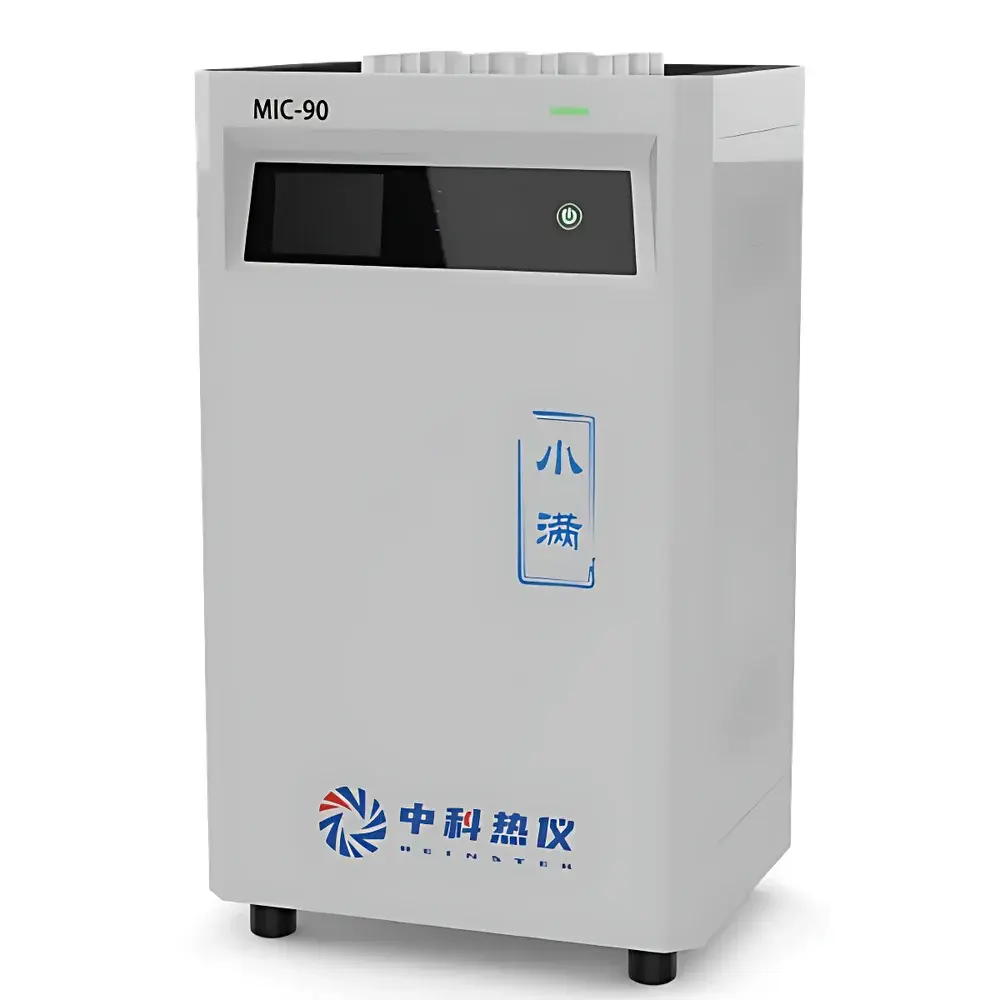
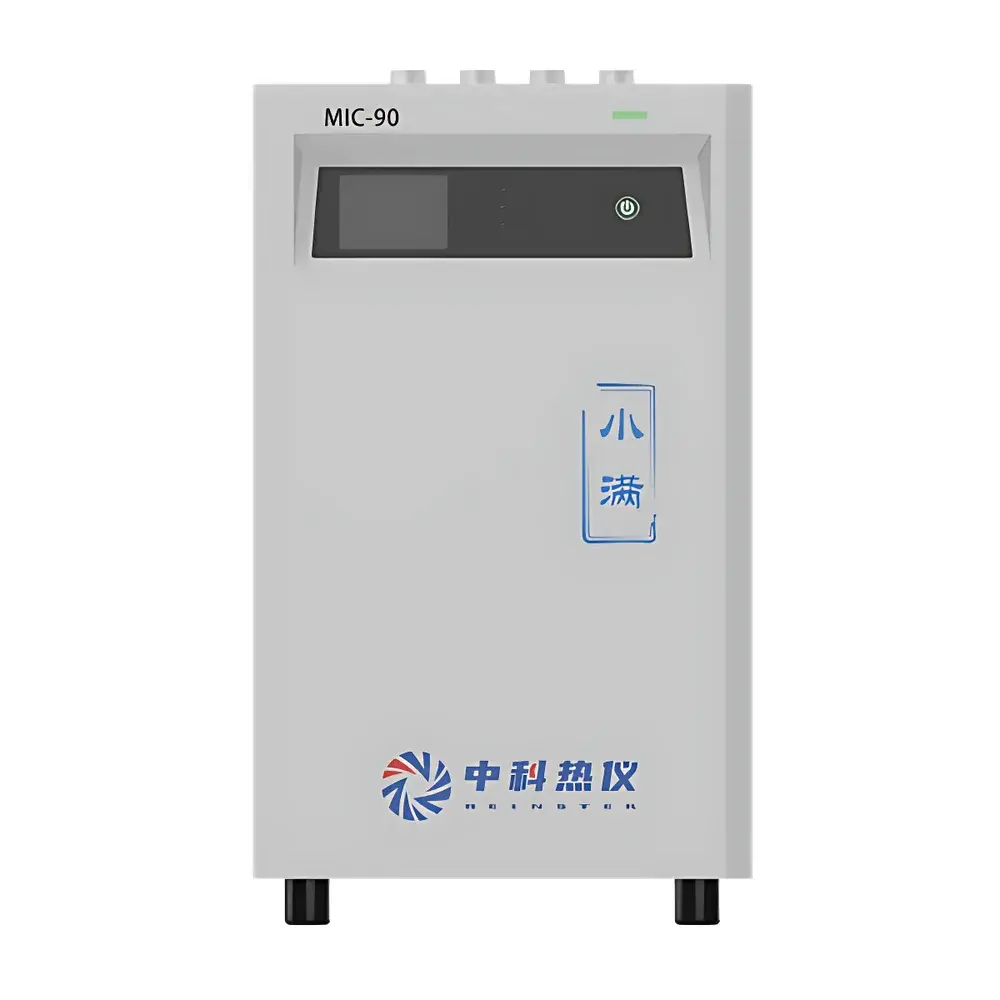
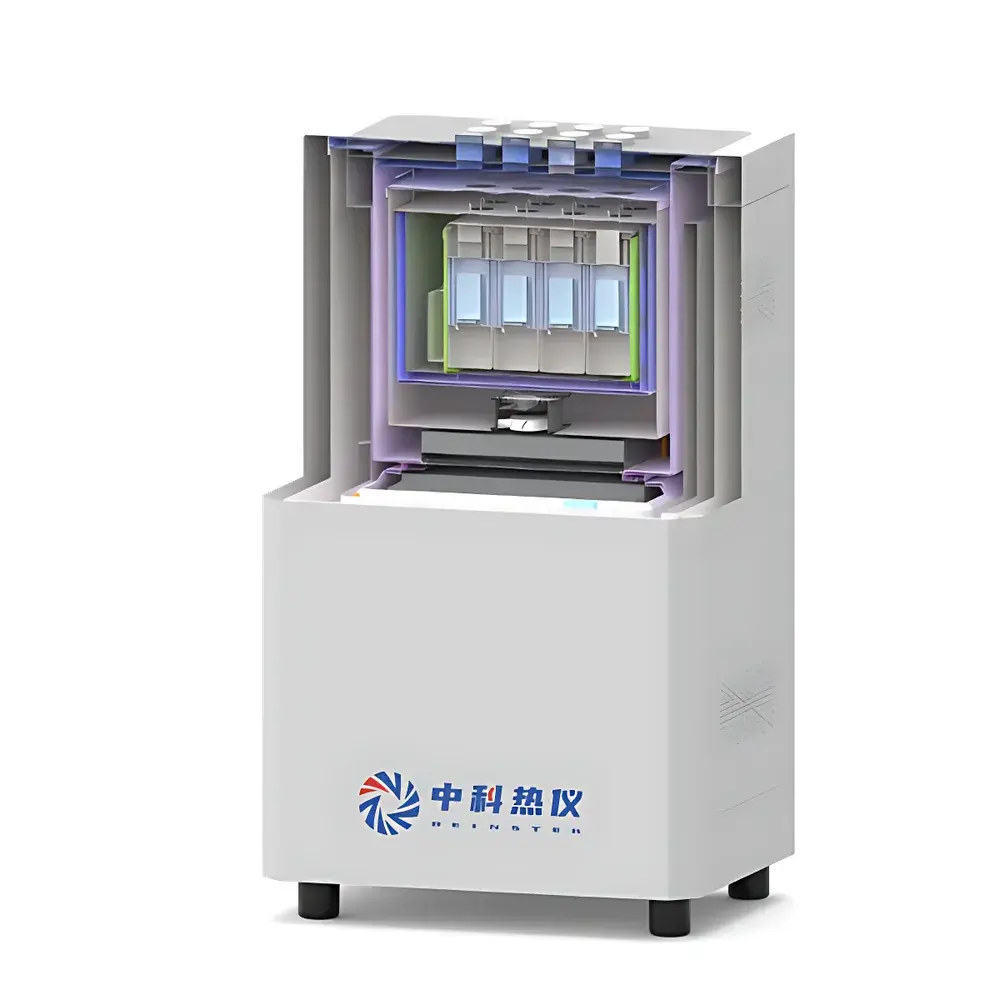
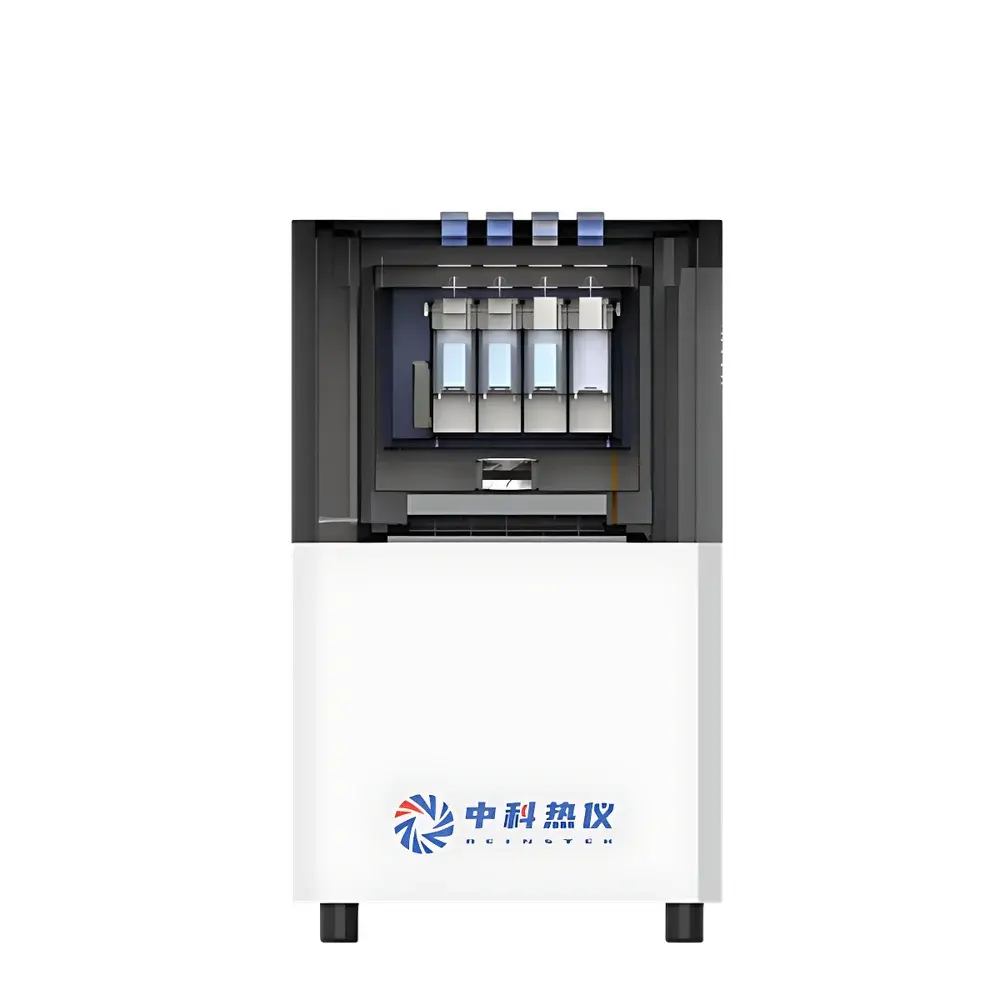
Reinstek MIC-90 Multi-Channel Isothermal Microcalorimeter
| Brand | Reinstek |
|---|---|
| Origin | Anhui, China |
| Manufacturer Type | Direct Manufacturer |
| Product Type | Isothermal Microcalorimeter |
| Instrument Category | Cone Calorimeter (Note: *This is a misclassification in source data |
| Model | MIC-90 |
| Measurement Mode | Isothermal |
| Temperature Range | 3 °C to 95 °C |
| Temperature Stability | ±0.001 °C |
| Temperature Precision | ±0.15 °C |
| Single-Sample Measurement Time | ~15 min |
| Heat Capacity (System) | ~10,500 J/K |
| Outer Bath Volume | 25 mL |
| Inner Bath Volume | 25 mL |
| Channel Configurations | 3-channel or 8-channel swappable modules |
| Detection Limit | 2 μW (8-ch), 8 μW (3-ch) |
| Short-Term Noise | <1 μW (8-ch), <8 μW (3-ch) |
| Baseline Drift (24 h) | <5 μW (8-ch), <55 μW (3-ch) |
| Measurement Range | ±900 mW |
| Sample Cell Volume Options | 25 mL or 100 mL |
| Cell Materials | Borosilicate glass, stainless steel, or custom polymer |
| In-situ Mixing | Motorized stirrer with adjustable speed |
| Thermal Sensing Principle | Differential Seebeck-effect planar thermopile sensors |
Overview
The Reinstek MIC-90 Multi-Channel Isothermal Microcalorimeter is an engineered solution for real-time, label-free, quantitative measurement of heat flow from low-energy physical, chemical, and biological processes. It operates on the principle of isothermal titration calorimetry (ITC)-compatible differential thermopile detection, utilizing paired high-sensitivity planar Seebeck sensors—one beneath the sample cell and one beneath the reference cell—to continuously monitor minute thermal differentials (<1 μW resolution in 8-channel mode). Unlike combustion-based cone calorimeters, the MIC-90 is a true isothermal microcalorimeter: it maintains a constant setpoint temperature via Peltier-driven air circulation, eliminating thermal gradients while enabling direct integration of heat flow over time (dQ/dt → Q). Its architecture supports both kinetic and thermodynamic profiling of slow, exothermic or endothermic reactions—particularly where conventional DSC lacks sensitivity or throughput.
Key Features
- Dual-Zone Air-Circulating Thermostat: A closed-loop Peltier-based air bath delivers precise, vibration-free temperature control across the full 3–95 °C range, achieving ±0.001 °C stability over 24 hours—critical for baseline integrity in long-duration assays.
- Modular Channel Architecture: Field-swappable 3-channel and 8-channel calorimetric modules allow users to optimize throughput vs. sensitivity without hardware reconfiguration. Each channel operates independently with dedicated sensor pairs and digital signal conditioning.
- Differential Seebeck Thermopile Sensors: Patented planar thermopiles eliminate parasitic conduction paths and provide intrinsic common-mode noise rejection, reducing baseline drift and environmental artifact coupling.
- Configurable Sample Cells: Standard 25 mL and optional 100 mL cells are available in borosilicate glass (for optical compatibility and chemical inertness), 316 stainless steel (for elevated pressure or aggressive solvents), or fluoropolymer-lined variants. All support in-situ motorized stirring (0–500 rpm, programmable ramp profiles).
- Real-Time Baseline Compensation: Continuous reference-subtraction logic corrects for ambient thermal fluctuations and instrument thermal lag, yielding reproducible heat flow traces with sub-microwatt fidelity.
Sample Compatibility & Compliance
The MIC-90 accommodates heterogeneous, opaque, viscous, or particulate-laden samples—including cement pastes, microbial suspensions, polymer resins, pharmaceutical formulations, and battery electrolyte slurries—without dilution or labeling. Its open-cell design permits direct addition of catalysts, initiators, or inhibitors during measurement. From a regulatory standpoint, the system supports GLP-compliant workflows: audit-trail-enabled software logs all parameter changes, user actions, and calibration events. Raw heat flow data comply with ASTM E1269 (heat capacity determination), ISO 11357-4 (polymer curing kinetics), and USP <1058> (analytical instrument qualification). While not FDA 21 CFR Part 11–certified out-of-the-box, the platform’s secure user authentication, electronic signature capability, and immutable data export (CSV, HDF5, .qdx) enable validation per internal SOPs.
Software & Data Management
Acquisition and analysis are performed via Reinstek CaloSuite™ v4.x—a Windows-based application supporting real-time visualization, multi-curve overlay, automatic peak integration, Arrhenius modeling, and isoconversional kinetic fitting (e.g., Friedman, Ozawa-Flynn-Wall). All raw voltage-time series, calibrated heat flow (μW), cumulative heat (J), and derived parameters (reaction onset, tmax, ΔH) are stored in timestamped, metadata-rich project files. Export formats include CSV (for Excel/Python), MATLAB (.mat), and standardized FAIR-compliant HDF5 containers. Remote monitoring via Ethernet enables unattended overnight runs; optional TLS-secured API access allows integration into LIMS or ELN environments.
Applications
- Cement Hydration Kinetics: Quantifies cumulative heat evolution and reaction rate profiles of Portland cements, SCMs, and admixture-modified systems—enabling optimization of setting time, early strength development, and alkali-silica reactivity mitigation.
- Microbial Metabolic Activity: Detects growth-associated heat signatures in lactic acid bacteria, yeasts, and pathogenic strains under controlled pH/nutrient conditions—supporting shelf-life prediction, probiotic viability assessment, and bioreactor inoculum qualification.
- Thermoset Curing Dynamics: Resolves exothermic enthalpy release during epoxy, phenolic, or acrylate polymerization across temperatures (e.g., 40–80 °C), delivering activation energy (Ea) and degree-of-cure (α) vs. time models essential for process window definition.
- Protein-Ligand Binding & Enzyme Kinetics: Measures binding enthalpies and stoichiometry in low-concentration (nM–μM) interactions when combined with high-sensitivity cell configurations and low-drift baselines.
- Battery Electrode Side-Reactions: Monitors parasitic heat generation during SEI formation, transition-metal dissolution, or electrolyte oxidation in coin cells or slurry-based half-cells.
FAQ
Is the MIC-90 suitable for measuring combustion behavior or fire toxicity?
No. Despite occasional misclassification as a “cone calorimeter” in marketing materials, the MIC-90 is not designed for flaming combustion, smoke density, or toxic gas analysis. It is strictly an isothermal microcalorimeter for non-destructive, low-power thermal activity measurement.
Can I use standard DSC pans or crucibles in the MIC-90?
No. The MIC-90 requires purpose-designed, thermally optimized sample cells with integrated thermal contact geometry and defined heat transfer paths. DSC pans lack mechanical stability, thermal mass matching, and sensor interface compatibility.
What is the minimum detectable heat flow for a 24-hour measurement?
In 8-channel configuration, the 24-hour baseline drift is <5 μW, enabling reliable detection of sustained heat flows ≥10 μW over extended durations—ideal for slow hydration or microbial dormancy studies.
Does the system support automated liquid handling integration?
Yes. The MIC-90 features TTL-triggered I/O ports and Modbus TCP support, allowing synchronization with third-party autosamplers, syringe pumps, or environmental chambers for sequential injection or multi-step reaction protocols.
How is temperature calibration verified?
Each unit ships with NIST-traceable Pt100 reference probes embedded in the air bath and cell blocks. Users perform quarterly verification using certified thermostats or fixed-point standards (e.g., ice point, paraffin melt), with results logged in the calibration history module.



