
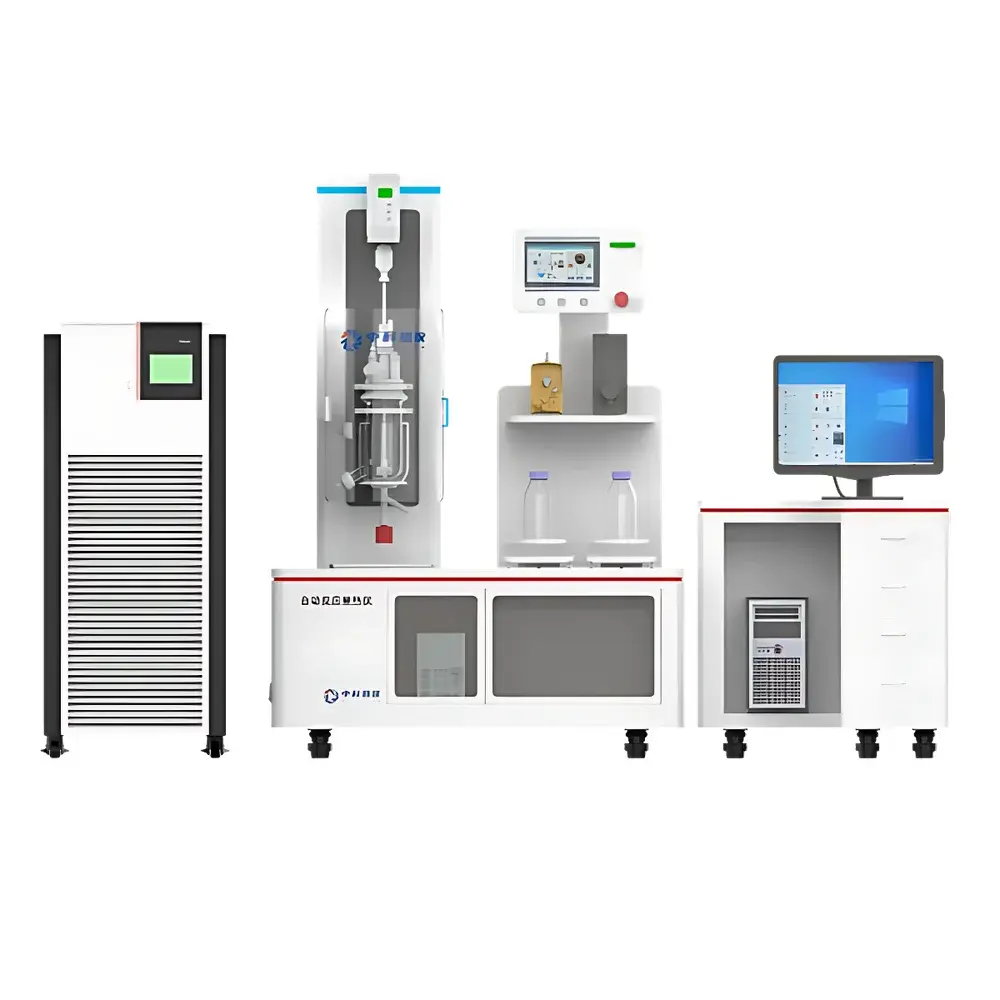
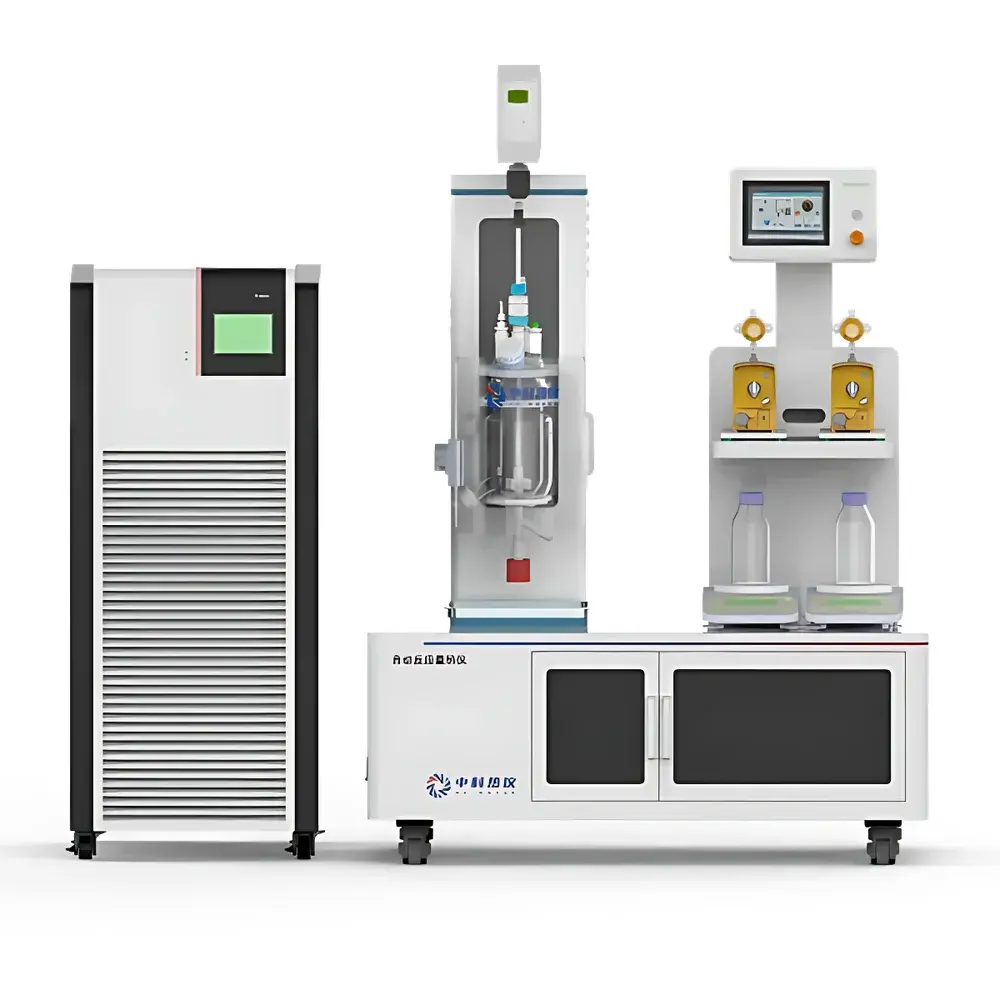
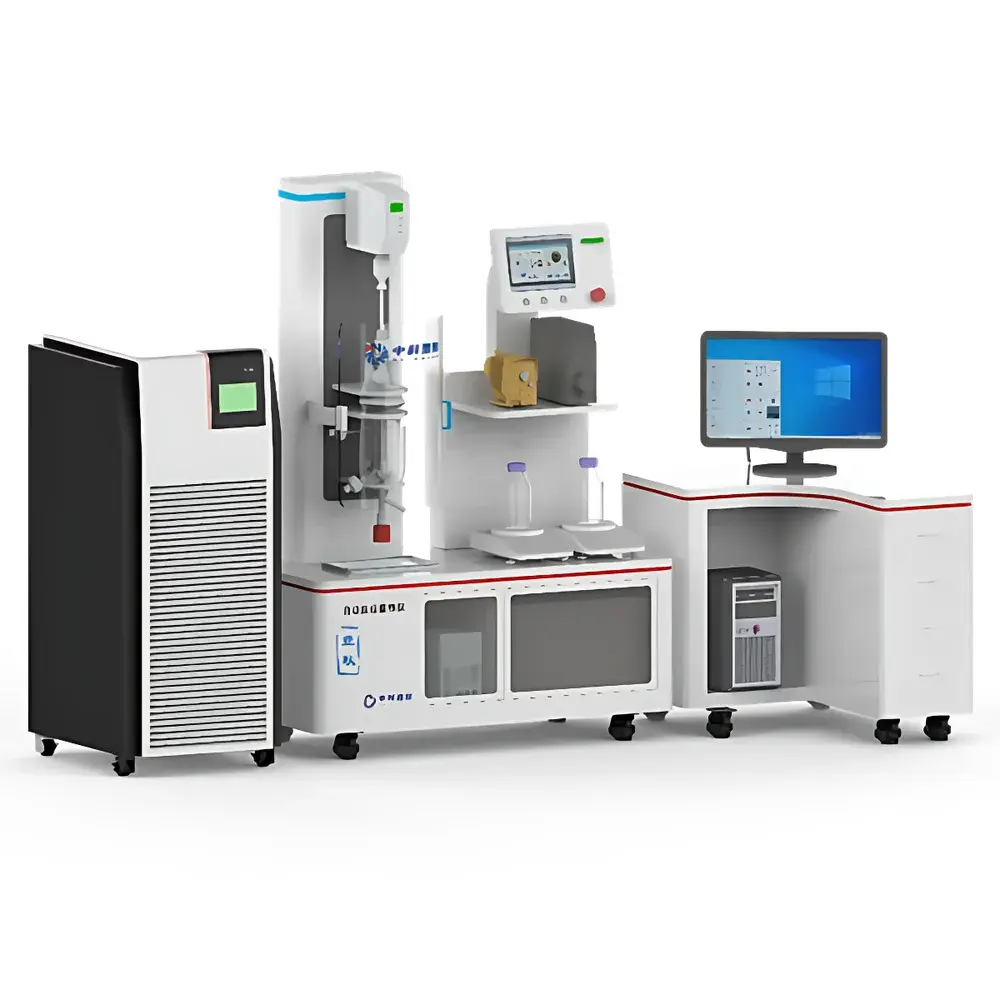
Reinstek RC-117 Automated Reaction Calorimeter
| Brand | Reinstek |
|---|---|
| Origin | Anhui, China |
| Manufacturer Type | Direct Manufacturer |
| Instrument Type | Reaction Calorimeter |
| Automation Level | Fully Automated |
| Temperature Range (Reactor) | –25 °C to 200 °C |
| Temperature Range (Oil Bath) | –45 °C to 250 °C |
| Temperature Resolution | 1.0 mK |
| Temperature Control Precision | ±0.1 K |
| Calorimetric Methods | Heat-Flow, Power Compensation (optional), Reflux (optional) |
| Reactor Volume | 1000 mL (customizable) |
| Maximum Operating Pressure | 10 MPa |
| Stirring Speed | up to 2000 rpm |
| Torque | up to 75 N·cm |
| Oil Circulation Rate | 35–76 L/min |
| Calibration Heater | 0–50 VDC / 3.00 A / 120 W |
| Power Supply | 3×400 V / 50 Hz (±10%) / 20 A |
| Total System Power | 7000 W |
| Oil Bath Dimensions | 600 × 700 × 1300 mm |
| Oil Bath Weight | 210 kg |
Overview
The Reinstek RC-117 Automated Reaction Calorimeter is a high-fidelity, bench-scale process calorimetry system engineered for dynamic thermal characterization of exothermic and endothermic chemical reactions under controlled conditions. Based on the principle of heat balance—measuring the instantaneous heat flow between the reaction mixture and a precisely regulated temperature-controlled jacket—the RC-117 delivers quantitative, time-resolved thermal data including total enthalpy change (ΔHrxn), specific heat release rate (dQ/dt), real-time conversion profiles, cumulative heat evolution, and apparent heat capacity. Its architecture integrates reactor thermodynamics, fluid dynamics, and closed-loop thermal control to replicate pilot- or production-scale process conditions in the laboratory. Designed for rigorous process safety evaluation, the instrument supports thermal hazard assessment per ASTM E698, ISO 8233, and CCPS Guidelines, enabling determination of adiabatic temperature rise (ΔTad), time-to-maximum-rate (TMRad), and criticality classification of runaway scenarios.
Key Features
- Multi-mode thermal control: Supports isothermal, isoperibolic, linear temperature ramp, and programmed scanning protocols—enabling kinetic profiling, stability screening, and decomposition onset detection.
- Triple calorimetric methodology: Standard heat-flow mode provides direct thermal flux measurement; optional power-compensation mode enhances sensitivity for low-energy transitions; reflux mode enables accurate quantification of vapor-phase enthalpies during boiling or solvent evaporation.
- High-dynamic-range thermal actuation: Dual-zone oil bath with independent heating (up to 250 °C) and refrigeration (down to –45 °C), coupled with 35–76 L/min circulation, achieves ±0.1 K reactor temperature stability across the full operating range.
- Modular reactor configuration: Interchangeable vessels (1000 mL standard; custom volumes available) in borosilicate glass, SS316L, or Hastelloy C-276 accommodate corrosive, high-pressure (up to 10 MPa), or oxygen-sensitive chemistries.
- Fully automated liquid/solid dosing: Four independently programmable liquid channels (electromagnetic diaphragm pump for ≤0.6 MPa; precision piston pump for ≤10 MPa) and one solid feed port enable sequential, timed, or event-triggered reagent addition with mass-based feedback (0.01 g resolution, 3100 g capacity).
- Integrated calibration subsystem: Onboard Joule heater (0–120 W, 0–50 VDC/3 A) with traceable electrical calibration allows in-situ verification of heat transfer coefficients (U-value) and specific heat capacity (Cp) without external reference materials.
Sample Compatibility & Compliance
The RC-117 accommodates heterogeneous reaction mixtures—including slurries, suspensions, emulsions, and gas-liquid systems—across diverse industrial domains: pharmaceutical API synthesis (including nitration, hydrogenation, and Grignard chemistry), fine chemical manufacturing, polymerization kinetics, cement hydration studies, PCM phase-change characterization, and energetic material safety testing. All wetted components comply with FDA-compliant surface finish standards (Ra ≤ 0.8 µm for stainless steel). The system supports GLP/GMP-aligned operation through audit-trail-enabled software (21 CFR Part 11 compliant), with electronic signatures, version-controlled method storage, and immutable raw data archiving. It meets mechanical safety requirements per PED 2014/68/EU (for pressure-rated variants) and electromagnetic compatibility per IEC 61326-1.
Software & Data Management
RC-117 is operated via Reinstek’s CaloSuite™ v4.2 software—a Windows-based platform delivering real-time visualization of temperature, heat flow, stirring torque, pressure, and dosing events. The software implements ISO 11357-7–aligned calculation algorithms for reaction enthalpy, conversion kinetics (e.g., nth-order, autocatalytic models), and thermal accumulation. Raw data are stored in HDF5 format with embedded metadata (instrument ID, operator, timestamp, calibration history). Export options include CSV, Excel, and PDF reports conforming to internal SOPs or external regulatory submissions (e.g., FDA IND/NDA, EMA CTD Module 3). Remote monitoring and alarm notification (email/SMS) are supported via OPC UA interface for integration into plant-wide DCS or MES environments.
Applications
- Process safety assessment: Determination of MTSR (Maximum Temperature of Synthesis Reaction), adiabatic onset temperature, and thermal accumulation factor (ϕh) for RC1–RC3 classification.
- Catalyst screening & optimization: Quantifying activation energy (Ea) and pre-exponential factor (A) via variable-temperature calorimetry.
- Reaction mechanism elucidation: Correlating heat flow profiles with in-situ spectroscopic data (e.g., FTIR, Raman) to identify intermediates.
- Scale-up support: Generating lumped kinetic parameters for AspenTech Batch, gPROMS, or DynoChem modeling.
- Material science: Hydration enthalpy of cements, latent heat of PCMs, specific heat capacity of battery electrolytes, and adsorption enthalpy of MOFs.
- Regulatory filing: Providing calorimetric evidence for ICH Q5C stability protocols and USP thermal analysis guidelines.
FAQ
What calibration standards are required for routine operation?
No certified reference materials are mandatory—the RC-117 uses electrical calibration via its integrated Joule heater, traceable to NIST-standard voltage and current references.
Can the system operate under inert atmosphere or vacuum?
Yes—reactor headspace can be purged with N2, Ar, or other gases; optional vacuum-rated configurations support pressures down to 1 mbar.
Is third-party software integration supported?
Yes—OPC UA, Modbus TCP, and ASCII serial protocols enable bidirectional communication with LabVIEW, MATLAB, DeltaV, and PI System.
How is heat loss correction handled?
The software applies a dynamic heat-loss model based on real-time U-value recalibration and jacket-to-reactor temperature gradients, eliminating reliance on static correction factors.
What maintenance intervals are recommended?
Oil bath fluid analysis every 12 months; stirrer seal inspection every 6 months; annual verification of temperature sensor linearity and dosing pump accuracy.



