
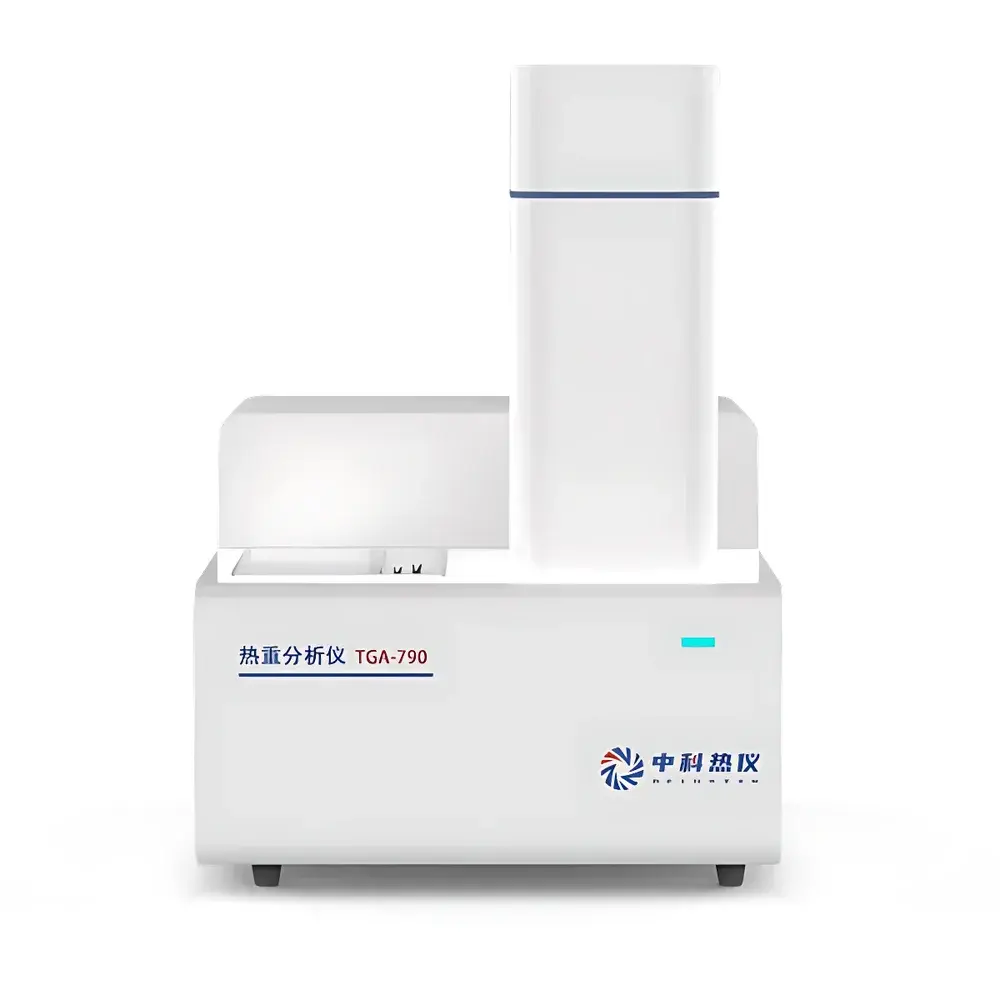
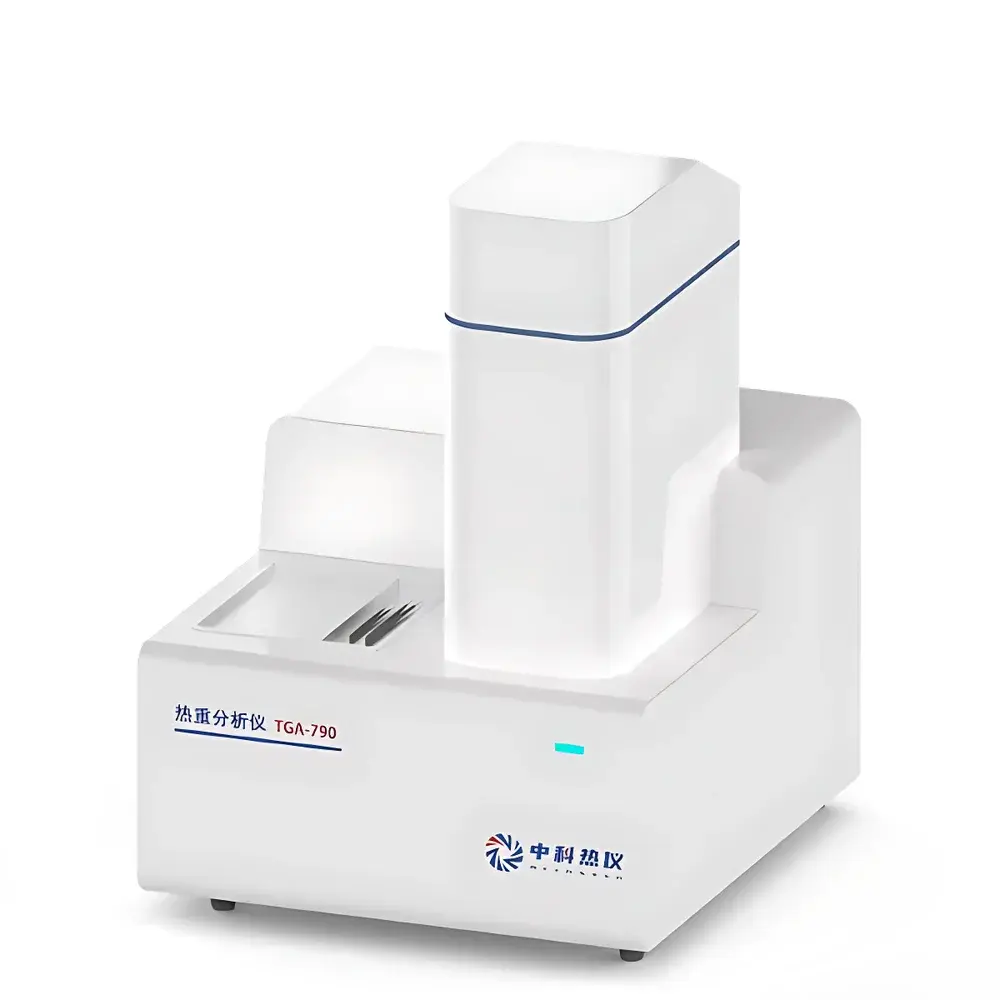
Reinstek TGA-790 Thermogravimetric Analyzer
| Brand | Reinstek |
|---|---|
| Origin | Anhui, China |
| Manufacturer Type | Direct Manufacturer |
| Origin Category | Domestic (China) |
| Model | TGA-790 |
| Pricing | Upon Request |
| Operating Environment | Ambient Pressure |
| Sample Capacity | Single Sample |
| Instrument Type | General-Purpose |
| Temperature Range | Room Temperature to 700 °C |
| Balance Sensitivity | ±0.01 µg |
| Temperature Calibration Method | Curie Point Reference |
| Heating/Cooling Rate | 0.01–50 °C/min |
| Mass Range | ±200 mg |
| Mass Resolution | ±0.02 µg |
| Atmosphere Control | Dual Independent Mass Flow Controllers (MFCs), Software-Programmable Gas Switching |
| Crucible Options | Alumina, Platinum |
| Furnace Cooling | Water-Cooled |
| Furnace Liner | Dust-Free Recirculating Cooling System |
| Power Supply | 220 V, 50/60 Hz |
Overview
The Reinstek TGA-790 Thermogravimetric Analyzer is a high-precision, general-purpose thermal analysis instrument engineered for rigorous quantitative measurement of mass change as a function of temperature or time under controlled atmospheric conditions. It operates on the fundamental principle of thermogravimetry—monitoring real-time mass variation during programmed thermal treatment—enabling precise characterization of thermal stability, decomposition behavior, compositional content, oxidative resistance, and gas adsorption/desorption kinetics. The system employs a classic suspended microbalance architecture, minimizing buoyancy-induced artifacts and ensuring exceptional signal fidelity across wide temperature excursions. Its water-cooled furnace delivers stable, linear temperature control from ambient up to 700 °C, with optional extension to 1300 °C upon request. Temperature accuracy is maintained via Curie point calibration using certified reference materials (e.g., nickel, iron, cobalt), traceable to international standards including ISO 11358 and ASTM E1131. Designed for laboratory environments requiring long-term reproducibility and low instrumental drift, the TGA-790 meets foundational requirements for GLP-compliant thermal analysis workflows.
Key Features
- Suspended high-sensitivity microbalance with ±0.01 µg sensitivity and ±0.02 µg resolution, optimized for minimal thermal drift and superior signal-to-noise ratio
- Water-cooled furnace enabling rapid cooling rates and stable isothermal hold performance at elevated temperatures
- Dual independent mass flow controllers (MFCs) supporting fully programmable gas switching between inert (N₂, Ar), oxidizing (air, O₂), and reactive (H₂, CO, NH₃) atmospheres
- Curie point-based temperature calibration protocol compliant with ISO 11358-1 and ASTM E1131 for traceable thermal accuracy
- Modular crucible support accommodating standard alumina and high-purity platinum crucibles; optional quartz and silicon carbide variants available for corrosive or high-temperature applications
- Integrated safety architecture including over-temperature cutoff, pressure relief valves, and interlocked furnace door access control
- Thermally isolated balance chamber with dust-free recirculating cooling to suppress convection-induced noise
Sample Compatibility & Compliance
The TGA-790 accommodates solid, powdered, and thin-film samples in standard crucibles (typically 5–100 mg loading). It supports routine analysis of polymers, ceramics, catalysts, pharmaceuticals, battery electrode materials, cementitious systems, and porous adsorbents—including hygroscopic or volatile specimens when coupled with purge gas conditioning. The instrument complies with key regulatory frameworks governing thermal analysis data integrity: its firmware supports audit trail logging, user access levels, and electronic signature capability aligned with FDA 21 CFR Part 11 requirements. All calibration records—including Curie point verification, mass calibration, and temperature linearity checks—are stored with timestamped metadata, facilitating GMP/GLP audit readiness. Optional accessories include humidity-controlled sample loading modules and corrosion-resistant gas lines for H₂O, SO₂, or HCl testing environments.
Software & Data Management
Control and analysis are performed via Reinstek’s proprietary TGA Analysis Suite v4.x—a Windows-based application supporting method development, real-time monitoring, automated baseline correction, derivative thermogravimetry (DTG), and multi-step kinetic modeling (e.g., Kissinger, Ozawa-Flynn-Wall, Friedman). Raw data export is supported in ASCII, CSV, and universal .tdms formats compatible with third-party platforms such as OriginLab, MATLAB, and Thermo Scientific™ OMNIC. The software enforces role-based permissions, encrypted database storage, and full version-controlled method archiving. All instrument events—including gas switches, temperature ramps, and alarm triggers—are logged with millisecond timestamps and linked to corresponding data files, satisfying traceability mandates under ISO/IEC 17025 and USP .
Applications
- Quantitative polymer composition analysis (e.g., filler content, plasticizer loss, copolymer ratio estimation)
- Decomposition kinetics and activation energy determination via model-free and model-fitting approaches
- Oxidative induction time (OIT) and thermal stability assessment of stabilizers in polyolefins
- Cement hydration profiling and bound water quantification in alkali-activated materials
- Adsorption/desorption isotherms and pore volume estimation in MOFs, zeolites, and activated carbons
- Thermal safety evaluation of energetic materials (e.g., decomposition onset, exothermic peak separation)
- Phase transition validation in phase change materials (PCMs) and latent heat capacity correlation
- Inorganic residue quantification (ash content) in pharmaceutical excipients and food matrices
FAQ
What is the maximum recommended operating temperature for standard configuration?
The base configuration is rated for continuous operation up to 700 °C; extended-range furnaces supporting 1300 °C are available as factory-installed options.
Does the TGA-790 support simultaneous DTA or DSC measurements?
No—the TGA-790 is a dedicated thermogravimetric platform. For combined TGA-DTA or TGA-DSC functionality, consult Reinstek’s hybrid STA-790 Simultaneous Thermal Analyzer series.
How is temperature calibration verified during routine use?
Users perform periodic Curie point calibration using certified reference metals (Ni: 354 °C, Fe: 769 °C, Co: 1121 °C); calibration reports include deviation values against NIST-traceable standards.
Can the instrument operate under vacuum or reduced pressure?
The standard configuration supports ambient-pressure operation only; vacuum-compatible versions with sealed gas lines and differential pumping interfaces are offered upon technical consultation.
Is remote monitoring or network integration supported?
Yes—Ethernet connectivity enables remote status monitoring, method transfer, and secure data retrieval via TLS-encrypted protocols; integration with LIMS systems is supported through configurable API endpoints.



