Renishaw OMP400 In-Machine Optical Touch Probe for Small CNC Machining Centers
| Brand | Renishaw |
|---|---|
| Origin | United Kingdom |
| Model | OMP400 |
| IP Rating | IPX8 |
| Operating Life | Up to 50 hours (continuous) |
| Dimensions | Ø40 mm × 50 mm |
| Compatible Receptors | OMM, OMI, OMI-2 |
| Trigger Technology | Strain Gauge-Based Optical Sensing |
| Interface | Modulated Optical Transmission |
| Application Scope | Z-axis–constrained machines, HSK32 & small-taper spindles |
| Compliance | Designed for ISO 230-2/6, ASME B5.54, and GLP/GMP-aligned process validation environments |
Overview
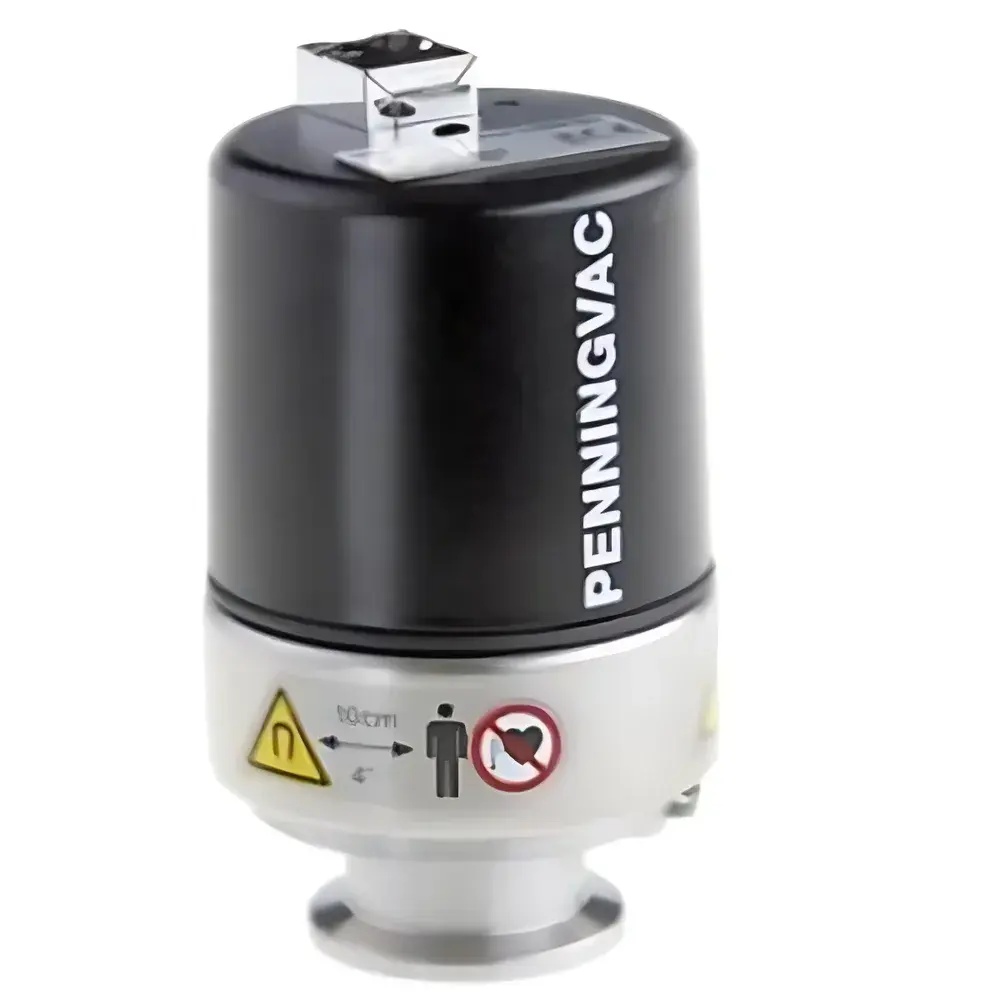
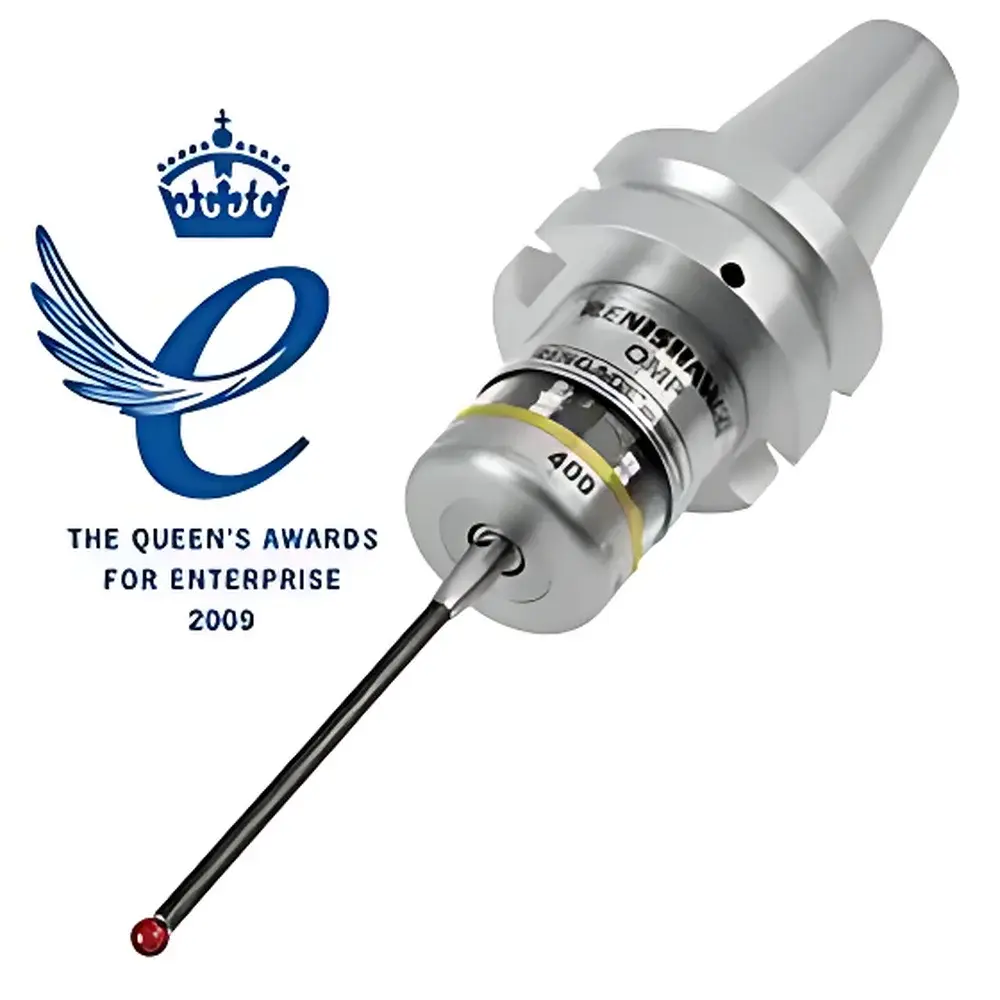
The Renishaw OMP400 is a compact, high-precision optical touch probe engineered specifically for integration into space-constrained machining environments—particularly small vertical machining centers (VMCs), micro-mills, and machines with limited Z-axis travel or small-taper spindles (e.g., HSK32). Unlike conventional mechanical or switch-based probes, the OMP400 employs Renishaw’s proprietary strain gauge sensing architecture—first validated in the MP700 spindle probe platform—to deliver sub-micron repeatability and minimal probing force variation. Its measurement principle relies on optically transmitted, modulated signals from a strain-sensitive ceramic sensing element, enabling consistent trigger behavior at ultra-low, uniform contact forces (<0.1 N typical). This eliminates mechanical hysteresis and reduces stylus deflection, directly improving dimensional accuracy and reducing pre-travel uncertainty—a critical factor in tight-tolerance in-process verification of features such as bore concentricity, slot symmetry, and profiled contours.
Key Features
- Ultra-compact form factor: Ø40 mm × 50 mm—enabling installation on machines where probe envelope and spindle clearance are severely restricted
- Strain gauge–based optical triggering: Delivers high reproducibility (<0.5 µm 2σ repeatability under controlled conditions) and insensitivity to stylus orientation or approach angle
- IPX8-rated sealed housing: Fully protected against coolant immersion, metal swarf ingress, and high-vibration environments typical of automated tool-changing cycles
- Modulated optical transmission protocol: Significantly enhanced immunity to ambient light interference (e.g., shop-floor LED lighting, laser alignment aids) compared to legacy unmodulated systems
- Backward and forward compatibility: Operates seamlessly with existing OMM and OMI receivers, as well as the newer OMI-2 integrated interface module—supporting both retrofit upgrades and greenfield installations
- Extended battery life: Up to 50 hours of continuous operation on a single CR123A lithium cell, minimizing downtime for maintenance or recalibration
Sample Compatibility & Compliance
The OMP400 is designed for use with standard tungsten carbide, ruby, or ceramic styli—available in diameters from 0.5 mm to 6 mm—and supports multi-point, scanning, and single-trigger measurement strategies within Renishaw’s MODUS™ and Productivity+™ software ecosystems. It complies with mechanical and environmental requirements outlined in ISO 230-2 (machine tool testing – positioning accuracy) and ISO 230-6 (diagnostic tests for volumetric performance). While not a metrology-grade CMM sensor, its performance aligns with in-process verification needs defined under ISO 10360-5 (CMM acceptance and re-verification) when deployed in stable thermal and mechanical conditions. The probe’s design supports audit-ready traceability workflows compatible with FDA 21 CFR Part 11–aligned electronic record systems when used with validated software configurations.
Software & Data Management
The OMP400 integrates natively with Renishaw’s MODUS™ metrology software suite, enabling full geometric evaluation (GD&T per ASME Y14.5 and ISO 1101), statistical process control (SPC) charting, and automated report generation. All probe events—including trigger timestamps, stylus vector data, and machine coordinate positions—are logged with millisecond resolution and support export to CSV, XML, or industry-standard DMIS formats. Audit trails include user authentication, parameter change history, and calibration event logs—essential for GLP/GMP-regulated manufacturing environments. Firmware updates are delivered via Renishaw’s secure Update Manager, ensuring continued compliance with evolving cybersecurity and functional safety expectations.
Applications
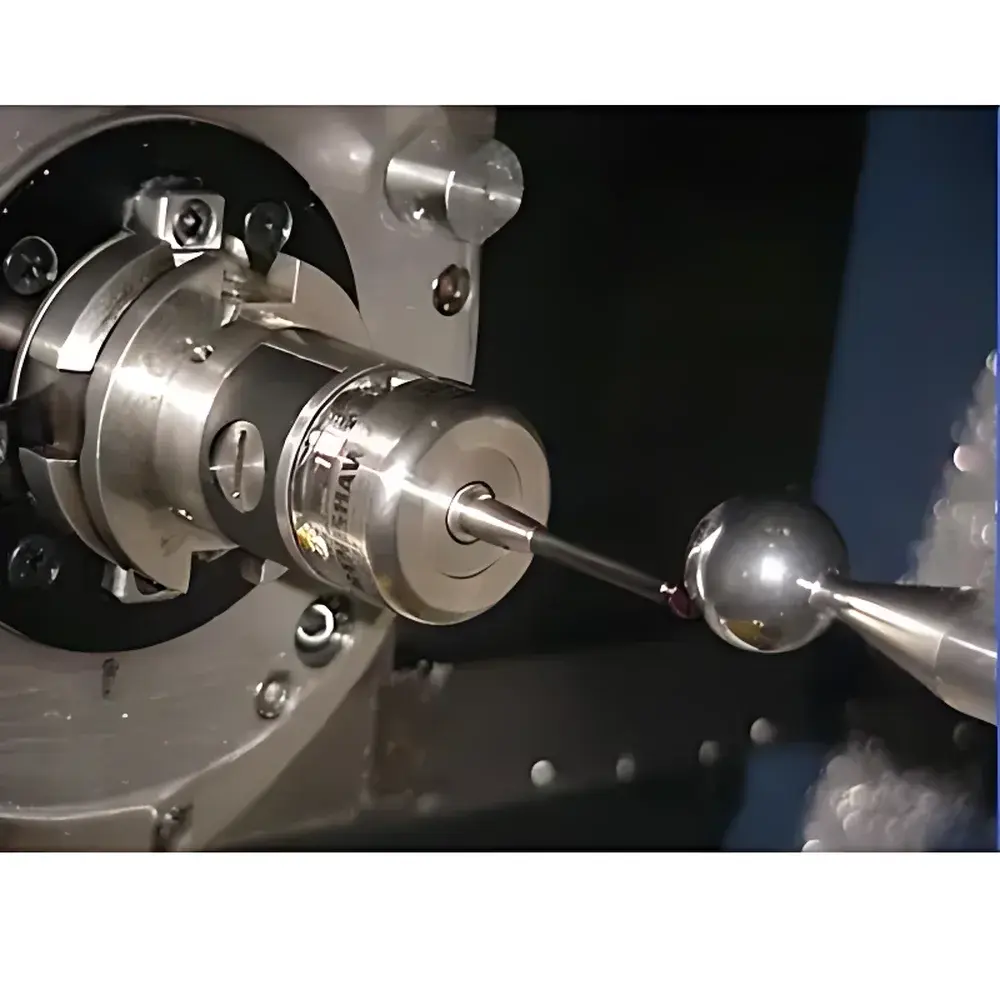
- First-article inspection and setup verification on small-batch or job-shop VMCs
- In-cycle tool wear compensation using real-time workpiece feature feedback
- Automated verification of critical dimensions prior to final finishing passes—reducing scrap and rework in aerospace and medical component production
- Fixtureless part alignment and datum establishment on palletized or tombstone-mounted setups
- Process capability studies (Cp/Cpk) for high-mix, low-volume production lines requiring rapid changeover and minimal manual intervention
FAQ
Is the OMP400 suitable for use in wet machining environments?
Yes—the IPX8 rating certifies full protection against prolonged immersion in coolant and cutting fluids, making it appropriate for flood-cooled and high-pressure mist applications.
Can the OMP400 replace an existing OMP40 probe without hardware modification?
In most cases, yes—mechanical mounting interfaces and signal protocols are identical; however, firmware updates on the receptor (OMI/OMM) may be required to enable full strain gauge–specific diagnostics.
Does the OMP400 require periodic recalibration?
While no scheduled recalibration is mandated by Renishaw, users operating under ISO 9001 or IATF 16949 must define and document their own verification intervals based on usage frequency, environmental exposure, and criticality of measured features.
What stylus configurations are supported for micro-feature measurement?
Styli with 0.5 mm and 1 mm ruby balls are routinely used for measuring features below 2 mm in diameter, provided adequate access and minimal stylus overhang are maintained to preserve effective resolution.
How does the modulated optical transmission improve reliability versus older optical probes?
Modulation shifts the carrier frequency outside the spectral noise band of ambient lighting sources, reducing false triggers by >90% in high-illumination workshops—verified per IEC 61000-4-3 electromagnetic immunity testing protocols.