
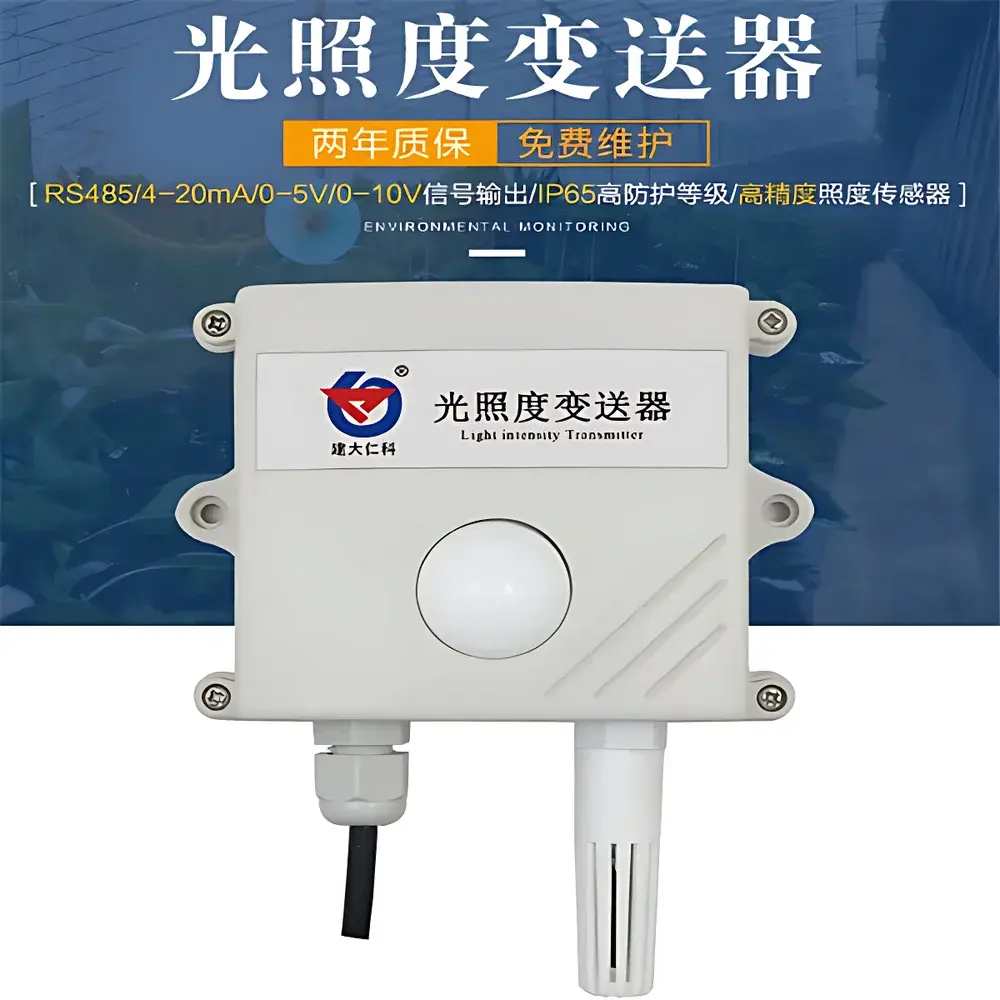
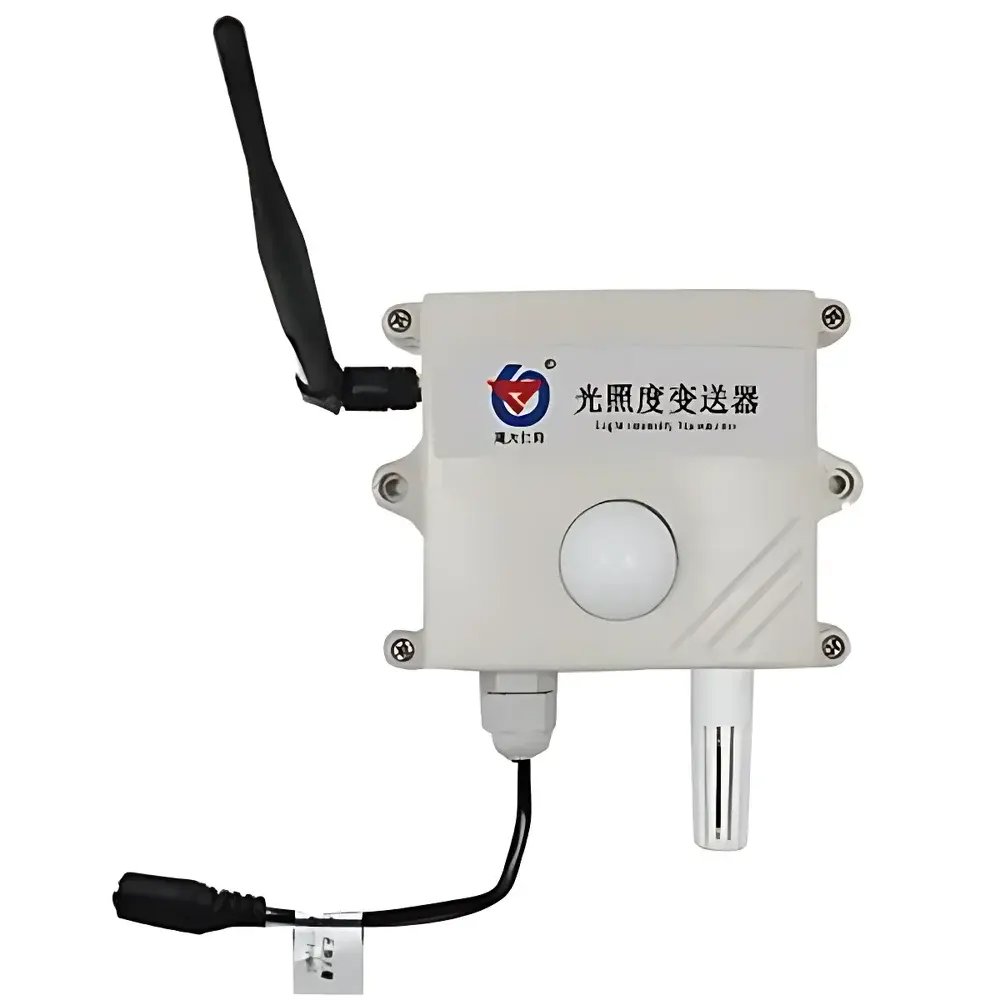
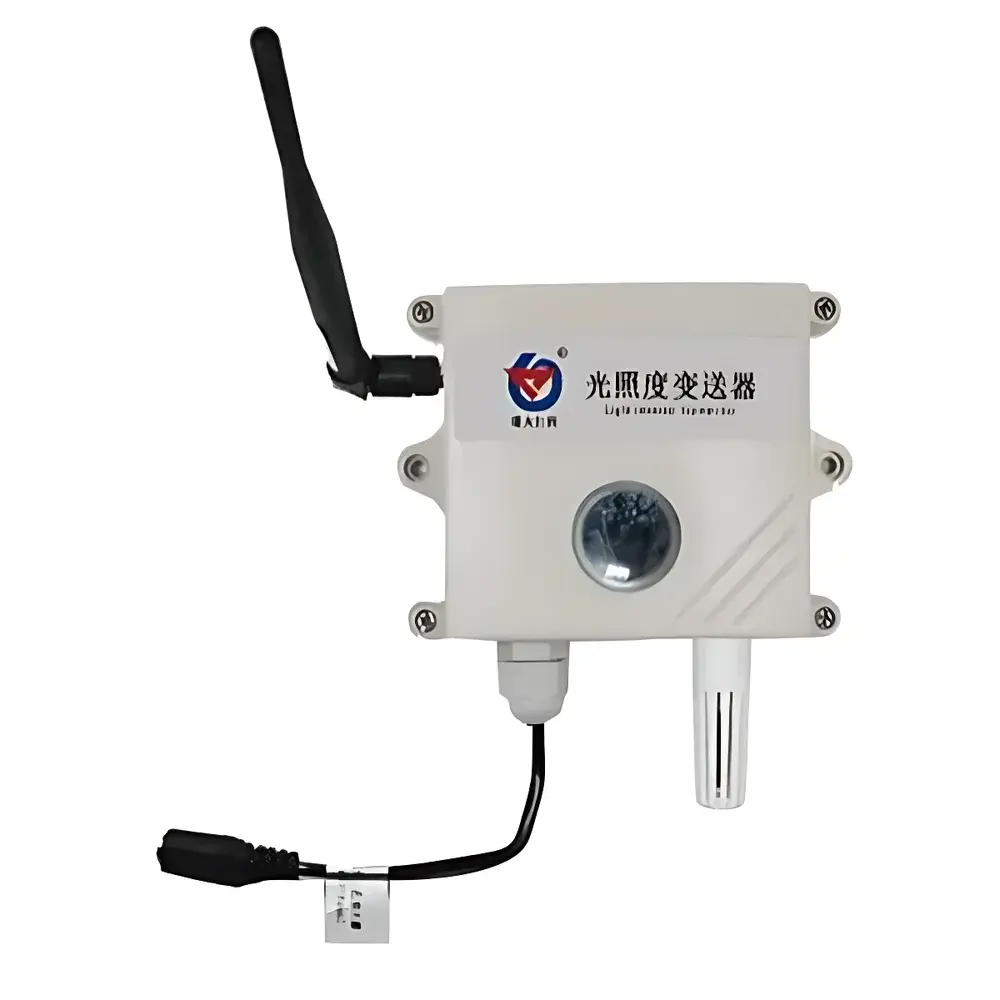
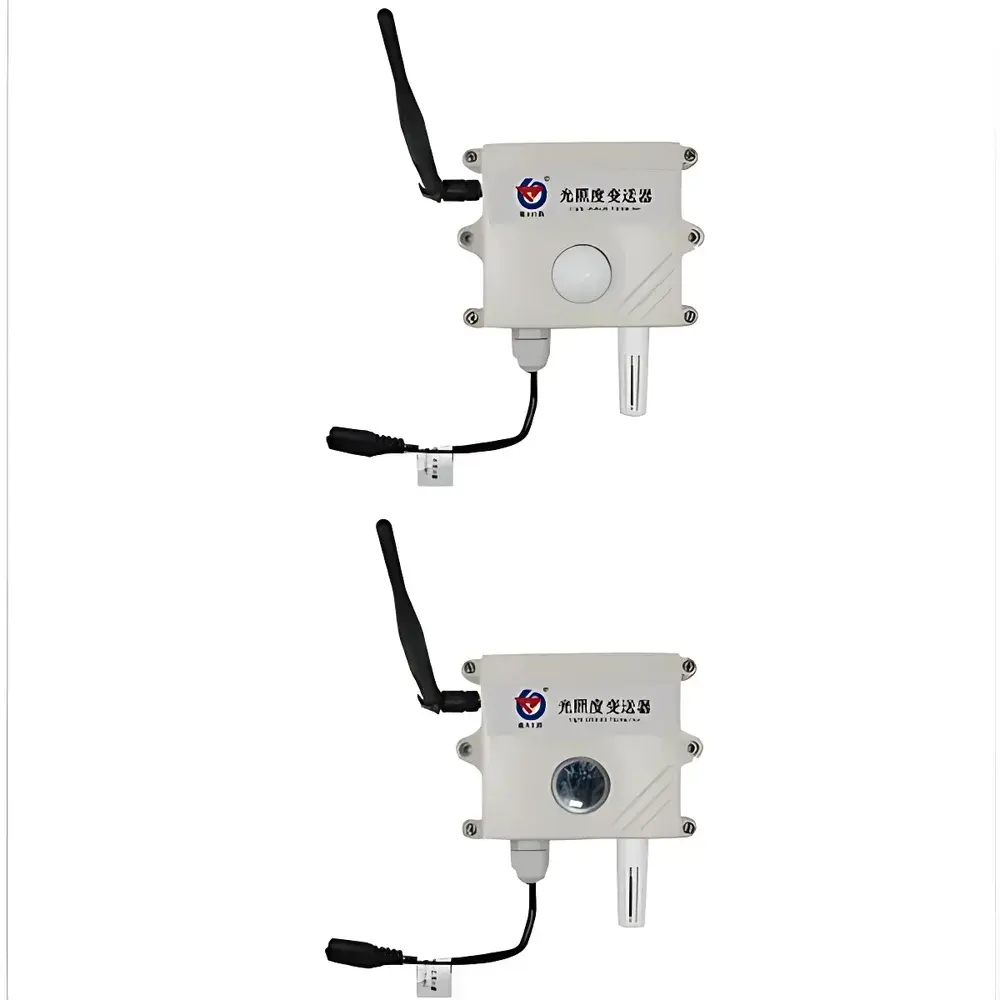
RenKe RS-GZ-DC Wireless Illuminance Sensor
| Brand | RenKe |
|---|---|
| Origin | Shandong, China |
| Manufacturer Type | Manufacturer |
| Origin Category | Domestic |
| Model | RS-GZ-DC |
| Pricing | Upon Request |
| Accuracy | ±7% (at 25°C) |
| Illuminance Range | 0–65535 lux |
| Long-term Stability | ≤5%/year |
| Response Time | 1 s |
| Output Signal | Radio Frequency (RF) Wireless Transmission |
Overview
The RenKe RS-GZ-DC Wireless Illuminance Sensor is a dedicated photometric monitoring device engineered for continuous, maintenance-free measurement of ambient illuminance in regulated environments—particularly pharmaceutical stability testing chambers, light-exposure validation zones, and controlled-environment laboratories. Unlike conventional wired illuminance transmitters, the RS-GZ-DC employs proprietary spread-spectrum radio frequency (RF) communication with frequency-hopping capability, enabling robust, interference-resistant data transmission without reliance on physical cabling. Its operational principle centers on calibrated silicon photodiode detection, optimized for spectral response aligned with the CIE photopic luminosity function (V(λ)), ensuring metrological relevance to human-eye-weighted illuminance (lux). The sensor is designed for integration into photostability testing workflows compliant with ICH Q1B, USP <1151>, and ISO 8570-2, where precise, traceable, and spatially distributed light intensity monitoring is mandatory for qualification of light sources and chamber uniformity mapping.
Key Features
- High-fidelity photodiode sensing element with ±7% measurement accuracy at 25°C, validated per ISO/CIE standard calibration protocols
- Wide dynamic range: 0–65535 lux, supporting both low-light storage condition monitoring and high-intensity UV/visible exposure testing
- True wireless architecture: No RS-485, Ethernet, or power-over-cable infrastructure required; eliminates single-point failure risks inherent in bus-topology wired networks
- Extended RF link budget: Up to 800 m line-of-sight range; penetrates up to four reinforced concrete walls (typical attenuation ≤15 dB per wall), enabling flexible deployment across multi-room facilities
- Self-contained power system: Integrated industrial-grade lithium-thionyl chloride battery with ≥3-year service life under typical sampling intervals (e.g., 1-min reporting), eliminating routine battery replacement during qualification periods
- Galvanic isolation: Complete electrical separation between sensing element, signal conditioning circuitry, and RF transceiver—ensuring immunity to ground loops and EMI-induced measurement drift
Sample Compatibility & Compliance
The RS-GZ-DC is compatible with all standard photostability test configurations defined in ICH Q1B, including Option 1 (near-UV/visible) and Option 2 (cool white fluorescent + near-UV lamp) irradiance profiles. Its compact, non-intrusive form factor (Ø60 × 30 mm) allows unobstructed placement within ICH-compliant light exposure chambers without disrupting airflow or irradiance homogeneity. The device meets electromagnetic compatibility (EMC) requirements per EN 61326-1 (industrial environment) and carries CE marking for conformity with EU RoHS Directive 2011/65/EU. While not intrinsically safe, it is rated IP65 for dust and water resistance—suitable for cleanroom Class D (ISO 14644-1) and non-sterile manufacturing support areas. Data integrity is maintained through time-stamped, CRC-protected RF packets, supporting audit readiness for FDA 21 CFR Part 11 and EU Annex 11 compliance when paired with validated receiving gateways (e.g., RS-XZJ-100-W or RS-JSQ-W).
Software & Data Management
Data from the RS-GZ-DC is received via RenKe’s certified wireless gateways: the RS-XZJ-100-W (supports up to 32 nodes, Ethernet/IP output) or RS-JSQ-W (supports up to 200 nodes, RS-485 Modbus RTU output). Both gateways provide configurable sampling intervals (1 s to 24 h), local data buffering (≥72 h), and TLS-secured cloud upload options. Raw lux values are timestamped with microsecond precision using synchronized NTP or GPS-derived time sources. The accompanying RenKe Cloud Platform enables real-time dashboard visualization, automated alarm thresholds (e.g., deviation >±10% from setpoint), trend analysis over qualification cycles, and PDF/CSV report generation—including metadata such as sensor ID, firmware version, battery voltage, and RF link quality index. All data logs include immutable audit trails meeting GLP/GMP documentation requirements for photostability study records.
Applications
- ICH Q1B photostability chamber qualification and routine monitoring (mapping illuminance uniformity across shelf positions)
- Light exposure validation for packaging materials, primary containers, and labeling under simulated daylight conditions
- Environmental monitoring in stability storage rooms (25°C/60% RH, 30°C/65% RH) per ICH Q5C
- Real-time illuminance logging during accelerated aging studies involving photochemical degradation pathways
- Integration into facility monitoring systems (FMS) for HVAC-adjacent lighting control feedback loops
- Long-term daylight harvesting assessment in pharmaceutical R&D greenhouses and botanical extraction labs
FAQ
What is the recommended mounting height and orientation for optimal measurement accuracy?
Mount the sensor at ≥1 m above floor level in an open, unobstructed location. Avoid proximity to metallic surfaces (>0.5 m clearance) and ensure direct line-of-sight to the dominant light source(s) being characterized.
Can the RS-GZ-DC be used in explosive or high-humidity environments?
No. It is not ATEX/IECEx certified and lacks explosion-proof housing. For high-humidity applications (>85% RH), use only within IP65-rated enclosures and avoid condensation-prone zones.
How is calibration traceability established?
Each unit ships with a factory calibration certificate referencing NIM (National Institute of Metrology, China) traceable standards. On-site recalibration is performed using NIST-traceable illuminance meters per ISO/IEC 17025-accredited procedures.
Does the device support Modbus TCP or MQTT protocols natively?
No. Native output is proprietary RF. Protocol translation occurs at the gateway level (RS-XZJ-100-W supports Modbus TCP; RS-JSQ-W supports Modbus RTU over RS-485).
What happens when battery voltage drops below operational threshold?
The sensor autonomously enters low-power alert mode, transmitting periodic “low-battery” status frames every 24 h until replacement. Data continuity is preserved via onboard memory buffer until gateway reconnection.







