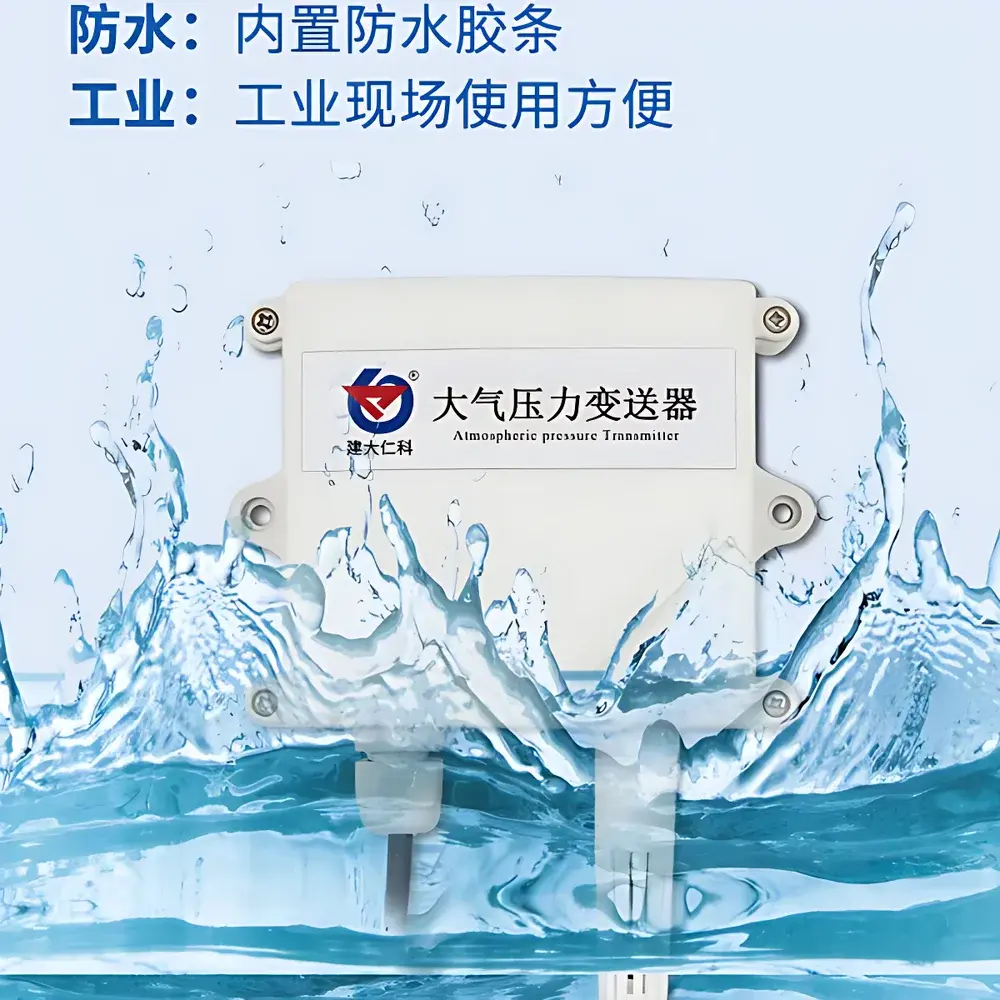
RenKe RS-QY-N01-2 Atmospheric Pressure Transmitter
| Brand | RenKe |
|---|---|
| Model | RS-QY-N01-2 |
| Measurement Principle | Piezoresistive Sensing with Integrated Temperature Compensation |
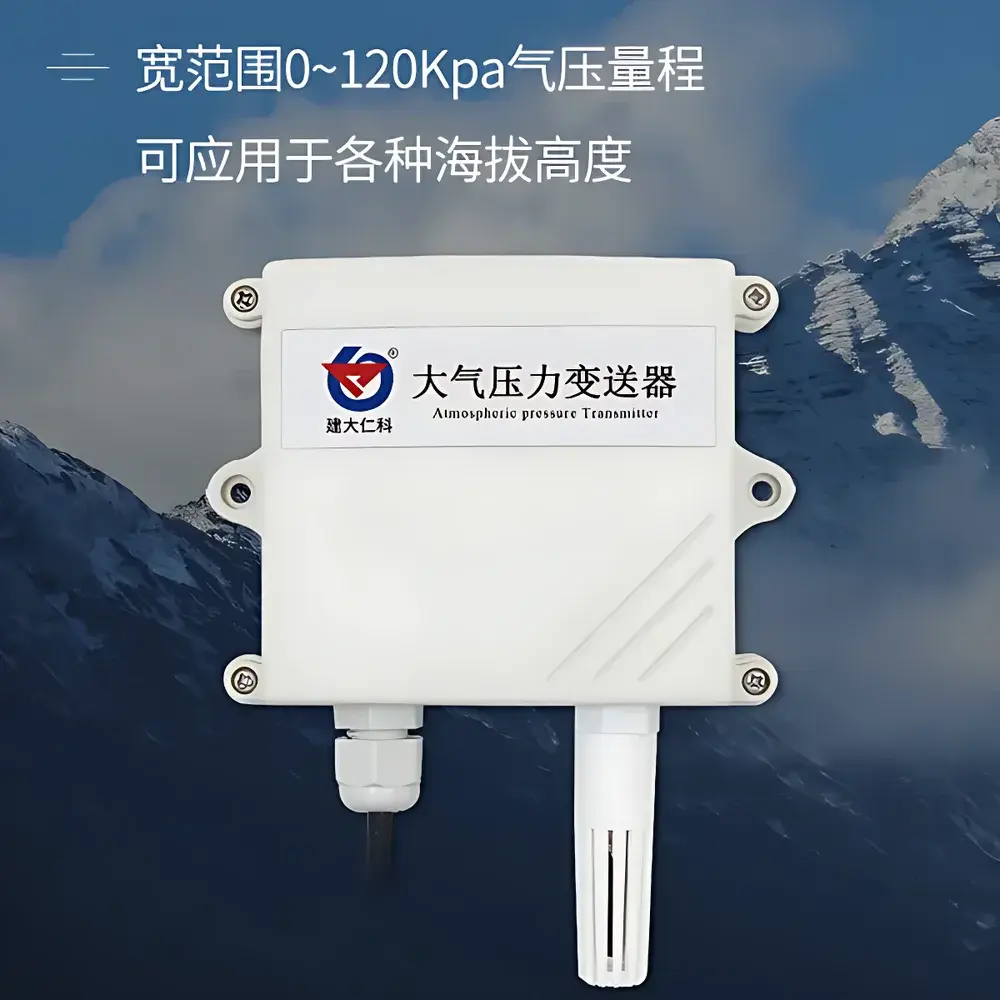
| Pressure Range | 0–120 kPa |
| Temperature Range | −40 to +80 °C (standard) |
| Pressure Accuracy | ±0.15 kPa @ 25 °C, 75 kPa |
| Temperature Accuracy | ±0.5 °C @ 25 °C |
| Long-Term Stability | ≤−0.1 kPa/year (pressure), ≤0.1 °C/year (temperature) |
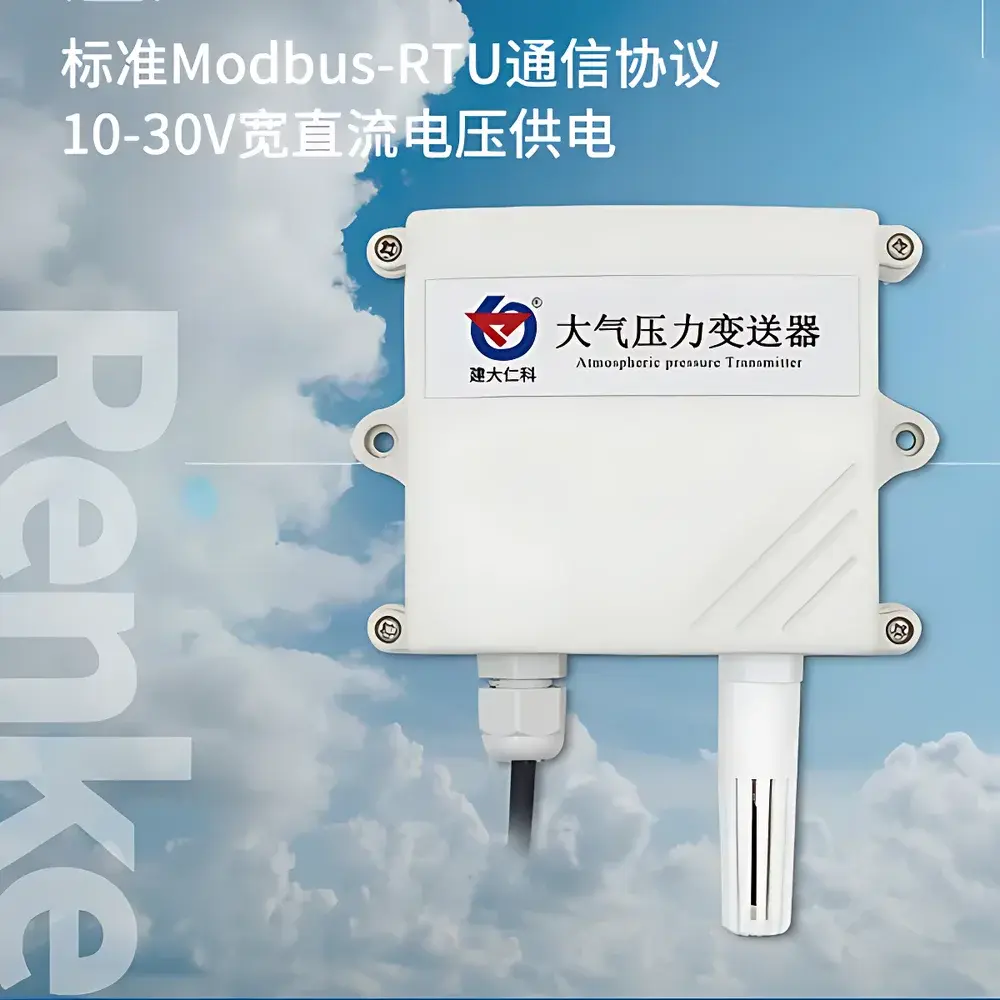
| Output | RS-485 Modbus RTU (default baud rate: 4800, 8N1) |
| Power Supply | 10–30 V DC |
| Power Consumption | ≤0.5 W |
| Response Time | ≤1 s |
| Operating Environment | −20 to +60 °C, 0–80 %RH |
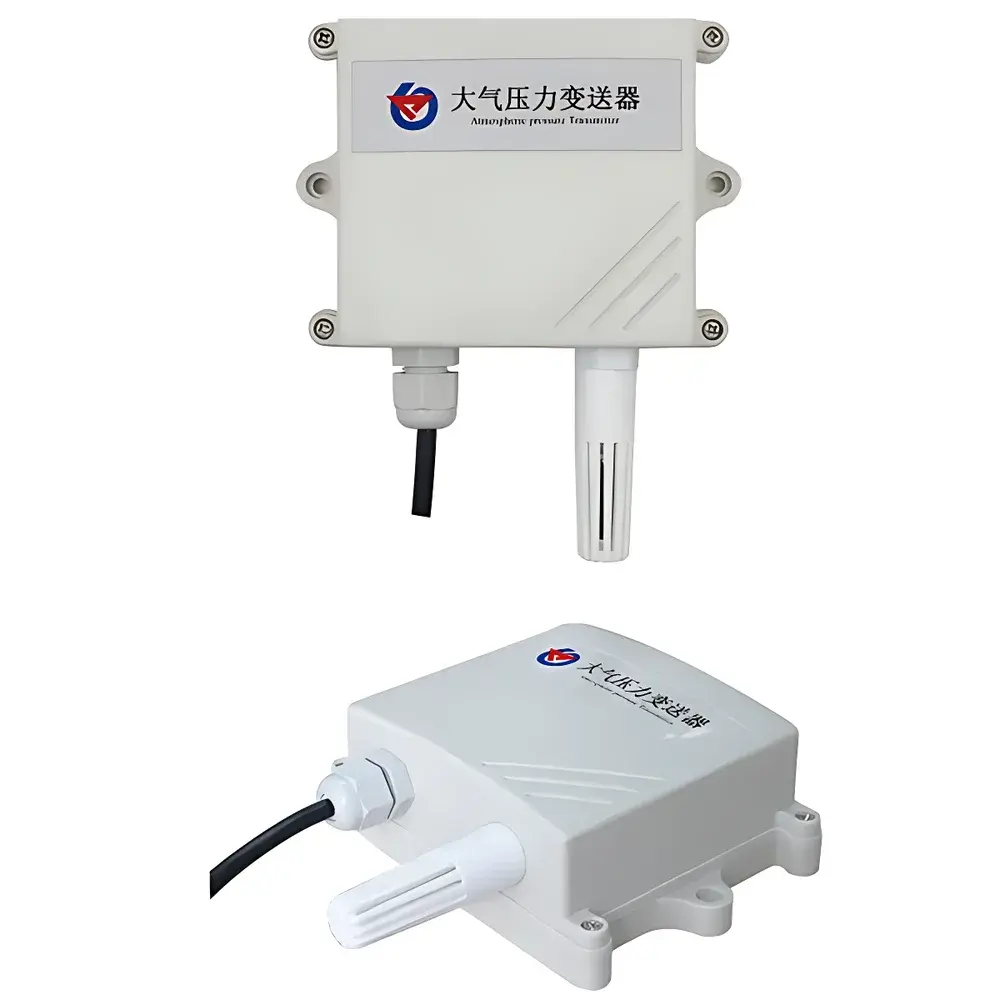
| Enclosure Type | Wall-Mounted IP65 Housing |
| Compliance | CE-marked design principles, RoHS-compliant materials, compatible with ISO/IEC 17025-aligned calibration workflows |
Overview
The RenKe RS-QY-N01-2 Atmospheric Pressure Transmitter is a precision-engineered industrial sensor designed for continuous, stable monitoring of ambient barometric pressure and concurrent air temperature in uncontrolled or semi-controlled environments. It employs a calibrated piezoresistive pressure sensing element coupled with an integrated digital temperature sensor, both subject to factory-applied multi-point temperature compensation algorithms. This architecture ensures minimal thermal drift and high repeatability across its full operational range — critical for applications where pressure-derived altitude estimation, environmental trend analysis, or HVAC system feedback control requires metrological consistency. Unlike consumer-grade barometers, the RS-QY-N01-2 is built to function reliably under extended deployment conditions typical of outdoor meteorological nodes, agricultural microclimate networks, archival storage facilities, and laboratory ambient monitoring systems.
Key Features
- Piezoresistive pressure transduction with embedded digital temperature compensation for reduced thermal hysteresis and long-term zero stability
- Simultaneous dual-parameter output: atmospheric pressure (0–120 kPa absolute) and ambient temperature (−40 to +80 °C, standard configuration)
- RS-485 serial interface compliant with Modbus RTU protocol (Function Code 03 supported), enabling seamless integration into SCADA, BMS, and data logger ecosystems
- Wide-input DC power range (10–30 V) enhances compatibility with solar-powered or battery-backed remote installations
- Wall-mountable IP65-rated enclosure with corrosion-resistant housing, suitable for indoor and sheltered outdoor mounting
- Low power consumption (≤0.5 W) minimizes thermal self-heating effects and extends operational lifetime in energy-constrained deployments
- Configurable communication parameters via PC-based utility software — including Modbus address, baud rate (2400/4800/9600), parity, and stop bits
Sample Compatibility & Compliance
This transmitter is specifically optimized for gaseous media — exclusively dry, non-corrosive ambient air. It is not rated for use with liquids, vapors, or aggressive gases (e.g., H₂S, Cl₂, NH₃). The device conforms to electromagnetic compatibility (EMC) best practices aligned with IEC 61000-4 series standards for industrial environments and utilizes RoHS-compliant electronic components. While not certified to formal ISO/IEC 17025 calibration accreditation, its documented accuracy specifications (±0.15 kPa at reference conditions) support traceable calibration against NIST-traceable barometric standards. For regulated environments requiring auditability — such as GLP-compliant environmental monitoring labs — the Modbus register structure supports timestamped data logging when paired with compliant host systems implementing FDA 21 CFR Part 11–compliant audit trails.
Software & Data Management
Data acquisition is facilitated through standard Modbus RTU over RS-485, supporting up to 247 slave devices on a single bus (with proper termination and biasing). The default communication settings — address 1, 4800 bps, 8 data bits, no parity, 1 stop bit — ensure plug-and-play interoperability with most industrial controllers and third-party loggers (e.g., Campbell Scientific CR1000X, Siemens Desigo CC, or open-source platforms like Node-RED with Modbus TCP gateways). RenKe provides a Windows-based configuration utility for parameter adjustment, firmware updates (if applicable), and real-time value monitoring. Raw sensor outputs are accessible via discrete Modbus holding registers: pressure (in kPa × 100, UINT16), temperature (in °C × 10, INT16), and diagnostic status flags. No proprietary cloud platform or vendor lock-in is required; all data remains under user control at the edge or enterprise layer.
Applications
- Miniature weather stations requiring altitude-referenced pressure trending and dew point estimation
- Control logic input for altitude-compensated combustion systems or ventilation rate modulation in greenhouses and vertical farms
- Environmental condition monitoring in archival repositories, museums, and pharmaceutical cold-chain staging areas
- Baseline pressure referencing in low-pressure process validation (e.g., lyophilizer chamber leak testing)
- Educational instrumentation labs demonstrating gas laws, atmospheric modeling, or sensor fusion techniques
- Field-deployed IoT nodes where low-power, wired serial communication is preferred over cellular or LoRaWAN alternatives
FAQ
What is the recommended calibration interval for this transmitter?
For applications demanding metrological rigor, annual verification against a certified reference barometer is advised. Under benign indoor conditions with stable thermal profiles, biennial verification may be justified per internal quality procedures.
Can the temperature measurement range be extended beyond −40 to +80 °C?
Yes — custom calibration and sensor selection are available upon request. Extended-range variants (e.g., −55 to +125 °C) require factory reconfiguration and updated calibration certificates.
Is the RS-485 interface electrically isolated?
No — galvanic isolation is not included in the base model. For installations involving ground potential differences >1 V or high EMI exposure, external isolated RS-485 repeaters or signal conditioners are recommended.
Does the device support analog output (e.g., 4–20 mA)?
No — the RS-QY-N01-2 is digital-only (RS-485 Modbus RTU). Analog variants (e.g., RS-QY-N01-A) are available separately with identical sensing performance but different output architecture.
How is long-term stability verified during manufacturing?
Each unit undergoes a 72-hour thermal soak test at 60 °C followed by a 48-hour stabilization period at 25 °C before final calibration and burn-in validation. Drift metrics are logged and retained for quality traceability.