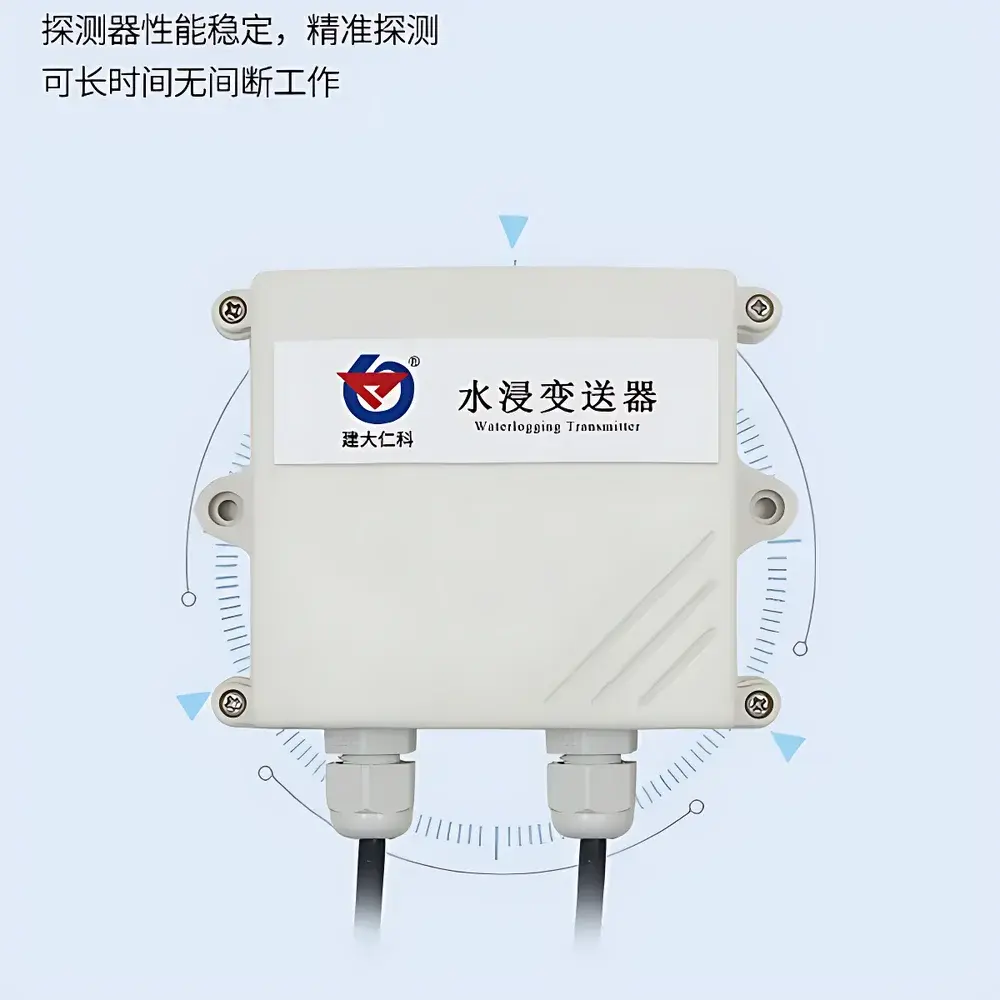
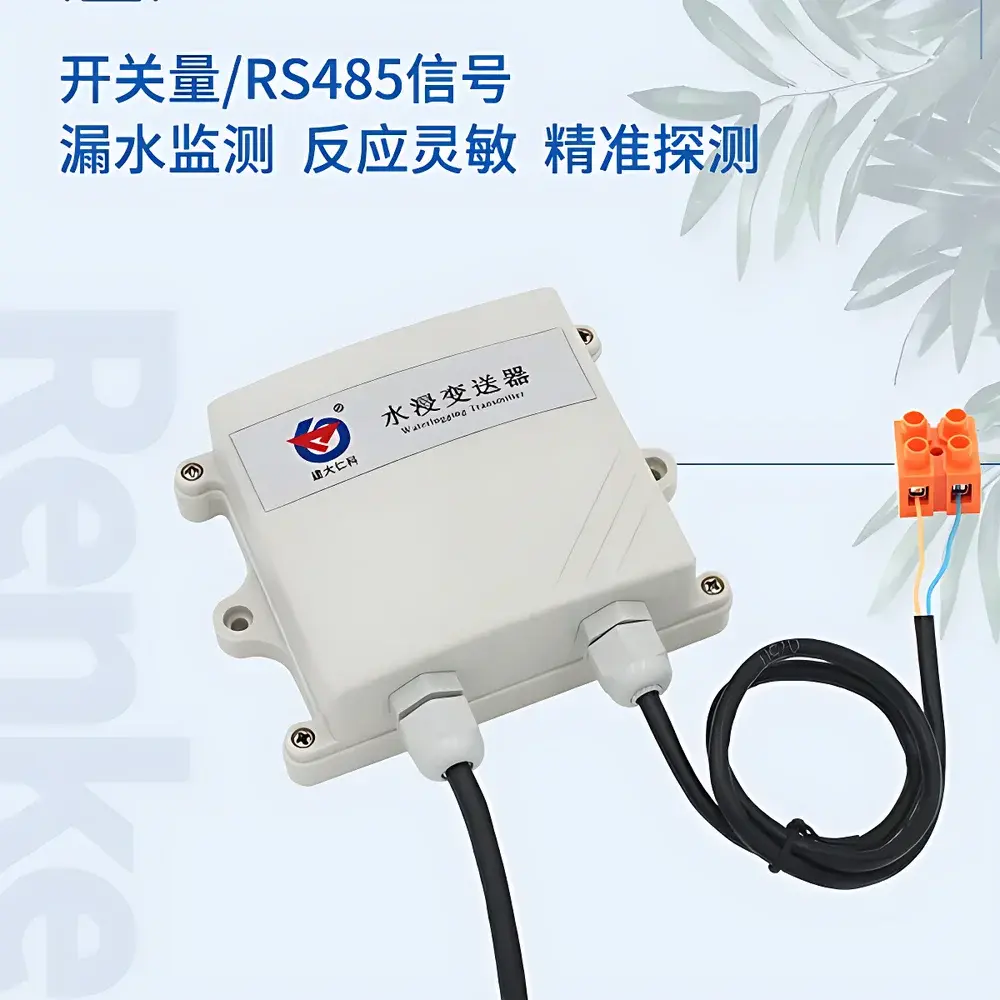
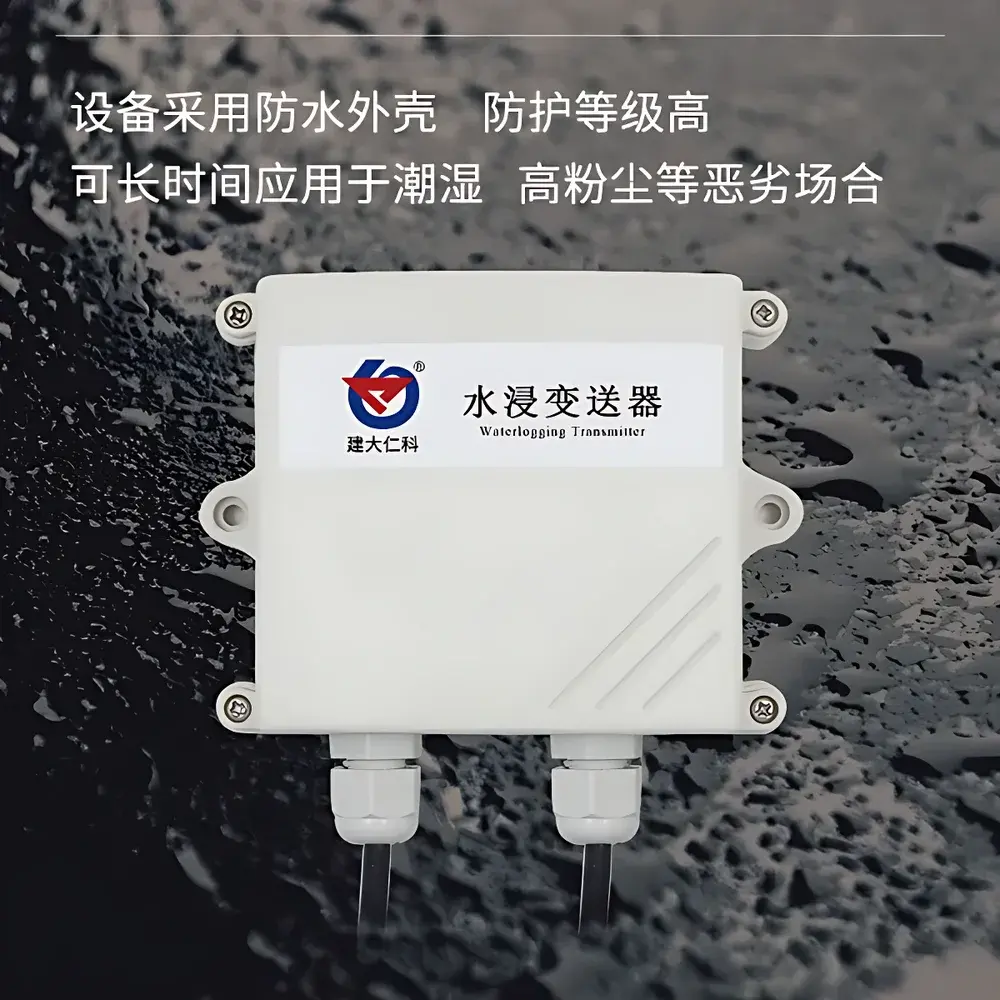
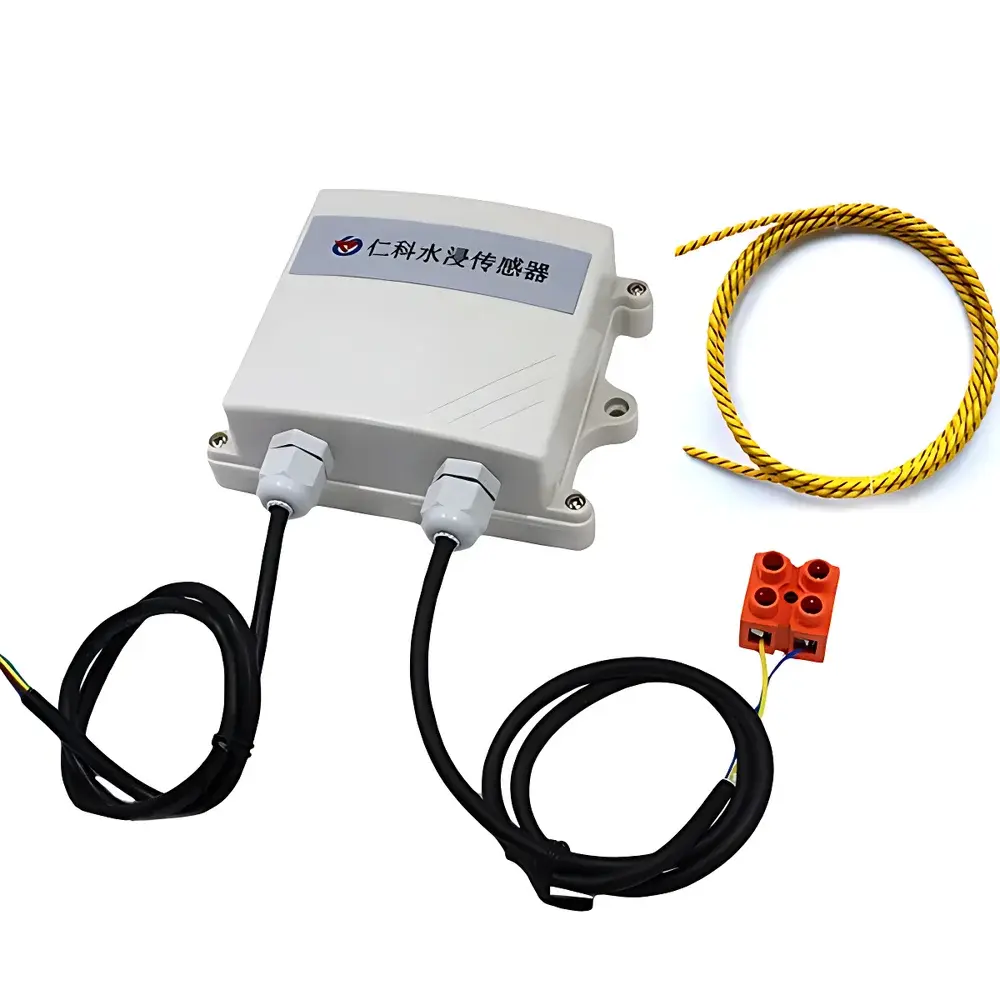
RenKe RS-SJ-N01-2 Wall-Mounted AC-Coupled Immersion Detection Sensor
| Brand | RenKe |
|---|---|
| Origin | Shandong, China |
| Manufacturer Type | Manufacturer |
| Country of Origin | China |
| Model | RS-SJ-N01-2 |
| Output Options | RS485 (Modbus-RTU), Relay Dry Contact (NO) |
| Power Supply | DC 10–30 V |
| Operating Temperature | −20 °C to +60 °C |
| Relative Humidity Range | 0–80% RH |
| Max RS485 Distance | 2000 m |
| Max Electrode/Cable Length | 30 m |
| IP Rating | IP67 (inferred from waterproof housing & harsh-environment deployment) |
Overview
The RenKe RS-SJ-N01-2 is a wall-mounted, AC-coupled immersion detection sensor engineered for reliable, maintenance-free water presence monitoring in mission-critical infrastructure environments. Unlike conventional DC-based electrode sensors—prone to electrode polarization, oxidation, and false negatives after prolonged submersion—the RS-SJ-N01-2 employs proprietary alternating current (AC) impedance sensing technology to measure changes in inductive coupling between conductive surfaces upon water contact. This method detects the dielectric shift induced by water bridging between sensing electrodes or along a leak-detection cable, enabling stable discrimination between tap water (conductivity ~500–800 µS/cm) and ultrapure water (conductivity <1 µS/cm) without electrode degradation. The sensor’s solid-state signal conditioning circuitry operates independently of electrode material chemistry, eliminating galvanic corrosion and extending functional service life beyond 5 years under continuous humid or intermittently flooded conditions. Designed for integration into industrial automation ecosystems, it conforms to baseline electromagnetic compatibility (EMC) requirements per IEC 61000-6-2/6-4 and supports long-haul serial communication in electrically noisy environments.
Key Features
- AC-coupled detection principle prevents electrode polarization and electrolytic corrosion—no consumable electrodes required
- Dual-output configuration: isolated relay (NO contact, 250 VAC/3 A resistive) and RS485 interface compliant with Modbus-RTU protocol (default address 1, configurable via software)
- Wide input voltage range (DC 10–30 V) with reverse-polarity and overvoltage protection
- IP67-rated polycarbonate “W-character” enclosure—optimized for wall mounting in high-humidity, dust-laden, or condensation-prone locations (e.g., telecom base station cabinets, data center subfloors, archival storage rooms)
- Configurable sensitivity thresholds for tap water or deionized water detection (factory default: tap water; DI mode requires firmware parameter adjustment)
- Low power consumption: ≤0.4 W (RS485 active), ≤1.2 W (relay actuated)
Sample Compatibility & Compliance
The RS-SJ-N01-2 is validated for use with standard bare copper or stainless-steel leak-detection electrodes (up to 30 m length) and conductive leak-detection cables meeting IEC 60529 mechanical durability specifications. It does not require calibration against reference liquids and exhibits consistent response across temperature gradients from −20 °C to +60 °C. While not certified to UL 508A or ATEX for hazardous locations, its design aligns with general-purpose industrial safety guidelines (IEC 61508 SIL 1 functional safety principles for non-safety-critical alarm functions). Documentation includes CE-conformity declarations for EMC and LVD directives. For regulated environments (e.g., pharmaceutical cleanrooms or utility substations), users must validate installation per site-specific risk assessments and integrate the device within broader alarm logging frameworks satisfying FDA 21 CFR Part 11 audit-trail requirements via upstream SCADA or DCS systems.
Software & Data Management
Modbus-RTU register mapping is published in the official RenKe protocol manual (v2.3), supporting read-only access to real-time status (coil 0x0000), fault flags (e.g., open-circuit detection, power anomaly), and configuration parameters (baud rate, parity, address). No proprietary software is required: integration with Siemens S7 PLCs, Rockwell ControlLogix, Ignition SCADA, or Node-RED is achieved using standard Modbus TCP-to-RTU gateways or native serial drivers. All relay state transitions are latching until manually reset or cleared via Modbus command (function code 0x05 or 0x0F). Event timestamps are generated at the host controller level; the sensor itself does not embed real-time clock functionality. Firmware updates are performed offline via UART using RenKe-provided configuration utilities—no field-upgradable bootloader is implemented.
Applications
- Preventive flood monitoring beneath raised floors in telecommunications central offices and edge computing nodes
- Continuous wetness surveillance in HVAC condensate pans, chiller rooms, and chilled-water pump enclosures
- Leak integrity verification for sealed equipment cabinets (e.g., UPS systems, battery banks, fire suppression control panels)
- Environmental compliance monitoring in archival repositories where humidity-induced mold growth must be intercepted prior to material damage
- Integration into building management systems (BMS) for automated sump pump activation or HVAC shutdown sequences
FAQ
What is the maximum recommended distance between the sensor and remote electrodes or leak-detection cable?
Up to 30 meters using 22 AWG twisted-pair shielded cable with proper grounding at the sensor end only.
Can the sensor distinguish between condensation and actual standing water?
Yes—its AC impedance thresholding rejects transient moisture films (<0.1 mm thickness) while reliably triggering on sustained liquid bridges ≥1 mm wide.
Is Modbus polling interval configurable?
No—the sensor responds to any valid Modbus-RTU query; timing is controlled entirely by the master device.
Does the relay output support fail-safe (NC) operation?
No—only normally open (NO) dry contact is provided; external relay modules may be used for NC logic inversion.
How is device addressing managed in multi-sensor RS485 networks?
Each unit must be assigned a unique Modbus slave ID (1–247) via software configuration before deployment; default factory ID is 1.