
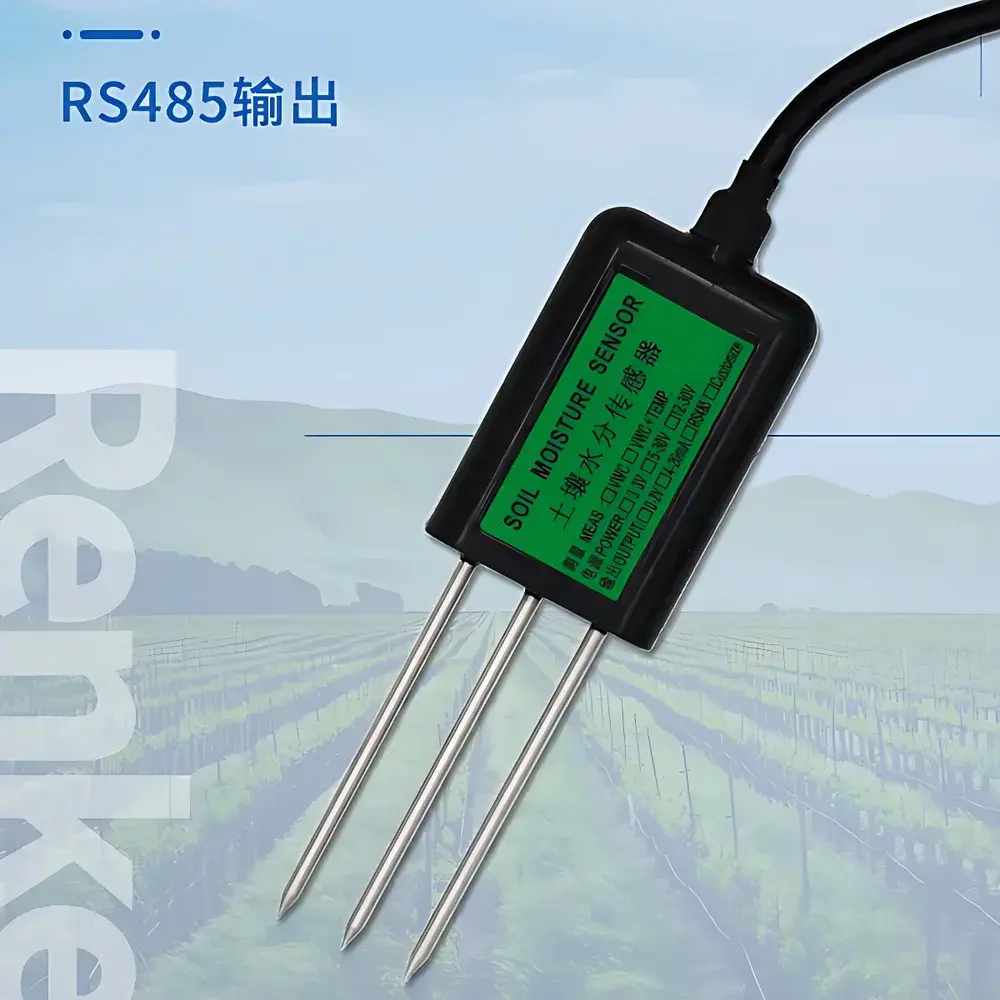
RenKe RS-WS-N01-TR Soil Moisture and Temperature Sensor
| Brand | RenKe |
|---|---|
| Origin | Shandong, China |
| Manufacturer Type | Manufacturer |
| Country of Origin | China |
| Model | RS-WS-N01-TR |
| Instrument Type | Soil Moisture Meter |
| Power Supply | 3.6–30 V DC |
| Power Consumption | 0.4 W |
| Temperature Range | −40 °C to +80 °C |
| Temperature Accuracy | ±0.5 °C |
| Moisture Accuracy | ±3% (v/v) |
| Output Signal | RS-485 (Modbus RTU) |
| Probe Length | 70 mm |
| Probe Diameter | 3 mm |
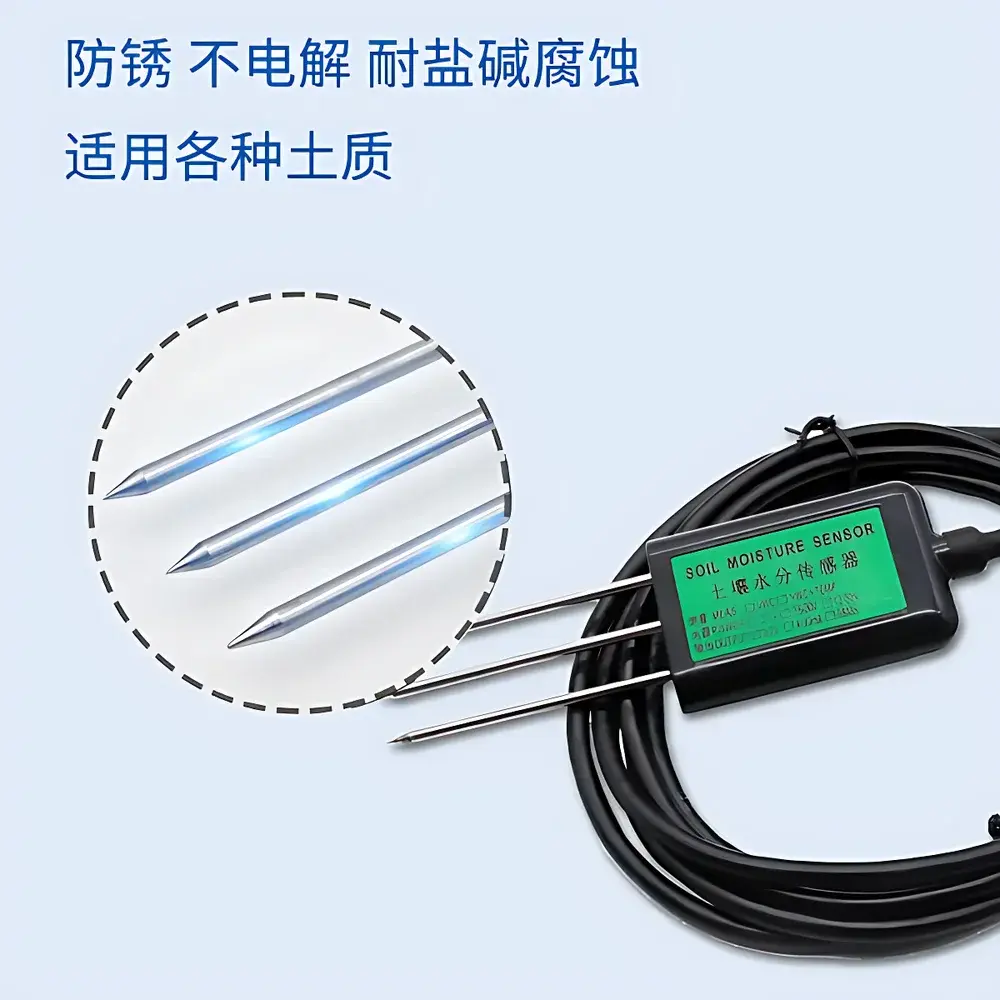
| Probe Material | 304 Stainless Steel |
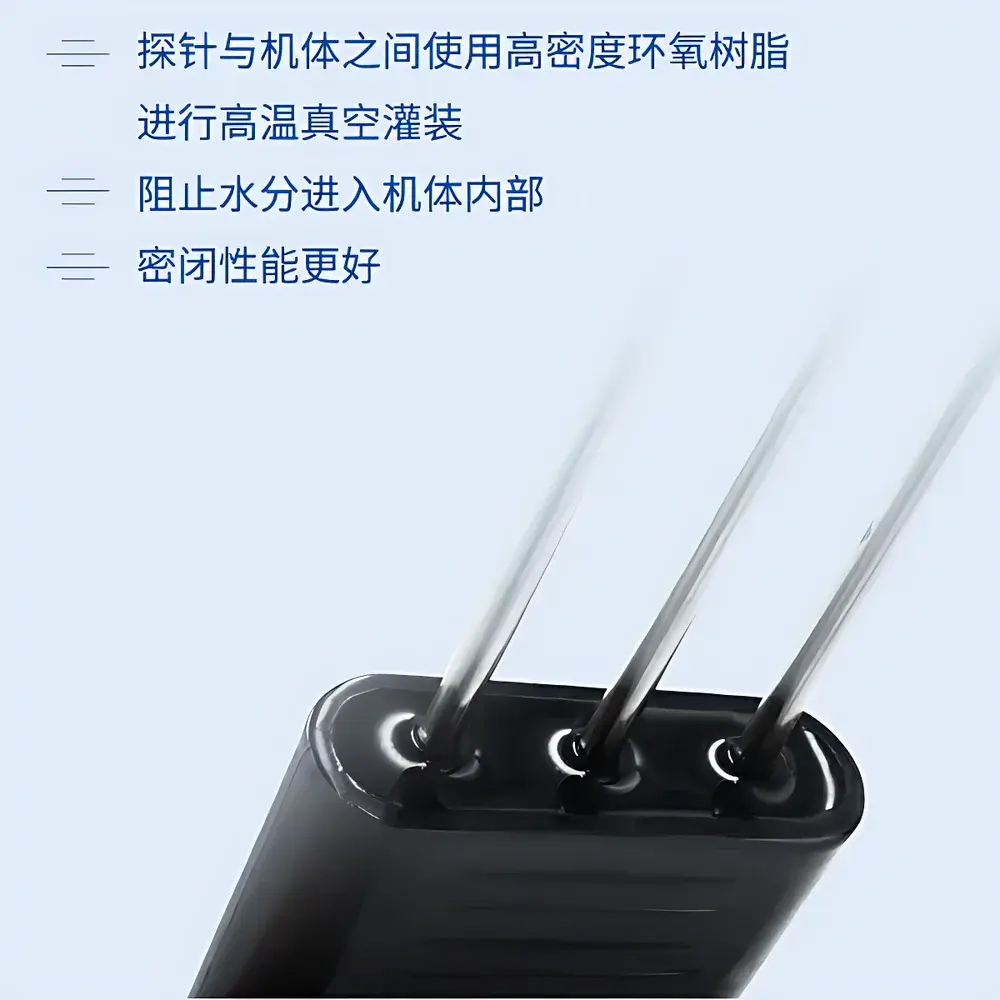
| Encapsulation | Vacuum-filled Epoxy Resin (Black Flame-Retardant) |
| Cable Length | 2 m (RVV 4×0.3 mm²) |
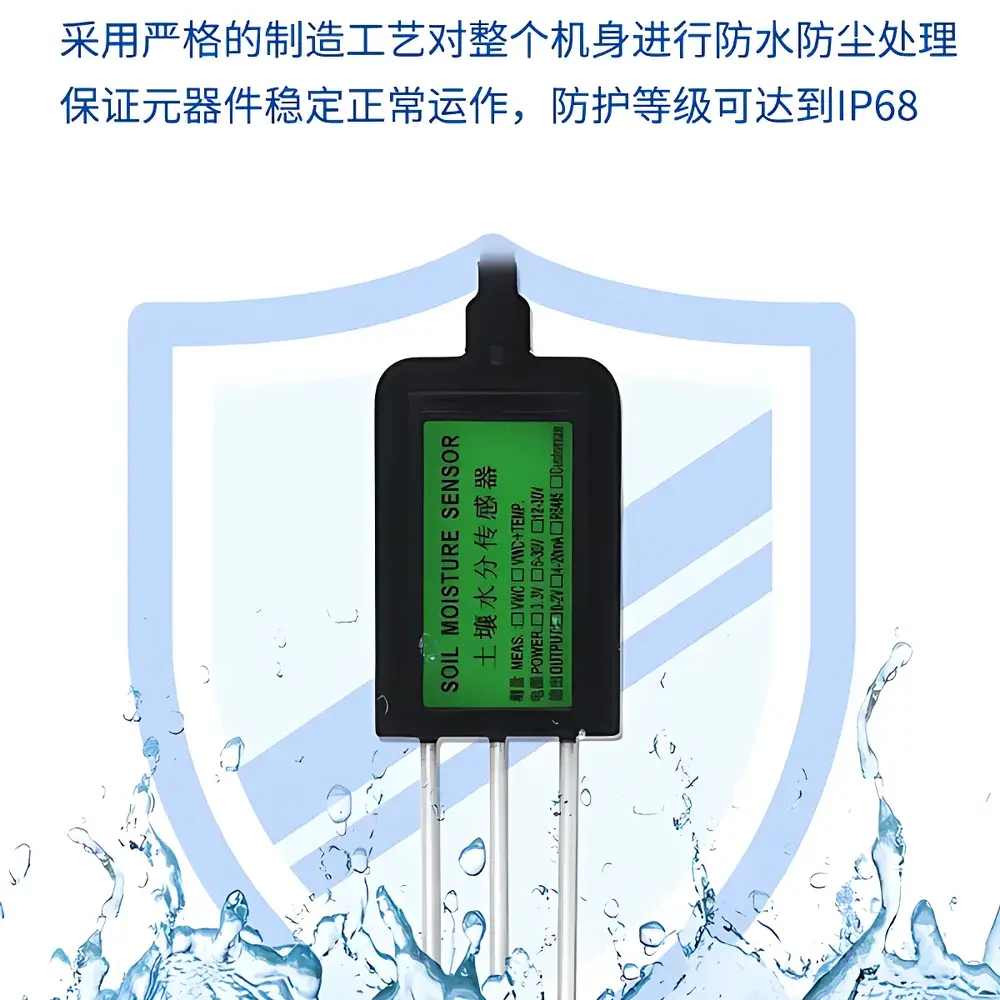
| IP Rating | IP68 |
| Storage Temperature | −40 °C to +80 °C |
| Soil Salinity Tolerance | Low Sensitivity |
Overview
The RenKe RS-WS-N01-TR is a rugged, field-deployable soil moisture and temperature sensor engineered for long-term in-situ monitoring in agricultural, ecological, hydrological, and environmental research applications. It employs frequency-domain reflectometry (FDR) principles to measure volumetric water content (θv) and integrates a high-stability thermistor for simultaneous temperature acquisition. Calibration was performed against gravimetric soil drying and validated against reference-grade German-manufactured sensors, ensuring traceable accuracy across diverse soil textures—from sandy loam to heavy clay—without significant drift due to electrolytic aging or salinity-induced polarization. The probe’s vacuum-encapsulated epoxy housing and 304 stainless steel electrodes provide structural integrity and electrochemical stability under continuous burial, enabling deployment in saturated, frozen, or saline environments where conventional capacitance-based sensors exhibit hysteresis or signal attenuation.
Key Features
- High-reproducibility FDR sensing architecture with factory calibration traceable to gravimetric standards
- Integrated dual-parameter measurement: volumetric soil moisture (±3% v/v) and temperature (±0.5 °C) within a single compact probe
- IP68-rated hermetic sealing using flame-retardant black epoxy resin; fully submersible and resistant to long-term electrolytic corrosion
- Wide operating voltage range (3.6–30 V DC), supporting solar-powered telemetry systems and battery-operated edge nodes
- RS-485 Modbus RTU interface with configurable slave address and baud rate (default: 9600 bps), compatible with industrial SCADA, LoRaWAN gateways, and PLCs
- Optimized mechanical design: 70 mm × 3 mm cylindrical stainless steel electrodes minimize soil disturbance during insertion and reduce root interference
Sample Compatibility & Compliance
The RS-WS-N01-TR is validated for use in mineral soils, organic substrates (e.g., peat, compost), and granular media including sand, vermiculite, and perlite. Its low sensitivity to bulk electrical conductivity (EC) ensures stable performance in soils with EC up to 4 dS/m—a threshold commonly encountered in irrigated croplands and reclaimed coastal zones. While not certified to ISO/IEC 17025 for metrological accreditation, the sensor conforms to functional requirements outlined in ASTM D5859-19 (Standard Guide for Soil Moisture Monitoring) and supports data collection protocols aligned with FAO-56 evapotranspiration modeling frameworks. For regulatory field studies, its output is suitable for GLP-compliant environmental monitoring when paired with audit-trail-capable data loggers.
Software & Data Management
Data acquisition relies on standard Modbus RTU protocol over RS-485, permitting seamless integration with open-source platforms (e.g., Node-RED, Grafana + InfluxDB) and commercial environmental monitoring suites (e.g., Campbell Scientific LoggerNet, HOBOware Pro). Each device supports configurable polling intervals and includes built-in error-checking (CRC-16). When deployed in multi-node networks, termination resistors (included) and proper A/B polarity ensure signal integrity over bus lengths up to 1,200 m. No proprietary software or cloud subscription is required; raw register values (holding registers 0x0000–0x0003) map directly to calibrated θv (%), temperature (°C), and diagnostic status flags—enabling transparent, auditable data pipelines compliant with FDA 21 CFR Part 11 when used with validated logging infrastructure.
Applications
- Precision irrigation scheduling in open-field agriculture and protected horticulture (greenhouses, vertical farms)
- Soil water balance modeling for watershed-scale hydrological forecasting and drought early-warning systems
- In situ validation of satellite-derived soil moisture products (e.g., SMAP, Sentinel-1)
- Long-term ecological monitoring in grassland, forest, and tundra ecosystems per LTER network protocols
- Quality control of soil amendments and compost maturation in waste treatment facilities
- Environmental impact assessments for landfill leachate plume tracking and remediation verification
FAQ
What is the recommended installation depth for optimal accuracy?
For most agronomic applications, insert the full 70 mm probe length vertically into undisturbed soil at depths corresponding to root zone profiles (e.g., 10–30 cm for shallow-rooted crops; 50–70 cm for perennial trees). Avoid air gaps or gravel layers around the probe shaft.
Can this sensor operate reliably in frozen soil?
It remains physically functional below 0 °C, but volumetric water readings decrease artificially in ice-dominated matrices due to reduced dielectric contrast between ice and soil solids. Users must apply empirical correction factors derived from local frost-thaw calibration curves.
Is RS-485 wiring polarity critical?
Yes—reversing A and B lines will prevent communication. Always verify terminal labeling and use twisted-pair cabling with shield grounded at one end only.
Does the sensor require periodic recalibration in the field?
No routine recalibration is needed under normal deployment conditions. However, cross-validation against gravimetric sampling is advised annually or after exposure to extreme pH (<4 or >9) or heavy metal contamination.
How does the sensor handle high-salinity soils?
Its FDR design minimizes salinity-induced error compared to TDR or capacitance sensors; deviation remains within ±3% up to 4 dS/m. Beyond that, site-specific calibration using known EC solutions is recommended.







