

RenKe RS-ZSYC-3S-G Online Dust Monitoring Station with PM2.5/PM10, Noise, and GPRS Connectivity
| Brand | RenKe |
|---|---|
| Origin | Shandong, China |
| Manufacturer | Yes |
| Country of Origin | China |
| Model | RS-ZSYC-3S-G |
| Instrument Type | Online |
| Measured Parameters | PM2.5, PM10, Sound Pressure Level (Noise) |
| Measurement Principle | Laser Scattering |
| Measurement Range | 0–1000 µg/m³ (PM) |
| Sampling Flow Rate | 16.67 L/min |
| Detection Limit | 1 µg/m³ |
| Temperature Sensor Range | −30 to +70 °C |
| Humidity Sensor Range | 0–99 %RH |
| Wind Speed Range | 0–60 m/s |
| Wind Direction | 8-Point Cardinal |
| Noise Range | 30–130 dB(A) |
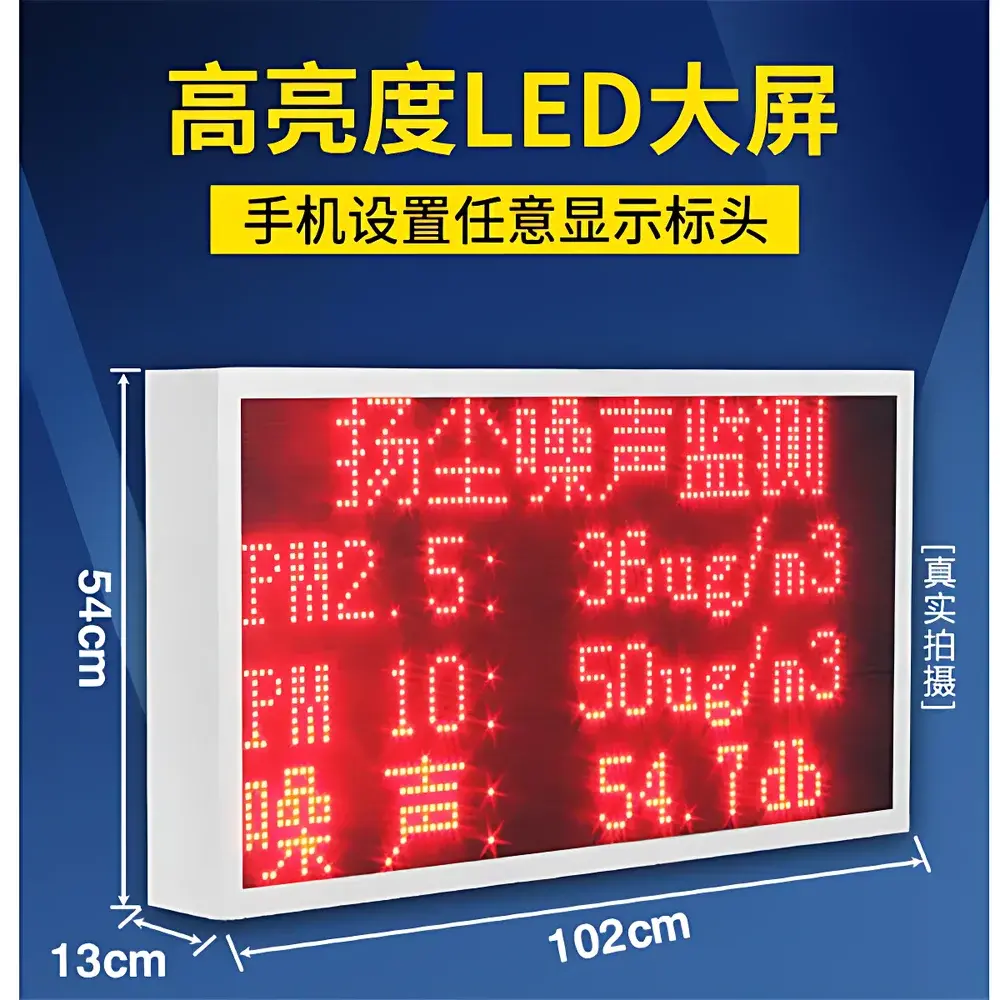
| LED Display Size | 57 cm × 105 cm |
| Communication | GPRS |
| Power Supply | AC 220 V |
Overview
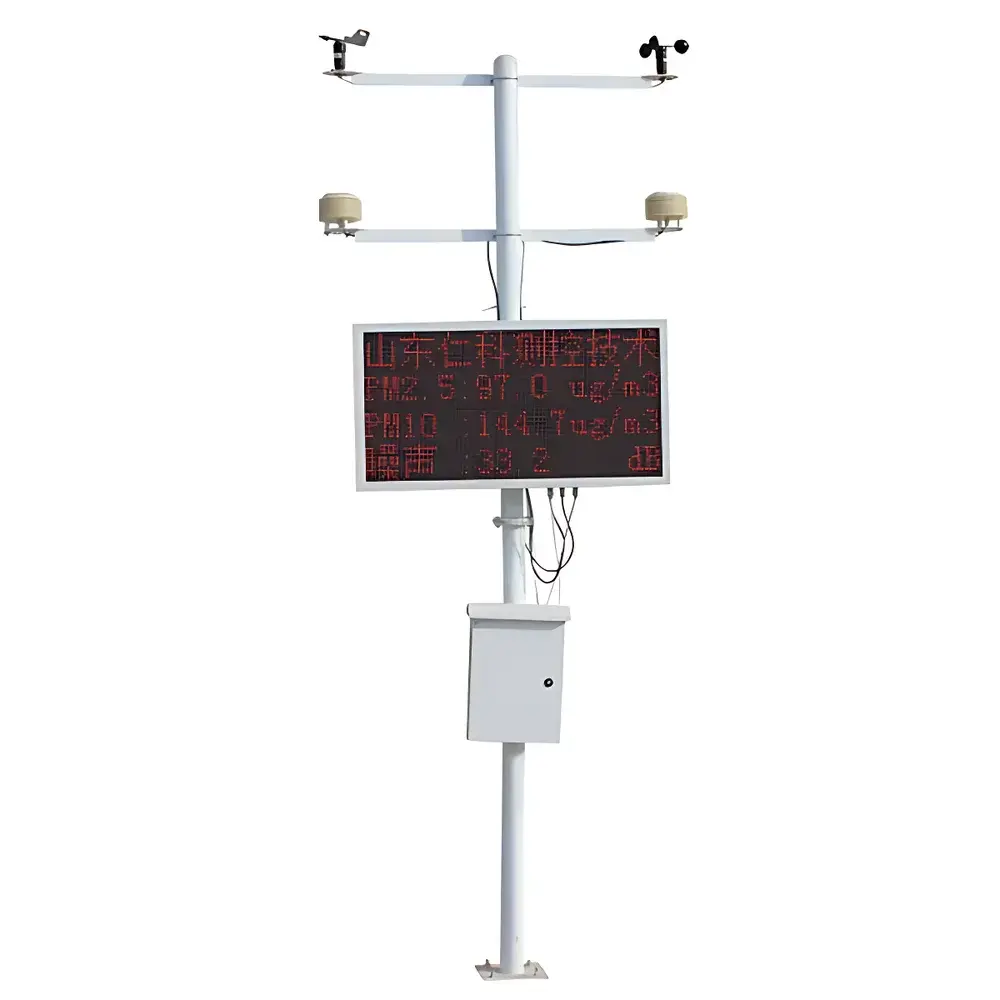
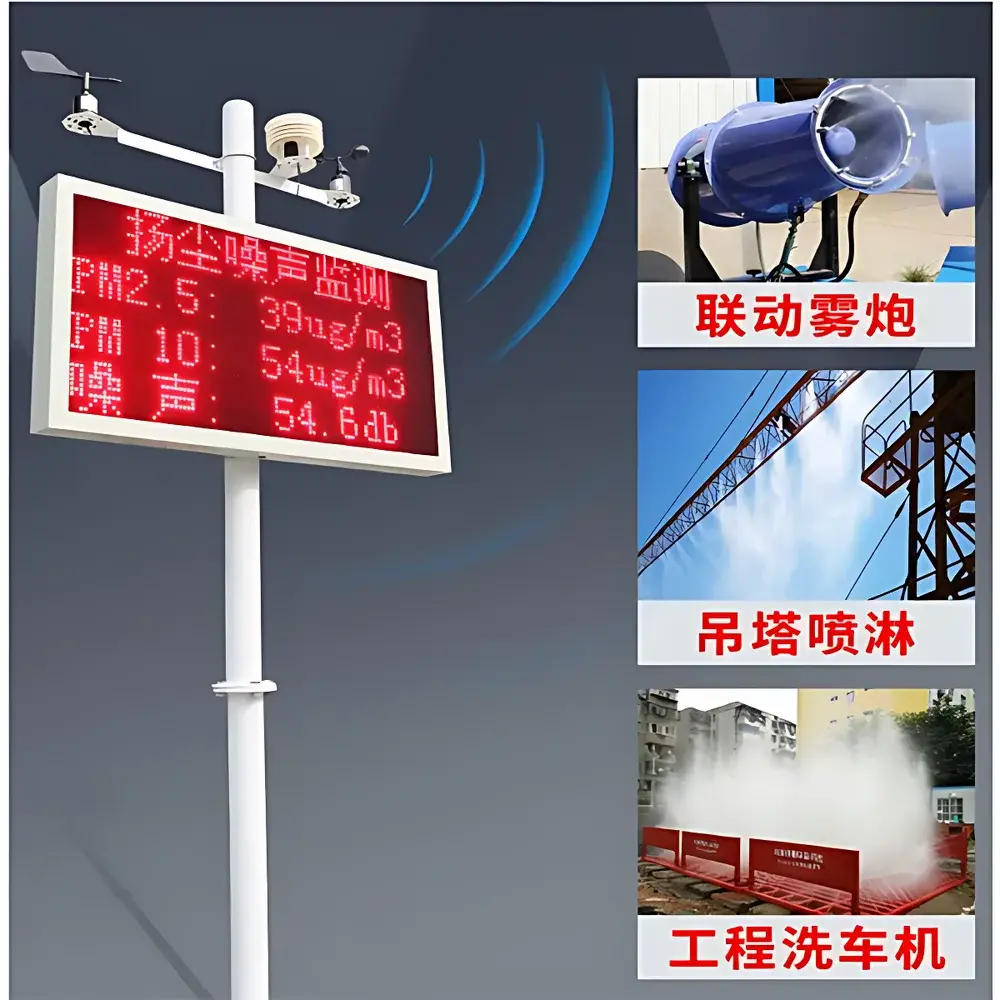
The RenKe RS-ZSYC-3S-G is an integrated online environmental monitoring station engineered for continuous, real-time surveillance of airborne particulate matter (PM2.5 and PM10) and ambient noise levels at construction sites, urban development zones, and industrial perimeters. It operates on the principle of laser light scattering—where a collimated laser beam interacts with suspended particles in an isokinetic sampling airstream, generating scattered light intensity proportional to particle concentration and size distribution. The instrument’s optical detection module is calibrated against gravimetric reference methods per ISO 12103-1 A2 test dust and validated under field conditions compliant with EN 15267-3 for continuous emission monitoring systems (CEMS). Designed for unattended operation in harsh outdoor environments, the station integrates meteorological sensing (temperature, relative humidity, wind speed, wind direction), acoustic measurement, and programmable relay control—enabling closed-loop integration with site mitigation equipment such as misting cannons.
Key Features
- Multi-parameter simultaneous acquisition: PM2.5, PM10, sound pressure level (dB(A)), air temperature, relative humidity, wind speed, and wind direction
- Laser scattering sensor with built-in flow control system ensuring stable 16.67 L/min sampling rate and minimizing particle loss due to diffusion or inertial deposition
- Integrated GPRS module supporting TCP/IP-based data transmission to cloud platforms; compatible with MQTT and HTTP(S) protocols for secure, low-latency telemetry
- Programmable dry-contact relay output (NO/NC) rated for 250 VAC / 5 A, designed for direct interfacing with external control systems—including secondary relays for fog cannon activation based on user-defined PM threshold triggers
- Outdoor-rated enclosure (IP65) with thermal management and condensation-resistant optics; operational temperature range: −20 °C to +60 °C
- Configurable LED display panel (57 cm × 105 cm) supporting real-time visualization of all measured parameters with customizable refresh intervals and unit formatting (µg/m³, °C, %RH, m/s, dB)
Sample Compatibility & Compliance
The RS-ZSYC-3S-G is optimized for ambient air sampling in non-explosive, non-corrosive environments typical of civil infrastructure projects. Its inlet design meets ISO 10780:2017 requirements for isokinetic sampling of coarse and fine particulates. All sensors are factory-calibrated traceable to NIST-certified standards where applicable. The device conforms to electromagnetic compatibility (EMC) directives per IEC 61000-6-2 (immunity) and IEC 61000-6-4 (emissions). Data logging and transmission architecture supports audit-ready record retention aligned with GLP principles. While not certified under EPA Method 201A or EU BREF BAT guidelines for regulatory-grade stack monitoring, it fulfills technical specifications outlined in China’s HJ 618-2011 and HJ 93-2013 for ambient PM monitoring in construction emission control applications.
Software & Data Management
Data from the RS-ZSYC-3S-G is transmitted via GPRS to a web-accessible platform supporting role-based user accounts, multi-site dashboard aggregation, and configurable alerting (SMS/email/webhook) upon parameter exceedance. Raw time-series data is stored in UTC timestamped CSV/JSON format with millisecond precision. Platform-side tools include trend analysis, statistical summaries (hourly/daily averages, 95th percentile noise), and exportable compliance reports. Firmware updates are delivered over-the-air (OTA) with digital signature verification. Audit trail functionality logs all configuration changes, calibration events, and user access—supporting documentation requirements under internal quality management systems (QMS) and third-party environmental audits.
Applications
- Real-time PM compliance monitoring at active construction sites subject to local municipal dust control ordinances
- Baseline and impact assessment for environmental impact statements (EIS) during pre-construction and operational phases
- Verification of dust suppression effectiveness (e.g., water spraying, tarpaulin coverage, windbreak installation)
- Urban air quality hotspot identification in proximity to roadworks, demolition, or material stockpiling areas
- Integration into smart city IoT infrastructures for cross-sensor correlation (e.g., correlating PM spikes with wind direction shifts or traffic flow patterns)
- Temporary deployment for event-related air quality management (e.g., festivals, parades, large-scale public works)
FAQ
What is the recommended maintenance interval for the optical chamber?
Optical path cleaning is advised every 30 days in high-dust environments; bi-weekly inspection is recommended during prolonged dry or windy conditions. Use only lint-free wipes and isopropyl alcohol (≥99%) to avoid lens coating damage.
Can the device be configured to trigger alarms based on multiple parameters simultaneously?
Yes—the embedded logic engine supports compound conditional rules (e.g., “if PM10 > 150 µg/m³ AND wind speed > 3 m/s, activate relay for 120 seconds”). Rules are defined and deployed remotely via the web interface.
Is the GPRS module compatible with international SIM cards?
The module supports quad-band GSM (850/900/1800/1900 MHz) and is interoperable with standard 2G/3G SIMs; however, carrier-specific APN configuration is required for regional network registration.
Does the system support time-synchronized data logging across multiple units?
Yes—each unit synchronizes its internal clock via NTP through the GPRS connection, ensuring sub-second alignment across distributed deployments for spatial-temporal analysis.
How is sensor drift compensated over extended field operation?
The firmware implements zero-point auto-compensation using periodic clean-air purging cycles (triggered hourly or on demand); full span calibration requires manual intervention with certified aerosol generators per manufacturer-recommended procedures.







