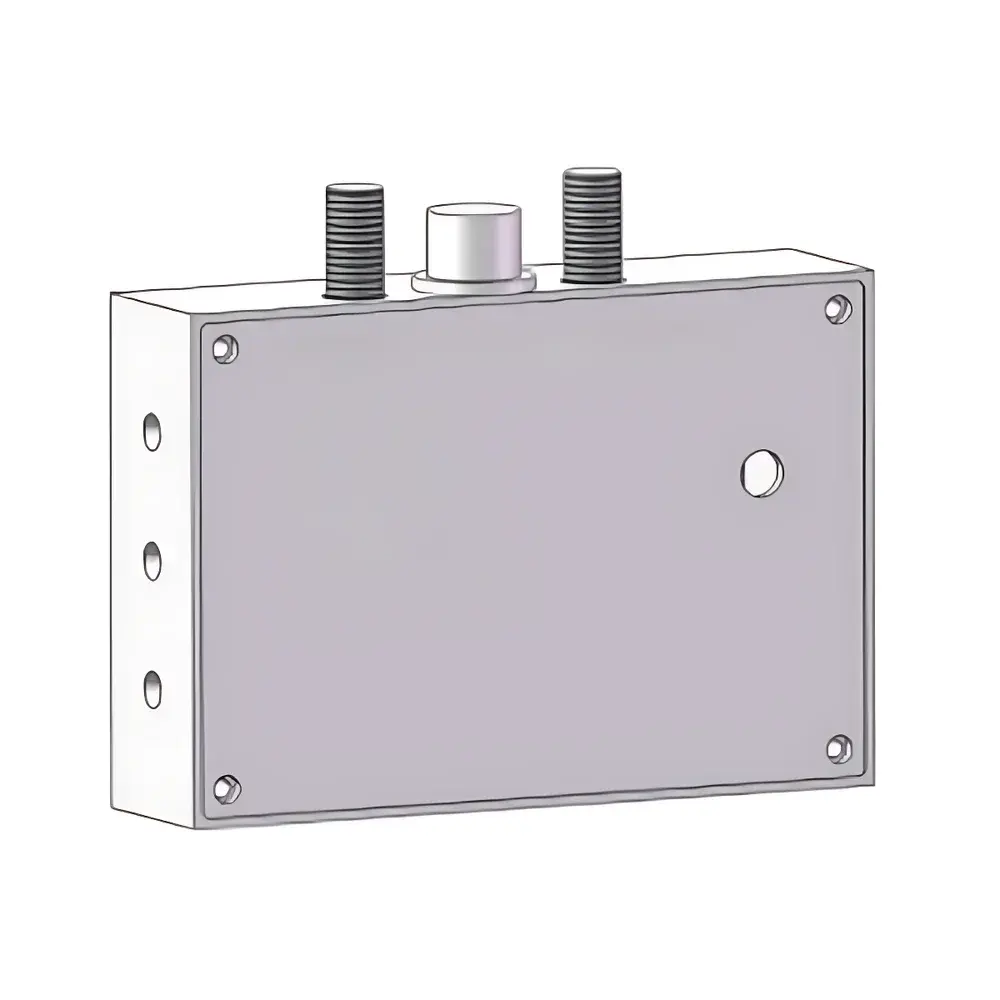
Resonant Photodetector (RPD) – Custom-Built Optoelectronic Detector for PDH Locking Applications
| Brand | OEM |
|---|---|
| Origin | China (Domestically Engineered & Manufactured) |
| Manufacturer Type | Authorized Distributor |
| Product Category | Import-Grade Domestic Instrumentation |
| Model | Resonant Photodetector (RPD) |
| Pricing | Upon Technical Consultation |
Overview
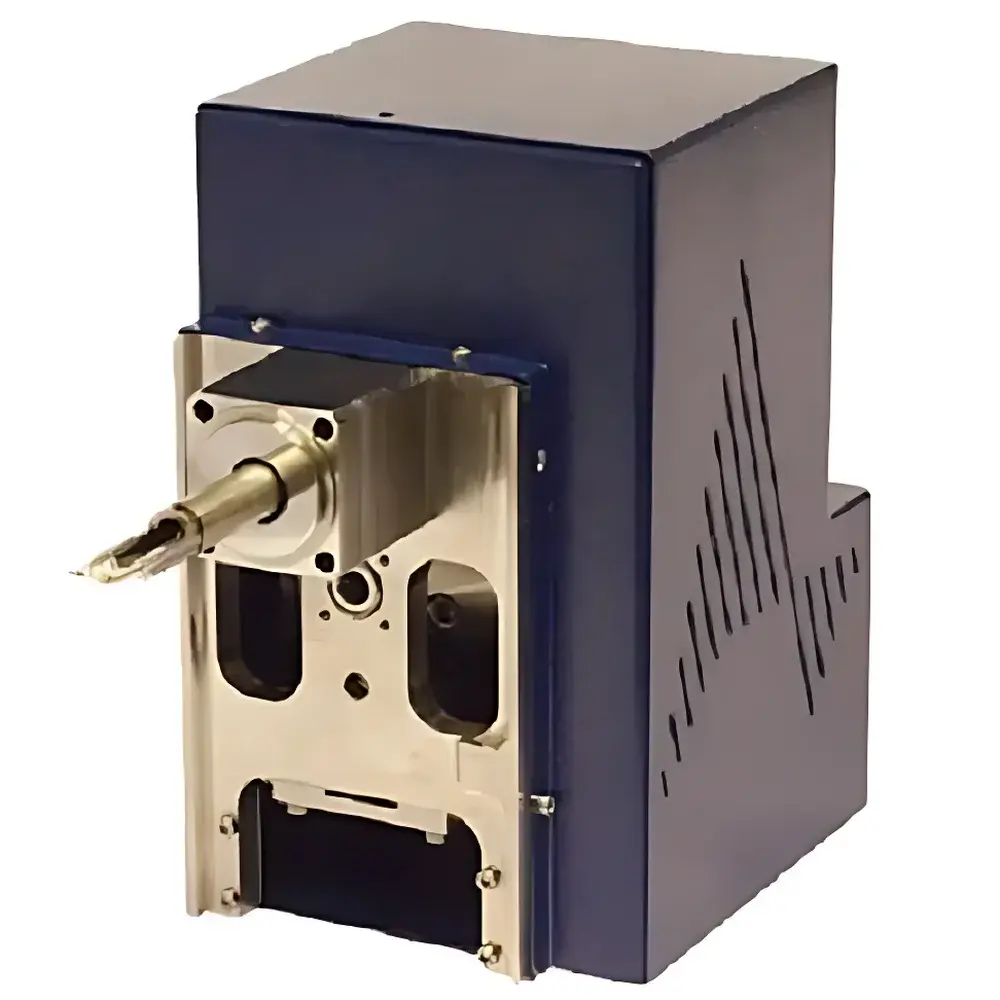
The Resonant Photodetector (RPD) is a purpose-engineered optoelectronic measurement instrument designed specifically for Pound–Drever–Hall (PDH) laser frequency stabilization systems. Unlike broadband photodetectors, the RPD leverages a passive LC resonant circuit integrated directly with the photodiode junction to provide sharply peaked spectral gain at user-defined modulation frequencies—thereby maximizing signal-to-noise ratio (SNR) for weak, phase-modulated optical signals while suppressing out-of-band noise. Its operation is grounded in fundamental resonant transimpedance amplification: incident photons generate photocurrent in either silicon (Si) or gallium arsenide (GaAs) photodiodes; this current flows through a high-Q LC tank network, producing voltage gain selectively within a narrow bandwidth centered on the resonant frequency (1–350 MHz, customizable). This architecture eliminates the need for post-detection RF filtering and avoids the thermal and shot-noise penalties inherent in wideband amplification stages. The RPD is not a generic photoreceiver but a system-level component optimized for closed-loop optical cavity locking, atomic interferometry, and ultra-stable laser referencing where error-signal slope, linearity, and dynamic range critically determine lock acquisition time and long-term stability.
Key Features
- Wavelength coverage: 400–1700 nm, supported by dual-material photodiode options — Si (400–1000 nm, 0.6 A/W responsivity) and GaAs (900–1700 nm, 1.0 A/W responsivity)
- Customizable resonant detection frequency: 1–350 MHz, factory-tuned to match specific PDH modulation carriers (e.g., 20 MHz, 35 MHz, 50 MHz standard variants)
- High-Q resonance: Q > 100 at target frequency, enabling sharp gain roll-off (>40 dB/decade) outside resonance
- DC-coupled transimpedance gain: 1 kV/A to 10 kV/A (configurable per model); AC-coupled small-signal gain: up to 1.8 × 10⁵ V/A
- Low noise equivalent power (NEP): 4.7 pA/√Hz (typical), measured at resonance under 5 V reverse bias
- Photodiode specifications: active area diameter 500 µm; junction capacitance 1–35 pF; reverse bias range 5–10 V
- Robust output interface: SMA, BNC, or LEMO connectors; 50 Ω output impedance; bipolar output voltage swing ±10 V
- Optical power handling: ≤10 mW typical saturation power; 30 mW damage threshold (CW, uniform illumination)
Sample Compatibility & Compliance
The RPD supports both free-space and fiber-coupled input configurations via optional adapters. It is compatible with standard PDH modulation schemes using EOMs operating in the 1–350 MHz range and integrates seamlessly into vacuum-compatible optical benches and vibration-isolated platforms. While not certified to IEC 61000 or CE as a standalone EMC product, its design adheres to laboratory-grade electromagnetic compatibility practices—including shielded enclosure, differential supply lines, and RF-grounded mechanical housing—to minimize coupling from adjacent RF sources. For GLP/GMP-aligned applications (e.g., quantum sensor calibration labs), full traceable test reports—including transfer function characterization, NEP validation, and DC/AC gain linearity verification—are available upon request. All units undergo individual resonance frequency verification using vector network analyzer (VNA)-based S₂₁ measurements prior to shipment.
Software & Data Management
The RPD operates as a hardware-only analog signal conditioning stage and requires no embedded firmware or driver software. Its analog output is fully compatible with industry-standard data acquisition systems (e.g., National Instruments PXI, Zurich Instruments HF2LI, Stanford Research Systems SR830) and lock-in amplifiers. When used in conjunction with PDH control software (e.g., LabVIEW-based PID loops, Python-controlled Moku:Lab FPGA systems), the RPD’s enhanced error-signal amplitude enables faster convergence and improved rejection of common-mode intensity noise. For auditability in regulated environments, raw detector output may be logged alongside timestamps and modulation parameters to satisfy FDA 21 CFR Part 11 requirements when paired with compliant DAQ software featuring electronic signatures and audit trails.
Applications
- PDH-based laser frequency stabilization for optical cavities (e.g., OPA cavities, Fabry–Pérot references)
- Atomic physics experiments requiring sub-Hz linewidth lasers (e.g., strontium lattice clocks, rubidium fountain standards)
- Quantum optics setups involving squeezed light detection, homodyne tomography, and cavity optomechanics
- Time-frequency dissemination over fiber links, where phase noise suppression at specific RF sidebands is critical
- Ultra-low-noise optical heterodyne detection in coherent LiDAR and gravitational wave detector readout chains
FAQ
What is the primary advantage of the RPD over a conventional broadband photodetector in PDH locking?
The RPD delivers >200× higher error-signal amplitude at the modulation frequency due to resonant gain enhancement, resulting in steeper zero-crossing slopes in the discriminant curve—directly improving lock-point stability, capture range, and immunity to low-frequency drift and broadband technical noise.
Can the resonant frequency be adjusted after purchase?
No—the LC network is fixed during manufacturing. However, multiple resonant variants (e.g., 34.5 MHz, 57.9 MHz, 101.2 MHz) are available off-the-shelf; custom frequencies are supported with lead-time consultation.
Is reverse bias voltage supplied externally or internally?
Reverse bias is provided via a dedicated four-conductor cable (+19 V white, +9 V red, −9 V blue, GND black) connected to an external regulated power module—ensuring low-noise, ripple-free biasing essential for stable junction capacitance and resonance Q.
Does the RPD support DC-coupled error signal extraction?
Yes—its dual-output architecture separates DC photocurrent (via “DC Signal” port) for beam alignment monitoring from AC error signal (via “AC Signal” port) for demodulation, preserving dynamic range and avoiding saturation during coarse lock acquisition.
What documentation accompanies each unit?
Each RPD ships with a calibration certificate listing measured resonance frequency, Q factor, DC/AC gain, NEP, and transfer function plot; mechanical drawings; electrical interface pinout; and safety-compliant operating instructions.