
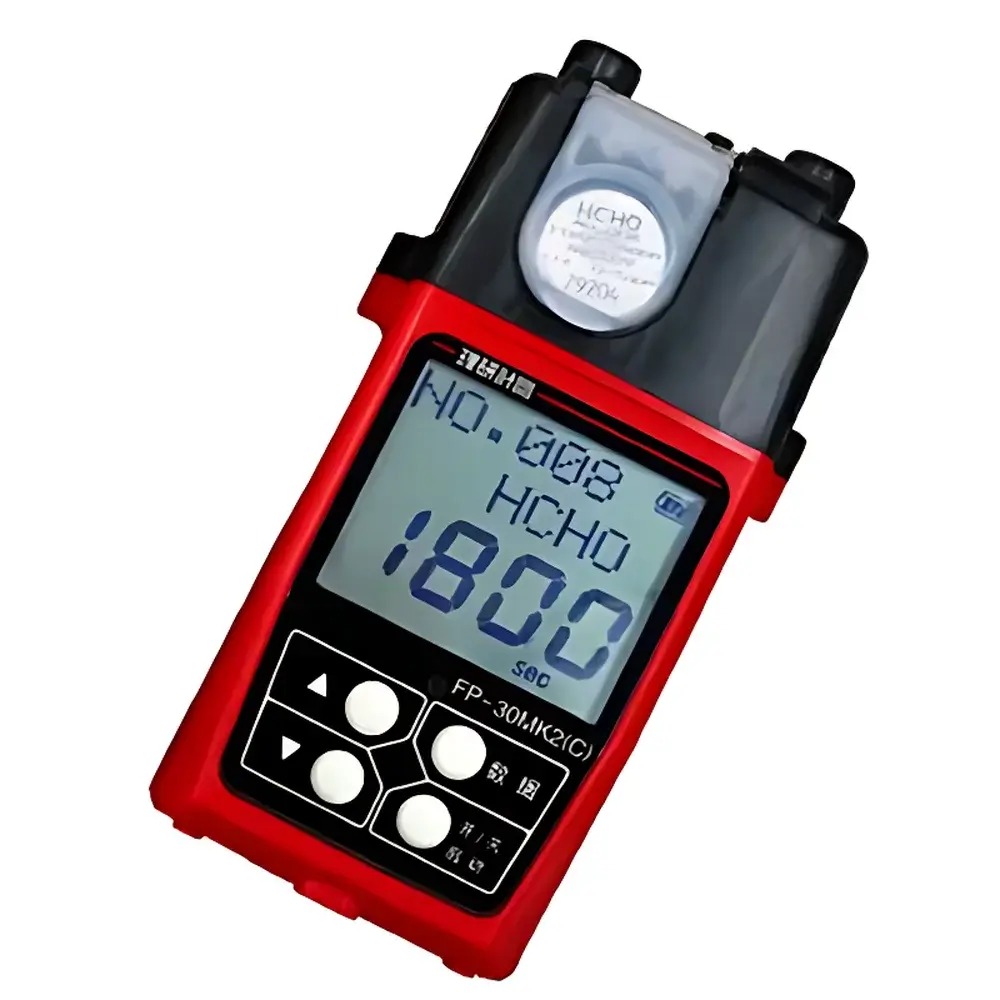
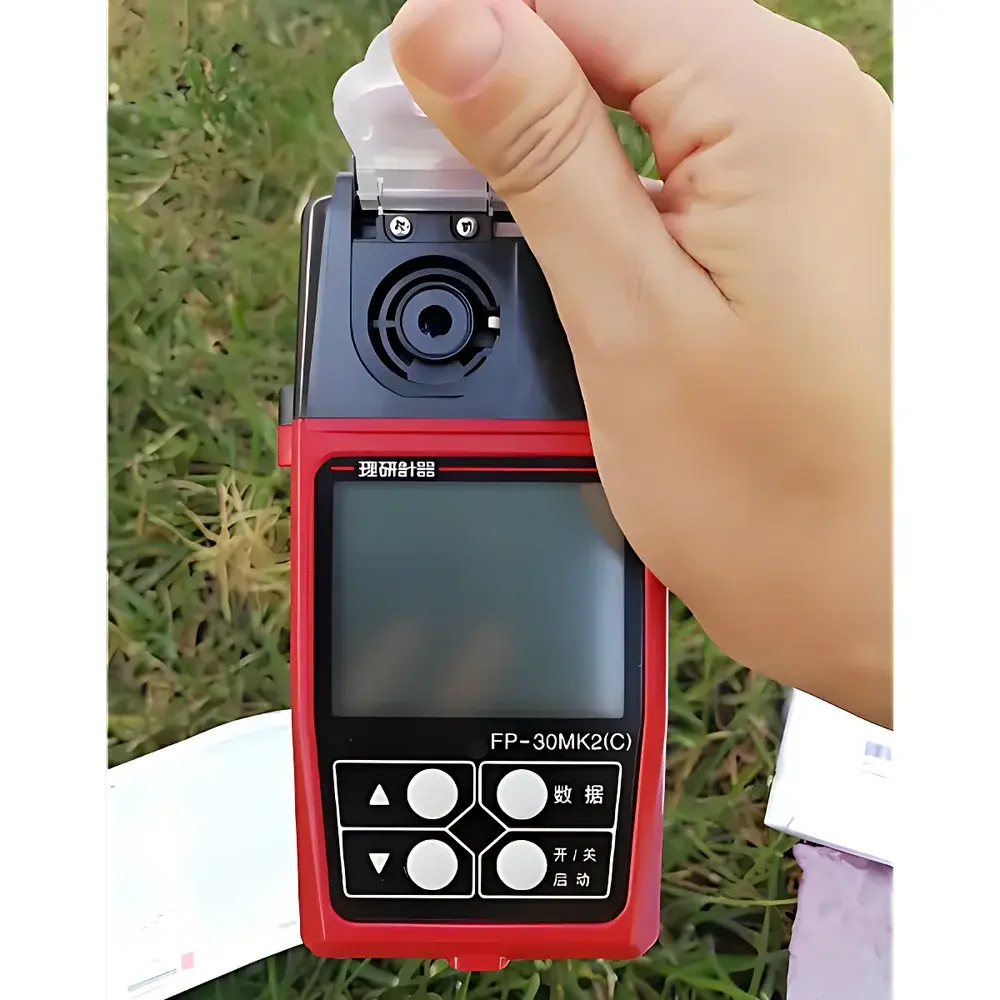
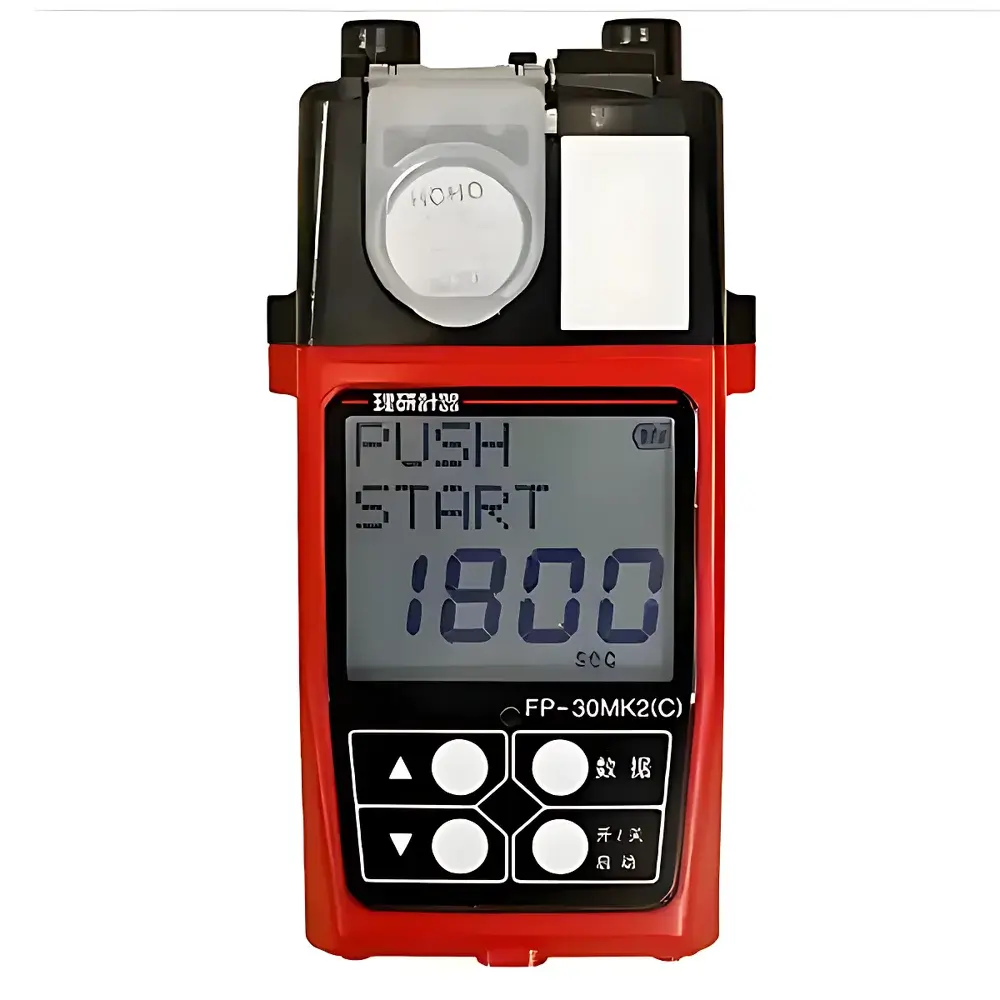
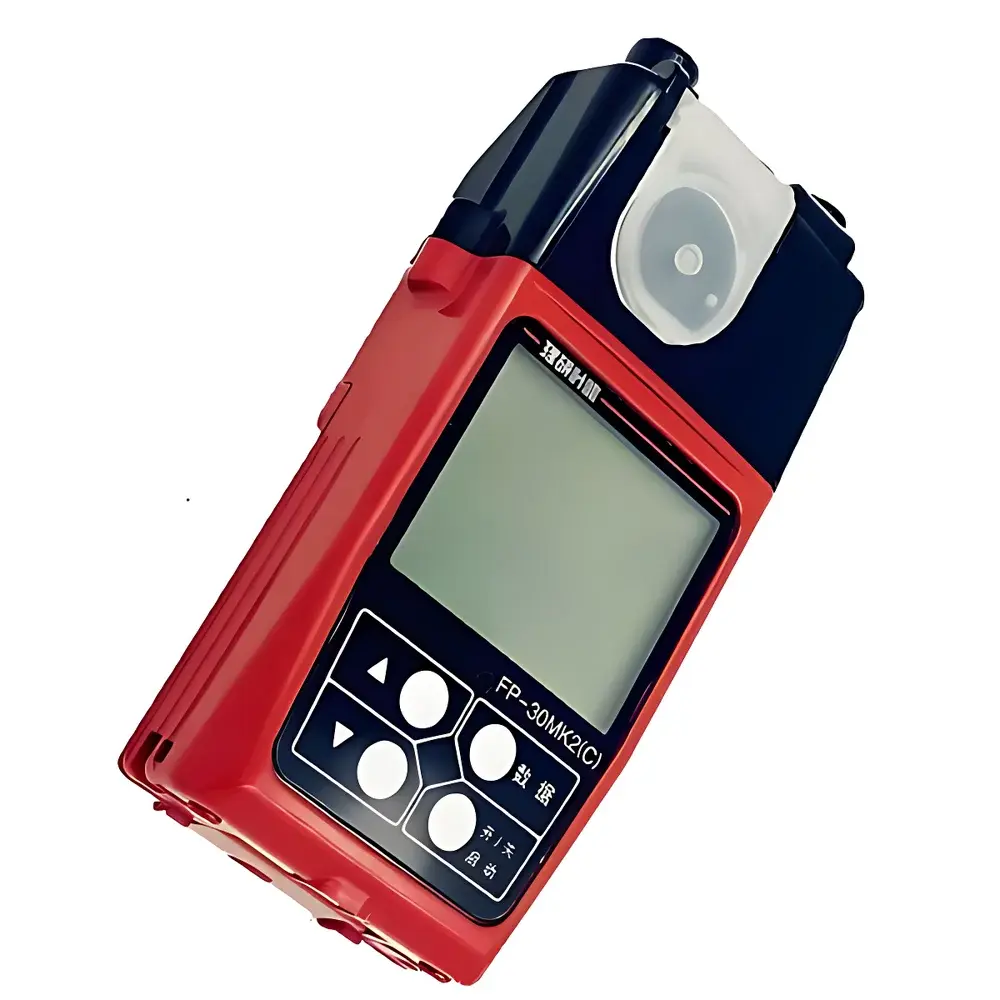
Riken Keiki FP-30MK2(C) Formaldehyde Analyzer
| Brand | Riken Keiki |
|---|---|
| Origin | Japan |
| Model | FP-30MK2(C) |
| Principle | Photometric Colorimetry |
| Measurement Range | 0–0.4 ppm / 0–1.0 ppm (equivalent to 0–0.50 mg/m³ / 0–1.250 mg/m³) |
| Resolution | 0.01 mg/m³ (low range) / 0.025 mg/m³ (high range) |
| Repeatability | ±5% of reading (typical, per JIS B 7981 and GB/T 18204.2–2014) |
| Sampling Method | Pump-aspirated |
| Response Time | t₉₅% ≤ 180 s |
| Operating Temperature | −10 °C to +40 °C |
| Operating Humidity | ≤90% RH, non-condensing |
| Flow Rate | 0.5 L/min |
| Data Storage | 99 auto-saved records |
| Battery Life | ~12 h (4 × AA alkaline, 20 °C, no backlight/alarm) |
| Dimensions | 80 × 150 × 40 mm (W×H×D) |
| Weight | ~250 g (excl. batteries) |
| Certifications | CPA (China Metrology Accreditation), compliant with GB/T 18204.2–2014 and JIS B 7981 |
Overview
The Riken Keiki FP-30MK2(C) Formaldehyde Analyzer is a portable, field-deployable instrument engineered for quantitative determination of formaldehyde (HCHO) in ambient air using photometric colorimetry — a standardized optical absorption technique based on the chromogenic reaction between formaldehyde and acetylacetone under acidic catalysis. This method generates a stable yellow-colored complex (3,5-diacetyl-1,4-dihydrolutidine), whose absorbance at 412 nm is linearly proportional to formaldehyde concentration. The FP-30MK2(C) implements this principle with integrated reagent cartridges, a precision optical detection module, and a calibrated micro-pump aspiration system. Designed for compliance with GB/T 18204.2–2014 “Public Place Hygiene Inspection Methods – Part 2: Chemical Pollutants” and aligned with JIS B 7981 “Portable Gas Detectors – Performance Requirements”, the analyzer delivers trace-level sensitivity (detection limit <0.02 mg/m³), high specificity in multi-pollutant environments, and robust performance across variable temperature and humidity conditions (−10 °C to +40 °C; ≤90% RH, non-condensing). Its compact form factor (80 × 150 × 40 mm), lightweight construction (~250 g), and battery-powered operation make it suitable for indoor air quality (IAQ) surveys, occupational hygiene assessments, post-renovation verification, and regulatory compliance monitoring in schools, offices, hospitals, and residential buildings.
Key Features
- Direct-read photometric analysis without pre-heating or calibration gas — ready for measurement immediately after insertion of pre-loaded reagent cartridge
- Dual-range measurement capability: 0–0.50 mg/m³ (0–0.4 ppm) and 0–1.250 mg/m³ (0–1.0 ppm), automatically selected based on concentration level
- High-contrast LCD display with backlight, showing real-time concentration (mg/m³), elapsed sampling time, battery status, and system diagnostics
- Integrated data logger storing up to 99 complete measurement records — including date/time stamp, average concentration, sampling duration (900 s or 1800 s), and instrument status flags
- Self-diagnostic firmware that continuously monitors sensor integrity, pump function, battery voltage, internal temperature, and optical path cleanliness — alerts displayed via icon and audible tone
- Compliant with China’s CPA (Certification of Pattern Approval) requirements and referenced in national standard GB/T 18204.2–2014 for formaldehyde testing in public places
Sample Compatibility & Compliance
The FP-30MK2(C) is optimized for gaseous formaldehyde in ambient air matrices. It exhibits minimal cross-sensitivity to common interferents such as methanol, ethanol, acetaldehyde, and nitrogen dioxide when operated within specified environmental limits. Sample introduction occurs via a constant-flow (0.5 L/min) diaphragm pump, ensuring consistent volumetric draw and reproducible integration over defined sampling intervals (15 or 30 minutes). The analyzer meets the metrological traceability requirements outlined in JJF 1001–2011 (General Terminology and Definitions for Metrology) and supports GLP-aligned documentation workflows through its timestamped storage and error-flagging architecture. While not intrinsically safe for Class I Division 1 hazardous locations, it is rated for general indoor/outdoor use in non-explosive atmospheres per IEC 61000-6-3 (EMC immunity) and IEC 60529 (IP20 ingress protection).
Software & Data Management
Data export is performed manually via visual readout and manual transcription, as the FP-30MK2(C) does not feature digital communication interfaces (e.g., USB, Bluetooth, or RS-232). All stored records are retained in non-volatile memory and persist through battery replacement. Each entry includes: acquisition timestamp (real-time clock with calendar), average HCHO concentration (mg/m³), total sampling duration, and diagnostic flags (e.g., low battery, pump fault, temperature out-of-range). The device supports audit-ready recordkeeping for QA/QC procedures in laboratories and third-party inspection agencies. For organizations requiring electronic data capture, external logging via timed photography or voice annotation is recommended to maintain chain-of-custody integrity in accordance with ISO/IEC 17025:2017 clause 7.5.2.
Applications
- Indoor Air Quality (IAQ) assessment in newly constructed or renovated buildings prior to occupancy
- Workplace exposure monitoring in furniture manufacturing, plywood production, and textile finishing facilities
- Regulatory compliance verification for schools, kindergartens, elderly care centers, and healthcare facilities under GB 50325–2020 and GB/T 18883–2002
- Field validation of HVAC system effectiveness and air purification device performance
- Epidemiological studies requiring rapid, on-site formaldehyde screening across multiple sampling points
- Technical support for environmental consulting firms conducting residential IAQ audits
FAQ
What formaldehyde measurement standard does the FP-30MK2(C) comply with?
It conforms to GB/T 18204.2–2014 (Method 1: Acetylacetone Spectrophotometry) and aligns with JIS B 7981 for portable gas analyzers.
Does the instrument require zero or span calibration before each use?
No — it operates with factory-calibrated optical path and pre-validated reagent cartridges; only cartridge replacement is required between measurements.
How is measurement uncertainty characterized for this device?
Per manufacturer specifications and verification testing per JJG 693–2011, typical expanded uncertainty (k=2) is ±5% of reading within the linear range, excluding sampling variability.
Can the FP-30MK2(C) be used outdoors in high-humidity environments?
Yes, provided relative humidity remains below 90% RH and no condensation forms on the optical window or sampling inlet.
Is the reagent cartridge interchangeable with earlier FP-30 series models?
Yes — the FP-30MK2(C) uses the same standardized acetylacetone-based reagent cartridge (Part No. FP-CAR-01) as FP-30MK2 and FP-30MKII units.
Related Products







