
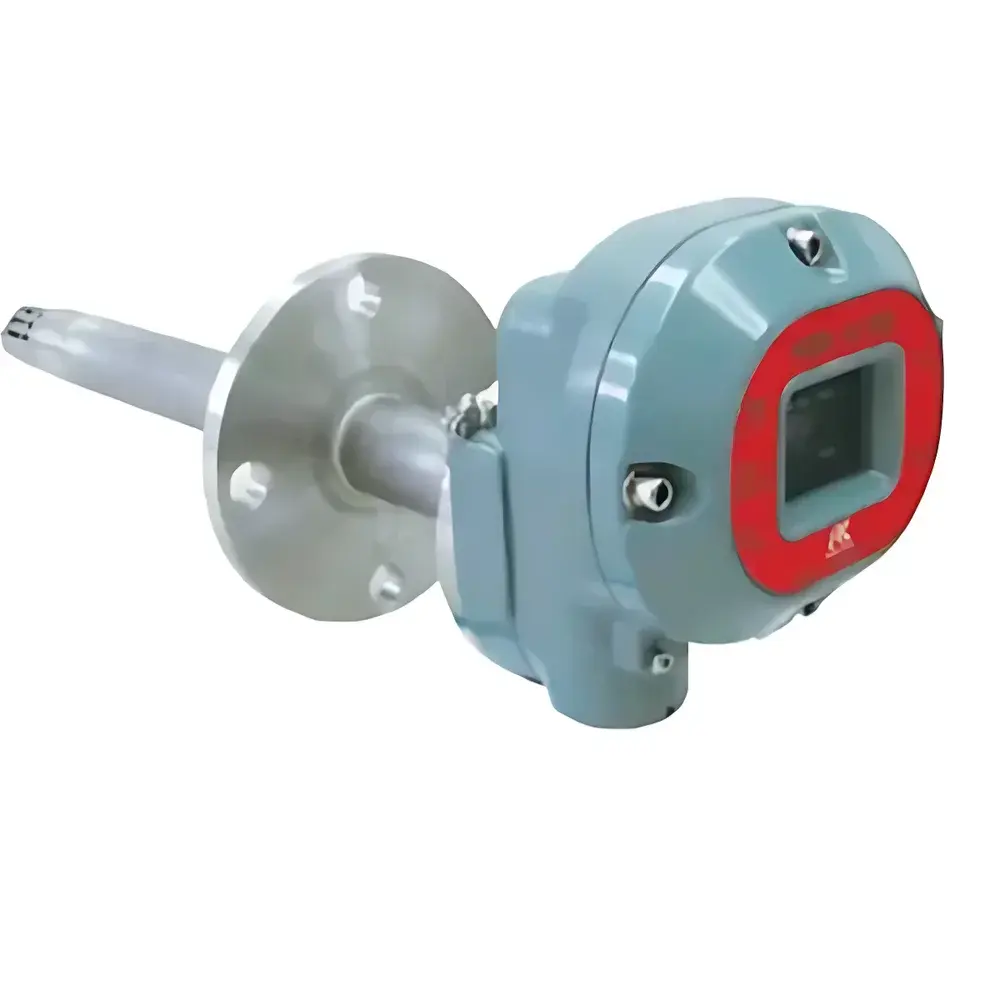
RIKEN KEIKI SD-2500 Explosion-Proof Catalytic Combustible Gas Detector
| Brand | RIKEN KEIKI |
|---|---|
| Origin | Japan |
| Model | SD-2500 |
| Detection Principle | Catalytic Bead (Pellistor) Combustion |
| Explosion Protection Rating | Ex d IIB T4 Gb |
| Operating Temperature Range | 0–250 °C |
| Display | Integrated LED Concentration Indicator |
| Input Power | 24 V DC (loop-powered) |
| Output Signal | 4–20 mA analog output with HART protocol support |
| Certifications | JIS ATEX, IECEx, UL/cUL Class I Div 1, FM Approved |
| Enclosure Rating | IP66/IP67 |
| Sensor Life Expectancy | ≥3 years typical in clean air environments |
Overview
The RIKEN KEIKI SD-2500 is an intrinsically robust, explosion-proof catalytic combustible gas detector engineered for continuous, reliable monitoring of hydrocarbon and other combustible vapors in high-risk industrial environments. Utilizing the well-established catalytic bead (pellistor) principle, the SD-2500 detects gases through controlled surface combustion on a heated platinum coil embedded in a porous ceramic bead. This exothermic reaction produces a measurable resistance change proportional to gas concentration—enabling linear, repeatable measurement across its calibrated range (typically 0–100% LEL for methane, propane, or hexane). Designed specifically for Zone 1 and Division 1 hazardous locations, the SD-2500 complies with international explosion protection standards including IEC 60079-0/-1/-11, ATEX 2014/34/EU, and UL 913 8th Edition. Its rugged stainless-steel housing and hermetically sealed sensor module ensure long-term stability under thermal cycling, mechanical vibration, and exposure to aggressive solvent vapors—including high-boiling-point compounds such as xylene, ethyl acetate, and glycol ethers—where conventional electrochemical or PID sensors may exhibit drift or poisoning.
Key Features
- Integrated LED display with real-time %LEL concentration readout—eliminates need for external indicator or alarm units
- Extended operational temperature range of 0–250 °C, validated per JIS C 0901 and IEC 60079-0 Annex E; uniquely supports hot-process monitoring in distillation columns, reactor jackets, and drying ovens
- Catalytic sensor optimized for high-boiling-point solvents (bp > 150 °C), with enhanced thermal management to prevent catalyst sintering or carbon fouling
- Explosion-proof enclosure rated Ex d IIB T4 Gb per IEC 60079-1, suitable for Group IIB gas atmospheres (e.g., ethylene, acetone, MEK)
- 4–20 mA analog output with HART 7 protocol support for bidirectional configuration, diagnostics, and calibration traceability
- Loop-powered design (24 V DC nominal) compatible with standard safety barriers and DCS/PLC input cards meeting IEC 61511 SIL 2 requirements
- Front-panel push-button interface with tactile feedback—no tools required for zero adjustment, span calibration, or alarm setpoint modification
Sample Compatibility & Compliance
The SD-2500 is validated for detection of Class I combustible gases and vapors defined in NFPA 505 and OSHA 1910.120, including but not limited to methane, propane, hydrogen, gasoline vapor, toluene, and ethanol. It is explicitly tested and certified for use in environments containing high-boiling-point organic solvents that challenge conventional detection methods. Compliance documentation includes full test reports from RIKEN KEIKI’s JQA-accredited laboratory, aligned with ISO/IEC 17025:2017. The device meets functional safety requirements per IEC 61508 Ed.2 (SIL 2 capable when integrated into a certified SIS), and supports audit-ready calibration logs compliant with FDA 21 CFR Part 11 when paired with RIKEN’s optional PC-based configuration software (SD-Config v3.2).
Software & Data Management
While the SD-2500 operates as a standalone field instrument, it interfaces seamlessly with RIKEN KEIKI’s SD-Config suite via HART modem connection. This Windows-based application enables full parameterization—including alarm thresholds (pre-alarm, alarm, fault), damping time (0.1–30 s), unit selection (%LEL or ppm), and sensor diagnostic history (zero drift, span loss, response time decay). All configuration changes are timestamped and user-logged, supporting GLP/GMP data integrity requirements. Optional integration with Modbus RTU gateways allows centralized monitoring within SCADA or MES platforms without compromising intrinsic safety integrity.
Applications
- Continuous monitoring in chemical reactor headspaces and condenser vents where solvent vapors exceed 200 °C
- Leak detection in solvent recovery systems handling acetone, MEK, or THF at elevated temperatures
- Safety interlock for inert gas purging sequences in pharmaceutical fluid-bed dryers
- Area monitoring in paint spray booths and coating lines with high-VOC, high-boiling-point formulations
- Process safety management (PSM) compliance verification per OSHA 1910.119 in refineries and petrochemical plants
FAQ
What gases can the SD-2500 detect?
It detects combustible gases and vapors with ignition temperatures compatible with catalytic bead technology—including methane, propane, hydrogen, gasoline, toluene, xylene, and high-boiling solvents up to 250 °C.
Is the SD-2500 suitable for SIL-rated safety loops?
Yes—when installed with certified barriers and configured per RIKEN’s Safety Manual Rev. 4.1, it supports SIL 2 applications under IEC 61511.
Does it require periodic bump testing?
Per IEC 62066 and OSHA 1910.120, daily bump testing is recommended prior to each shift; full calibration every 3–6 months depending on exposure conditions.
Can it operate in saturated humidity or corrosive atmospheres?
The IP66/IP67-rated housing resists ingress of water and dust, but prolonged exposure to H₂S, Cl₂, or siloxanes may poison the catalyst—use of inlet filters and scheduled sensor replacement is advised.
How is calibration performed?
Zero calibration uses certified zero air; span calibration employs certified test gas (e.g., 50% LEL methane in air) delivered via diffusion or regulated flow at 0.5 L/min—procedure documented in RIKEN Technical Bulletin TB-SD2500-07.





