RM Young 41342 Platinum Resistance Air Temperature Sensor
| Brand | RM Young |
|---|---|
| Origin | USA |
| Model | 41342 |
| Sensor Type | 1000 Ω Pt RTD (Class A) |
| Output Options | 4-wire Pt RTD / 0–1 VDC (5 mA, 8–24 VDC supply) / 4–20 mA (20 mA, 12–30 VDC supply) |
| Temperature Range | –50 to +50 °C |
| Calibration Accuracy at 0 °C | ±0.3 °C (NIST-traceable certificate included) |
| Optional Enhanced Accuracy | ±0.1 °C |
| Recommended Radiation Shields | Gill 41003P Passive Multi-Plate Shield or 43502 Active Ventilated Shield |
| Compliance | NIST-traceable calibration, ISO/IEC 17025-compliant calibration procedures |
Overview
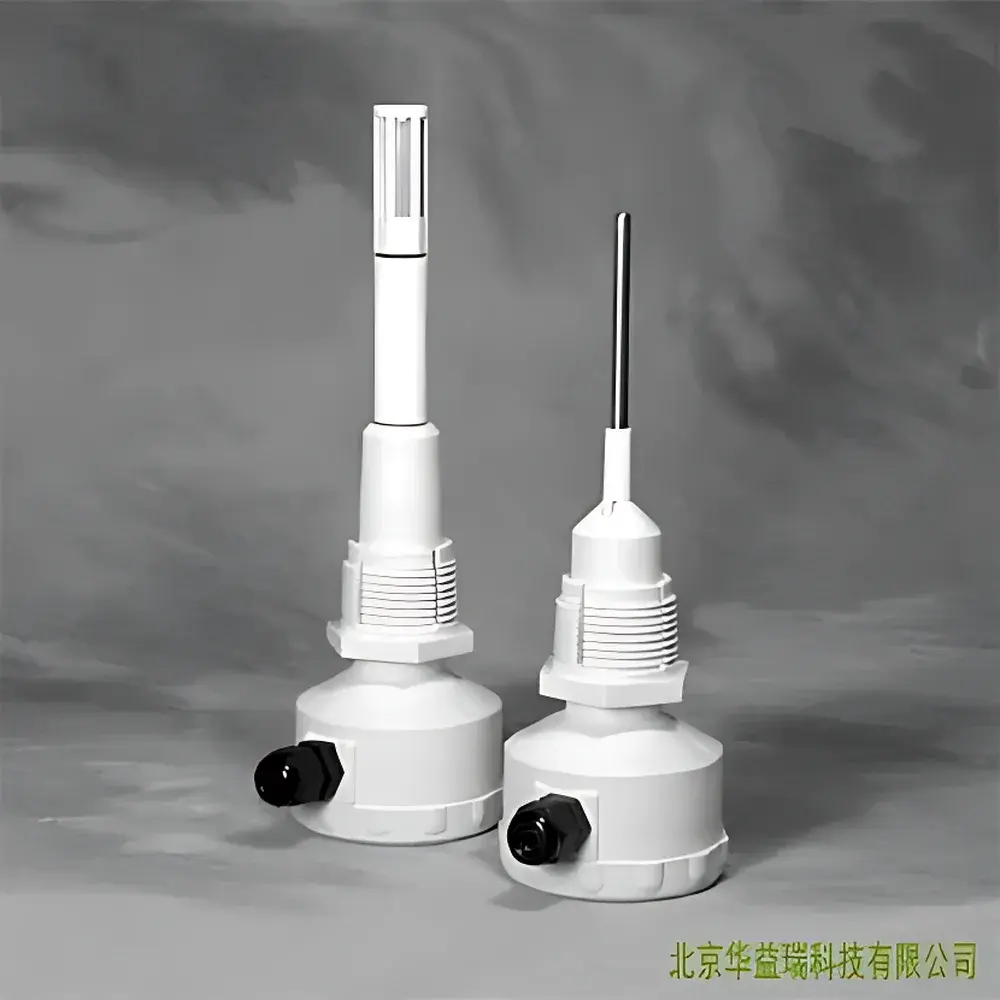
The RM Young 41342 Platinum Resistance Air Temperature Sensor is a high-stability, precision-grade instrument engineered for meteorological, environmental monitoring, and long-term climatological applications requiring traceable, low-drift temperature measurement in ambient air. Based on the internationally standardized 1000 Ω platinum resistance thermometer (Pt1000) element conforming to IEC 60751 Class A tolerances, the 41342 delivers exceptional thermal stability and repeatability across its operational range of –50 °C to +50 °C. Its four-wire configuration eliminates lead resistance errors—ensuring true resistance measurement independent of cable length or ambient temperature gradients along the conductor path. Unlike thermistor- or thermocouple-based alternatives, the Pt1000 sensor exhibits near-linear response, minimal hysteresis, and proven long-term drift characteristics below 0.02 °C per year under controlled exposure conditions—making it suitable for networks requiring inter-site comparability and multi-decade data consistency.
Key Features
- Four-wire Pt1000 RTD sensing element (1000 Ω nominal at 0 °C), optimized for low self-heating and high signal-to-noise ratio
- Three mutually exclusive output configurations: native 4-wire resistance output (standard), isolated 0–1 VDC analog voltage (excitation-dependent), or loop-powered 4–20 mA current output
- NIST-traceable calibration certificate supplied with each unit; standard accuracy ±0.3 °C at 0 °C; optional high-accuracy calibration available to ±0.1 °C
- Robust stainless-steel probe housing with PTFE-insulated leads rated for outdoor exposure and UV resistance
- Integrated junction box at cable termination for secure, weather-resistant field wiring and signal conditioning interface
- Designed for seamless integration with RM Young’s passive (41003P) and active (43502) radiation shields to minimize solar loading and convective bias
Sample Compatibility & Compliance
The 41342 is intended exclusively for ambient air temperature measurement in open-air or shielded atmospheric environments. It is not designed for immersion, duct, or surface-contact applications. Its performance complies with WMO Guide to Meteorological Instruments and Methods of Observation (CIMO Guide, Chapter 4) requirements for Class II temperature sensors. All calibration procedures follow ISO/IEC 17025-accredited practices, with uncertainty budgets documented per ILAC-P10:2022. The sensor meets CE marking requirements for electromagnetic compatibility (EMC Directive 2014/30/EU) and RoHS 2011/65/EU material restrictions. When deployed with Gill 41003P or 43502 radiation shields, the combined system satisfies ASTM D5465–22 and ISO 7726:2022 standards for radiant heat error mitigation in outdoor air temperature sensing.
Software & Data Management
The 41342 operates as a transducer-level device and does not include embedded firmware or onboard digital processing. Its analog outputs are compatible with industry-standard data loggers (e.g., Campbell Scientific CR1000X, Onset HOBO RX3000, Delta-T DL2e) supporting Pt1000 resistance input, millivolt/voltage differential channels, or 4–20 mA loop inputs. For voltage output mode, differential measurement is strongly recommended to reject common-mode noise from long cable runs or electrically noisy sites. All calibration coefficients—including Callendar-Van Dusen parameters—are provided in the NIST certificate and may be directly imported into logger configuration software or post-processing tools (e.g., MATLAB, Python SciPy, R) for real-time linearization. Audit trails, calibration history, and sensor metadata can be maintained in accordance with GLP/GMP-aligned environmental data management systems compliant with FDA 21 CFR Part 11 when integrated with validated data acquisition platforms.
Applications
- Surface meteorological networks (ASOS, AWOS, synoptic stations)
- Climate reference stations and GCOS-certified observing sites
- Air quality monitoring systems requiring co-located temperature compensation
- Ecological research plots and flux towers (e.g., AmeriFlux, ICOS)
- Calibration transfer standards for secondary sensor verification
- Long-term urban heat island (UHI) studies demanding interannual stability
FAQ
Is the 41342 compatible with third-party data loggers beyond RM Young systems?
Yes—the 4-wire resistance output is universally compatible with any data logger supporting Pt1000 RTD inputs. Voltage and current outputs interface with standard analog input modules meeting respective excitation and load specifications.
Why is differential measurement recommended for the 0–1 VDC output?
Single-ended voltage measurements are susceptible to ground loops and electromagnetic interference over extended cable lengths; differential acquisition rejects common-mode noise and improves measurement fidelity in field deployments.
Can the 41342 be used without a radiation shield?
No—it must be installed within a WMO-compliant radiation shield (e.g., Gill 41003P or 43502) to ensure radiative equilibrium and prevent solar heating artifacts that compromise measurement validity.
What documentation accompanies the sensor upon shipment?
Each unit ships with a NIST-traceable calibration certificate (including uncertainty budget), mechanical installation guide, electrical interface specifications, and compliance declarations for CE, RoHS, and EMC.
Is field recalibration supported?
The 41342 is not user-recalibratable; however, periodic recalibration at an ISO/IEC 17025-accredited laboratory is recommended every 2–3 years for critical climate applications or per site-specific QA/QC protocols.
Related Products