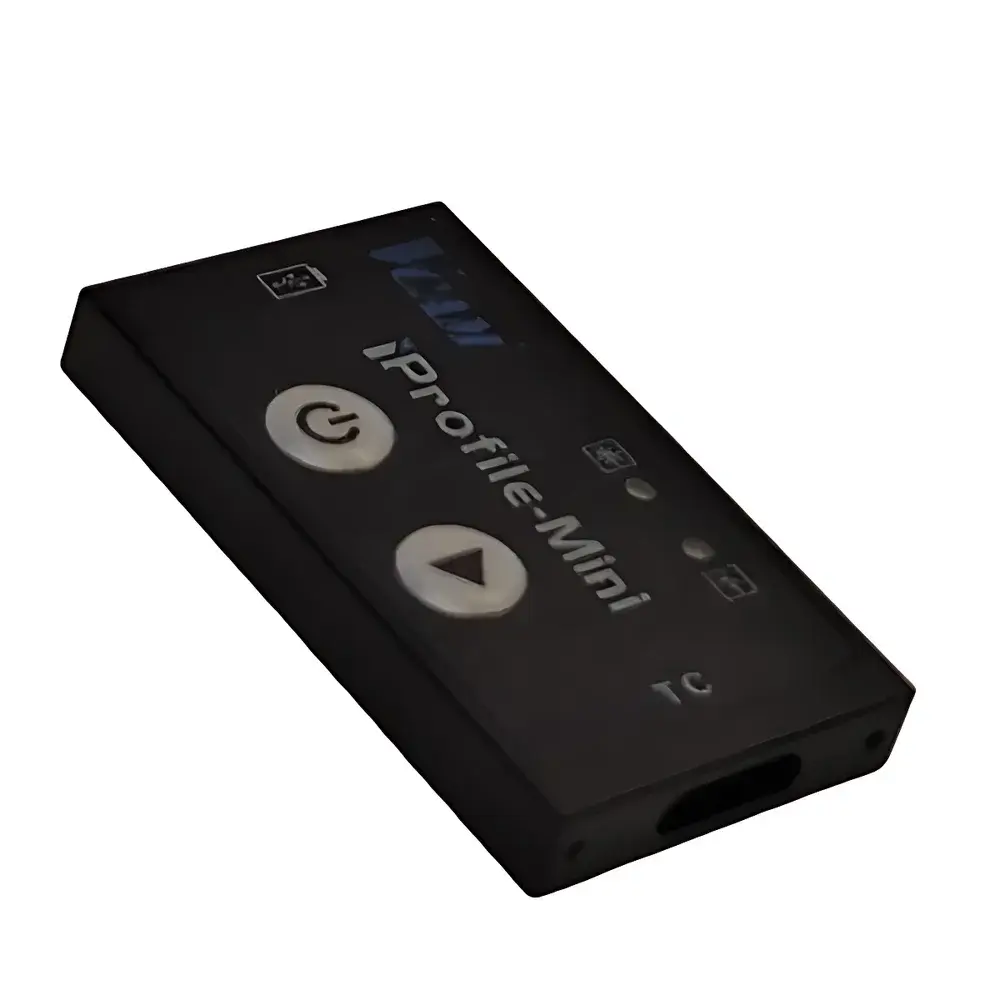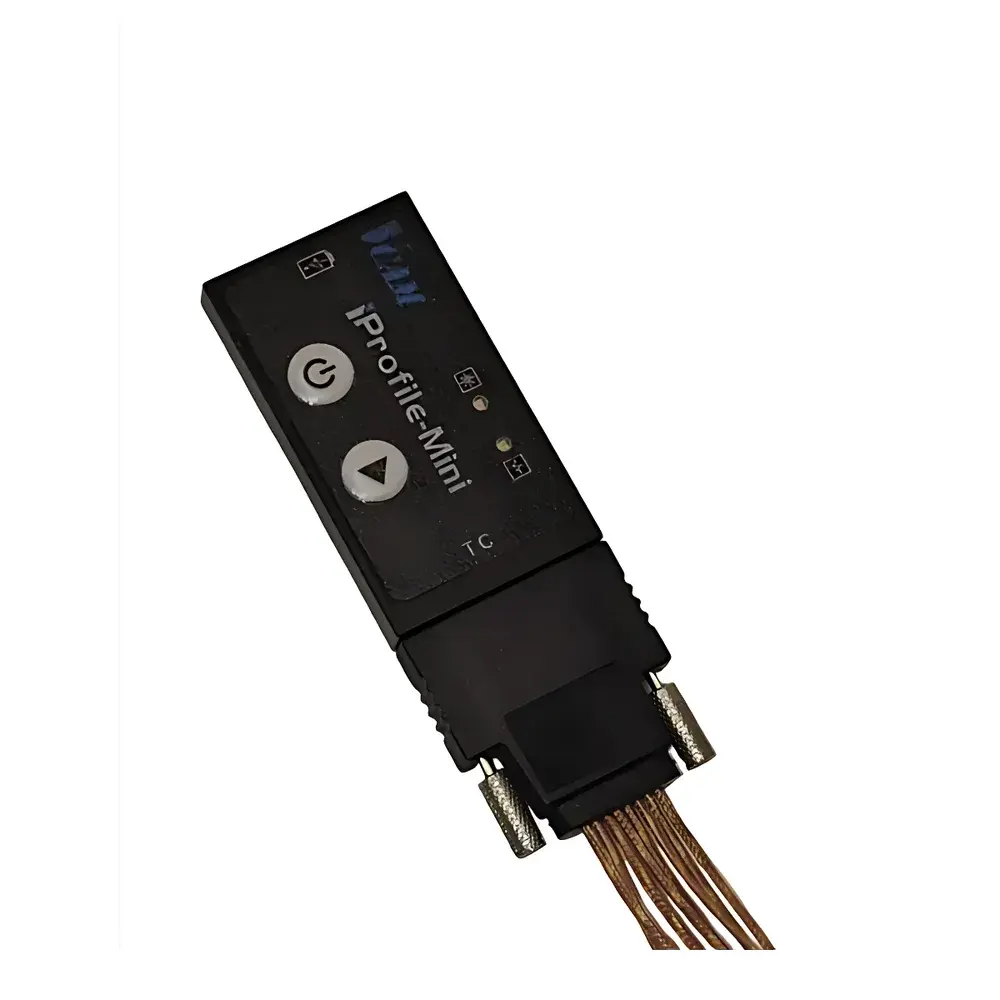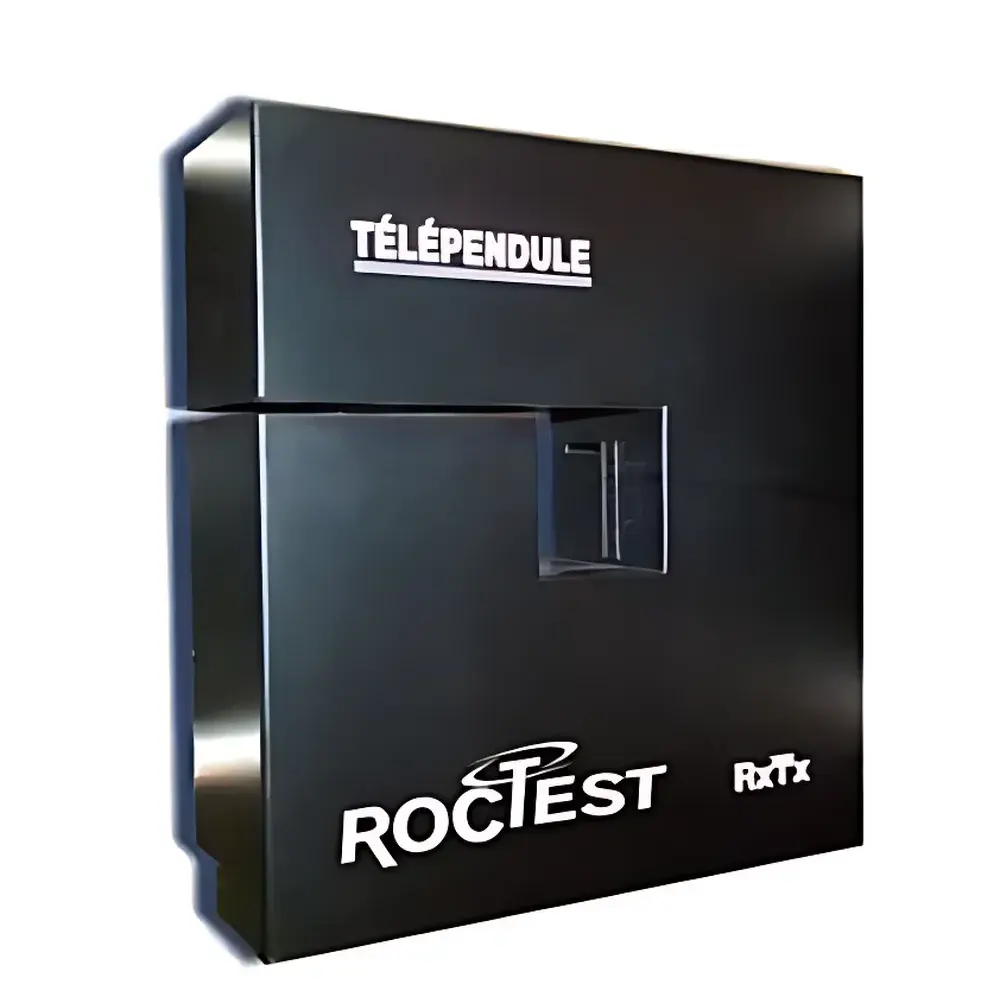
Roctest RxTx Telemetric Plumb Line Coordinate Instrument
| Brand | Roctest |
|---|---|
| Origin | Canada |
| Model | RxTx |
| Measurement Axes | X, Y, Z (Z-axis optional) |
| Environmental Rating | IP67-rated ruggedized enclosure |
| Data Logging | Integrated non-volatile memory with checksum-verified storage |
| Communication | Dual RS-232/RS-485 ports |
| Local/Remote Control | Full command set accessible via local control port or dial-up network connection |
| Mounting | Tool-free slot-based installation compatible with both upright and inverted plumb lines |
| Security | Password-protected configuration and data memory |
| Compliance | Designed to meet IEC 61000-6-2 (immunity) and IEC 61000-6-4 (emission) standards for industrial environments |
Overview
The Roctest RxTx Telemetric Plumb Line Coordinate Instrument is an optoelectronic displacement monitoring system engineered for long-term, high-stability measurement of plumb line deviations in civil infrastructure applications. Operating on the principle of precision optical centroid detection, the RxTx captures sub-millimeter positional shifts of a suspended plumb line relative to a fixed reference frame. It employs a calibrated CCD or CMOS imaging sensor array coupled with real-time centroid calculation algorithms to determine the line’s projected position in the X–Y plane; optional Z-axis measurement integrates vertical displacement via integrated tilt-compensated inclinometry or external LVDT coupling. Designed for deployment in harsh outdoor environments—including dam abutments, tunnel portals, and foundation monitoring points—the instrument features a fully sealed, corrosion-resistant aluminum housing rated to IP67, ensuring operational integrity under continuous exposure to rain, dust, freeze–thaw cycles, and temperature fluctuations from –30 °C to +70 °C.
Key Features
- Triple-axis displacement monitoring (X/Y standard; Z-axis configurable via external sensor interface or internal tilt compensation)
- Integrated data logger with 16 MB non-volatile flash memory, supporting cyclic or event-triggered storage with CRC-32 integrity verification
- Dual serial communication interfaces (RS-232 and RS-485) enabling direct connection to modems, SCADA RTUs, or industrial gateways
- Secure configuration architecture: password-protected memory sectors prevent unauthorized parameter modification or firmware overwrite
- Tool-free, slot-based mechanical mounting system—compatible with both upright (top-suspended) and inverted (bottom-anchored) plumb line configurations without disassembly
- Low-power operation (typical 1.2 W @ 12 VDC), supporting solar-battery hybrid power systems for remote deployments exceeding 12 months autonomy
- Onboard real-time clock with NTP synchronization capability when connected to Ethernet-enabled gateway devices
Sample Compatibility & Compliance
The RxTx is optimized for use with standard stainless-steel or Invar plumb wires (diameters 0.5–1.2 mm) tensioned to ≥200 N. Its optical aperture accommodates wire sag profiles up to ±15 mm deviation from nominal vertical within a 100 mm field of view. The instrument complies with electromagnetic compatibility requirements per IEC 61000-6-2 (industrial immunity) and IEC 61000-6-4 (conducted/radiated emissions), and meets structural vibration resistance per ISO 10816-1 (velocity-based severity thresholds for stationary equipment). While not certified to SIL or ASME B56.1, its architecture supports integration into safety-related monitoring schemes when deployed with redundant data paths and externally validated alarm logic per IEC 61508 functional safety guidelines.
Software & Data Management
Data acquisition and configuration are managed through Roctest’s proprietary WinLog software (v5.2+), which supports automated calibration routines, baseline drift correction, and time-synchronized multi-instrument networks. All stored datasets include embedded metadata: timestamp (UTC), temperature reading (onboard thermistor), battery voltage, and sensor status flags. Export formats include CSV (with header metadata), XML (compliant with ISO 19115 geospatial metadata schema), and binary .RXL files for post-processing in MATLAB or Python-based analysis pipelines. Audit trails—including user login history, configuration changes, and firmware update logs—are retained in tamper-evident format, satisfying GLP-aligned documentation requirements for long-term structural health monitoring programs.
Applications
- Continuous deformation monitoring of concrete gravity dams, arch dams, and embankment structures using existing plumb line arrays
- Foundation settlement tracking in high-rise buildings, bridge piers, and offshore platforms where access is limited or hazardous
- Post-construction validation of geotechnical stabilization works, including soil nailing and anchored retaining walls
- Integration into early-warning systems for landslide-prone slopes, with programmable threshold alarms routed via relay outputs or MQTT to central SCADA
- Long-term creep and thermal expansion studies in nuclear containment structures and hydroelectric penstocks
FAQ
Does the RxTx support real-time data streaming over cellular networks?
Yes—when paired with an industry-standard GSM/LTE modem (e.g., Sierra Wireless HL7800 or Telit LE910), the RxTx transmits time-stamped coordinate data at user-defined intervals (1 min to 24 h) using AT-command protocol or transparent TCP/IP mode.
Can it operate without external power for extended periods?
With a 24 Ah deep-cycle battery and 40 W solar panel, typical field deployments achieve >14 months of unattended operation at 15-minute sampling intervals.
Is third-party software integration possible?
Yes—the RxTx exposes a documented ASCII command set and supports Modbus RTU over RS-485, enabling native integration with Ignition, Wonderware, or custom Python/C# telemetry clients.
What calibration traceability does it provide?
Each unit ships with a factory calibration certificate traceable to NRC Canada (National Research Council) dimensional metrology standards, including uncertainty budgets per ISO/IEC 17025.
How is data integrity ensured during transmission loss?
Local logging continues uninterrupted during comms outages; upon reconnection, the instrument automatically resumes transmission from the last acknowledged packet sequence number, preventing data gaps.