
Rongjida DFY-1 Starch Viscometer
| Brand | Rongjida |
|---|---|
| Origin | Shanghai, China |
| Manufacturer Type | Direct Manufacturer |
| Model | DFY-1 |
| Display | Backlit LCD digital display |
| Rotational Speed | 75 rpm |
| Sample Volume | 20 mL |
| Viscosity Range | 0–10,000 mPa·s |
| Measurement Accuracy | ±2% (for Newtonian fluids) |
| Repeatability | ±1% (for Newtonian fluids) |
| Temperature Control Range | Ambient to 98 °C |
| Temperature Control Precision | ±0.1 °C |
| Heating Method | Electric heating (300 W) |
| Ramp Rate | 1.5 °C/min (heating & cooling) |
| Hold Duration | 30 min at 95 °C (or 98 °C) and 30 min at 50 °C |
| Software | Included proprietary starch analysis software (Windows-compatible) |
| Dimensions (W × D × H) | 310 × 200 × — mm |
| Net Weight | 10 kg |
| Power Supply | 220 V, 50 Hz |
Overview
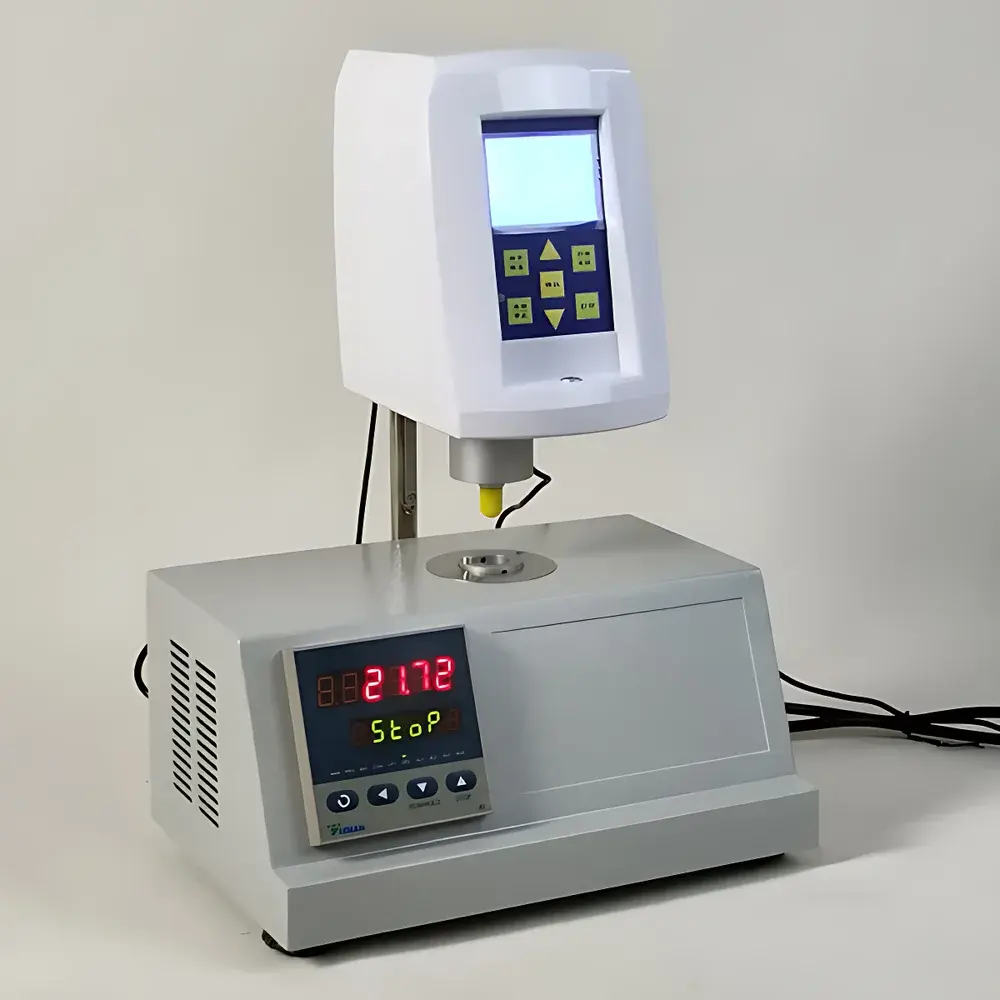
The Rongjida DFY-1 Starch Viscometer is a dedicated rotational viscometer engineered for standardized thermal profiling of native and modified starches under controlled temperature ramps. It operates on the principle of rotational viscometry in a controlled-temperature coaxial cylinder geometry (cup-and-bob configuration), where torque response to fixed-shear-rate rotation (75 rpm) is continuously measured as temperature is cycled per GB/T 22427.7–2008 and GB/T 14490–1993. The instrument replicates the canonical gelatinization protocol: linear heating from 35 °C to 95 °C (or 98 °C) at 1.5 °C/min, 30-minute isothermal hold, followed by linear cooling to 50 °C at the same rate and another 30-minute hold. This enables full characterization of starch pasting behavior—including onset of gelatinization, peak viscosity, hot paste stability, breakdown (drop value), cooling paste viscosity, and retrogradation (recovery value)—all derived algorithmically from time–temperature–viscosity data streams.
Key Features
- Dedicated starch measurement architecture: Optimized cup-and-bob geometry with DF-1# rotor and sample cup designed for reproducible 20 mL slurry volume handling and minimal wall-slip effects.
- Programmable thermal profile compliance: Fully automated temperature ramping and holding sequences aligned with Chinese national standards GB/T 22427.7–2008 and GB/T 14490–1993.
- High-precision thermostatic control: PID-regulated electric heating system (300 W) with ±0.1 °C stability across 35–98 °C range; real-time temperature feedback integrated into viscosity acquisition.
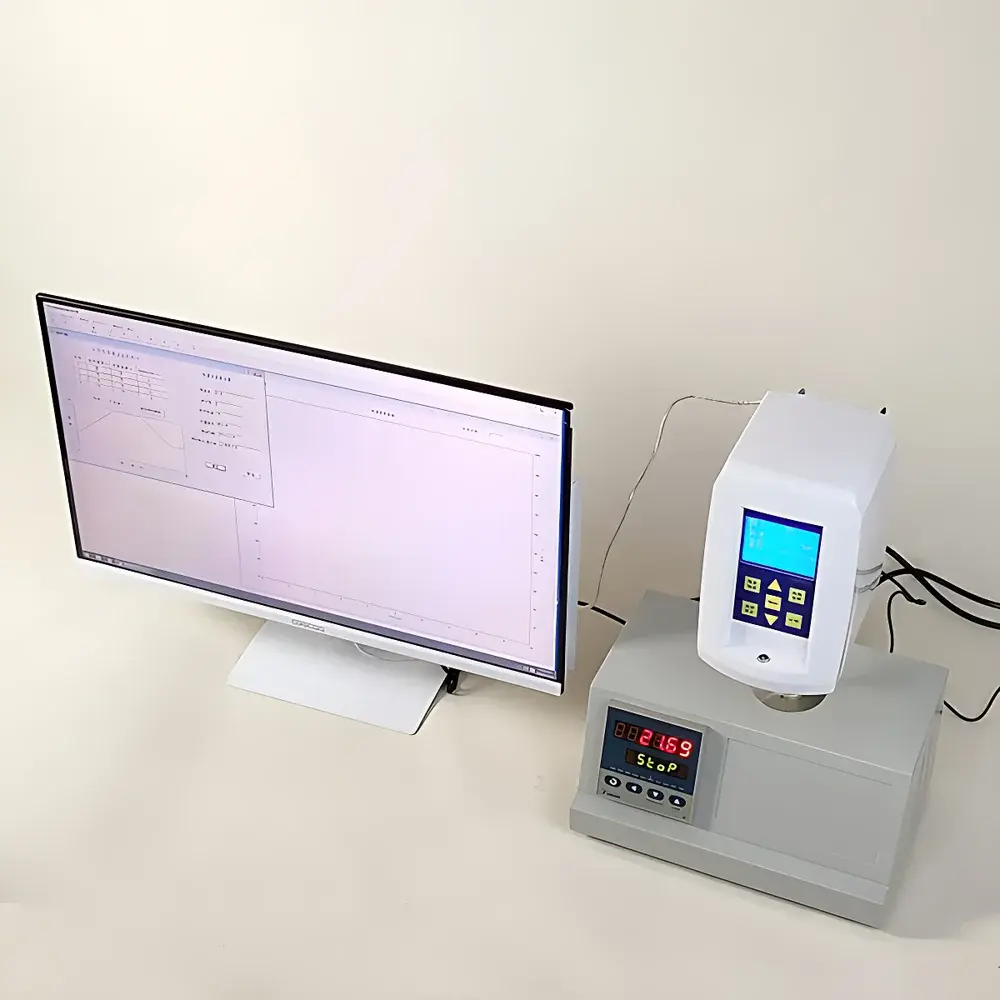
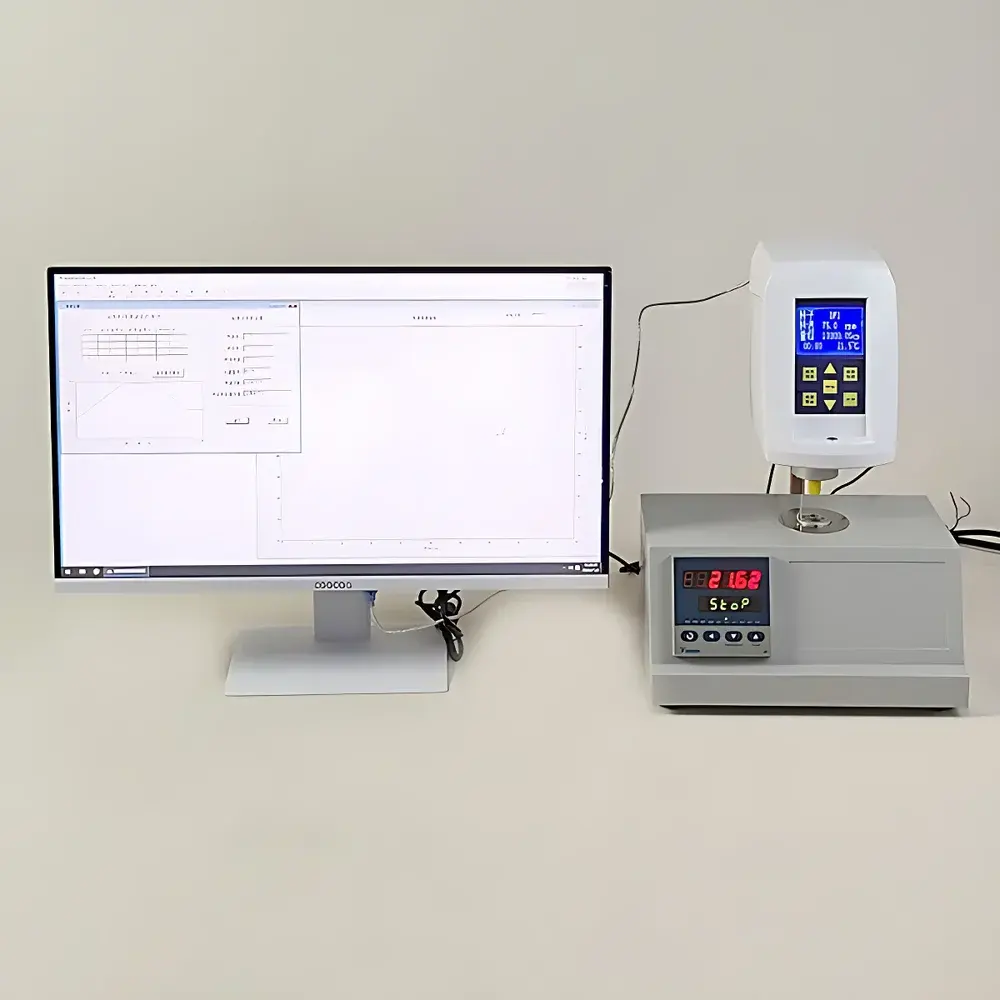
- Integrated data acquisition and analysis: Onboard backlit LCD displays real-time viscosity (mPa·s) and temperature (°C); all raw and processed data exportable via USB to Windows-based proprietary software.
- Low-sample-consumption operation: Requires only 20 mL of standardized starch slurry (typically 6–8% w/w), minimizing material usage while maintaining statistical robustness for QC workflows.
- Compact benchtop footprint: Dimensions of 310 × 200 × [height not specified] mm and net weight of 10 kg enable flexible integration into QC labs, R&D facilities, and pilot-scale production environments.
Sample Compatibility & Compliance
The DFY-1 is validated for use with cereal, tuber, and legume-derived native starches (e.g., corn, wheat, potato, cassava, rice) as well as chemically or physically modified variants (e.g., cross-linked, hydroxypropylated, acetylated). Its measurement protocol satisfies the physical test requirements of GB/T 22427.7–2008 (Starch—Determination of viscosity) and GB/T 14490–1993 (Method for determination of pasting properties of cereals and starches—Viscometric method). While not certified to ISO/IEC 17025 or ASTM E29–23, its operational parameters align with widely accepted industrial reference methods used in starch supplier qualification, formulation development, and incoming raw material verification. The instrument supports GLP-aligned documentation when paired with the included software’s timestamped data logging and export functions.
Software & Data Management
The DFY-1 ships with Windows-compatible proprietary software that imports raw .csv or .txt files generated by the instrument. The software performs automatic identification of critical pasting parameters—including gelatinization onset temperature, peak viscosity, hot-hold viscosity (at 95 °C start/end), cool-hold viscosity (at 50 °C start/end), breakdown (peak – hot-hold end), and setback (cool-hold end – hot-hold end). All curves are overlay-capable for batch-to-batch comparison. Export options include PDF reports (with embedded graphs and metadata), Excel-compatible spreadsheets, and image files (PNG/JPEG). Audit trail functionality includes operator ID input, test date/time stamp, and parameter configuration history—supporting basic traceability requirements in regulated manufacturing environments operating under internal QA protocols.
Applications
- Quality control of incoming starch raw materials in food ingredient manufacturing.
- Formulation screening for bakery, noodle, sauce, and dairy alternative applications where paste clarity, shear stability, and retrogradation resistance are critical.
- R&D evaluation of enzymatic or chemical modification efficacy on starch functional properties.
- Process validation for starch cooking and hydration steps in extrusion, canning, or retort operations.
- Educational use in food science laboratories for teaching starch physicochemical behavior under thermal stress.
- Supplier qualification testing where GB/T-compliant pasting data are contractually required.
FAQ
What standards does the DFY-1 comply with?
It is designed and validated for full conformance with GB/T 22427.7–2008 and GB/T 14490–1993.
Is the DFY-1 suitable for non-starch samples such as gums or hydrocolloids?
While it can measure viscosity of other suspensions or gels, its thermal ramp profile and software algorithms are optimized exclusively for starch pasting behavior; results for non-starch systems lack standardized interpretation.
Does the instrument support 21 CFR Part 11 compliance?
No. The DFY-1 and its software do not include electronic signature, role-based access control, or immutable audit trails required for FDA-regulated GMP environments.
Can the heating rate or hold times be modified?
The firmware implements fixed 1.5 °C/min ramp rates and 30-minute holds per national standard; no user-adjustable thermal programming is available.
What is the calibration procedure?
Calibration uses certified Newtonian reference oils (e.g., silicone oils with known viscosity at 25 °C and 50 °C); torque and temperature sensors are factory-calibrated, with periodic verification recommended using traceable standards.





