
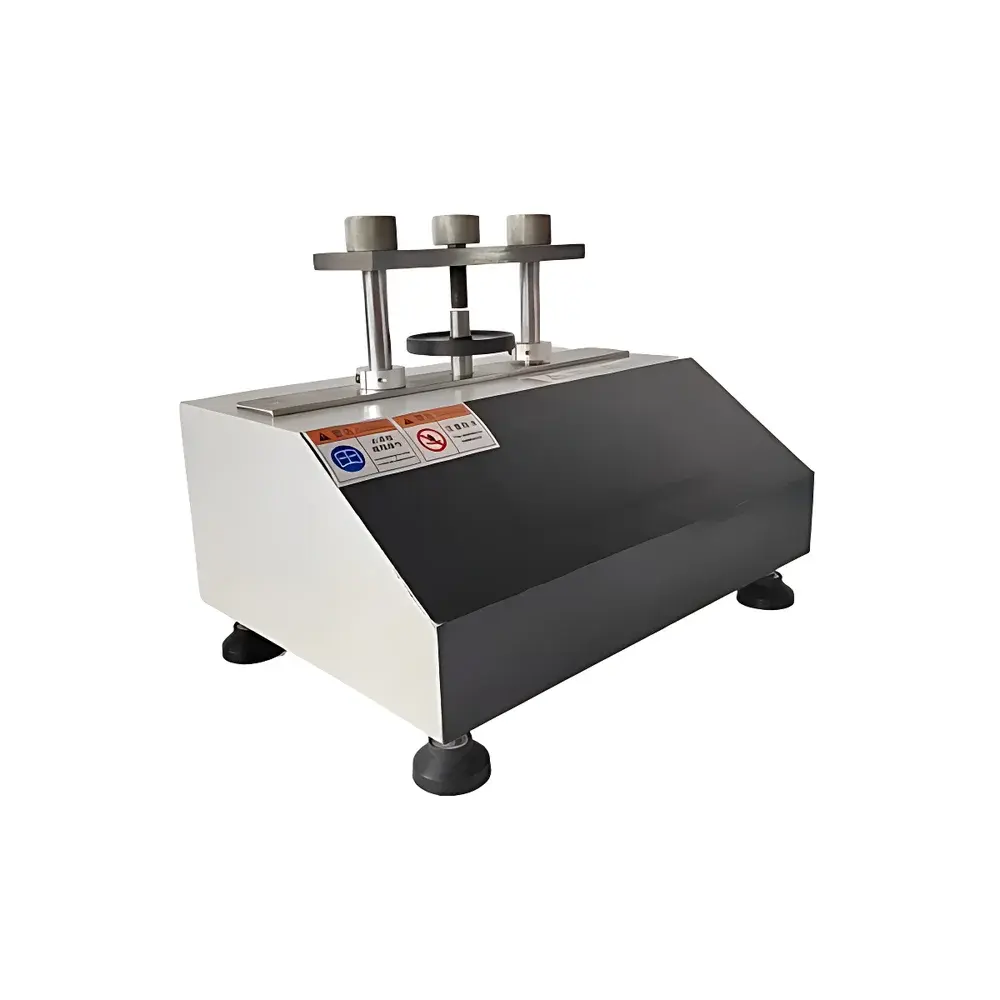
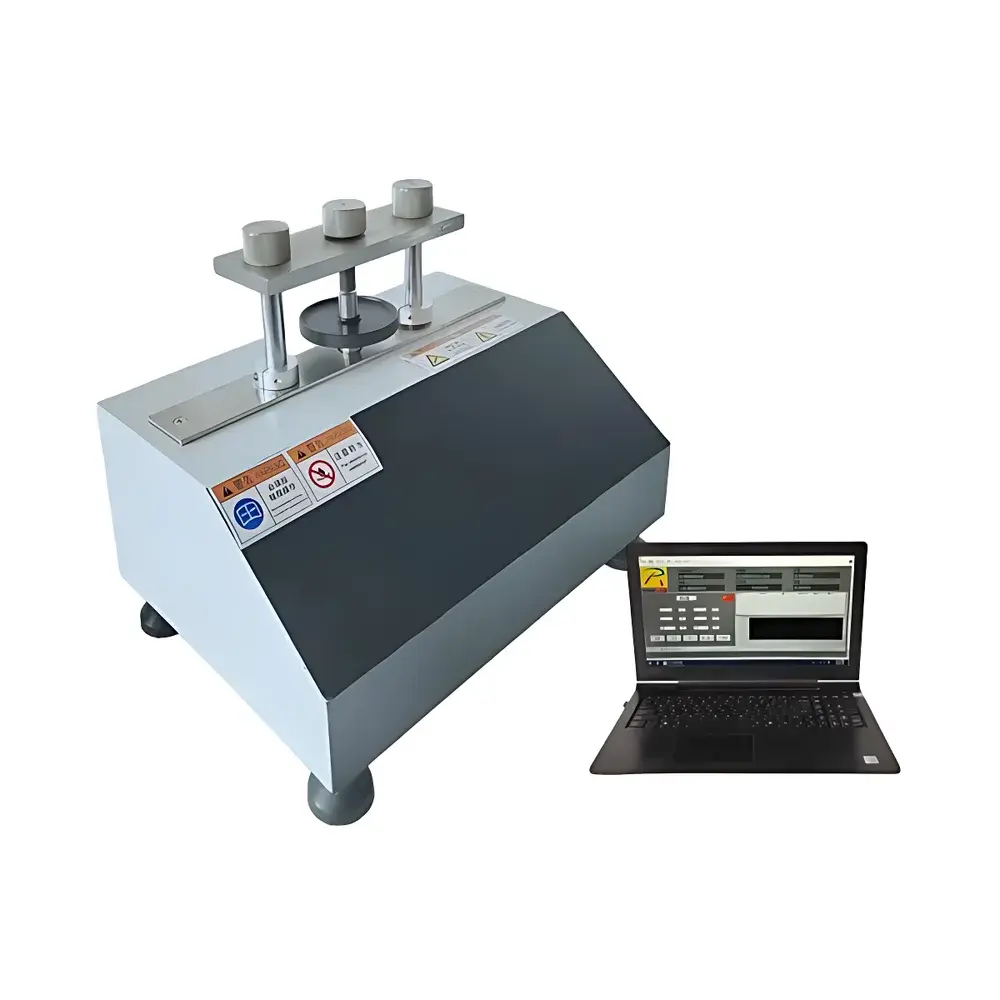
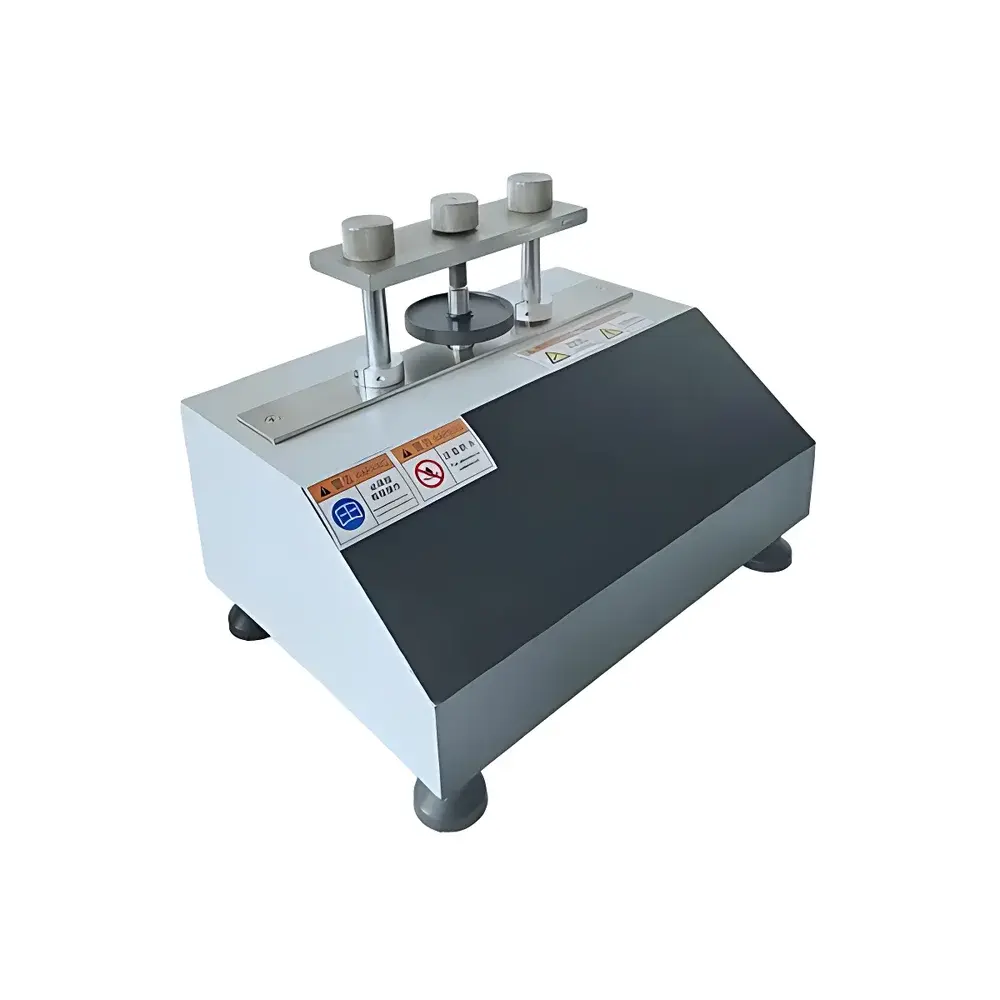
ROOKO FT-803 Series Automatic Particle Crushing Strength Tester
| Brand | ROOKO |
|---|---|
| Origin | Zhejiang, China |
| Manufacturer Type | Authorized Distributor |
| Country of Origin | China |
| Model | FT-803 Series |
| Measurement Range | 0–20 kN (customizable) |
| Accuracy | ≤0.5% F.S. |
| Units | kgf, N, lbf (switchable) |
| Output | crushing strength (average, max/min), specific strength (per unit length/area), compression deformation (elastic), statistical analysis (upper/lower limits, tolerance band, % distribution) |
| Compliance | GB/T 44750, ASTM D6176, ASTM D4179, ISO 4708 |
| Interface | USB & RS-232 |
| Software | PC-based with data logging, report generation, real-time curve plotting, and process analytics |
| Language | bilingual (English/Chinese) |
| Safety | integrated mechanical and software interlocks |
Overview
The ROOKO FT-803 Series Automatic Particle Crushing Strength Tester is a precision-engineered mechanical testing system designed for the quantitative evaluation of uniaxial compressive resistance in discrete solid particulates. It operates on the principle of controlled quasi-static axial loading—applying a calibrated force perpendicular to the particle’s longest dimension until fracture or defined yield occurs—while simultaneously recording load-displacement response. This methodology aligns with standardized single-particle compression protocols used in catalyst characterization, granular fertilizer quality assurance, metallurgical pellet evaluation, and pharmaceutical excipient screening. Unlike bulk compression testers, the FT-803 isolates individual particles to eliminate interparticle interference, enabling statistically robust determination of intrinsic mechanical integrity. Its architecture integrates a high-rigidity load frame, a servo-controlled actuator with closed-loop force feedback, and an optical displacement sensor with sub-micrometer resolution—ensuring reproducibility across heterogeneous particle populations.
Key Features
- Full-scale force range from 0 to 20 kN, field-configurable to match application-specific requirements (e.g., low-force molecular sieve testing vs. high-strength iron ore pellet validation)
- Triple-unit display and output: selectable between kilogram-force (kgf), newton (N), and pound-force (lbf), with automatic scaling and unit-consistent reporting
- Real-time acquisition of both peak crushing load and elastic compression displacement (ΔL), supporting calculation of apparent Young’s modulus for deformable particles
- On-device statistical engine computes mean crushing strength, standard deviation, coefficient of variation, maximum/minimum values, and user-defined upper/lower specification limits
- Bilingual UI (English/Chinese) with intuitive touchscreen navigation; firmware supports firmware-upgradable calibration coefficients and test method templates
- Integrated safety system includes hardware-based emergency stop, load-cell overload protection, and software-enforced travel limit enforcement to prevent crosshead collision
Sample Compatibility & Compliance
The FT-803 accommodates irregularly shaped granules, spheroids, extrudates, and agglomerates ranging from 1 mm to 25 mm in nominal diameter. Its sample holder design allows rapid manual loading without fixtures for spherical particles, while optional V-groove or flat-anvil adapters enable stable positioning of angular or elongated specimens. The instrument conforms to internationally recognized test standards including GB/T 44750 (Chinese national standard for catalyst mechanical strength), ASTM D6176 (standard test method for crushing strength of catalyst pellets), ASTM D4179 (for spherical industrial catalysts), and ISO 4708 (mechanical strength of granular fertilizers). Data traceability meets GLP-compliant documentation requirements when paired with the optional audit trail module in the PC software.
Software & Data Management
The companion Windows-based software provides full instrument control, real-time visualization of force–displacement curves, and post-test analytical tools. Raw data are stored in CSV and proprietary binary formats with embedded metadata (operator ID, timestamp, calibration ID, environmental conditions). Reporting functions generate customizable PDF reports containing summary statistics, histogram distributions, trend charts across batch runs, and pass/fail flags against preset specification bands. Export options include Excel-compatible spreadsheets and image exports of annotated graphs. The software supports 21 CFR Part 11 compliance through optional digital signature modules, electronic audit trails, and role-based user access controls—enabling use in regulated QC environments.
Applications
- Quality control of nitrogen/phosphate/potash fertilizers to ensure handling durability and resistance to attrition during transport and application
- Mechanical stability assessment of zeolite, alumina, and silica-based catalysts prior to reactor loading
- Strength grading of iron ore pellets and direct-reduced iron (DRI) nodules for blast furnace feed optimization
- R&D evaluation of binder efficacy in pharmaceutical tablet granulation and ceramic green-body formation
- Comparative analysis of granule integrity under variable humidity or thermal preconditioning per ICH Q5C stability protocols
FAQ
What particle size range is supported by the FT-803 Series?
The system is optimized for particles between 1 mm and 25 mm in nominal dimension; custom anvil configurations are available for sub-millimeter or oversized specimens.
Does the instrument support automated sample feeding?
The base FT-803 model is manually loaded; however, ROOKO offers an optional robotic sample handler (FT-AH-200) for high-throughput labs requiring >100 tests/day.
How is calibration traceability maintained?
Each unit ships with a NIST-traceable certificate of calibration; field recalibration uses certified deadweight standards or accredited force calibration cells per ISO 376.
Can test methods be saved and recalled as templates?
Yes—up to 99 user-defined test protocols can be stored onboard and synchronized with the PC software, including target force rate, dwell time, and statistical parameters.
Is the software compatible with LIMS integration?
The software exposes a COM interface and supports HL7 and ASTM E1384 message structures for seamless integration into laboratory information management systems.



