
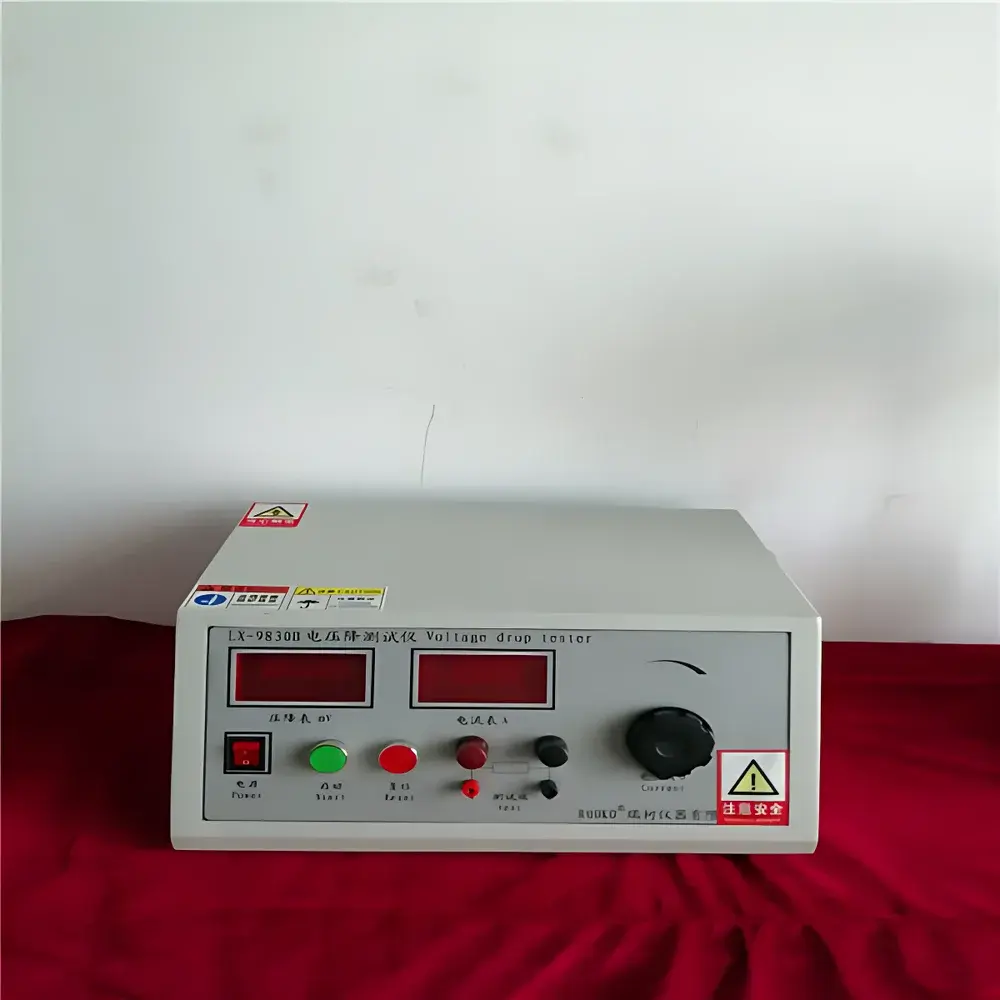
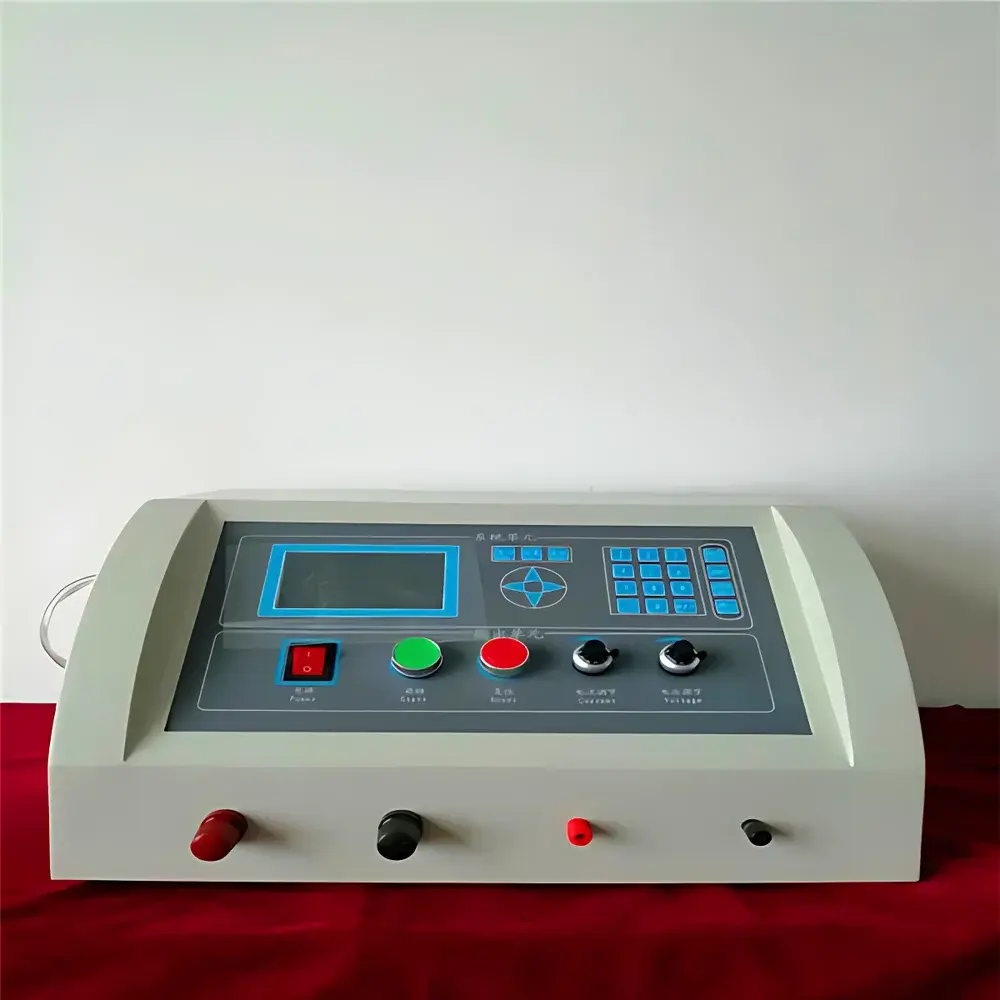
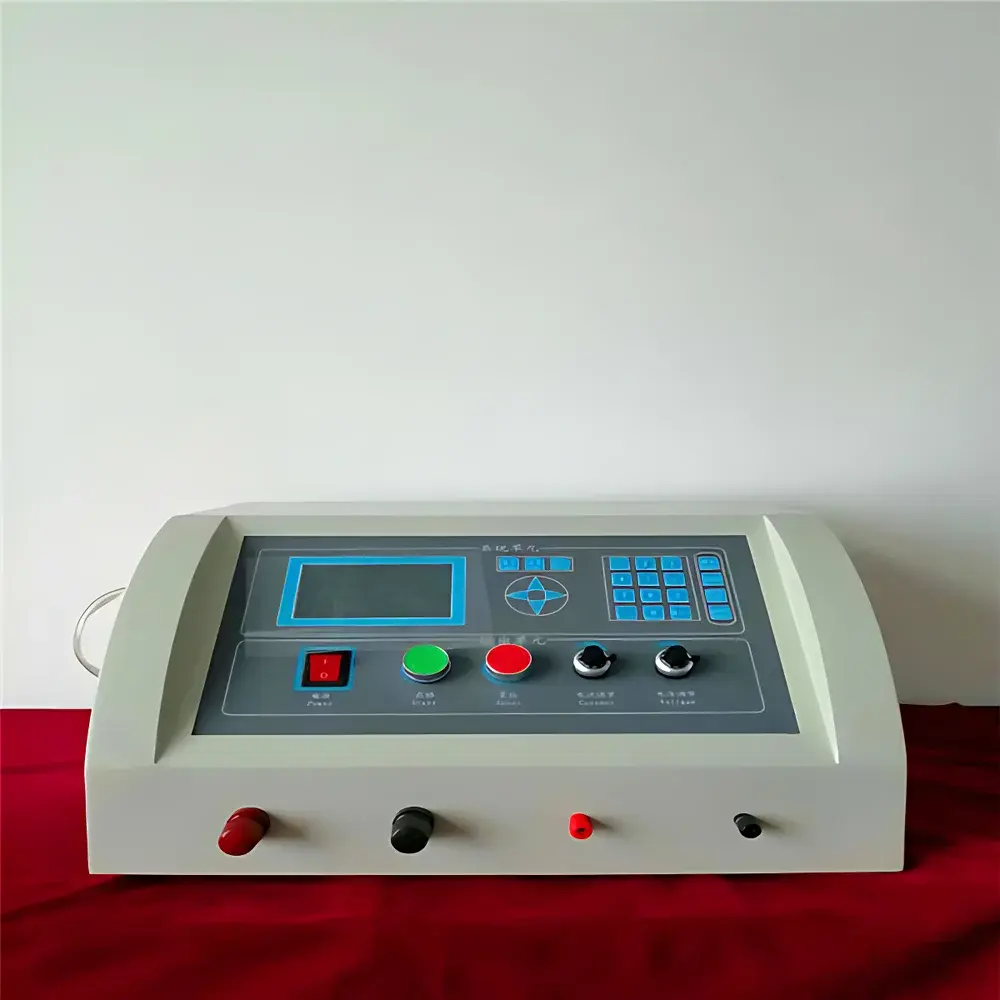
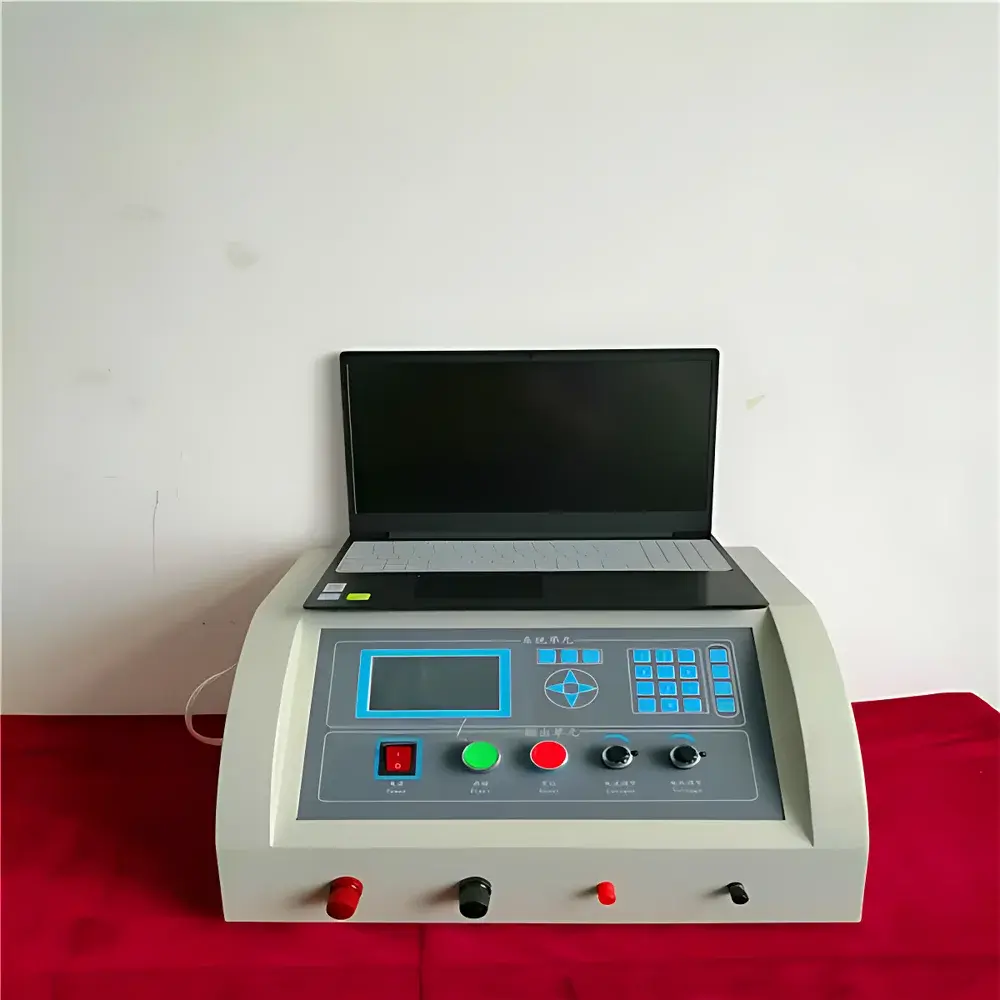
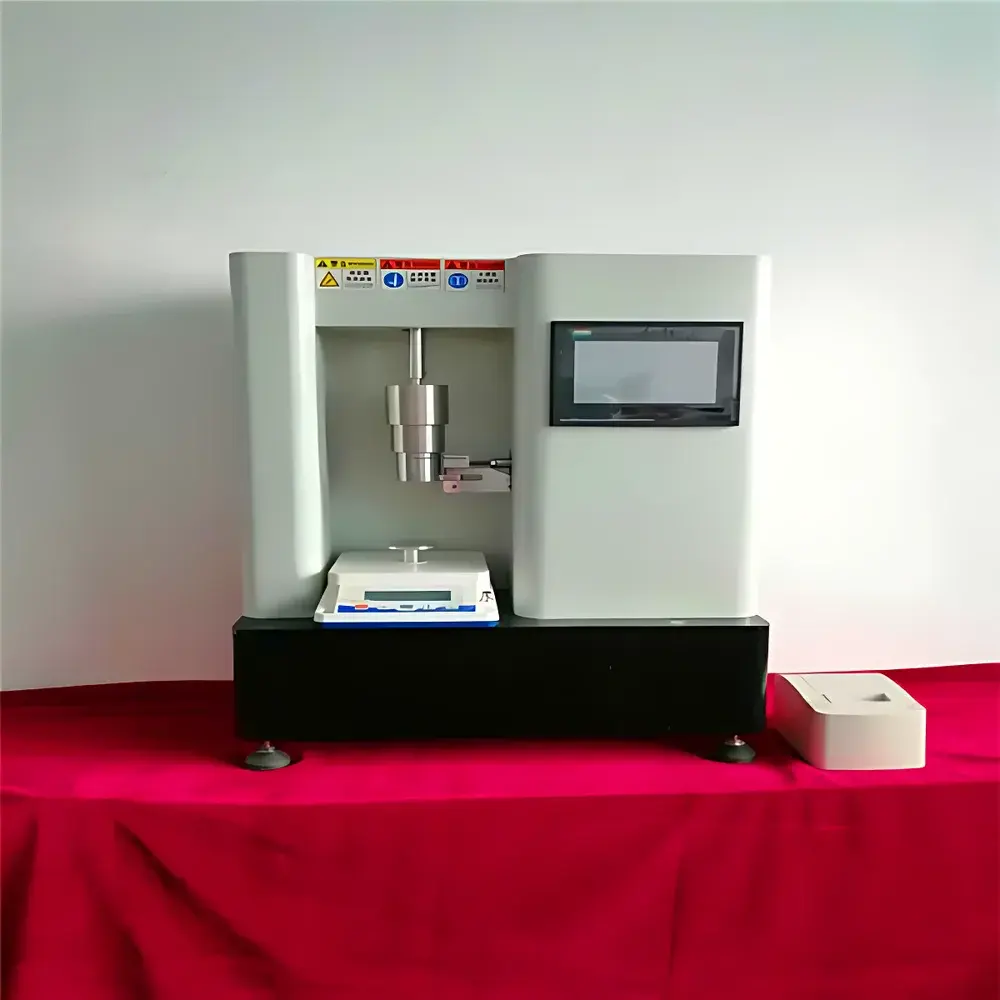
ROOKO LX-9830GA Voltage Drop Analyzer
| Brand | ROOKO |
|---|---|
| Model | LX-9830GA |
| Type | Benchtop Voltage Drop Analyzer |
| Measurement Parameters | Contact Resistance, Voltage Drop, Current, Open-Circuit Voltage, Temperature |
| Current Range | 0–300 A (selectable ranges: 0–40 A / 0–60 A / 0–100 A / 0–200 A / 0–300 A) |
| Voltage Range (open-circuit) | 0–12 V / 0–24 V / 0–30 V (optional) |
| Voltage Drop Range | 0–199.99 mV |
| Resolution | 0.01 mV (voltage drop), 0.01 A (current), 0.01 V (voltage) |
| Accuracy | ±1% of reading |
| Test Time Setting | 0.01 s – 99.99 h |
| Temperature Measurement Range | 0–25 °C (integrated sensor) |
| Compliance Standards | QC/T 29106–2004, QC/T 730–2005, ISO 6722:2002, GB/T 2951–1997, GB/T 3048–1994, QC/T 413–2002, SAE USCAR-38:2009 |
| Interface Options | RS-232, USB 2.0 |
| Data Management | Password-protected instrument configuration, pass/fail counting (0–99999), audible/visual alarm on limit violation |
| External Integration | PLC control interface, PC software (optional), printer support, custom fixture compatibility |
Overview
The ROOKO LX-9830GA Voltage Drop Analyzer is a precision benchtop instrument engineered for quantitative evaluation of electrical contact resistance and voltage drop across low-resistance interconnections in automotive, aerospace, and industrial wiring systems. It operates on the four-wire (Kelvin) measurement principle to eliminate lead resistance error, delivering traceable, repeatable results under controlled constant-current excitation. Unlike generic multimeters or handheld micro-ohmmeters, the LX-9830GA integrates programmable current sourcing (up to 300 A), high-resolution millivolt sensing (0.01 mV), and time-synchronized acquisition—enabling compliance verification per internationally recognized test protocols including QC/T 29106–2004 (Chinese automotive standard), ISO 6722:2002 (road vehicle wiring harnesses), and SAE USCAR-38:2009 (electrical connector performance). Its architecture supports both laboratory-grade validation and inline production testing when integrated with PLC-controlled test stations or automated assembly lines.
Key Features
- Programmable constant-current source with six selectable ranges: 0–40 A, 0–60 A, 0–100 A, 0–200 A, and 0–300 A—each calibrated to ±1% full-scale accuracy
- Four-terminal Kelvin sensing with dual-channel analog front-end for simultaneous current sourcing and voltage drop acquisition
- High-stability open-circuit voltage output (0–12 V / 0–24 V / 0–30 V, optional) supporting pre-test continuity checks and bias conditioning
- User-configurable test duration from 0.01 seconds to 99.99 hours, enabling transient response analysis and thermal stabilization monitoring
- Pass/fail statistical engine with independent counters for good/bad units (0–99999), configurable upper/lower limits, and real-time visual/audible alarms
- Secure instrument management via password-protected access levels for calibration, setup, and user mode operations
- Built-in temperature compensation using integrated ambient sensor (0–25 °C range), referenced to copper resistivity curves per IEC 60584
Sample Compatibility & Compliance
The LX-9830GA is specifically designed for evaluating metallic contact interfaces where low-resistance integrity is mission-critical: crimped wire-to-terminal joints, PCB-mounted connectors, relay contacts, switch actuation points, and multi-pin automotive harness assemblies. Fixture adaptability allows standardized application of test force and probe alignment per QC/T 29106–2004 Section 5.7—where voltage drop is measured across a defined 75 mm bare conductor segment adjacent to the crimp zone, with background wire resistance subtracted algorithmically. The system meets electromagnetic compatibility (EMC) requirements per GB/T 18268.1–2010 (industrial measurement equipment) and supports audit-ready documentation for GLP/GMP environments when paired with optional PC software featuring 21 CFR Part 11–compliant electronic signatures, audit trails, and raw data export in CSV/Excel format.
Software & Data Management
Optional ROOKO DataLink™ PC software provides full remote control, real-time waveform visualization, and automated report generation compliant with ISO/IEC 17025 documentation standards. All measurements include timestamping, operator ID, fixture ID, and environmental metadata. Data archives support version-controlled backups, trend analysis across production lots, and comparative statistical process control (SPC) charts (X-bar/R, Cpk). USB and RS-232 interfaces enable direct integration with MES/SCADA platforms, while ASCII-based command protocol simplifies PLC scripting for automated test sequencing. No proprietary drivers required—standard CDC ACM class enumeration ensures plug-and-play compatibility with Windows, Linux, and macOS hosts.
Applications
- Validation of crimp quality in automotive wiring harnesses per ISO 6722 and USCAR-38
- End-of-line testing of battery interconnects and busbar joints in EV power distribution systems
- Quality assurance for aerospace-grade circular connectors (MIL-DTL-38999, EN3645)
- R&D characterization of contact resistance vs. current density, temperature, and mechanical vibration
- Supplier qualification audits requiring documented repeatability (R&R) studies per AIAG MSA guidelines
- Root cause analysis of intermittent failures in high-current switching devices (e.g., starter relays, fusible links)
FAQ
What standards does the LX-9830GA directly support for voltage drop testing?
It implements test methodologies defined in QC/T 29106–2004 (China), SAE USCAR-38:2009 (USA), ISO 6722:2002 (International), and QC/T 730–2005 (automotive switch testing), with hardware-level alignment to their specified current profiles, probe placement geometry, and rejection thresholds.
Can the instrument perform automatic subtraction of wire resistance during crimp testing?
Yes—the system supports two-point reference measurement mode: first acquire baseline voltage drop across a known-length bare conductor; then measure at the crimp zone and auto-subtract the stored reference value, as mandated by QC/T 29106–2004 Section 5.7.
Is calibration traceable to national metrology institutes?
All factory calibrations are performed using Fluke 5720A multifunction calibrators, with certificates referencing CNAS-accredited standards (equivalent to ISO/IEC 17025) and NIST-traceable artifacts.
Does the device support custom fixture design for non-standard components?
Yes—ROOKO provides mechanical interface specifications (mounting holes, probe travel envelope, maximum clamping force) and collaborates with customers to validate fixture performance using certified reference shunts prior to deployment.
How is data integrity ensured during long-duration tests?
Internal watchdog timers monitor ADC stability, memory buffer health, and power supply ripple; any anomaly triggers automatic test abort and event logging with HEX-encoded diagnostic dump for root-cause review.
Related Products






