
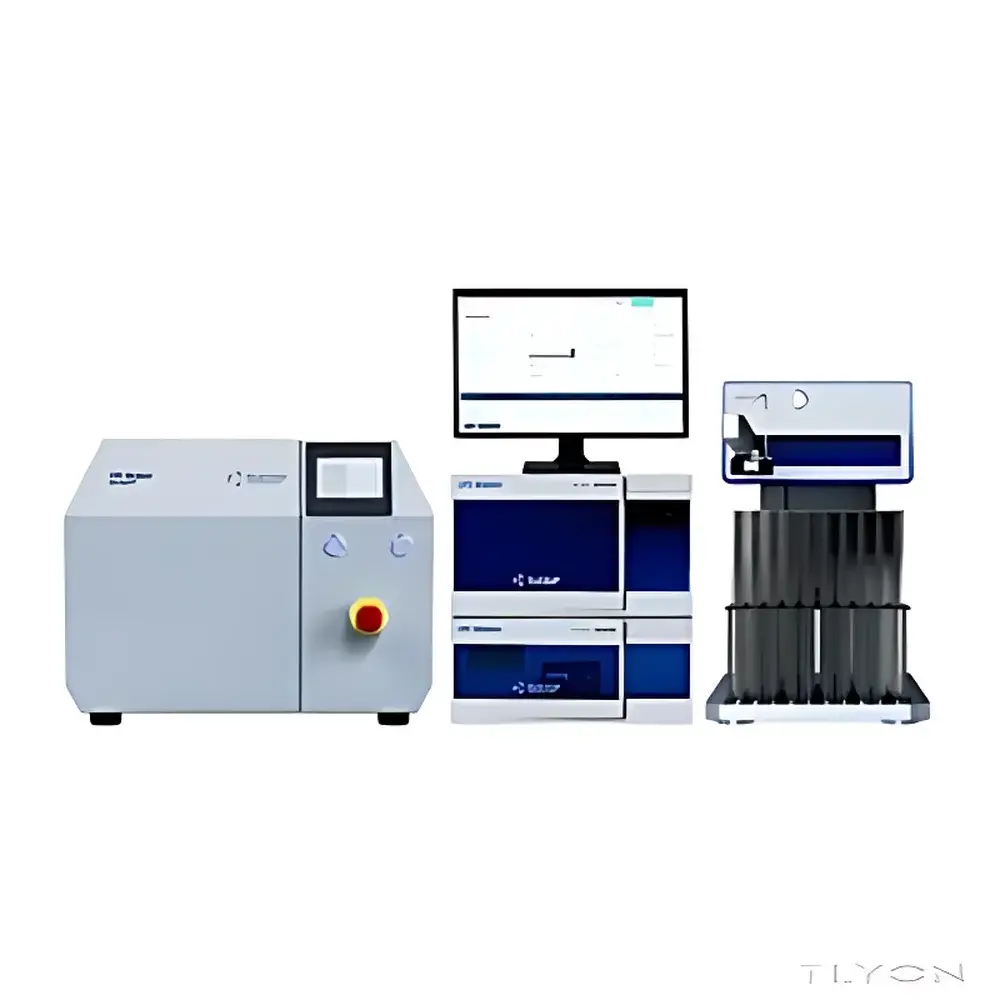
RotaChrom CPC Modeler Centrifugal Partition Chromatography System
| Brand | Tlyon (Distributor) |
|---|---|
| Origin | Hungary |
| Manufacturer | RotaChrom GmbH |
| Instrument Type | Benchtop Centrifugal Partition Chromatograph |
| Software Components | CPC Simulator, CPC Visualizer |
| Flow Rate Range | 0.1–25 mL/min |
| Sample Load Capacity | 10 mg–5 g per cycle |
| Detection | UV-Vis (200–600 nm), optional ELSD/MS interface |
| Fraction Collection | Automated, timed or peak-triggered |
| Compliance | GLP-ready architecture, audit trail-capable software logging, ISO/IEC 17025-aligned operation |
Overview
The RotaChrom CPC Modeler is a fully integrated centrifugal partition chromatography (CPC) platform engineered for rigorous method development, solvent screening, and scalable purification of complex molecules—including natural products, chiral intermediates, peptide fragments, and active pharmaceutical ingredients (APIs). Unlike solid-phase chromatographic techniques, CPC operates on liquid–liquid partitioning principles: separation occurs in a rotating hydrodynamic field where two immiscible liquid phases—stationary and mobile—are retained by centrifugal force without any solid support. This eliminates irreversible adsorption, sample degradation, and column fouling, ensuring high recovery yields (>95%) and reproducible retention behavior across scales. The system comprises three interoperable modules: the benchtop CPC instrument (RotaChrom’s proprietary rotor design with optimized phase retention), the CPC Simulator software (a predictive modeling engine grounded in empirical partition coefficient data), and the CPC Visualizer (a web-based tool for real-time elution profile simulation). Designed for laboratories transitioning from discovery to process development, the CPC Modeler bridges analytical insight with preparative readiness—enabling direct translation from mg-scale screening to kg-scale manufacturing.
Key Features
- Modular architecture integrating hardware, simulation, and visualization tools into a single workflow.
- Benchtop CPC unit with precision-engineered rotor geometry delivering >92% stationary phase retention at rotational speeds up to 1,200 rpm.
- Programmable dual-pump liquid delivery system supporting gradient and isocratic elution modes with flow stability ±0.5% over 24 h.
- UV-Vis detector with 10-mm flow cell, wavelength scanning capability (200–600 nm), and real-time spectral deconvolution for co-eluting peaks.
- Automated fraction collector with 96-well plate or vial rack compatibility, configurable by time, volume, or UV threshold.
- CPC Simulator powered by a peer-reviewed database of 16,000+ literature-derived partition coefficients (log DCP), validated against experimental CPC separations across 2700 compounds.
- CPC Visualizer enabling interactive elution curve prediction using user-defined crude composition, KD values, and solvent system polarity indices.
- GLP-compliant software architecture with electronic signatures, full audit trail, and 21 CFR Part 11–ready configuration options.
Sample Compatibility & Compliance
The CPC Modeler accommodates thermolabile, polar, and highly functionalized analytes unsuitable for reversed-phase HPLC or silica-based flash systems—including glycosides, alkaloids, macrocyclic lactones, and oligonucleotide conjugates. Its solvent flexibility supports biphasic systems ranging from hexane/ethyl acetate/methanol/water (HEMWat) to more polar systems such as tert-butyl methyl ether/acetonitrile/water (TBME/ACN/H2O), enabling orthogonal selectivity tuning. All instrumentation and software comply with ISO/IEC 17025 requirements for testing laboratories, and the CPC Simulator’s underlying algorithms have been benchmarked against ASTM D8199-22 (Standard Guide for Solvent Selection in Liquid–Liquid Extraction). Data integrity protocols meet FDA expectations for regulated environments, including secure user access control, immutable metadata tagging, and exportable CSV/PDF reports traceable to raw acquisition timestamps.
Software & Data Management
CPC Simulator and CPC Visualizer are deployed as standalone Windows applications and browser-accessible tools respectively, both interfacing with the benchtop instrument via OPC UA protocol. The simulator accepts two mandatory inputs—compound distribution ratio (KD) and crude matrix composition—and outputs predicted resolution (Rs), peak capacity, cycle time, and solvent consumption per gram purified. Internal calibration models incorporate rotor geometry, interfacial tension, and viscosity effects to refine retention time estimates. All simulation sessions are logged with version-stamped parameters, enabling retrospective validation and regulatory submission support. Raw chromatographic data are stored in vendor-neutral HDF5 format, compatible with third-party chemometric packages (e.g., MATLAB, Python SciPy) for multivariate analysis. Audit trails record every parameter change, user login, and report generation event—fully compliant with ALCOA+ (Attributable, Legible, Contemporaneous, Original, Accurate, Complete, Consistent, Enduring, Available) data governance principles.
Applications
- Rapid purification of natural product libraries for hit-to-lead campaigns, particularly for compounds exhibiting poor silica affinity or acid/base lability.
- Chiral resolution of racemates using pH-modulated aqueous two-phase systems, avoiding costly chiral stationary phases.
- Downstream processing of biotech-derived molecules—e.g., antibody–drug conjugate (ADC) linker–payload intermediates—where residual solvents must meet ICH Q3C thresholds.
- Recycling and reconstitution of spent solvent phases via integrated distillation modules (optional add-on), reducing organic waste volume by up to 70% versus conventional column chromatography.
- Method scouting for continuous CPC processes under PAT (Process Analytical Technology) frameworks, leveraging real-time UV spectral feedback for adaptive fraction switching.
FAQ
How does CPC differ from traditional column chromatography in terms of scalability?
CPC achieves linear scale-up because retention mechanisms depend solely on partition coefficients and rotor hydrodynamics—not surface area or bed height. A method developed on the benchtop CPC (e.g., 25 mL/min flow, 5 g load) translates directly to pilot-scale (2 L/min, 2 kg load) without re-optimization.
Can CPC Simulator predict separation outcomes for novel, unpublished compounds?
Yes—using quantitative structure–partition coefficient (QSPR) models trained on the 16,000-entry database, the simulator estimates log KD from SMILES strings when experimental data are unavailable.
Is the system compatible with mass spectrometry detection?
The benchtop CPC features a low-dead-volume post-column splitter and ESI-compatible flow cell; integration with LC-MS systems has been validated per USP <725> guidelines for hyphenated purification.
What solvent systems are pre-validated in CPC Visualizer?
The application includes 42 pre-configured biphasic systems spanning polarity indices from 0.2 to 10.5, each benchmarked against NIST SRM 869b (polycyclic aromatic hydrocarbon mixtures) and ISO 17034-certified reference standards.
Does the software support automated method reporting for regulatory submissions?
Yes—CPC Simulator generates IQ/OQ-ready documentation packages including system suitability tests, robustness assessments (±5% KD variation), and forced degradation study templates aligned with ICH Q5C and Q5D.






