
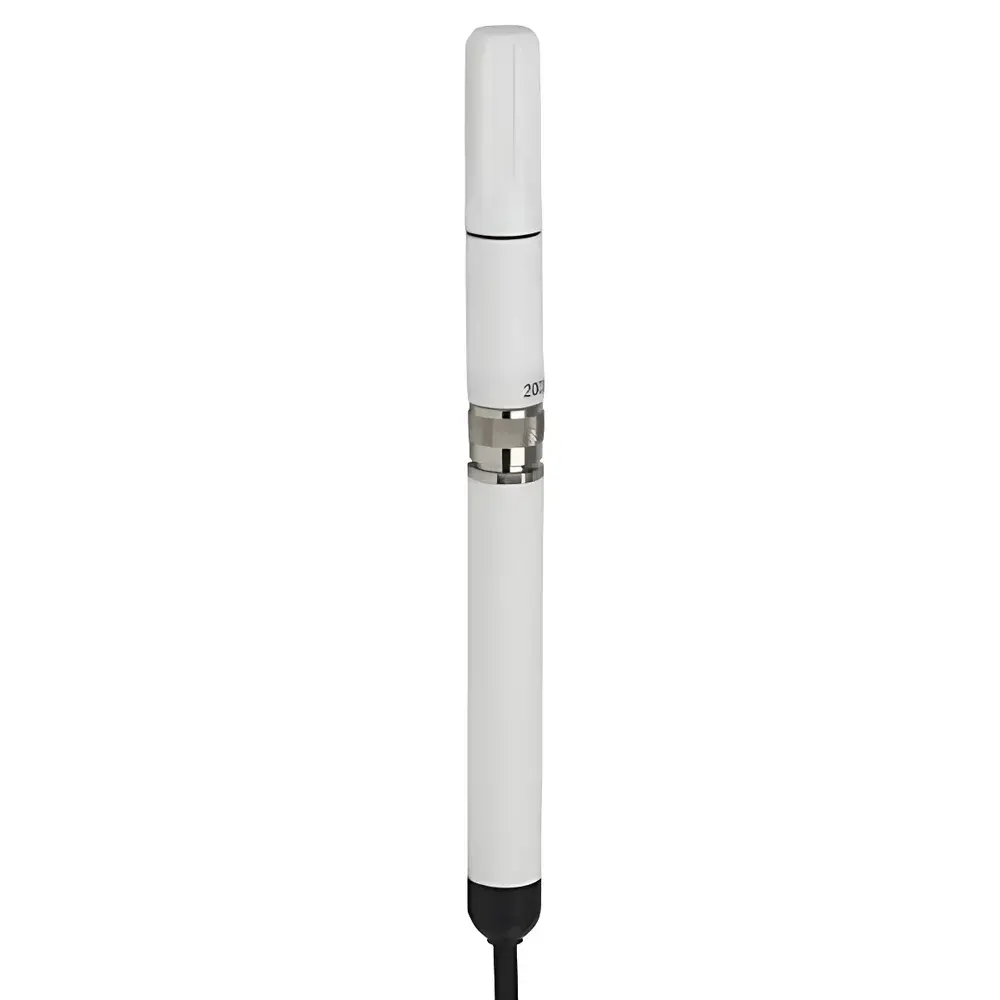
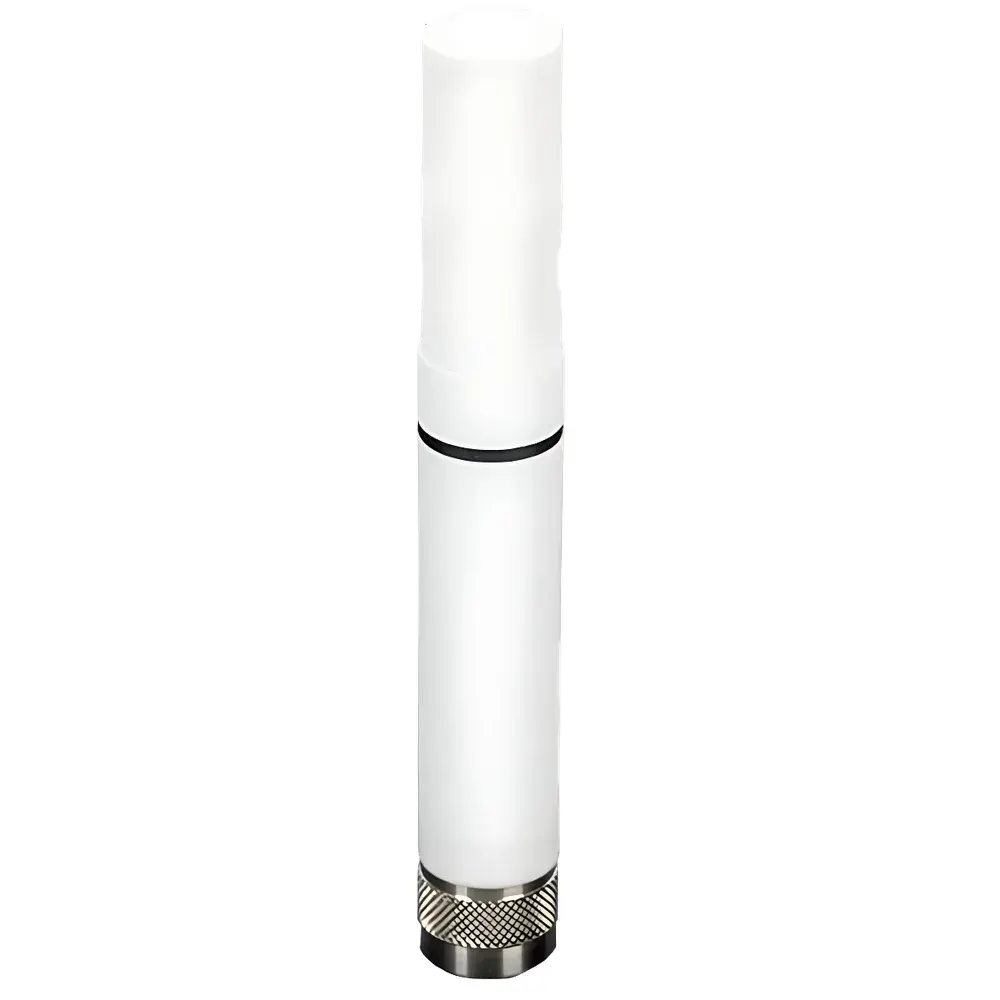
Rotronic HC2AS3 Air Temperature and Humidity Probe
| Brand | Rotronic |
|---|---|
| Model | HC2AS3 |
| Sensor Type | Combined Temperature & Relative Humidity Probe |
| Origin | Switzerland |
| Temperature Sensor | PT100 Platinum Resistance Thermometer (Class A) |
| Temperature Range | −50 to +100 °C |
| Temperature Resolution | 0.01 °C |
| Temperature Accuracy | ±0.1 °C at 23 °C |
| Long-term Temperature Stability | <0.1 °C/year |
| RH Sensor | ROTRONIC Hygromer® IN-1 Capacitive Polymer Sensor |
| RH Range | 0 to 100.00 %RH |
| RH Resolution | 0.01 %RH |
| RH Accuracy | ±0.8 %RH at 23 °C (10–90 %RH), ±1.5 %RH at extremes |
| RH Long-term Stability | <1 %RH/year |
| Response Time (τ₆₃) | ≤22 s (at 1 m/s airflow, 23 °C) |
| Operating Temperature | −40 to +100 °C |
| Output Signal | 0–1 V analog (linear, ratiometric) |
| Supply Voltage | 5 VDC or 12 VDC |
| Current Consumption | <4.3 mA @ 5 VDC, <2.0 mA @ 12 VDC |
| Dimensions | Ø15 mm × 183 mm |
| Mass | 10 g |
Overview
The Rotronic HC2AS3 is a high-precision, field-deployable air temperature and relative humidity (RH) probe engineered for continuous environmental monitoring in demanding outdoor, industrial, and research-grade applications. Based on Rotronic’s proprietary Hygromer® IN-1 capacitive polymer sensing element and a Class A PT100 platinum resistance thermometer, the HC2AS3 delivers metrologically traceable measurements compliant with international standards for climatological and process-critical data acquisition. Its robust stainless-steel housing and hermetically sealed sensor head provide exceptional resistance to salt-laden atmospheres, condensation, and thermal cycling—making it suitable for long-term deployment in coastal, marine, agricultural, and infrastructure monitoring networks. Unlike consumer-grade hygrometers, the HC2AS3 operates across an extended temperature range (−40 to +100 °C) while maintaining certified accuracy and stability under real-world airflow and contamination conditions.
Key Features
- Traceable calibration: Factory-calibrated against NIST-traceable reference standards; optional ISO/IEC 17025 accredited calibration certificate available.
- High-stability sensing architecture: Hygromer® IN-1 polymer sensor exhibits low hysteresis (<0.2 %RH) and minimal drift in cyclic humidity exposure; PT100 element conforms to IEC 60751 Class A tolerance.
- Environmental resilience: IP65-rated probe body; corrosion-resistant stainless-steel sheath (AISI 316L); validated performance in saline fog (ISO 9227 neutral salt spray test >500 h).
- Fast and repeatable response: τ₆₃ ≤22 s at 1 m/s airflow—optimized for dynamic ambient profiling without compromising long-term baseline integrity.
- Low-power analog interface: Ratiometric 0–1 V output ensures immunity to supply voltage fluctuations; compatible with Campbell Scientific, Delta-T, Onset HOBO, and custom DAQ systems.
- Minimal thermal mass: 10 g total mass and slender 15 mm diameter enable rapid equilibration in low-velocity airstreams and reduce solar radiation error in unsheltered installations.
Sample Compatibility & Compliance
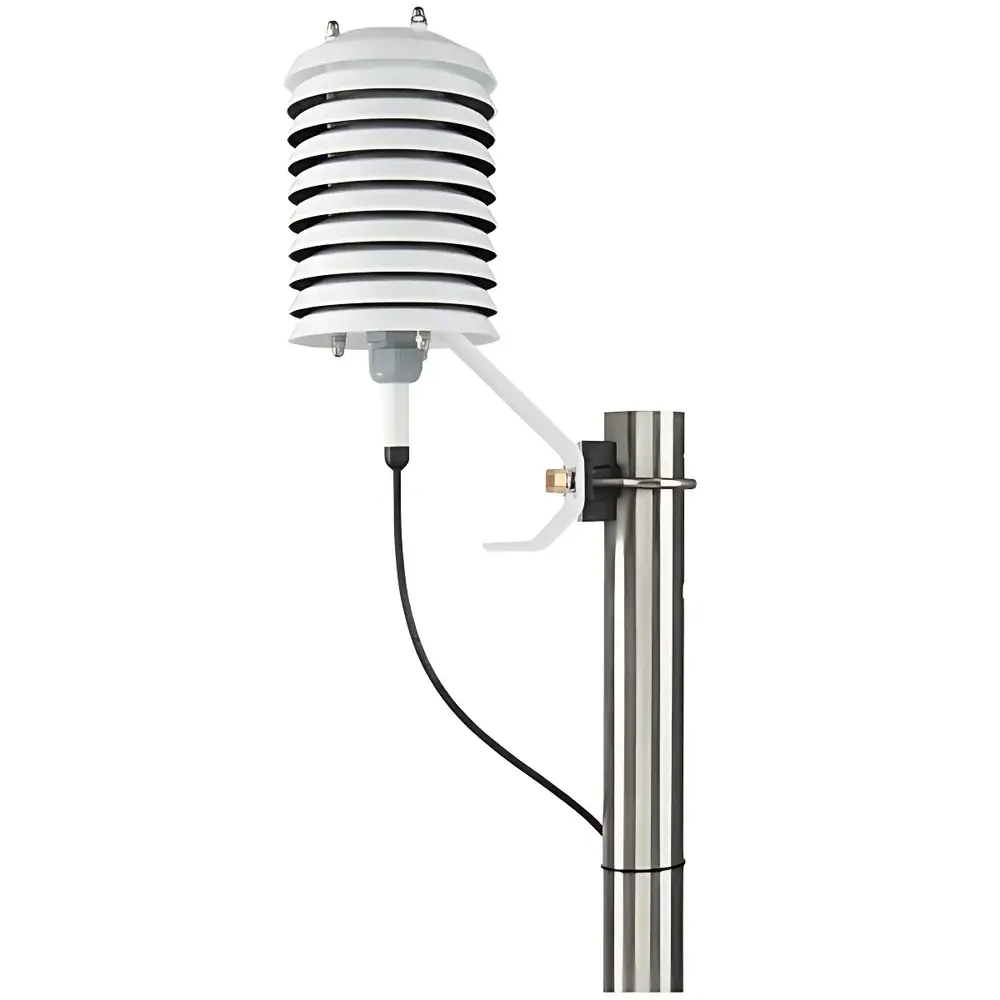
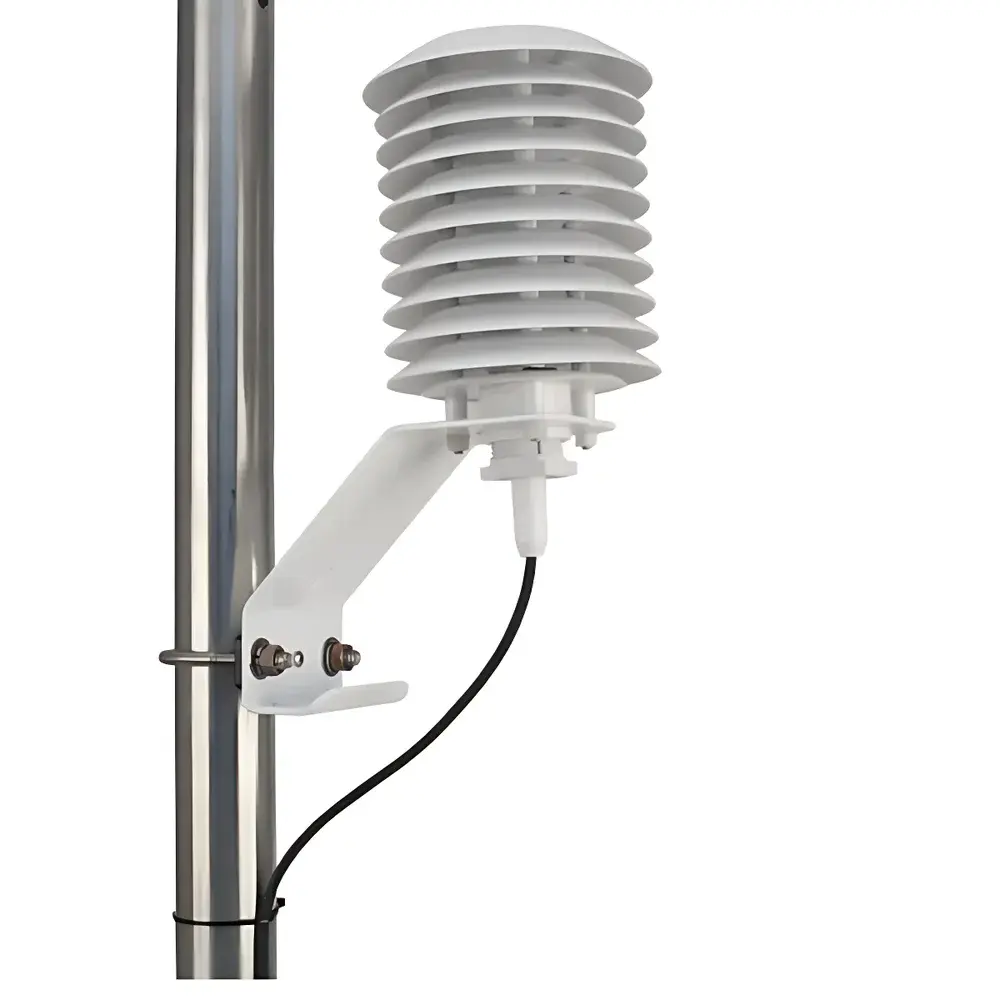
The HC2AS3 is designed for direct measurement of ambient air in open or ducted environments. It does not require sample conditioning (e.g., drying or filtration) for standard atmospheric monitoring but may be integrated with radiation shields (e.g., Rotronic RS4) or aspiration housings for high-accuracy meteorological use. The probe complies with key regulatory and quality frameworks including EN 16798-1 (energy performance of buildings), ISO 7726 (ergonomics of thermal environments), and ASTM E337 (standard test method for measuring humidity with electric hygrometers). Its documented long-term stability supports GLP-compliant environmental logging where audit trails and instrument history are required.
Software & Data Management
While the HC2AS3 is an analog-output probe and does not include embedded firmware or Bluetooth/Wi-Fi connectivity, it is fully interoperable with industry-standard data acquisition platforms—including Campbell Scientific CR series loggers, Rotronic’s HygroLog NT software (via compatible signal conditioners), and third-party SCADA/HMI systems supporting 0–1 V inputs. When used with Rotronic’s HW4 or HygroSoft software (via HC2-S transmitters), users gain access to automated calibration verification, drift trending, uncertainty budgeting per GUM (JCGM 100), and export to CSV, XML, or PDF reports compliant with FDA 21 CFR Part 11 when paired with appropriate electronic signature and audit trail modules.
Applications
- Long-term climatological monitoring networks (e.g., NOAA, WMO station upgrades)
- Coastal and offshore infrastructure health monitoring (bridges, wind turbine nacelles, subsea control pods)
- Pharmaceutical warehouse and cold chain validation (ICH guidelines for storage environment qualification)
- Agricultural microclimate mapping and controlled-environment agriculture (CEA) ventilation control
- Building envelope performance assessment and HVAC commissioning per ASHRAE Guideline 0 and ISO 16814
- Calibration laboratory reference probes for secondary humidity standards
FAQ
Is the HC2AS3 suitable for submerged or high-condensation environments?
No—it is rated IP65, meaning protection against water jets, but not submersion. For saturated or intermittent immersion scenarios, consider the HC2A-S with optional hydrophobic membrane or the HC2-IC series with integrated condensate drain path.
Can the probe be recalibrated in-field?
Yes—using Rotronic’s portable HC2-CAL calibration kit (two-point RH/temperature check at 33 %RH/23 °C and 75 %RH/23 °C), though full recalibration requires return to an accredited lab due to sensor element replacement constraints.
Does the 0–1 V output require external excitation?
No—the probe contains internal regulation; only a stable 5 VDC or 12 VDC supply is needed. Output is ratiometric, so scaling errors from supply drift are inherently compensated.
What is the recommended mounting orientation?
Vertical orientation (sensor tip downward) is preferred to minimize dust accumulation and facilitate natural condensate runoff. Avoid horizontal mounting in high-particulate or dew-prone locations.
How often should calibration verification be performed?
Annually for critical applications (e.g., GxP environments); biannually for general environmental monitoring—aligned with ISO/IEC 17025 clause 7.7 and Rotronic’s recommended maintenance interval.



