
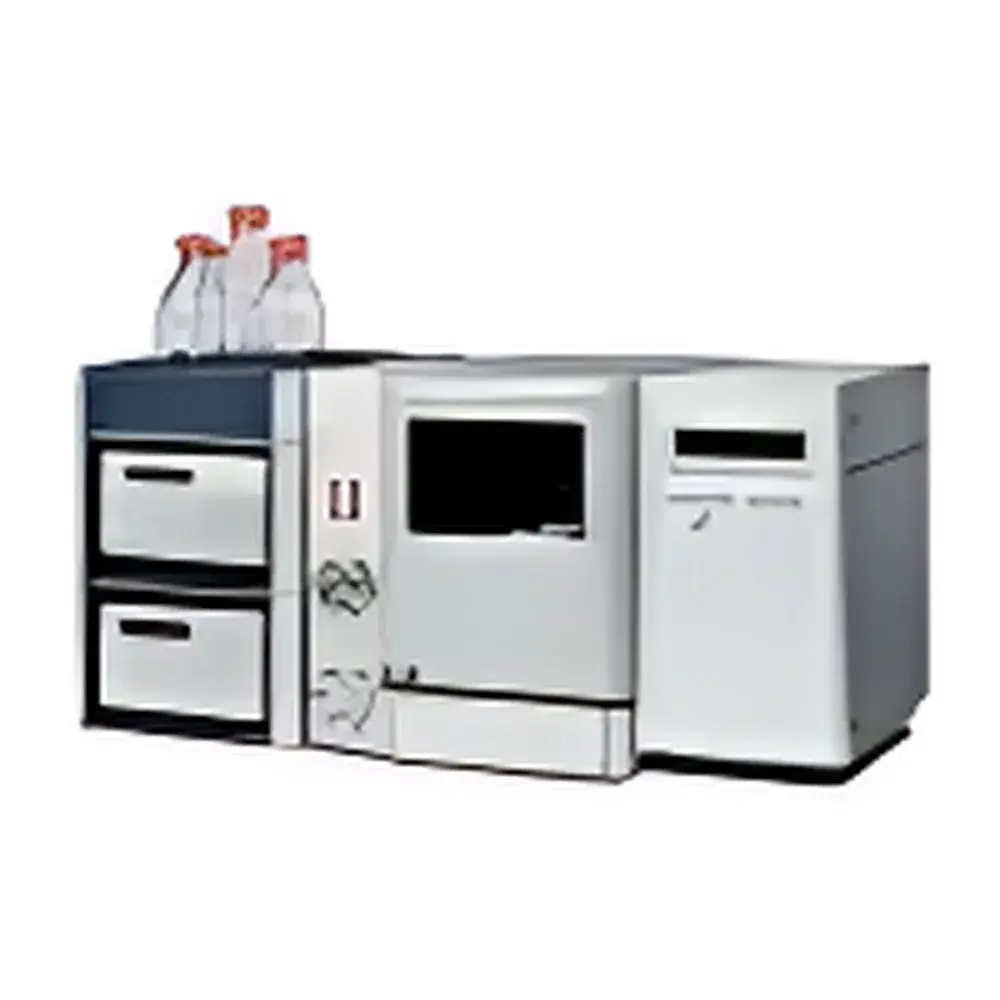
ROXY™ EC-LC System by Antec Leyden
| Origin | Netherlands |
|---|---|
| Manufacturer Type | Authorized Distributor |
| Origin Category | Imported |
| Model | ROXY |
| Pricing | Available Upon Request |
| Potentiostat | ROXY Potentiostats DCC |
| Autosampler | AS 110 (Cool, Micro, 10-Position Vial) |
| LC Pump | LC 110 |
| Reactor Cell | Integrated with Multi-Electrode Detection (MD) and Gas Collection (GC) Electrodes |
| Organizer | OR 110 |
| Software | Clarity Chromatography Data System |
Overview
The ROXY™ EC-LC System is a purpose-engineered electrochemical liquid chromatography platform developed by Antec Leyden (Netherlands) for coupling high-performance liquid chromatography (HPLC) with controlled-potential electrochemistry (EC) and downstream mass spectrometry (MS). At its core, the system implements potentiostatic control over flow-through electrochemical reactors—enabling precise, reproducible oxidation or reduction of analytes in real time under defined electrochemical conditions. Unlike biological metabolism—which requires days to weeks and introduces complex matrix interferences—the ROXY™ system generates structurally authentic metabolites within seconds via electrochemical simulation of Phase I oxidative pathways (e.g., hydroxylation, N-dealkylation, dehydrogenation). This principle supports rapid, cell-free, and reagent-free generation of reference standards and reactive intermediates directly inline with LC separation and MS detection—making it indispensable for early-stage drug metabolism and pharmacokinetics (DMPK) assessment, redox toxicology screening, and oxidative stress modeling.
Key Features
- Integrated potentiostatic control via ROXY Potentiostats DCC—supporting dual-channel, multi-step potential programming with <1 mV resolution and <50 µs response time for transient species capture.
- Modular reactor cell design featuring interchangeable working electrodes (glassy carbon, boron-doped diamond, gold) and integrated multi-detection (MD) capability for simultaneous amperometric and coulometric monitoring.
- Gas collection (GC) electrode configuration enables quantitative trapping and offline analysis of volatile electrochemical products (e.g., CO₂, NO, H₂O₂).
- AS 110 autosampler with Peltier-cooled micro-carrier (4–40 °C), 10-position vial capacity, and low carryover (<0.005%) for trace-level metabolite stability studies.
- LC 110 binary gradient pump delivering pulseless flow from 0.001–10.000 mL/min with pressure rating up to 600 bar—compatible with sub-2 µm UHPLC columns.
- OR 110 organizer ensures standardized cable routing, fluidic alignment, and thermal stabilization across all EC-LC modules to minimize baseline drift and improve inter-run reproducibility.
Sample Compatibility & Compliance
The ROXY™ EC-LC System accommodates small molecules (MW < 1,500 Da), peptides, nucleosides, and lipid peroxidation markers in aqueous/organic mobile phases (e.g., acetonitrile/water, methanol/ammonium acetate buffers). It operates within ISO/IEC 17025-compliant laboratories and supports audit-ready workflows aligned with FDA 21 CFR Part 11 requirements when used with Clarity software’s electronic signature, role-based access control, and immutable audit trail features. All electrochemical modules comply with IEC 61000-4-3 (EMC) and IEC 61010-1 (electrical safety) standards. Method validation adheres to ICH M10 and ASTM E2689 guidelines for electrochemical derivatization coupled to LC-MS.
Software & Data Management
Clarity Chromatography Data System (v8.x or later) serves as the unified control and analysis environment. It provides synchronized acquisition of LC elution profiles, potentiostat current/voltage traces, and MS TIC/BPC data in a single timeline. The software includes dedicated EC method templates, automatic peak alignment across electrochemical potentials, and built-in tools for Faradaic efficiency calculation and charge-normalized response quantification. Raw data files are stored in vendor-neutral .cdf format, enabling third-party processing (e.g., in MATLAB or Python-based chemometrics pipelines). Full GLP/GMP compliance is supported through electronic signatures, version-controlled method archiving, and automated backup to network-attached storage (NAS) or LIMS-integrated repositories.
Applications
- Rapid generation of oxidative metabolites for structural elucidation and MS/MS library expansion—reducing reliance on in vivo/in vitro incubations.
- Electrochemical enhancement of electrospray ionization (ESI) signal intensity via pre-ionization or charge-state manipulation of labile compounds.
- μ-scale preparative synthesis of metabolite standards (1–100 nmol per run) with direct transfer to NMR or HRMS characterization.
- Assessment of covalent binding risk between reactive drug metabolites and model nucleophiles (e.g., glutathione, cysteine) under physiological pH and temperature.
- Controlled electrochemical cleavage of disulfide bonds or methionine residues in therapeutic proteins and monoclonal antibodies—supporting forced degradation studies per ICH Q5C.
- Simulation of oxidative damage to DNA bases (e.g., 8-oxoguanine), phospholipids (e.g., hydroperoxides), and polyphenols under tunable redox potentials.
FAQ
Can the ROXY™ EC-LC system be retrofitted to an existing HPLC or UHPLC platform?
Yes—modular architecture allows integration with third-party LC systems via analog/digital I/O and TTL triggering; full synchronization requires Clarity software licensing.
Is the reactor cell compatible with high-temperature or supercritical fluid operation?
No—the standard reactor cell is rated for ambient-to-60 °C operation and pressures ≤350 bar; high-temperature variants require custom engineering and are not part of the base configuration.
Does Clarity software support automated potential ramping during LC gradient elution?
Yes—multi-segment potential programs can be triggered by time, retention time, or UV/EC signal thresholds, enabling dynamic electrochemical modulation across peaks.
What electrode materials are supplied as standard, and can custom electrodes be validated?
Glassy carbon and boron-doped diamond electrodes are included; custom electrodes (e.g., Pt mesh, Au nanoparticles) may be qualified per user-defined protocols using Clarity’s electrode calibration module.
How is system performance verified post-installation?
Antec-certified installation includes electrochemical benchmarking with ferrocene/ferricinium redox couple, LC flow accuracy verification (per USP ), and end-to-end EC-LC-MS sensitivity testing using paracetamol oxidation products.





