
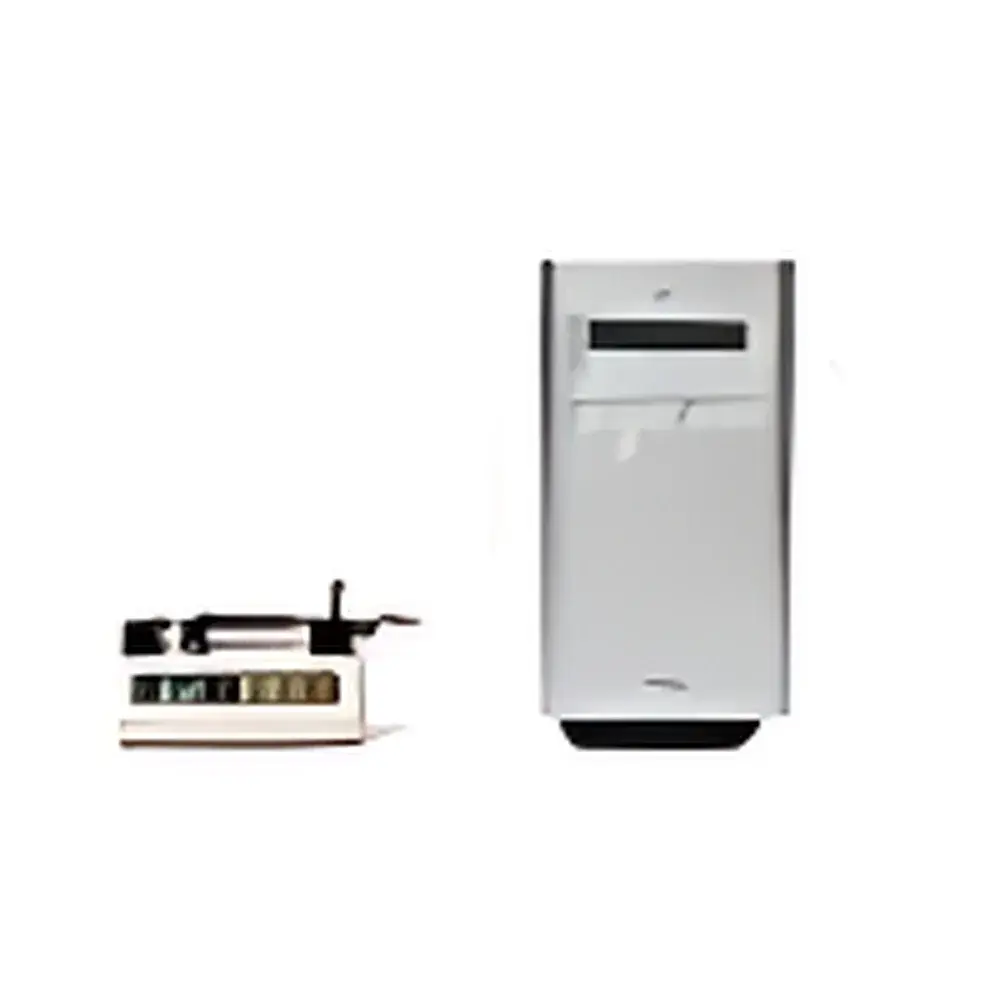
ROXY™ EC Potentiostat by Antec
| Brand | Antec |
|---|---|
| Origin | Netherlands |
| Model | ROXY™ EC |
| Application | Online Electrochemical Cell for LC-MS Coupling |
| Compatibility | Universal MS Interface (Agilent, Thermo Fisher, Waters, SCIEX, Shimadzu) |
| Configuration | Flow-through electrochemical flow cell with integrated electrode cartridge and MS-compatible solvent handling |
| Regulatory Context | Designed for GLP-compliant metabolic stability screening and oxidative stress simulation studies |
Overview
The ROXY™ EC Potentiostat is a purpose-engineered electrochemical flow cell system developed by Antec (Netherlands) for seamless integration upstream of mass spectrometers in liquid chromatography–mass spectrometry (LC-MS) workflows. Unlike conventional offline electrochemical reactors or batch-mode electrolysis cells, the ROXY™ EC operates as a real-time, online electrochemical conversion module—positioned directly between the LC column outlet and the MS ion source. It employs controlled-potential amperometry in a microfluidic thin-layer flow cell architecture, enabling precise, reproducible electrochemical oxidation or reduction of analytes under physiologically relevant potentials (±2.0 V vs. Ag/AgCl). This design facilitates direct generation and immediate detection of reactive metabolites—such as quinones, iminium ions, hydroxylamines, and radical intermediates—without post-reaction quenching, derivatization, or chromatographic separation. The system is engineered for compatibility with standard electrospray ionization (ESI) and atmospheric pressure chemical ionization (APCI) sources, supporting both positive- and negative-ion mode acquisition.
Key Features
- Modular, MS-coupled electrochemical flow cell with replaceable carbon-based electrode cartridges (glassy carbon, boron-doped diamond, or gold options)
- Programmable three-electrode configuration (working, reference, counter) with digital potentiostatic control and real-time current monitoring
- Low dead-volume fluidic path (< 5 µL) to minimize band broadening and ensure chromatographic integrity
- Chemically inert PEEK and titanium wetted materials compatible with organic/aqueous mobile phases (including 0.1% formic acid, 10 mM ammonium acetate, acetonitrile/water gradients)
- Integrated temperature stabilization (ambient to 40 °C) to suppress non-faradaic side reactions and improve reaction selectivity
- Full remote control via Antec’s ECControl software with synchronized triggering of LC gradient, MS acquisition, and potential ramping protocols
Sample Compatibility & Compliance
The ROXY™ EC supports small-molecule pharmaceuticals, peptides, nucleosides, lipids, and xenobiotics across a wide polarity and molecular weight range (MW < 2,000 Da). Its operation adheres to electrochemical principles defined in ASTM E2913 (Standard Guide for Electrochemical Methods in Pharmaceutical Analysis) and aligns with ICH M3(R2) and FDA guidance on metabolite safety testing. When deployed in early-stage drug discovery, the system enables generation of Phase I–like oxidative metabolites under non-enzymatic, redox-controlled conditions—supporting regulatory submissions requiring structural characterization of major human metabolites (FDA Guidance for Industry, “Metabolites in Safety Testing”, 2020). Data acquisition complies with 21 CFR Part 11 requirements when used with validated software configurations, including electronic signatures, audit trails, and secure user access controls.
Software & Data Management
ECControl software provides synchronized method development across LC, EC, and MS domains. Users define multi-step potential programs (e.g., stepwise ramp from −0.2 V to +1.4 V over 30 s), trigger MS full-scan or targeted acquisition upon current threshold exceedance, and export time-resolved electrochemical current traces alongside mass spectral data. All raw files (.raw, .d, .wiff) retain embedded metadata—including applied potential, current, flow rate, and timestamp alignment—enabling retrospective correlation of electrochemical behavior with ion abundance. Export formats include mzML and CSV for integration into third-party metabolomics platforms (XCMS, MS-DIAL, Compound Discoverer). Audit trail logs record all parameter changes, user logins, and method executions—fully traceable for GxP audits.
Applications
- In vitro metabolic profiling: Rapid simulation of cytochrome P450–mediated oxidation (e.g., N-dealkylation, aromatic hydroxylation) without enzyme cofactors or microsomal incubations
- Metabolite synthesis & isolation: Microscale preparative generation (µg-scale) of unstable metabolites for NMR or synthetic validation
- Oxidative stress modeling: Controlled generation of ROS-induced modifications on proteins (methionine sulfoxidation), DNA (8-oxoguanine), and phospholipids (hydroperoxide formation)
- Drug–protein binding assessment: Electrochemical cleavage of covalent adducts followed by LC-MS/MS detection of released peptide epitopes
- Redox stability screening: Quantitative evaluation of compound susceptibility to auto-oxidation under physiological pH and potential conditions
FAQ
Can the ROXY™ EC be coupled with high-resolution mass spectrometers such as Q-TOF or Orbitrap systems?
Yes—the system interfaces directly with any LC-MS platform using standard ESI or APCI sources, including Thermo Orbitrap Exploris, Sciex X500B, Agilent 6545XT, and Waters SELECT SERIES Cyclic IMS. No hardware modification is required.
Is electrode fouling a concern during long-duration runs?
The flow-cell geometry and pulsed potential protocols minimize passivation; routine cleaning cycles (e.g., anodic stripping at +1.8 V for 60 s) restore baseline performance. Cartridge replacement is recommended after ~200 injections under aggressive oxidation conditions.
Does the ROXY™ EC support dual-potential or bipotential experiments?
Yes—ECControl allows independent programming of working and counter electrode potentials, enabling asymmetric redox cycling and selective generation of transient intermediates.
How is calibration performed for quantitative EC-MS applications?
Calibration relies on internal standard–based response factors derived from electrochemically generated metabolite standards or stable-isotope labeled analogues; absolute quantification requires external calibration curves established under identical potential and flow conditions.
What maintenance is required beyond cartridge replacement?
Annual verification of potentiostat accuracy (±1 mV potential tolerance, ±0.1 nA current resolution) and fluidic integrity testing (backpressure monitoring, leak detection) are recommended per ISO/IEC 17025 guidelines.
Related Products





