
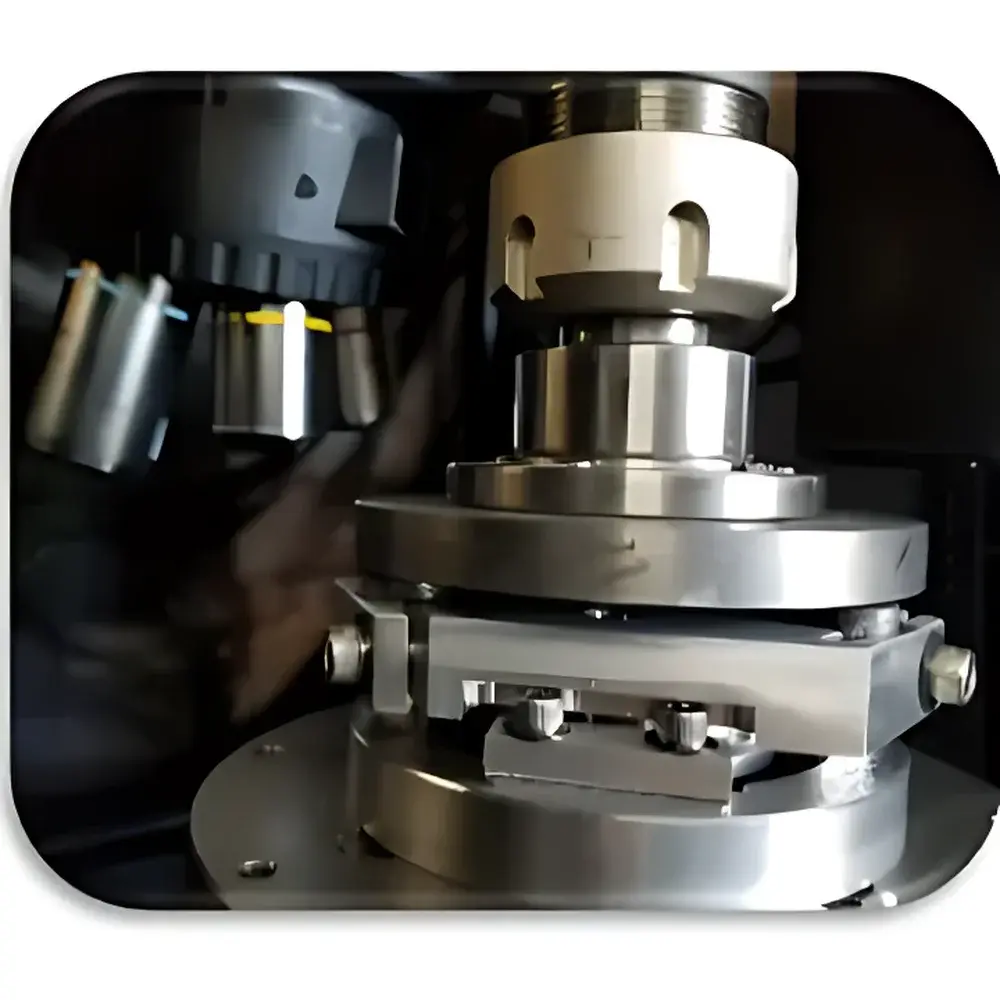
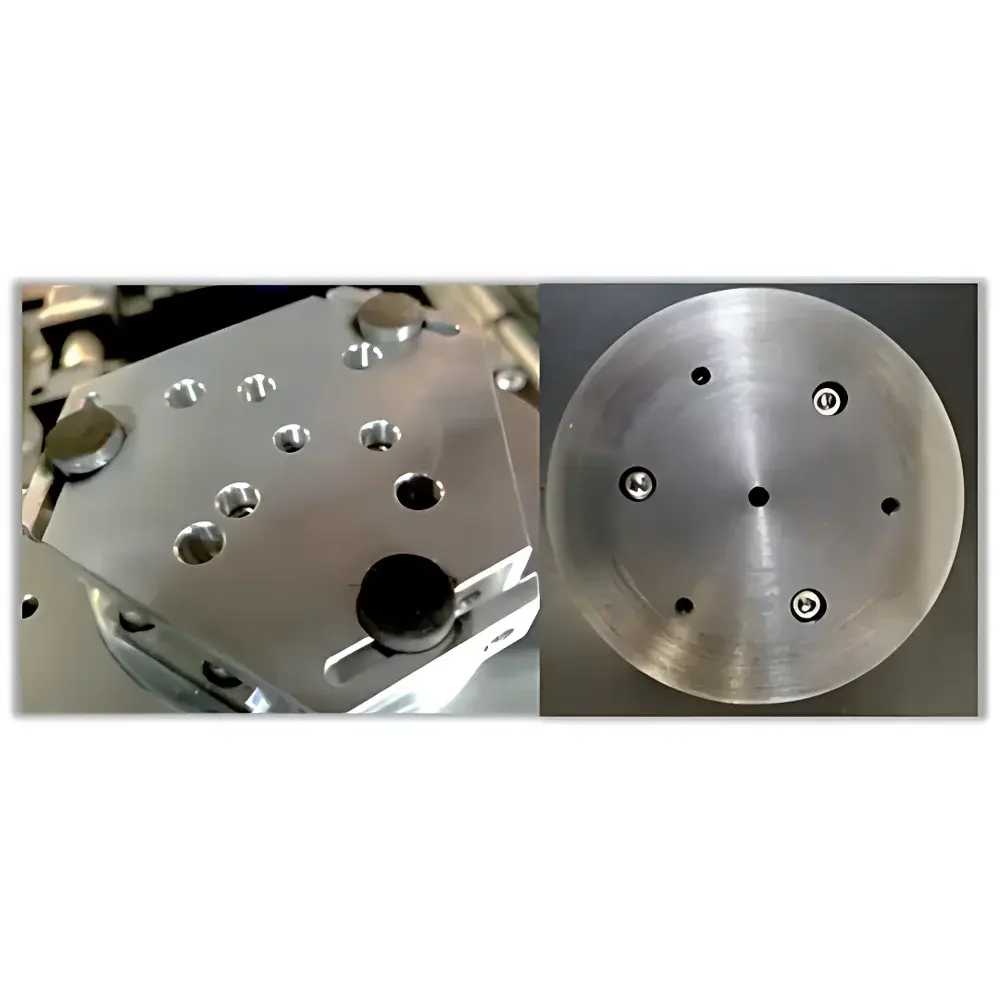
Rtec Brake-5000 SAE J2522-Compliant Multifunctional Tribological Tester
| Brand | Rtec |
|---|---|
| Origin | Switzerland |
| Model | Brake-5000 |
| Instrument Type | Multifunctional Tribological Tester |
| Compliance | SAE J2522, ISO 6310, ASTM G99, ASTM D3702 |
| Drive Configuration | Dual-axis rotational (upper/lower spindle), high-torque motorized actuation |
| Data Acquisition | Real-time synchronized logging of normal load, friction torque, coefficient of friction (μ), sliding velocity, interface temperature, acoustic emission, wear depth, and volumetric wear loss |
| Control Modes | Programmable acceleration/deceleration profiles, constant-speed braking, step-load cycling, environmental conditioning (optional humidity/temperature chamber integration) |
| Software | Rtec Tribos™ v8.2 with GLP-compliant audit trail, FDA 21 CFR Part 11 user role management, and automated report generation per ISO/IEC 17025 requirements |
Overview
The Rtec Brake-5000 is a purpose-engineered tribological testing system designed specifically for the dynamic simulation and quantitative evaluation of brake material performance under conditions that replicate real-world service environments. Based on the fundamental principles of controlled-contact tribometry—employing precision-controlled normal loading, programmable rotational kinematics, and multi-sensor in situ monitoring—the Brake-5000 implements standardized test protocols defined in SAE J2522 (“Brake Friction Material Dynamometer Test Procedure”) while supporting broader tribological characterization across ISO 6310 (brake lining materials), ASTM G99 (pin-on-disk wear), and ASTM D3702 (friction and wear of bearing materials). Unlike conventional fixed-geometry testers, the Brake-5000 utilizes a dual-motor, coaxial rotational architecture enabling independent control of upper and lower specimen motion—critical for simulating asymmetric contact mechanics encountered in disc-pad, drum-lining, and clutch plate interfaces.
Key Features
- Modular tribological platform accommodating specimens from small coupons (10 × 10 mm) to full-size brake pads (up to 150 mm width) and clutch facings, with optional custom fixture kits for OEM-specific geometries.
- High-torque (±50 N·m), high-resolution (0.01 N·m) servo-driven spindles capable of generating linear acceleration/deceleration ramps (0–15 m/s²) and maintaining stable rotational velocities from 0.1 to 3000 rpm.
- Synchronized acquisition of 12+ physical parameters at 10 kHz sampling rate: normal force (±0.1% FS), friction torque (±0.05% FS), instantaneous coefficient of friction (μ), surface temperature (IR pyrometer, ±1°C), acoustic emission (AE sensor, 100 kHz bandwidth), linear wear displacement (LVDT, ±0.1 µm resolution), and volumetric wear calculated via integrated 3D profilometry (optional add-on).
- Programmable environmental control interface supporting integration with external climate chambers (–40°C to +250°C, 10–95% RH) to assess thermal-hygroscopic coupling effects on fade/recovery behavior.
- Rigid granite base with active vibration isolation and thermally stable frame design ensuring measurement repeatability < ±1.2% COV across 50+ consecutive SAE J2522 cycles.
Sample Compatibility & Compliance
The Brake-5000 supports standardized test configurations per SAE J2522 Annex A (inertia dynamometer emulation), including Type I (low-speed drag), Type II (high-speed fade), and Type III (recovery) sequences. It accommodates metallic, semi-metallic, low-metallic, ceramic, and organic non-asbestos friction composites. Specimen mounting conforms to ISO 6310 mechanical fastening specifications and permits rapid tool-less changeover between pad-on-disc, shoe-on-drum, and plate-on-plate configurations. All hardware and firmware are validated per ISO/IEC 17025:2017 calibration traceability requirements, with factory-certified uncertainty budgets documented for each transducer channel. System compliance documentation includes SAE J2522 test method verification reports and ASTM E2586 statistical validation of data reproducibility.
Software & Data Management
Rtec Tribos™ v8.2 provides a validated, audit-ready software environment compliant with FDA 21 CFR Part 11 (electronic signatures, role-based access, immutable audit trails) and aligned with GLP/GMP laboratory practices. The software enables full test sequence scripting—including ramped load profiles, variable slip ratios, and conditional logic triggers (e.g., terminate cycle if μ drops below 0.25 for >2 s). Raw time-series data are stored in HDF5 format with embedded metadata (operator ID, calibration date, environmental logs). Automated reporting modules generate SAE J2522-compliant summary tables, fade curves (μ vs. speed), recovery plots (μ vs. cycle number), and statistical summaries (mean, SD, min/max, Cpk) per ASTM E2586. Export options include CSV, PDF, and XML for LIMS integration.
Applications
Primary use cases include formulation screening of friction modifiers (e.g., Cu-free alternatives), evaluation of thermal stability during repeated fade-recovery cycles, quantification of wear debris generation rates under humid vs. dry conditions, and correlation of acoustic emission signatures with subsurface cracking initiation. Secondary applications span aerospace brake material qualification (MIL-PRF-46147), railway brake pad homologation (EN 15427), and biomedical implant coating wear assessment (ASTM F732). The system serves R&D laboratories in Tier-1 automotive suppliers, national metrology institutes, and university tribology research centers engaged in ISO/TC 108/WG 10 standard development.
FAQ
Does the Brake-5000 meet full SAE J2522 certification requirements for OEM submission?
Yes—the system implements all mandatory hardware specifications (inertia simulation accuracy, torque resolution, temperature measurement uncertainty) and software reporting structures defined in SAE J2522 Rev. 2021, and includes third-party verification documentation from TÜV Rheinland.
Can it replicate transient thermal gradients observed during emergency braking?
Yes—via synchronized IR thermography (optional 640 × 480 pixel thermal camera module) and closed-loop thermal profiling, enabling surface temperature ramp rates up to 120°C/s with spatial resolution of 0.5 mm.
Is remote operation and data monitoring supported?
Yes—Tribos™ supports secure TLS 1.3 encrypted remote desktop access, live dashboard streaming, and MQTT-based telemetry export for centralized lab data infrastructure.
What maintenance intervals are recommended for long-term metrological stability?
Annual transducer recalibration (NIST-traceable), biannual spindle bearing inspection, and quarterly verification of encoder linearity per ISO 230-2 Annex B are specified in the maintenance manual.
Are custom test protocols outside SAE J2522 supported?
Yes—the open API (Python/C++ SDK) allows users to define proprietary test logic, integrate external sensors (e.g., strain gauges, gas analyzers), and embed machine learning inference pipelines for real-time wear prediction.



