
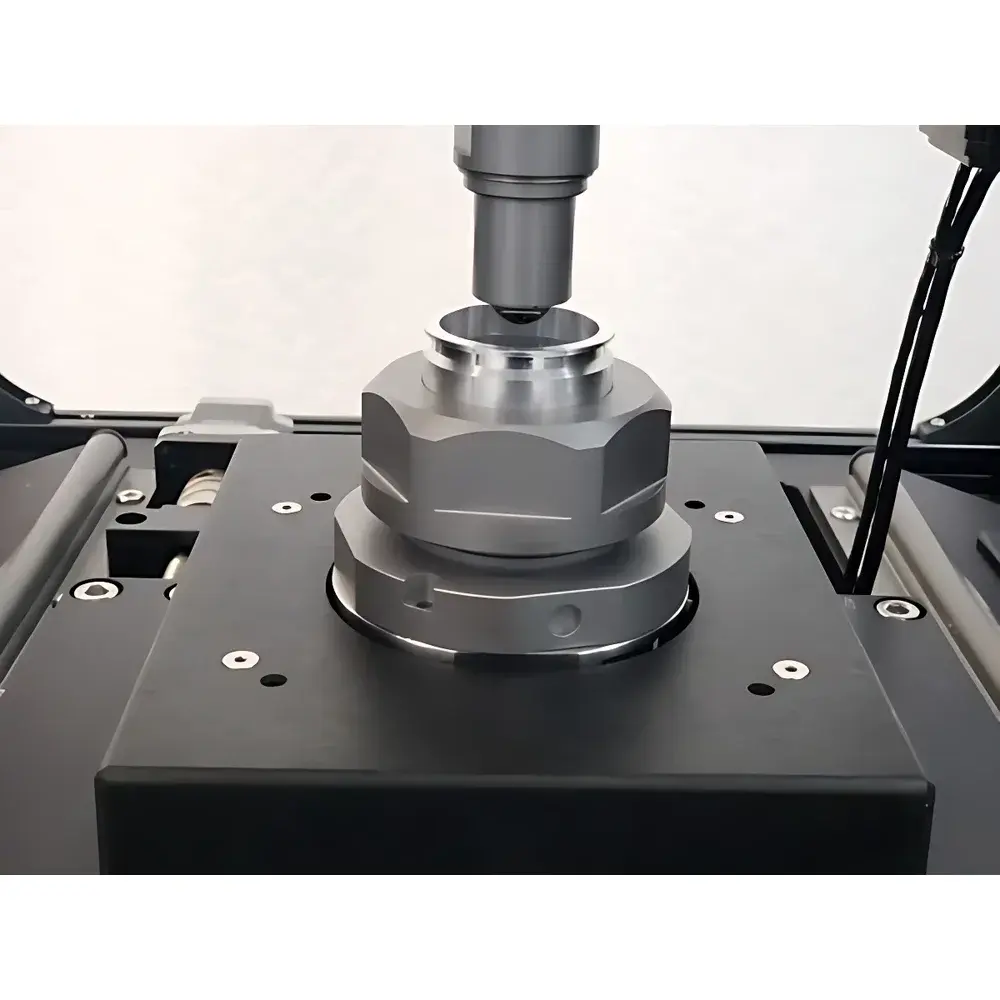
Rtec FBT-1000 Four-Ball Tribometer
| Brand | Rtec |
|---|---|
| Origin | Switzerland |
| Model | FBT-1000 |
| Test Types | EP (Extreme Pressure) and Wear Testing |
| Temperature Range | –40 °C to 200 °C (optional up to 400 °C) |
| Maximum Load | 12,000 N |
| Rotational Speed | Up to 1800 rpm |
| Real-time Monitoring | Torque, Load, Temperature, Acoustic Emission, Friction Coefficient |
| Compliance | ISO 12583, ASTM D2266, D2596, D2783, D4172, DIN 51350, BS EN ISO 20623, CEC L-45-A-99 |
| Sample Compatibility | Lubricating oils, greases, additives, solid lubricants |
| Data Resolution | Sub-micron wear scar measurement via integrated 3D profilometry |
Overview
The Rtec FBT-1000 Four-Ball Tribometer is an engineered precision instrument for standardized and advanced tribological evaluation of lubricants under controlled extreme pressure (EP) and boundary wear conditions. Based on the classical four-ball geometry—three stationary balls arranged in a tetrahedral configuration supporting a rotating upper ball—the system applies well-defined normal load, rotational speed, and temperature to quantify frictional behavior, wear resistance, and EP performance. Its operational principle adheres to the Couette-type shear flow regime between contacting surfaces, enabling reproducible simulation of elastohydrodynamic (EHD) and mixed-lubrication regimes encountered in gearboxes, bearings, and hydraulic systems. Designed for compliance with globally recognized test protocols—including ISO 12583 for EP testing and ASTM D4172 for wear assessment—the FBT-1000 delivers metrologically traceable data essential for formulation development, quality control, and regulatory submission in lubricant manufacturing and petroleum R&D laboratories.
Key Features
- Programmable closed-loop force control up to 12,000 N with real-time load feedback and dynamic compensation
- Wide thermal operating range: –40 °C to 200 °C (with optional high-temperature module extending to 400 °C)
- Synchronized multi-parameter acquisition: continuous torque, axial load, temperature, acoustic emission, and friction coefficient at ≥1 kHz sampling rate
- Automated EP failure detection via torque spike recognition, acoustic signature analysis, and visual smoke onset correlation
- Integrated anti-splash test chamber with sealed vapor containment and inert gas purging capability
- Modular architecture supporting interchangeable fixtures for four-ball, pin-on-disk, and reciprocating configurations
- High-resolution wear scar quantification using Rtec Universal Profilometer (3D topography, volume loss, scar diameter, ellipticity)
Sample Compatibility & Compliance
The FBT-1000 accommodates a broad spectrum of petroleum-based and synthetic lubricants—including mineral oils, PAOs, esters, greases, and additive packages—as well as solid lubricants and functional coatings. It is validated for use with standard reference materials (SRMs) traceable to NIST and certified by major OEMs for qualification testing per OEM-specific specifications (e.g., GM 6277M, Ford WSS-M2C945-A). All test routines are fully compliant with ISO 12583 (EP), ISO 20623 (wear), ASTM D2596 (load-wear index), ASTM D2783 (weld point), ASTM D2266 (wear scar diameter), and ASTM D4172 (four-ball wear test). The system supports audit-ready documentation aligned with GLP and GMP requirements, including full electronic records with time-stamped metadata, user authentication logs, and 21 CFR Part 11–compliant electronic signatures when paired with Rtec’s validated software suite.
Software & Data Management
Rtec Tribosuite™ v5.2 provides comprehensive test method configuration, real-time visualization, and post-processing analytics. Preloaded templates include all relevant ASTM, ISO, and DIN methods with auto-calculated pass/fail criteria (e.g., weld load, mean wear scar diameter, load-wear index). Raw sensor streams are stored in HDF5 format with embedded calibration coefficients and environmental metadata. Advanced reporting modules generate PDF/Excel outputs compliant with internal QA workflows and external regulatory submissions. Audit trails record every parameter change, user action, and instrument state transition. Optional integration with LIMS platforms (via ASTM E1578-compliant API) enables automated result transfer and batch-level traceability across enterprise laboratory networks.
Applications
- Development and benchmarking of anti-wear (AW) and extreme pressure (EP) additive packages
- Formulation screening of base oil blends and biodegradable lubricants
- Quality assurance of finished lubricants against batch-to-batch variability
- Failure mode analysis of field-failed lubricants through comparative wear morphology
- Supporting OEM approval processes requiring ISO/ASTM-certified tribological data
- Academic research on tribofilm formation kinetics, shear-induced degradation, and thermal runaway mechanisms
FAQ
What standards does the FBT-1000 natively support?
The system ships with pre-validated methods for ISO 12583, ASTM D2266, D2596, D2783, and D4172, plus DIN 51350 and CEC L-45-A-99. Custom protocol implementation is supported via open scripting interface.
Can wear scar measurements be performed in situ without disassembling the test cell?
No—post-test wear scar analysis requires removal of the lower balls and imaging via the integrated or external Rtec Universal Profilometer. However, real-time torque and acoustic trends provide predictive indicators of wear progression.
Is temperature control available during EP testing at maximum load?
Yes. Active PID-controlled heating/cooling maintains setpoint stability ±0.5 °C even under 12,000 N static load and 1800 rpm rotation.
How is failure defined in an ASTM D2596 EP test?
Failure is determined by either welding of the four-ball contact zone (visually confirmed), torque exceeding 200% of baseline, or sustained acoustic emission amplitude >85 dB(A) for >2 s—whichever occurs first.
Does the system meet FDA or pharmaceutical regulatory requirements?
While primarily deployed in petroleum and industrial lubricant labs, the FBT-1000 can be configured for 21 CFR Part 11 compliance with validated software, electronic signatures, and full audit trail functionality—making it suitable for lubricant testing in regulated medical device or pharma manufacturing environments where ISO 20623-compliant grease performance is required.





