
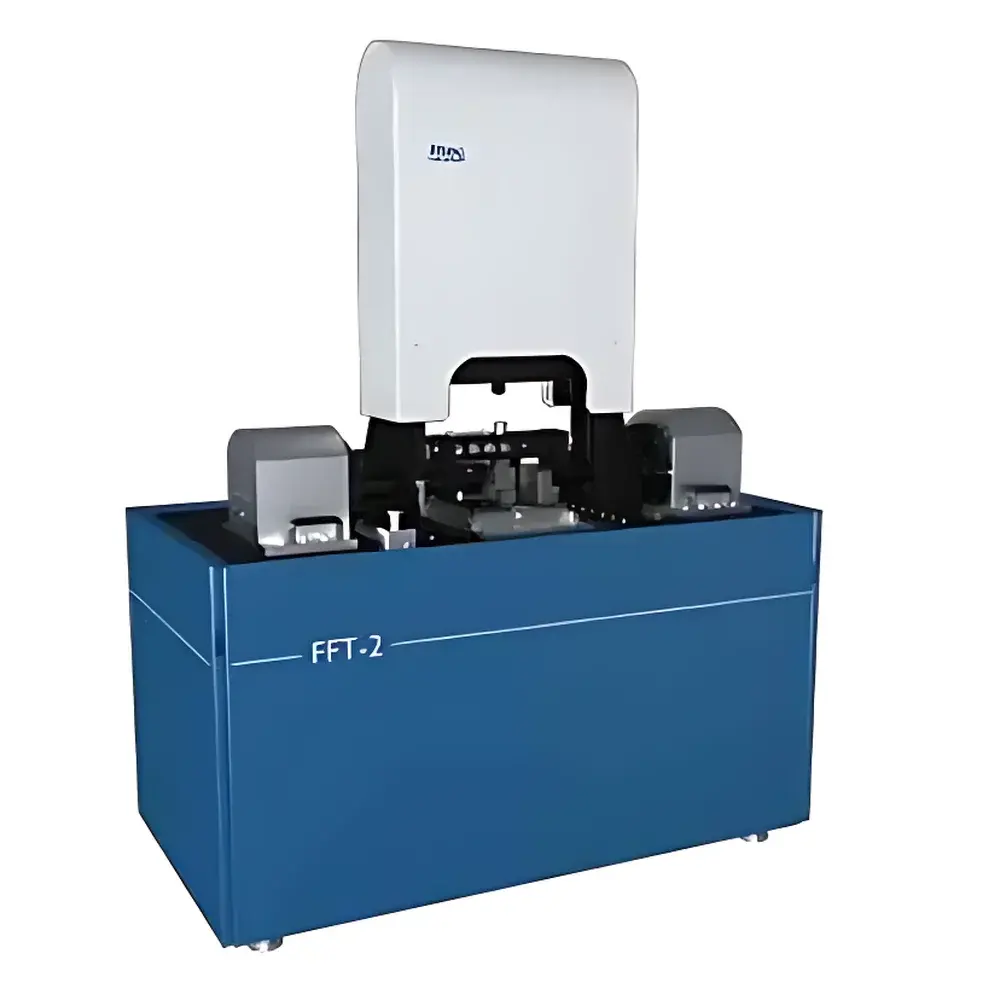
Rtec FFT-1 Reciprocating Tribological Tester
| Brand | Rtec |
|---|---|
| Origin | Switzerland |
| Model | FFT-1 |
| Instrument Type | Reciprocating Friction and Wear Tester |
| Maximum Normal Load (Fz) | Up to 5000 N |
| Maximum Test Temperature | 500 °C |
| Compliance | ISO 19291, ASTM E2789, ASTM D6425, ASTM D7421, ASTM D5707, ASTM D5706, ASTM D7594, DIN 51834-2/3/4 |
| Environmental Control | Integrated temperature chamber (−40 °C to 500 °C), optional humidity control |
| Sensor Integration | Displacement sensor, Acoustic Emission (AE) sensor, Contact Resistance sensor |
| Software | Real-time closed-loop control with customizable test scripting, statistical data reporting, GLP-compliant audit trail, FDA 21 CFR Part 11 ready configuration |
Overview
The Rtec FFT-1 Reciprocating Tribological Tester is an engineered platform for quantitative evaluation of frictional behavior, wear kinetics, and surface degradation mechanisms under controlled mechanical, thermal, and environmental conditions. Based on the reciprocating (linear oscillatory) tribometry principle—where a stationary or moving counterface oscillates across a fixed or sliding specimen—the FFT-1 delivers high-fidelity force, displacement, and energy dissipation data in accordance with internationally recognized tribological test standards. Its modular architecture supports variable stroke lengths (0.1–25 mm), frequencies (0.01–100 Hz), and normal load application (up to 5000 N), enabling replication of real-world contact regimes encountered in automotive valve trains, biomedical implants, aerospace coatings, and microelectromechanical systems (MEMS). The system operates within a thermally stabilized chamber capable of sustained operation from −40 °C to 500 °C, permitting investigation of thermal softening, oxidation-driven wear transitions, and phase-dependent lubricant film breakdown.
Key Features
- High-resolution, dual-axis load cell with integrated calibration traceability for simultaneous measurement of normal (Fz) and tangential (Fx/Fy) forces, enabling coefficient of friction (COF) calculation with <0.5% repeatability over extended test durations.
- Real-time closed-loop motion control using high-bandwidth servo actuators, ensuring precise stroke amplitude, frequency, and waveform fidelity (sinusoidal, triangular, trapezoidal, or user-defined profiles).
- Integrated multi-sensor acquisition suite: non-contact displacement transducer (±0.1 µm resolution), broadband acoustic emission sensor (100 kHz–1.2 MHz bandwidth), and low-noise contact resistance module for in situ detection of asperity-level electrical conduction changes during boundary lubrication events.
- Modular environmental chamber with programmable ramping rates (≤5 °C/min), uniform axial temperature distribution (±2 °C over 50 mm specimen zone), and optional humidity control (10–95% RH) for simulating corrosive or hygroscopic wear environments.
- Pre-certified hardware and software architecture compliant with FDA 21 CFR Part 11 requirements—including electronic signatures, audit trail logging, role-based access control, and immutable data archiving—supporting regulated QA/QC workflows in pharmaceutical device development and medical material validation.
Sample Compatibility & Compliance
The FFT-1 accommodates flat, curved, or cylindrical specimens up to Ø50 mm × 15 mm thickness, with interchangeable fixture sets for pin-on-disk, ball-on-flat, and linear reciprocating configurations. Standardized test geometries align with ISO 19291 (lubricated reciprocating wear testing), ASTM E2789 (tribological screening of orthopedic biomaterials), ASTM D6425 (automotive engine oil evaluation), and DIN 51834 series (lubricant additive performance under mixed/boundary regimes). All test methods are preloaded in the software library with parameter templates validated against round-robin interlaboratory studies. System compliance documentation includes ISO/IEC 17025 traceable calibration certificates for load, displacement, and temperature subsystems.
Software & Data Management
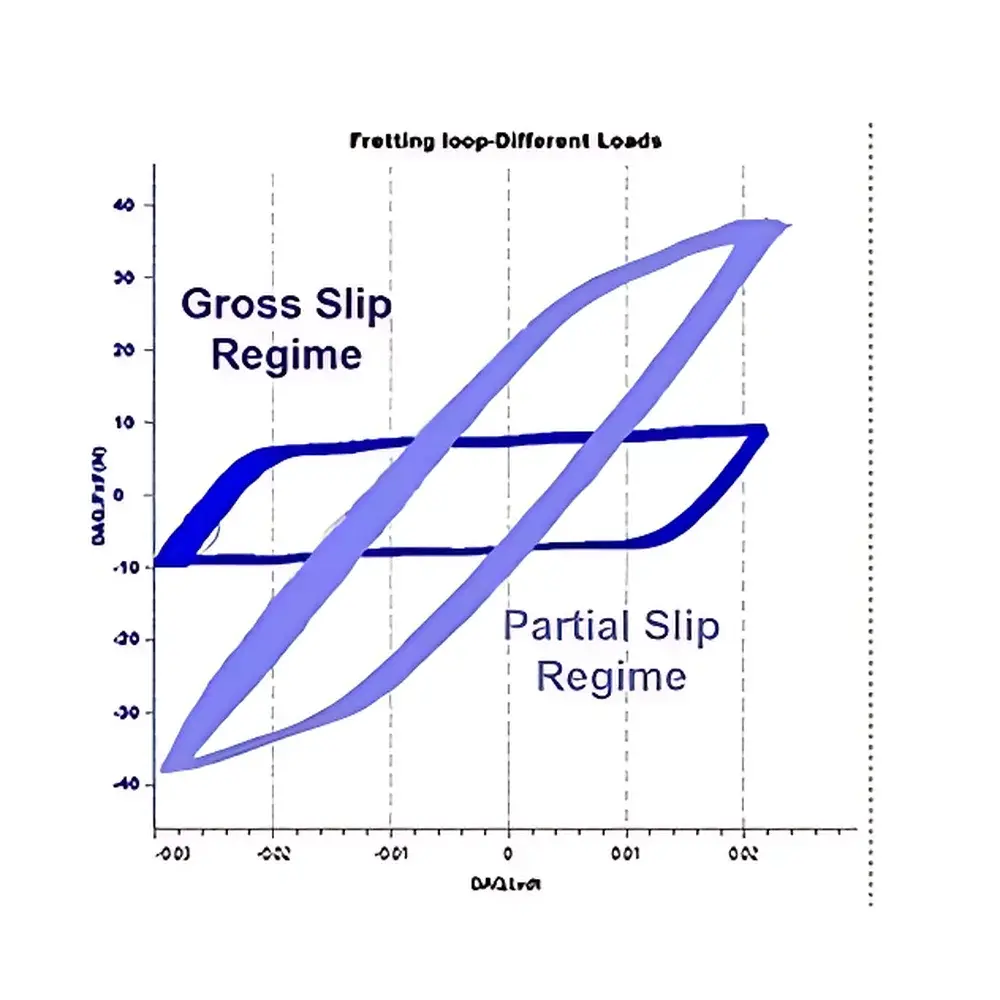
Rtec’s Tribometer Control Suite (TCS v5.x) provides unified interface for test definition, real-time monitoring, and post-acquisition analysis. The scripting engine supports Python-based custom protocol development (e.g., stepwise load ramping, temperature-coupled frequency sweeps, or COF-triggered termination logic). Raw time-series data (force, displacement, AE RMS, contact resistance) are stored in HDF5 format with embedded metadata (operator ID, calibration status, environmental setpoints). Statistical modules include Weibull wear rate distribution fitting, COF hysteresis loop quantification, AE burst counting with amplitude thresholding, and multivariate correlation mapping between friction evolution and thermal history. Export options include CSV, MATLAB .mat, and PDF reports compliant with GLP audit requirements.
Applications
- Development and qualification of low-friction coatings (DLC, MoS₂, WS₂) for electric vehicle transmission components under high-load, elevated-temperature conditions.
- Screening of biolubricants and synovial fluid substitutes for total joint replacement devices per ASTM F732 and ISO 14242-1.
- Failure mode analysis of turbine blade tip seals exposed to cyclic thermal-mechanical loading and particulate contamination.
- Quantitative assessment of tribofilm formation kinetics in next-generation engine oils containing novel anti-wear additives (e.g., phosphoramidates, ionic liquids).
- Correlation of acoustic emission signatures with subsurface crack initiation in bearing steels under rolling-sliding contact.
FAQ
What standard test methods are natively supported in the FFT-1 software?
The system includes fully configured protocols for ISO 19291, ASTM D6425, ASTM E2789, ASTM D7421, and DIN 51834-2/3/4, with all required parameter limits, pass/fail criteria, and reporting templates pre-installed.
Can the FFT-1 perform tests under vacuum or inert gas environments?
Yes—the chamber can be fitted with gas inlet/outlet ports and pressure monitoring; optional vacuum-rated versions support operation down to 10⁻³ mbar when paired with external pumping systems.
Is third-party data import/export supported for integration with LIMS or MATLAB-based modeling workflows?
HDF5 and CSV exports include full metadata headers; MATLAB API and Python SDK are provided for direct instrument control and batch analysis pipeline development.
How is temperature uniformity verified across the test zone?
Each chamber undergoes thermal mapping per ASTM E220 prior to shipment, with verification data included in the factory acceptance report; users may revalidate using embedded PT100 sensors at three spatial locations.
Does the system meet regulatory requirements for use in GMP manufacturing environments?
When configured with 21 CFR Part 11 option enabled—including electronic signature capture, audit trail review tools, and password-protected method locking—the FFT-1 satisfies core data integrity requirements for GMP-compliant material release testing.



