
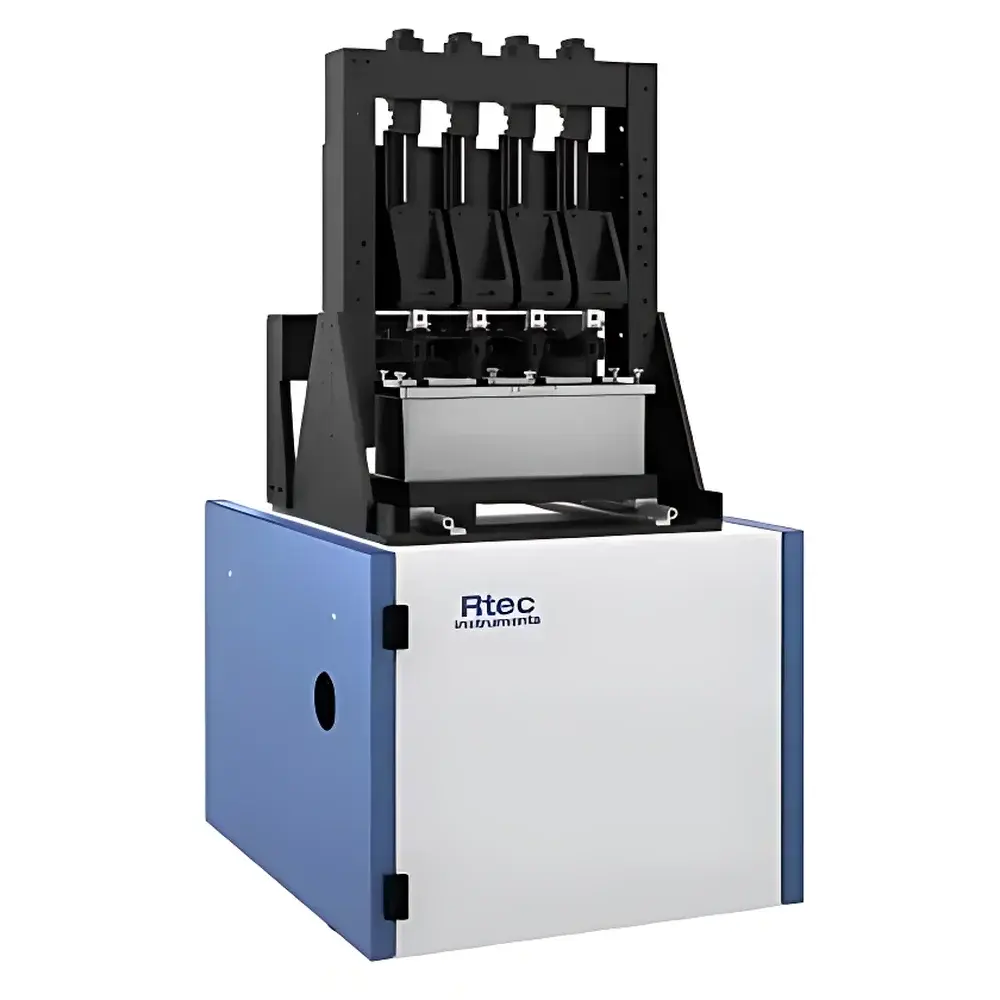
Rtec MFT-4000 Multi-Station Biomaterial Testing System
| Brand | Rtec |
|---|---|
| Origin | Switzerland |
| Model | MFT-4000 |
| Instrument Type | Multi-Function Tribological Tester |
| Application Focus | Biomaterials Evaluation |
Overview
The Rtec MFT-4000 Multi-Station Biomaterial Testing System is an advanced, modular tribological platform engineered for high-precision, multi-sample evaluation of mechanical and surface interaction properties in biomedical materials. Built upon a rigid electro-mechanical architecture with closed-loop force control and sub-micron positional resolution, the system operates on established tribological principles—including pin-on-disk, ball-on-flat, reciprocating linear, and scratch testing configurations—to quantify wear volume, coefficient of friction (COF), adhesion, micro-scratching resistance, and fatigue-induced surface degradation under physiologically relevant conditions. Designed specifically for orthopedic implant coatings (e.g., DLC, TiN, hydroxyapatite), soft-tissue simulants (e.g., silicone elastomers, hydrogels), dental composites, and biodegradable polymers, the MFT-4000 enables comparative benchmarking across multiple test stations simultaneously—reducing inter-test variability and accelerating regulatory preclinical data generation.
Key Features
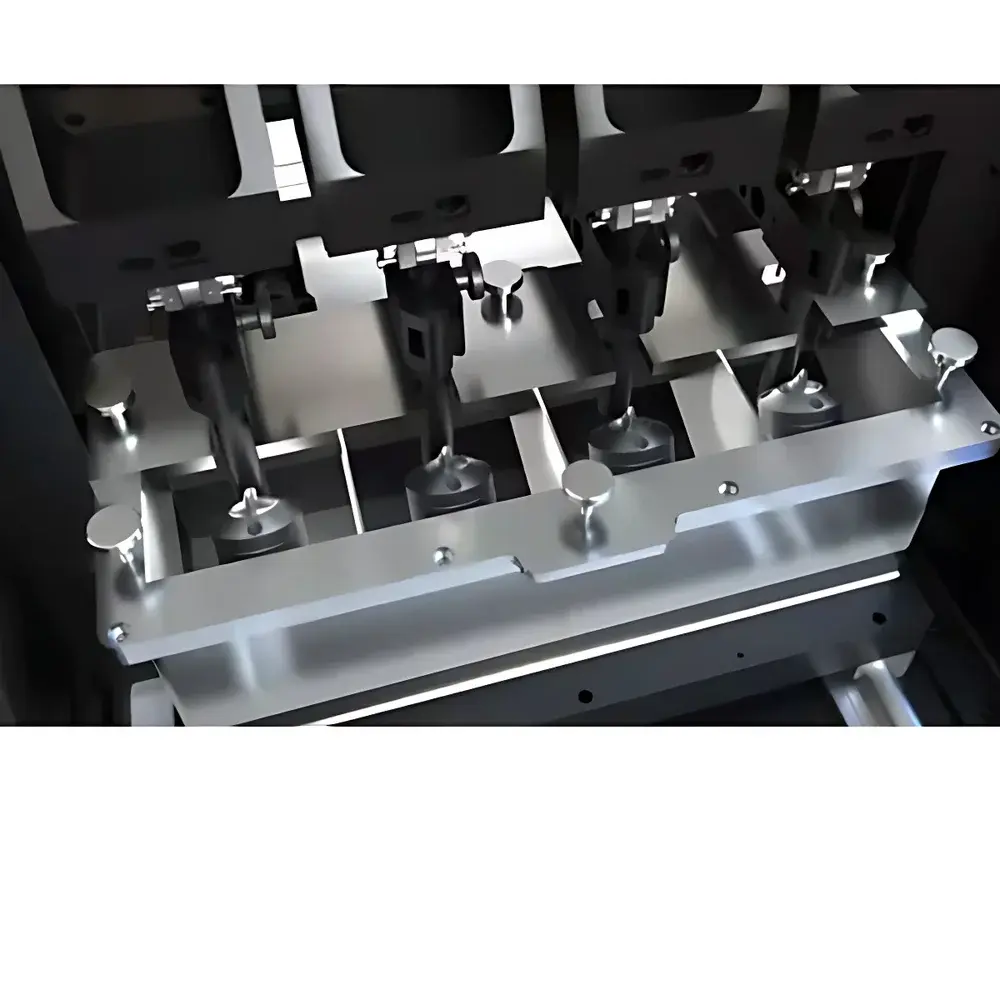
- Four independent, programmable test stations operating in parallel—each equipped with real-time load cell feedback (±0.05 mN resolution) and high-speed displacement sensors (10 nm resolution)
- Multi-axis motion control supporting rotational (0.01–500 rpm), linear reciprocating (0.1–50 mm/s, stroke up to 25 mm), and controlled normal load application (0.1–100 N, accuracy ±0.5% FS)
- Integrated environmental chamber (−20 °C to +80 °C, ±0.3 °C stability) with optional humidity control (10–95% RH) and simulated synovial fluid circulation module
- Onboard high-resolution optical profilometry (50×–200× magnification, 0.5 µm lateral resolution) for in-situ wear track imaging and 3D topography reconstruction post-test
- Modular sensor integration capability for simultaneous acquisition of acoustic emission, temperature rise at interface, and electrical contact resistance—critical for evaluating tribo-corrosion in metallic biomaterials
Sample Compatibility & Compliance
The MFT-4000 accommodates standard ASTM F732, ISO 6474, and ISO 14242-1 compliant specimen geometries—including 6–12 mm diameter pins, 25–50 mm diameter disks, and custom-fabricated joint simulator inserts. Sample holders accept hydrated, cryo-fixed, or sterilized specimens without disassembly. All test protocols support GLP-compliant execution: audit trails record operator ID, calibration timestamps, environmental parameters, and raw sensor outputs in immutable binary format. Data export formats comply with FDA 21 CFR Part 11 requirements—including electronic signatures, version-controlled method files, and time-stamped raw data archives. The system meets CE marking directives for medical device ancillary equipment (MDD 93/42/EEC Annex II) and conforms to IEC 61000-6-2/6-4 for electromagnetic compatibility.
Software & Data Management
Rtec’s Tribosoft v8.2 provides full instrument orchestration via intuitive workflow-based scripting. Users define multi-step test sequences—including preload ramping, dynamic load modulation, and conditional termination triggers (e.g., COF deviation >15%, acoustic emission burst threshold). Real-time visualization includes synchronized time-series plots of friction force, normal load, displacement, and temperature. Post-processing tools calculate volumetric wear rate (mm³/N·m), specific wear coefficient (k), and Stribeck curve fitting per ASTM G133. All datasets are stored in vendor-neutral HDF5 format with embedded metadata (test standard, sample ID, environmental setpoints), enabling seamless import into MATLAB, Python (via h5py), or LIMS platforms. Automated report generation supports customizable templates aligned with ISO/IEC 17025 documentation requirements.
Applications
- Preclinical screening of bearing couples in total joint replacements (UHMWPE vs. CoCrMo, ceramic-on-ceramic, metal-on-metal)
- Quantitative assessment of lubricity and wear resistance of hydrogel-based cartilage substitutes under cyclic loading
- Evaluation of antibacterial coating durability on orthopedic screws and dental implants subjected to simulated oral or intra-articular environments
- Tribo-electric characterization of bioresorbable polymer sutures during knot-tying and tissue pull-out simulations
- Accelerated aging studies combining mechanical wear with oxidative challenge (H₂O₂ exposure) per ISO 10993-13
FAQ
Can the MFT-4000 perform tests in simulated body fluid (SBF) or bovine serum?
Yes—the system integrates a recirculating fluid delivery subsystem compatible with ISO 23317-compliant SBF formulations and 25–100% bovine serum solutions, with temperature-controlled reservoirs and inline filtration.
Is calibration traceable to national standards?
All load cells and displacement sensors are factory-calibrated against PTB (Germany) and NIST-traceable references; calibration certificates include uncertainty budgets per ISO/IEC 17025.
Does the system support third-party automation integration?
Yes—Tribosoft exposes RESTful API endpoints and OPC UA server functionality for integration with robotic sample handlers, environmental monitoring systems, and enterprise MES platforms.
What maintenance intervals are recommended for long-term reliability?
Preventive maintenance is scheduled every 1,000 operational hours or annually—whichever occurs first—with documented procedures covering spindle alignment verification, vacuum chuck integrity checks, and environmental chamber seal inspection.
Related Products



