
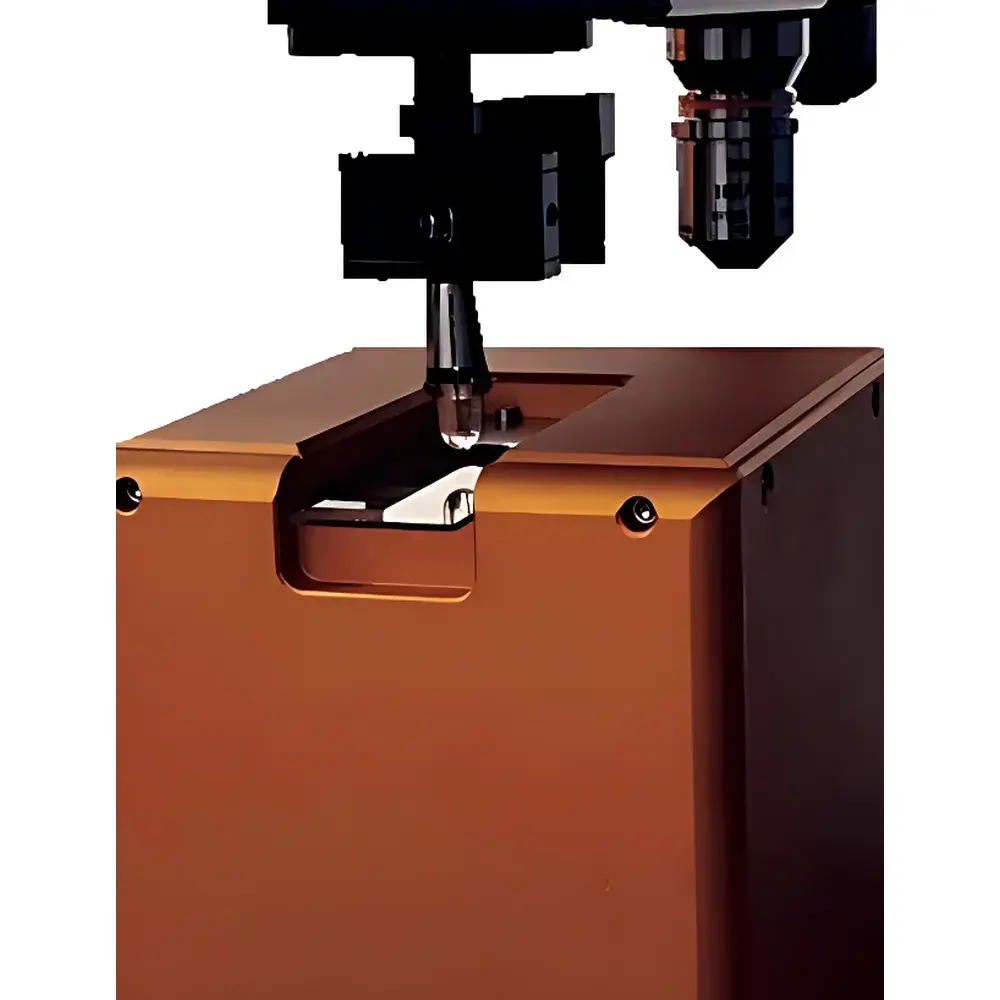
Rtec Surf-2 Adhesion Tester
| Brand | Rtec |
|---|---|
| Origin | Switzerland |
| Model | Surf-2 |
| Force Range (Tensile/Shear/Peel) | 0.1 mN to 5 N |
| Force Resolution | 0.1 µN |
| Displacement Resolution | 1 µm |
| Test Speed | 0.01–5 mm/s |
| Integrated Inverted Microscope | Brightfield & Darkfield Imaging |
| Contact Area Measurement | Real-time, automated |
| Floor Noise (RMS) | 0.1 µN |
| Footprint | Compact desktop design |
Overview
The Rtec Surf-2 Adhesion Tester is a high-precision, modular instrumentation platform engineered for quantitative measurement of interfacial adhesion forces across diverse material systems. It operates on the fundamental principle of controlled mechanical loading—applying precisely regulated tensile, shear, or peel forces to an interface while simultaneously capturing real-time force-displacement data and high-magnification optical imagery of the contact zone. Unlike conventional pull-off testers limited to single-point force thresholds, the Surf-2 integrates microelectromechanical force sensing with synchronized inverted microscopy to resolve both dynamic force evolution and evolving contact geometry at micron-scale resolution. This dual-modality architecture enables rigorous investigation of adhesion hysteresis, interfacial failure modes (e.g., cohesive vs. adhesive fracture), and time-dependent interfacial rheology—critical parameters in soft matter science, biomaterials engineering, and surface functionalization research.
Key Features
- Sub-micron force resolution: Capacitive load cell with 0.1 µN RMS resolution and full-scale range from 0.1 mN to 5 N, enabling reliable quantification of weak interfacial interactions in hydrogels, lipid bilayers, and bioadhesives.
- Real-time contact area tracking: Integrated inverted microscope (brightfield/darkfield) co-aligned with the actuation axis delivers live video feed; proprietary image analysis algorithms compute instantaneous contact area, perimeter, and shape evolution during loading/unloading cycles.
- Multi-mode mechanical testing: Programmable force profiles support standardized adhesion protocols—including ASTM D3359 (cross-hatch tape test simulation), ISO 4624 (pull-off strength), and custom shear/peel ramp-hold-relax sequences.
- Low-noise mechanical environment: Vibration-isolated base and low-floor-noise design (0.1 µN RMS) ensure signal integrity during ultra-low-force measurements, eliminating spurious drift in long-duration creep or stress-relaxation experiments.
- Macro-to-micro scalability: Compatible with samples up to 100 mm × 100 mm, allowing correlation of bulk surface topography (e.g., laser-textured substrates, micropatterned elastomers) with localized adhesion behavior.
Sample Compatibility & Compliance
The Surf-2 accommodates rigid substrates (glass, silicon wafers, metals), compliant polymers (PDMS, PU, silicone gels), hydrated biological tissues (ex vivo skin, mucosal membranes), and stimuli-responsive hydrogels. Its open-stage architecture permits integration of environmental chambers (temperature/humidity control), liquid cells for submerged testing, and electrochemical accessories for in situ corrosion-adhesion coupling studies. The system complies with key regulatory frameworks governing materials characterization in regulated environments: it supports audit-trail-enabled data acquisition per FDA 21 CFR Part 11 requirements when paired with validated software modules, and its force calibration traceability aligns with ISO/IEC 17025-accredited procedures. Test methods implemented on the Surf-2 are referenced in ISO 8510-2 (adhesion of flexible coatings), ASTM F2255 (tensile adhesion of medical device adhesives), and EN 14410 (bond strength of construction sealants).
Software & Data Management
Rtec’s AdhesionSuite v4.2 provides instrument control, real-time visualization, and post-processing workflows optimized for interfacial mechanics. The software synchronizes force-time curves with timestamped video frames, enabling pixel-level correlation between detachment events and contact area collapse. Built-in modules generate standardized reports compliant with GLP/GMP documentation standards—including operator ID, calibration certificate references, environmental metadata, and digital signatures. Raw data exports in HDF5 format preserve hierarchical structure for third-party analysis (MATLAB, Python SciPy); CSV outputs include force, displacement, contact area, frame count, and user-defined annotations. Optional IQ/OQ/PQ validation packages are available for pharmaceutical and medical device QA/QC laboratories requiring formal system qualification.
Applications
- Development and validation of anti-fouling and self-cleaning surfaces for marine coatings and biomedical implants
- Quantitative comparison of pressure-sensitive adhesives (PSAs) under variable humidity and temperature conditions
- Mechanistic studies of bio-inspired dry adhesives (e.g., gecko-mimetic fibrillar arrays)
- Characterization of epidermal electronics adhesion to human skin under cyclic mechanical strain
- Interfacial stability assessment of layered battery electrodes during calendaring and cycling
- Time-resolved adhesion kinetics of hydrogel-based wound dressings on ex vivo porcine skin models
- Fundamental contact mechanics investigations involving capillary bridging, van der Waals dominance, and viscoelastic dissipation
FAQ
What types of adhesion tests can the Surf-2 perform?
It supports tensile (pull-off), shear, and peel configurations with programmable load profiles, including ramp, hold, relaxation, and cyclic modes.
Is the inverted microscope compatible with transparent and opaque substrates?
Yes—dual brightfield/darkfield illumination enables high-contrast imaging of both reflective metal surfaces and translucent hydrogels or biological tissues.
Can the system be calibrated in-house?
Yes, using NIST-traceable deadweight standards; full calibration certificates and uncertainty budgets are generated automatically within AdhesionSuite.
Does the software support automated pass/fail criteria for QC testing?
Yes—user-defined limits on peak force, work of adhesion, or contact area retention can trigger real-time alerts and export compliance logs.
What environmental controls can be integrated?
Humidity chambers (10–95% RH), thermal stages (−20 °C to +80 °C), and liquid immersion cells are mechanically and software-integrated via standardized mounting interfaces.



