
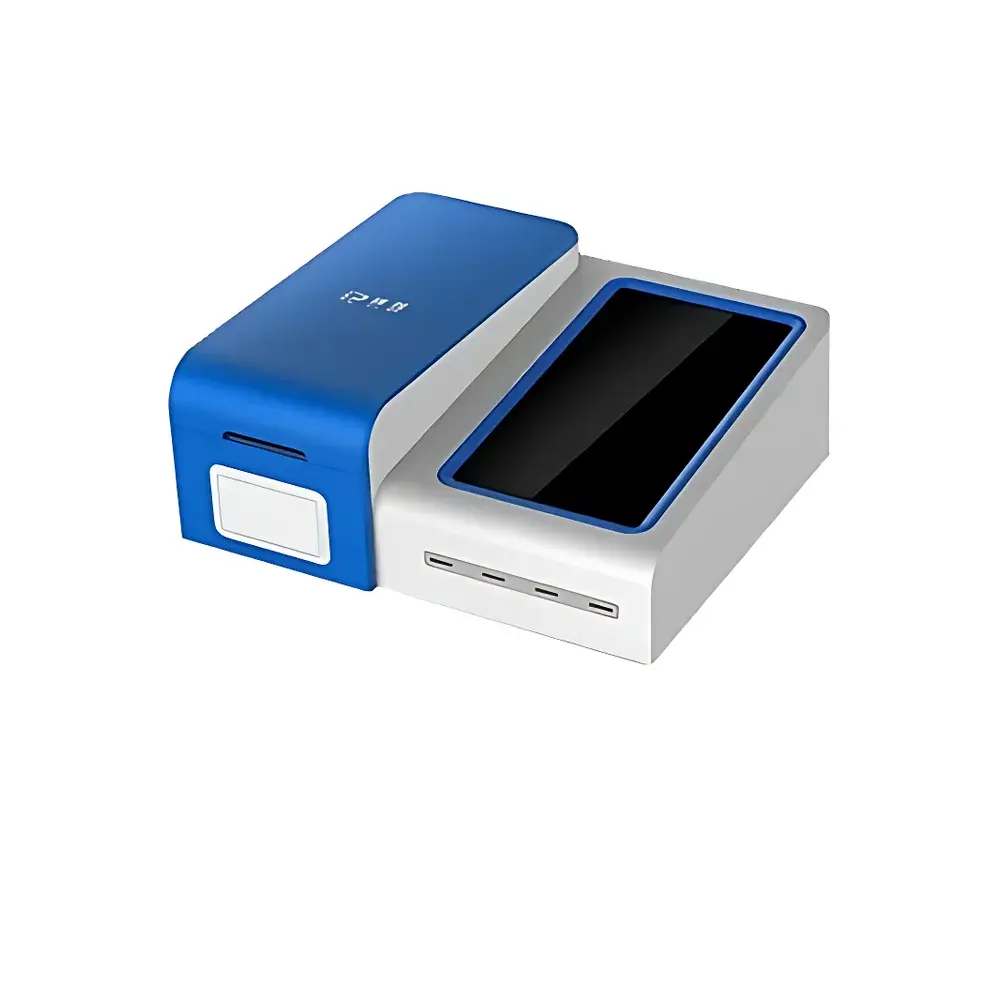
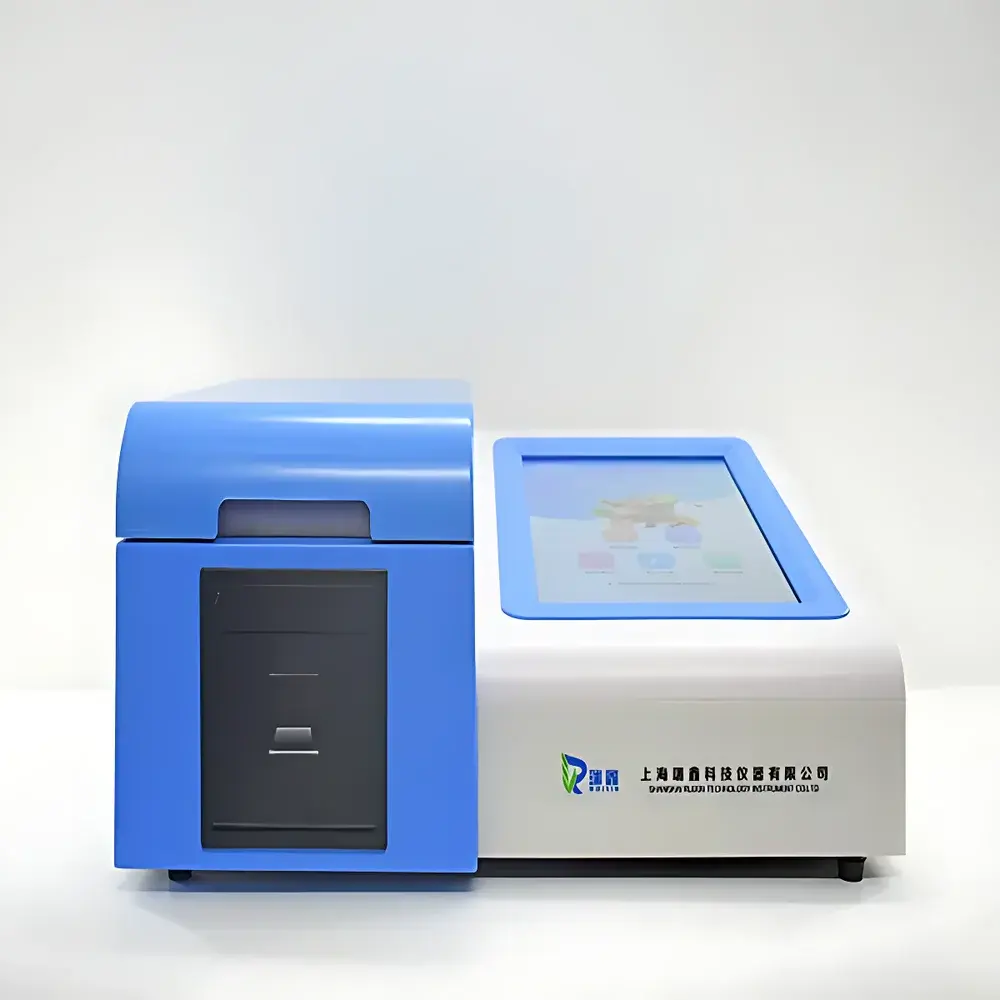
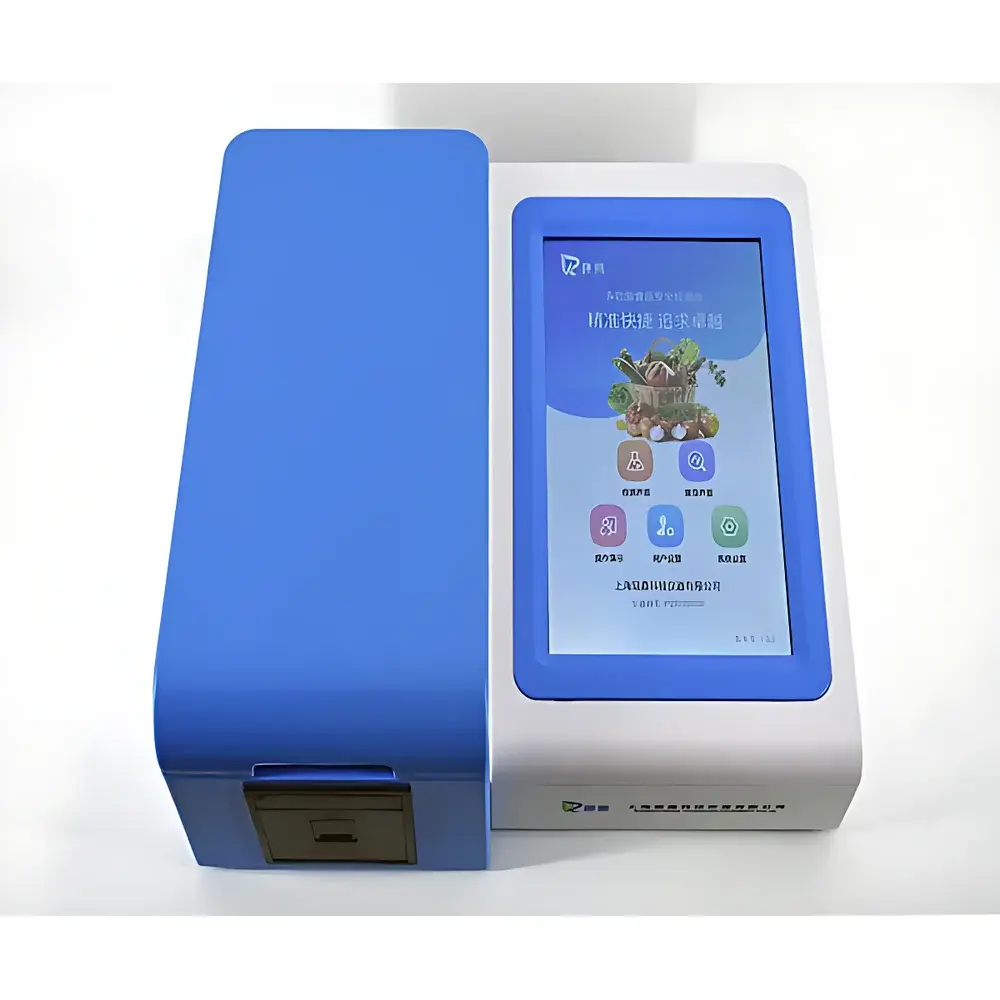
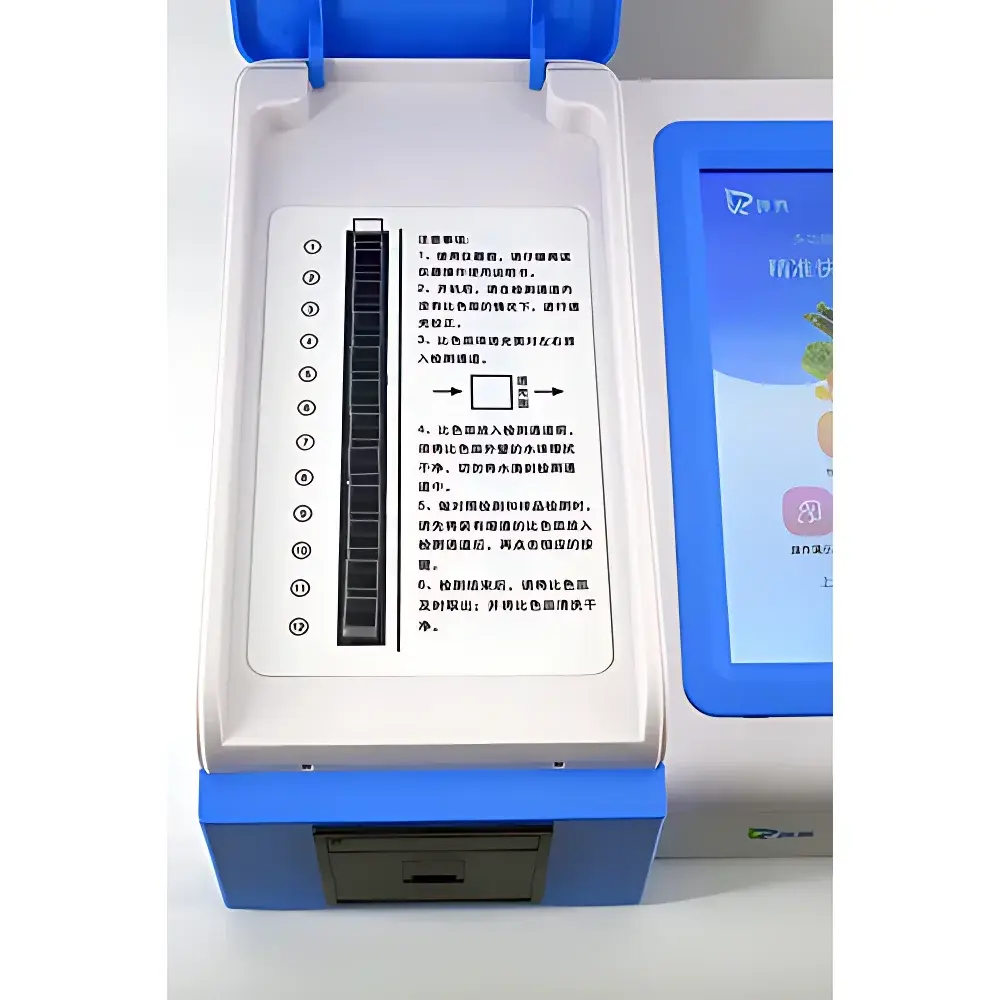
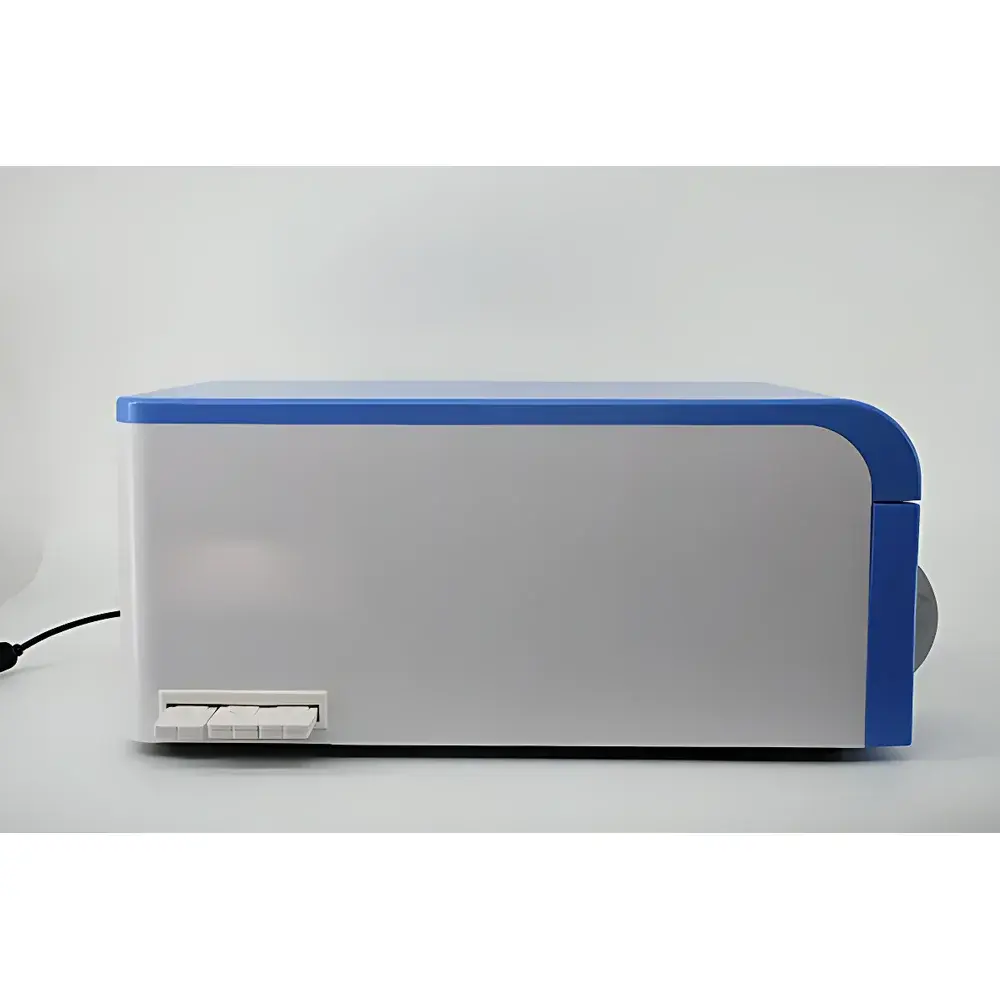
Ruixin CNY-1218NS Multi-Analyte Rapid Food Safety Analyzer
| Brand | Ruixin |
|---|---|
| Origin | Shanghai, China |
| Manufacturer Type | Authorized Distributor |
| Country of Manufacture | China |
| Model | CNY-1218NS |
| Price | USD 5,300 (FOB Shanghai) |
| Function Type | Multi-analyte (Pesticide, Veterinary Drug, Mycotoxin & Heavy Metal Residues) |
| Sample Compatibility | Universal for Solid & Liquid Food Matrices |
| Wavelength Range | 380–680 nm |
| Detection Time per Sample | ≤ 180 s |
| Photometric Repeatability | ≤ 0.2% T |
| Absorbance Repeatability | ≤ 0.3% |
| Optical Channels | 12 photometric + 3 colloidal gold lateral flow readers |
| Display | 10.1″ capacitive touchscreen (Android OS) |
| Data Connectivity | Wi-Fi, RJ45 Ethernet, optional 4G LTE module |
| Power Supply | 220 V ±10%, 50/60 Hz |
Overview
The Ruixin CNY-1218NS Multi-Analyte Rapid Food Safety Analyzer is an integrated benchtop instrument engineered for regulatory-grade screening of chemical contaminants in food and agricultural commodities. It combines dual detection modalities—visible-range spectrophotometry (380–680 nm) and quantitative colloidal gold immunochromatographic strip analysis—within a single platform. This architecture enables simultaneous, method-validated quantification of organophosphates, carbamates, pyrethroids, antibiotics, mycotoxins (e.g., aflatoxin B₁, deoxynivalenol, zearalenone), and heavy metals (Pb, Cd) in complex matrices including fruits, vegetables, cereals, tea, aquatic products, eggs, and animal tissues. Designed to meet the operational requirements of food safety authorities, agricultural inspection bureaus, and third-party testing laboratories, the CNY-1218NS supports rapid decision-making at point-of-collection or centralized labs without reliance on off-site GC-MS or LC-MS/MS confirmation—while maintaining full traceability to national and international reference methods (GB/T 5009.x, GB 2763, NY/T 448, ISO 15725, AOAC Official Methods®).
Key Features
- Integrated dual-mode detection: 12-channel visible-spectrum photometer + 3-channel digital colloidal gold strip reader with automatic line intensity quantification.
- 10.1″ high-resolution Android-based touchscreen interface with intuitive icon-driven workflow navigation and built-in instructional video playback.
- Preloaded national standard database containing >1,000 certified reference sample names, supporting pinyin-based fuzzy search and batch ID auto-generation.
- Onboard thermal printer for immediate hard-copy reporting compliant with GLP documentation standards (timestamped, operator-ID stamped, QR-coded).
- Embedded 64 GB eMMC storage with USB 2.0 export capability; data encrypted at rest and in transit via TLS 1.2.
- Multi-protocol connectivity: IEEE 802.11ac Wi-Fi, 10/100 Mbps Ethernet (RJ45), and field-upgradable 4G LTE module for real-time cloud synchronization.
- Optical performance validated per ISO 9001–certified calibration protocol: absorbance linearity (0.000–4.000 A), transmittance resolution (0.01% T), and photometric repeatability ≤0.2% T (n=10, CV).
Sample Compatibility & Compliance
The CNY-1218NS accepts homogenized extracts prepared using standardized QuEChERS, ELISA, or lateral flow pretreatment protocols per GB/T 20770, GB/T 20772, and ISO/IEC 17025:2017 Annex A.3 guidelines. It supports direct analysis of centrifuged supernatants, filtered filtrates, and reconstituted strip eluates from diverse matrices—including leafy greens, root vegetables, rice, wheat flour, shrimp muscle, chicken liver, and egg yolk—without hardware modification. All assay kits used with this platform are CE-IVD marked and registered under China NMPA Class II IVD regulations. Instrument firmware complies with FDA 21 CFR Part 11 requirements for electronic records and signatures, including audit trail logging, role-based access control (RBAC), and immutable result archiving.
Software & Data Management
The embedded Ruixin FoodTrace™ OS v3.2 provides end-to-end digital chain-of-custody management. Each test generates a unique digital record containing instrument ID, operator credentials, GPS-tagged location (when enabled), environmental temperature/humidity metadata, raw optical readings, calibration logs, and pass/fail flags against preset MRL thresholds (aligned with EU Commission Regulation (EC) No 396/2005 and China GB 2763–2021). Data exports support CSV, PDF, and XML formats compatible with national food safety surveillance platforms (e.g., China’s National Food Safety Risk Monitoring Information System). Cloud integration uses RESTful APIs conforming to HL7 FHIR R4 standards for interoperability with LIMS and ERP systems.
Applications
- Routine surveillance testing in provincial agriculture inspection stations and municipal market supervision bureaus.
- On-farm pre-harvest screening to guide harvest timing and post-harvest treatment decisions.
- Supply chain verification at cold storage facilities, wholesale markets, and supermarket distribution centers.
- Reference laboratory triage—prioritizing samples requiring confirmatory analysis by HPLC-MS/MS or ICP-MS.
- Training and capacity building for rural extension officers and cooperative QA staff under FAO/WHO Codex Alimentarius frameworks.
FAQ
Does the CNY-1218NS require external calibration standards for daily operation?
No—each assay cartridge includes internal reference zones and onboard calibration curves verified during factory certification. User-performed verification uses Ruixin-certified QC check standards (Cat. No. RQV-2024), traceable to NIST SRM 930e (for heavy metals) and CRM-PA-01 (for pesticide metabolites).
Can the instrument store and recall historical calibration data?
Yes—calibration history, including date/time, operator ID, standard lot number, and deviation metrics, is retained for ≥5 years and exportable as auditable reports.
Is method validation documentation available for regulatory submission?
Yes—Ruixin provides full validation dossiers per ISO/IEC 17025 Annex A.4, including specificity, LOD/LOQ, precision (intra- and inter-day), accuracy (spike recovery 70–120%), and ruggedness studies across 12 matrix types.
What is the expected service life of the optical system under continuous use?
The LED light source and CMOS detector array are rated for ≥50,000 measurement cycles (≈8 years at 20 tests/day); preventive maintenance intervals are scheduled every 12 months via Ruixin-certified field engineers.
How does the device ensure data integrity during offline operation?
All measurements are timestamped and cryptographically signed locally; unsynchronized data queues automatically transmit upon network restoration with SHA-256 hash verification to prevent tampering or loss.






