
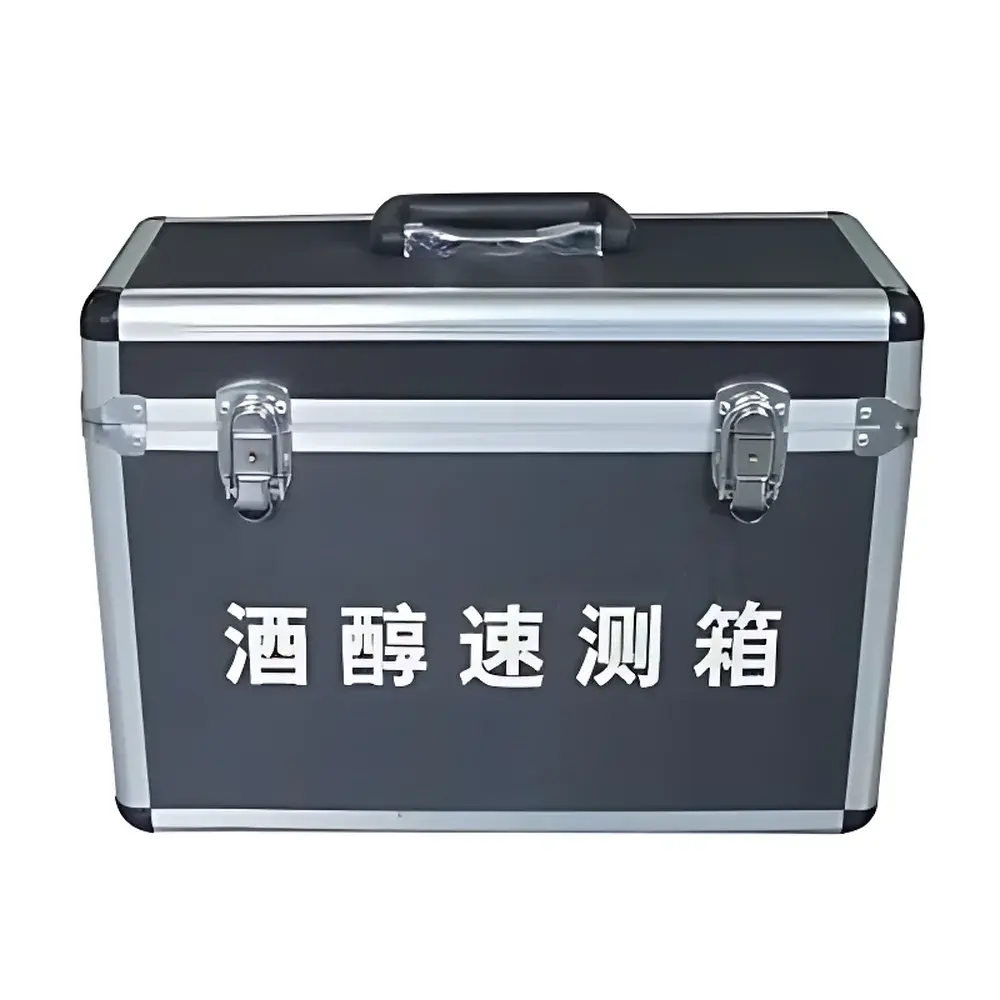
Ruixin JCX-JC10 Methanol & Ethanol Rapid Detection Kit
| Brand | Ruixin |
|---|---|
| Origin | Shanghai, China |
| Manufacturer Type | Authorized Distributor |
| Country of Origin | China |
| Model | JCX-JC10 |
| Price | USD 495 (FOB Shanghai) |
| Function Type | Multi-analyte Screening System |
| Sample Compatibility | Liquid Alcoholic Beverages, Distillates, Blended Spirits, Fermented Liquors |
| Wavelength Range | 400–680 nm |
| Detection Time | <120 seconds per sample |
| Coefficient of Variation (CV) | <5% |
| Optical Channels | Single-beam photometric detection |
Overview
The Ruixin JCX-JC10 Methanol & Ethanol Rapid Detection Kit is a portable, field-deployable photometric screening system engineered for the quantitative and semi-quantitative assessment of methanol concentration in alcoholic beverages—primarily distilled spirits, ethanol-blended liquors, and fermented alcoholic products. It operates on the principle of enzymatic oxidation coupled with colorimetric endpoint detection: methanol is selectively oxidized by alcohol oxidase (AOX) to formaldehyde, which then reacts with chromogenic reagents (e.g., Nash reagent or modified MBTH-based formulations) under controlled pH and temperature to generate a stable colored complex. Absorbance is measured at optimized wavelengths within the 400–680 nm range using a built-in LED-based photometer. The system delivers results in under two minutes with analytical reproducibility (CV <5%) suitable for regulatory triage and preliminary compliance verification. Designed for use in resource-constrained or mobile environments—including food safety inspection vehicles, provincial CDC laboratories, and on-site market surveillance—the JCX-JC10 bridges the gap between laboratory-grade GC analysis and qualitative test strips, offering trace-level sensitivity without requiring chromatographic infrastructure.
Key Features
- Single-channel, LED-driven photometer with auto-zero calibration and integrated optical path stabilization
- Pre-optimized, lyophilized reagent tablets for methanol-specific enzymatic reaction—no cold chain required; shelf life ≥18 months at 4–30°C
- Dedicated assay protocol validated against reference methods (AOAC 992.13, ISO 17247:2015 Annex B) for methanol in spirit matrices
- On-device calculation engine with pre-loaded calibration curves for common spirit types (grain-based, cassava-based, molasses-derived)
- IP54-rated enclosure with rubberized grip and shock-absorbing housing for field durability
- No external power supply needed: powered by two standard AA alkaline batteries (≥800 tests per set)
Sample Compatibility & Compliance
The JCX-JC10 is validated for direct analysis of undiluted or 1:5 diluted samples of clear, non-viscous alcoholic liquids—including baijiu, shochu, soju, aguardiente, and industrial ethanol solutions. Turbid or highly colored samples require centrifugation or filtration prior to testing. The assay demonstrates minimal cross-reactivity with ethanol (<0.8% signal interference at 40% v/v ethanol), isopropanol, and propanol, ensuring specificity in high-ethanol matrices. Method performance meets the minimum requirements outlined in China’s GB 5009.266–2016 (National Food Safety Standard – Determination of Methanol in Foods) for rapid screening. While not intended as a definitive compliance method for final release testing, it satisfies GLP-aligned field screening criteria per WHO/FAO Joint Expert Committee on Food Additives (JECFA) guidance and supports risk-based prioritization for confirmatory GC-FID/GC-MS analysis. All reagents are CE-IVD registered and compliant with ISO 13485:2016 manufacturing controls.
Software & Data Management
The device includes an embedded microcontroller with non-volatile memory storing up to 500 test records, each timestamped and tagged with operator ID, sample ID, and environmental temperature. Data export is supported via USB-C interface to Windows/macOS platforms using Ruixin DataLink v2.1 software—a lightweight desktop application that generates audit-ready PDF reports compliant with FDA 21 CFR Part 11 requirements (electronic signatures, audit trail, user access levels). Raw absorbance values, calculated concentrations (g/100 mL), pass/fail flags against configurable regulatory thresholds (e.g., ≤0.04 g/100 mL for grain-based spirits), and QC control status are all exportable in CSV format for LIMS integration. Firmware updates are delivered via signed OTA packages with SHA-256 verification.
Applications
- Routine surveillance of informal market spirits in rural and peri-urban distribution channels
- Emergency response during suspected mass methanol poisoning outbreaks (e.g., hospital ED triage support)
- Pre-shipment verification for small-batch distilleries lacking in-house GC capability
- Educational use in food science curricula for teaching rapid analytical validation principles
- Border inspection units conducting rapid risk-based screening of imported alcoholic products
FAQ
Is the JCX-JC10 suitable for detecting methanol in beer or wine?
No. The assay is optimized for high-alcohol-content distillates (≥30% ABV). Low-ABV fermented beverages require matrix-specific validation and are not covered under standard operating procedures.
Does the kit include calibration standards?
Yes—each kit contains three certified methanol reference standards (0.02, 0.08, and 0.20 g/100 mL) traceable to NIM (National Institute of Metrology, China) RM-123 series.
Can results be used for legal enforcement?
Results serve as presumptive evidence only. Positive findings must be confirmed by accredited GC-based methods (e.g., GB 5009.266–2016 or AOAC 992.13) prior to regulatory action.
What maintenance does the photometer require?
None beyond periodic lens cleaning with lint-free optical tissue and monthly blank verification using supplied zero-reference solution.
Is training provided for end users?
Yes—Ruixin offers a certified 4-hour virtual workshop covering SOP execution, interference recognition, QC interpretation, and report generation, aligned with ISO/IEC 17025 competency requirements.




