Ruixin JCX-STWS10 School Cafeteria Food Safety Rapid Detection Kit
| Brand | Ruixin |
|---|---|
| Origin | Shanghai, China |
| Manufacturer Type | Authorized Distributor |
| Country of Manufacture | China |
| Model | JCX-STWS10 |
| Price | USD 285 (FOB Shanghai) |
| Detection Capabilities | ATP bioluminescence (surface hygiene), anionic synthetic detergent residue (MBAS assay), food core temperature (–50 to 200 °C), storage/refrigeration temperature (–32 to 400 °C), free chlorine concentration (50–2000 mg/L as Cl₂) |
| Net Weight | 3.0 kg |
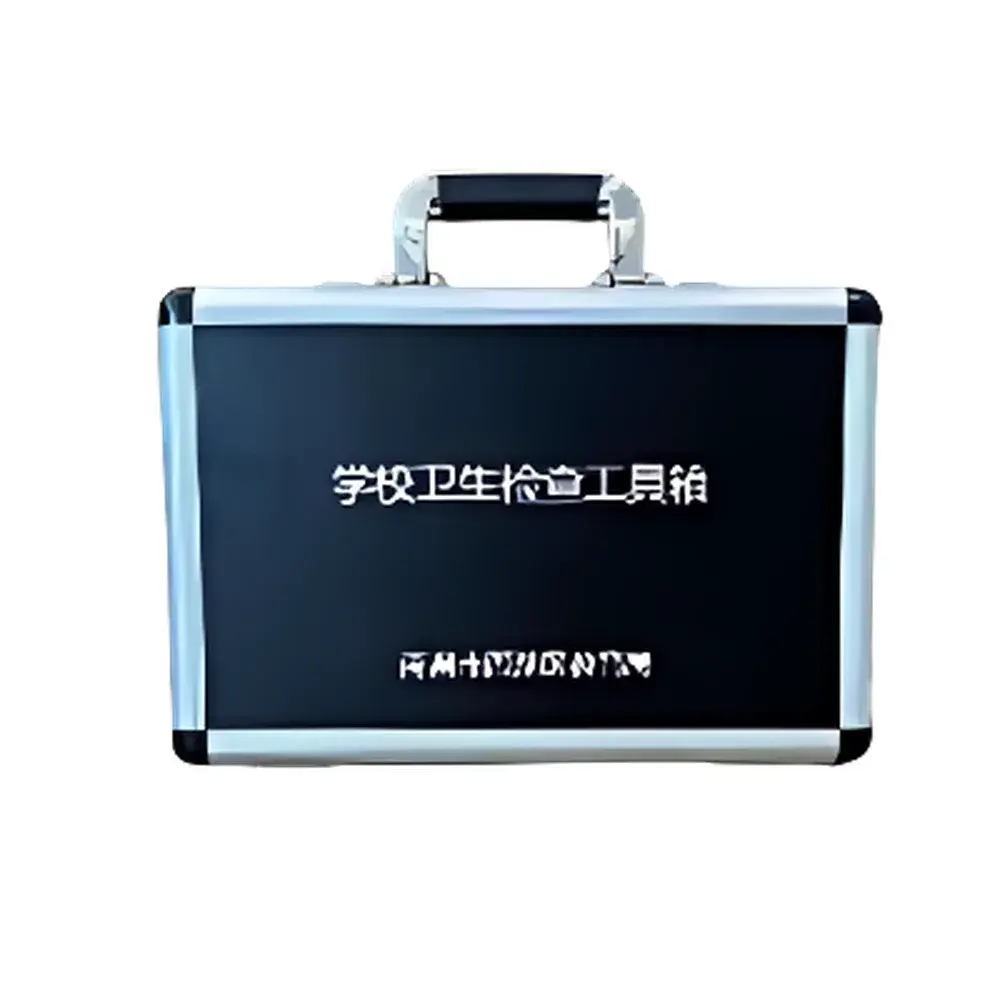
| Carry Case | Aluminum alloy portable case (350 × 270 × 110 mm) |
Overview
The Ruixin JCX-STWS10 School Cafeteria Food Safety Rapid Detection Kit is a purpose-built, field-deployable instrumentation system engineered for routine environmental and procedural compliance monitoring in institutional food service operations. Designed specifically for school cafeterias operating under national food safety regulatory frameworks—including China’s GB 31654-2021 (Food Service Hygiene Management Standard) and GB 14934-2016 (Disinfected Tableware Hygiene Standard)—the kit integrates validated rapid analytical methods grounded in established scientific principles: bioluminescent ATP quantification for microbial load estimation on surfaces; colorimetric methylene blue active substances (MBAS) assay for anionic surfactant detection; thermistor-based contact temperature measurement for food core validation; infrared non-contact thermometry for cold chain integrity verification; and DPD (N,N-diethyl-p-phenylenediamine) colorimetric strip testing for free chlorine residual in sanitizing solutions. All components are calibrated and verified per ISO/IEC 17025 traceable procedures where applicable, ensuring data integrity suitable for internal audit logs and regulatory documentation.
Key Features
- Modular, all-in-one portable configuration housed in a rugged anodized aluminum case with custom foam inserts—optimized for daily transport between kitchen zones, dishwashing stations, cold storage rooms, and administrative offices.
- Dual high-accuracy food thermometers (WT-2 and TK900 models) featuring ±0.5 °C accuracy across –50 °C to 200 °C range, conforming to ASTM E745-22 requirements for thermal probe performance in food safety applications.
- RFE-31 ATP luminometer with integrated photomultiplier tube (PMT) sensor, providing quantitative RLU (Relative Light Unit) output correlated to ATP concentration (0.01–1000 pg/μL); includes pre-sterilized, RNase/DNase-free swabs validated for food contact surface sampling per ISO 22000 Annex A.3.
- Calibrated DPD test strips (50–2000 mg/L Cl₂ range) compliant with ISO 7393-2 for residual oxidant measurement in chlorine-based sanitizers; results interpretable within 60 seconds without auxiliary instrumentation.
- Non-contact infrared thermometer (UT-300S) with 12:1 distance-to-spot ratio and emissivity adjustment (0.10–1.00), enabling accurate surface temperature assessment of refrigerated units, steam tables, and holding cabinets without contamination risk.
Sample Compatibility & Compliance
The JCX-STWS10 kit supports direct analysis of stainless steel, ceramic, plastic, and melamine food contact surfaces; aqueous rinse water samples from dishwashing cycles; liquid sanitizer solutions; and solid or semi-solid food matrices (e.g., cooked meats, dairy products, produce). All consumables—including MBAS reagent kits and ATP swabs—are manufactured under ISO 13485-certified quality systems and supplied with lot-specific CoA (Certificate of Analysis). The system facilitates adherence to HACCP prerequisite programs, supports GLP-aligned recordkeeping, and generates data compatible with internal nonconformance reporting workflows required under China’s Food Safety Law (Article 44) and the Ministry of Education’s “School Canteen Food Safety Management Guidelines.” No instrument requires external power beyond standard AA batteries or USB-C charging.
Software & Data Management
While the kit operates independently of proprietary software, the RFE-31 ATP meter features USB-C connectivity and optional CSV export capability for integration into existing LIMS or Excel-based tracking templates. All instruments include dedicated logbook templates aligned with GB/T 27320-2010 (Good Manufacturing Practice for Food Service Enterprises), supporting manual entry of date/time, operator ID, location, sample ID, measured value, pass/fail threshold comparison, and corrective action notes. Audit trails generated through these logs meet minimum documentation requirements for third-party inspections and internal food safety audits. Optional cloud-based reporting modules (via Ruixin’s RUINEX Connect platform) support role-based access control and automated PDF report generation compliant with ISO 22000 Clause 8.9.2.
Applications
- Verification of post-rinse surface cleanliness following manual or automated dishwashing cycles.
- Validation of sanitizer concentration in three-compartment sinks and chemical dispensers prior to use.
- Monitoring time–temperature abuse during hot holding (>60 °C) and cold holding (<8 °C) phases.
- Assessment of refrigerator/freezer operational consistency during peak service hours.
- Quantitative evaluation of detergent carryover on utensils and cookware after mechanical washing.
- Documentation support for annual food safety training assessments and internal self-inspection programs.
FAQ
Is this kit certified for use in official regulatory inspections?
The JCX-STWS10 itself is not a certified measuring instrument under CNAS accreditation, but all included devices and consumables comply with referenced national standards (GB, ISO) used by provincial market supervision bureaus during routine cafeteria inspections. Results serve as preliminary evidence supporting corrective actions.
Can the ATP meter be recalibrated in-house?
Yes—the RFE-31 includes a built-in calibration check using standardized ATP solution vials (included in kit); full recalibration requires return to Ruixin’s Shanghai service center per ISO/IEC 17025 procedures.
Are replacement reagents and swabs supplied with batch-specific expiration dates?
All consumables ship with printed lot numbers and expiration dates; MBAS reagents retain stability for 24 months unopened at 2–8 °C, while ATP swabs are stable for 18 months at ambient temperature when sealed.
Does the kit meet requirements for school-level food safety officer training modules?
Yes—it is explicitly referenced in the Shanghai Municipal Education Commission’s 2023 “Cafeteria Hygiene Competency Framework” as Tier-1 field verification equipment for designated food safety coordinators.