
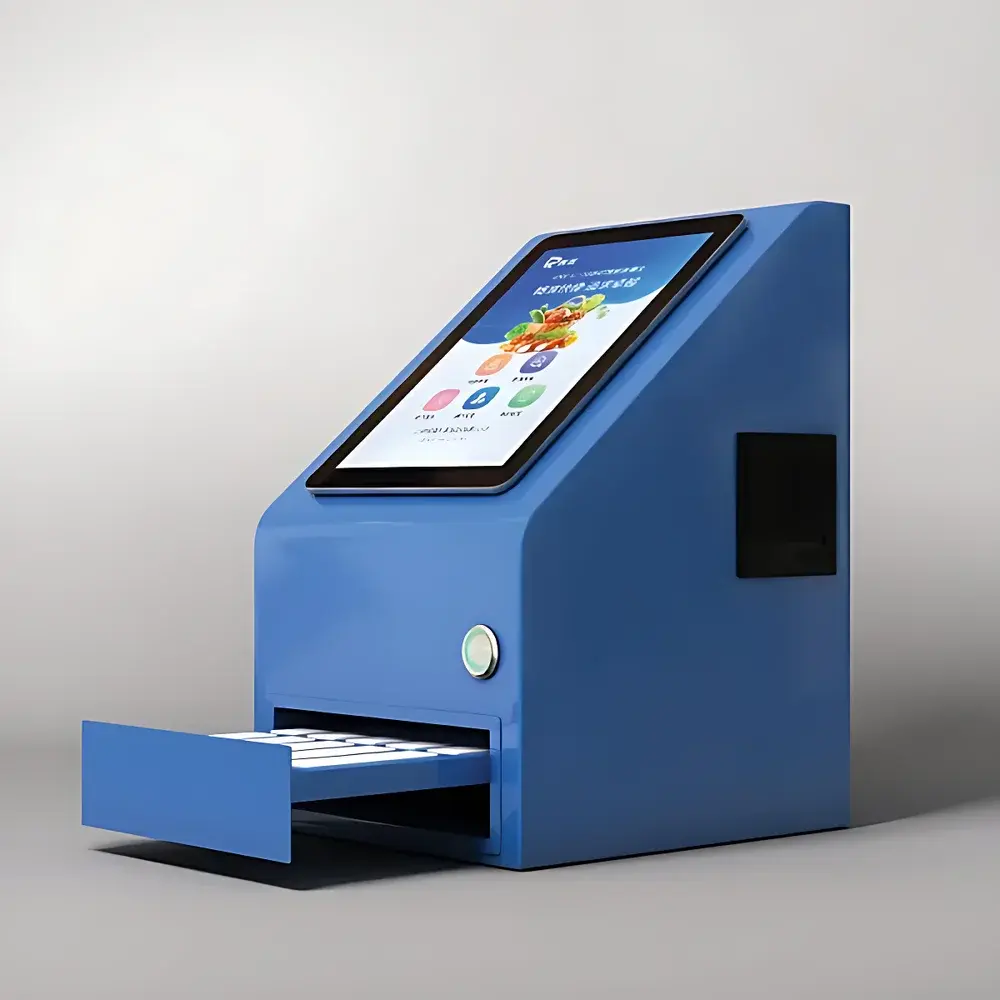
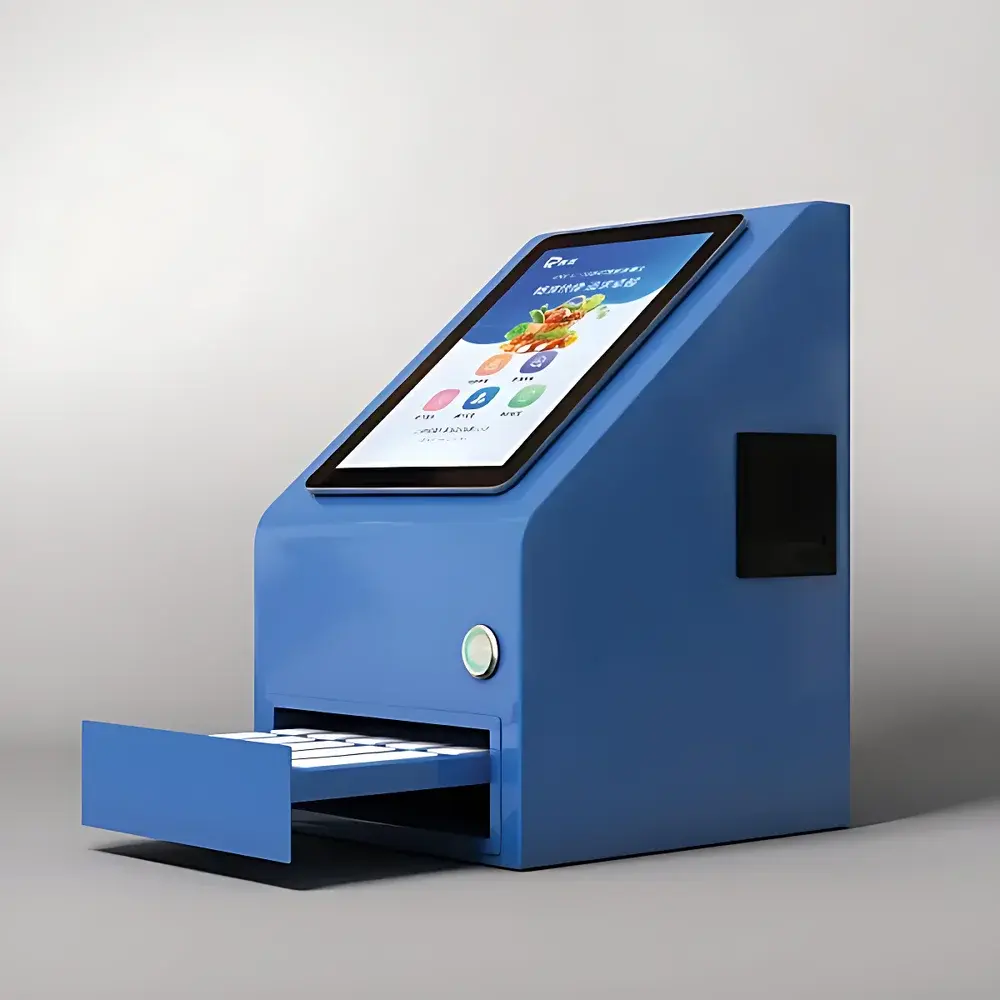
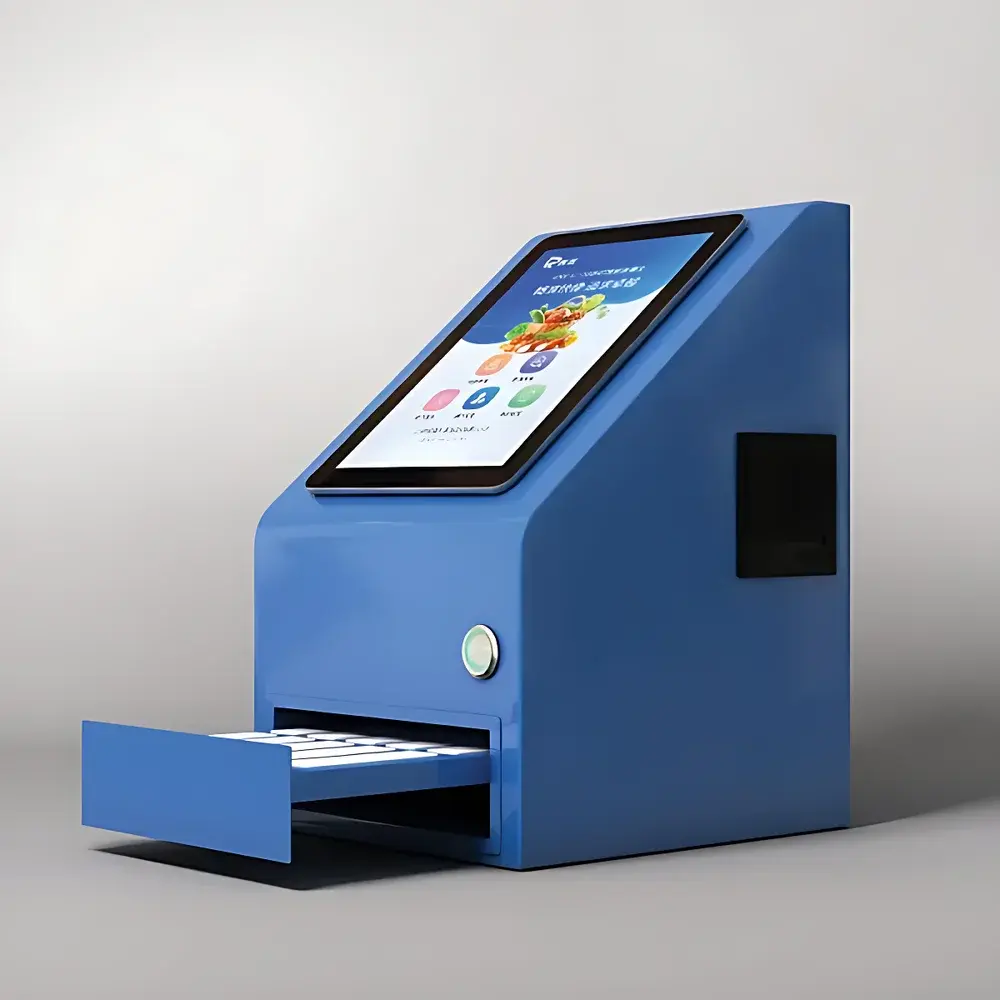
Ruixin JT-108SY Veterinary Drug Residue Analyzer
| Brand | Ruixin |
|---|---|
| Origin | Shanghai, China |
| Manufacturer Type | Authorized Distributor |
| Product Origin | Domestic (China) |
| Model | JT-108SY |
| Price | USD 3,950 (approx.) |
| Function Type | Multi-analyte Immunoassay Platform |
| Sample Applicability | Universal for Animal-Derived Food Matrices |
| Wavelength Range | 380–680 nm |
| Detection Time | ≤ 180 s per assay |
| Repeatability (CV) | ≤ 0.3% |
| Detection Channels | 6 independent optical channels |
Overview
The Ruixin JT-108SY Veterinary Drug Residue Analyzer is a CE-compliant, field-deployable immunoassay platform engineered for rapid, quantitative interpretation of lateral flow immunochromatographic assays (LFIA) based on colloidal gold technology. Unlike conventional visual readout systems, the JT-108SY employs high-resolution CCD imaging coupled with embedded AI-driven image processing algorithms to convert qualitative test strip signals into objective, traceable numerical outputs—including T-line intensity, C-line intensity, T/C ratio, and chromaticity values. This eliminates subjective visual interpretation bias and enables compliance with ISO/IEC 17025 requirements for measurement uncertainty estimation in food safety screening. Designed specifically for regulatory laboratories, cooperative inspection centers, and farm-to-market traceability hubs, the instrument supports standardized detection across diverse matrices including muscle tissue, milk, eggs, honey, aquatic products, feed, and dairy derivatives—without requiring sample derivatization or extraction optimization for each analyte.
Key Features
- Six independent optical detection channels enable parallel analysis of up to six test strips simultaneously—reducing batch turnaround time without cross-channel interference.
- 10.1-inch capacitive touchscreen running Android OS v11, with intuitive UI designed for operators with minimal technical training; includes built-in video tutorials accessible offline.
- Automated card recognition system distinguishes valid vs. invalid LFIA strips using edge-detection and background-noise profiling—no manual alignment or calibration required.
- Integrated thermal printer (wide-format adhesive label + thermal roll + A4), compliant with China’s Interim Implementation Plan for Edible Agricultural Product Qualification Certificate, generating QR-coded certificates containing batch ID, testing date, operator ID, and raw image metadata.
- Multi-mode connectivity: dual-band Wi-Fi (2.4/5 GHz), Gigabit Ethernet (RJ45), optional 4G LTE module, and AGPS geotagging—ensuring real-time synchronization with cloud-based LIMS platforms.
- Onboard data storage: ≥1 million test records retained locally on internal eMMC + expandable microSD slot (up to 512 GB); all images and results encrypted per AES-256 standards.
- Open architecture firmware supports remote OTA updates, third-party plugin integration (e.g., custom reporting templates), and audit-log export in CSV/JSON format.
Sample Compatibility & Compliance
The JT-108SY is validated for use with commercially available colloidal gold LFIA kits conforming to GB/T 22286–2008 (determination of β-agonists in animal tissues), GB/T 21312–2007 (nitrofuran metabolites), and GB/T 22973–2008 (chloramphenicol in honey). It accommodates standard 3-mm wide nitrocellulose membranes from major suppliers (e.g., BioChain, Biotime, Lanzhou Minhai). The instrument meets electromagnetic compatibility requirements per GB/T 18268.1–2010 and operates within environmental conditions of 10–40°C and 30–85% RH. All firmware and data handling protocols are aligned with GLP principles, supporting full audit trails, user role-based access control (admin/operator/auditor), and electronic signature capability compliant with FDA 21 CFR Part 11 Annex 11 equivalents.
Software & Data Management
Embedded Ruixin CloudLink™ software provides end-to-end digital traceability—from sample registration to certificate generation. Each test record embeds EXIF metadata (timestamp, GPS coordinates, device serial number, firmware version) and links directly to raw CCD image files stored in DICOM-compatible format. Data export supports HL7 v2.5.1 messaging for interoperability with national food safety surveillance systems (e.g., China’s NIFDC Integrated Monitoring Platform). Statistical dashboards generate daily/weekly/monthly reports on false-negative rates, CV distribution per analyte group, and inter-operator consistency metrics—all exportable as PDF or Excel. Optional API access enables integration with ERP systems (SAP S/4HANA, Oracle Food Safety Cloud) via RESTful endpoints secured by OAuth 2.0.
Applications
- Routine screening of β-agonists (clenbuterol, ractopamine, salbutamol) in pork, beef, and poultry tissues.
- Multi-residue antibiotic detection in raw milk: β-lactams, tetracyclines, fluoroquinolones, macrolides, aminoglycosides, sulfonamides.
- Fungal toxin quantification in feed and grain: aflatoxin B1/M1, zearalenone, deoxynivalenol, fumonisins, ochratoxin A.
- Honey adulteration and contaminant verification: chloramphenicol, nitrofurans, quinolones, and veterinary hormone residues.
- Surveillance testing of aquatic products for malachite green, crystal violet, and nitrofuran metabolites.
- On-farm verification of withdrawal periods prior to slaughter or milking—supporting HACCP plan execution.
FAQ
Does the JT-108SY require external calibration standards for each test strip batch?
No. The instrument performs automatic reference normalization using the built-in C-line signal and preloaded calibration curves provided by certified kit manufacturers.
Can the device store and reprocess historical images with updated algorithms?
Yes. Raw CCD images are preserved unaltered; firmware updates include backward-compatible reanalysis engines that can apply new quantification models to archived data.
Is remote diagnostic support available through the cloud interface?
Yes. Authorized service engineers can initiate secure remote sessions (AES-256 encrypted VNC) with user consent to perform firmware diagnostics, sensor recalibration, or log analysis.
What regulatory documentation accompanies the instrument for laboratory accreditation?
Factory-issued ISO/IEC 17025-compliant performance verification report, traceable NIST-calibrated photometric validation certificate, and full software validation package (IQ/OQ/PQ protocols) are supplied upon request.
How does the system ensure data integrity during network outages?
All tests execute locally; results queue automatically upon reconnection and synchronize with timestamp-consistent conflict resolution logic to prevent duplication or overwrites.





