
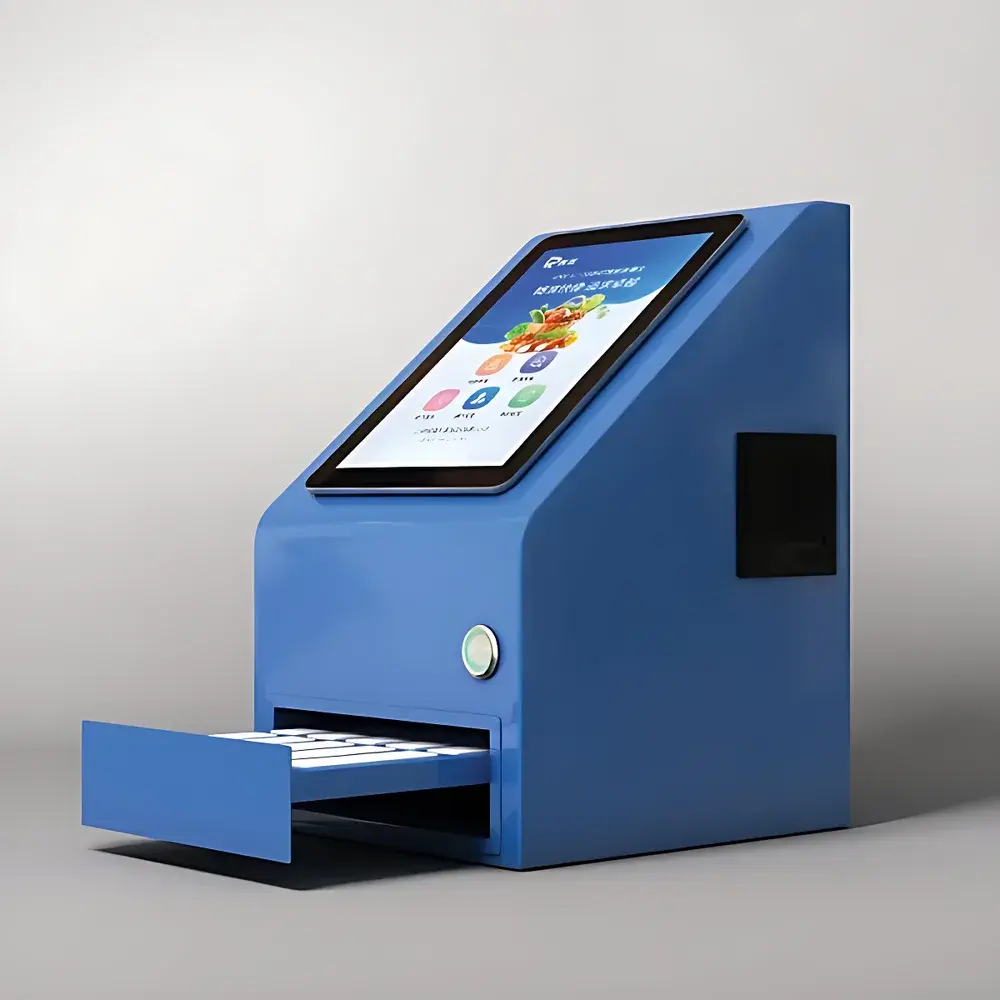
Ruixin JT-108SYFM Honey-Specific Veterinary Drug Residue Analyzer
| Brand | Ruixin |
|---|---|
| Origin | Shanghai, China |
| Manufacturer Type | Authorized Distributor |
| Regional Classification | Domestic (PRC) |
| Model | JT-108SYFM |
| Price | USD 5,300 (FOB Shanghai) |
| Function Type | Multi-analyte Immunoassay Platform |
| Sample Format | Single-format Strip-Based Assay |
| Wavelength Range | 380–680 nm |
| Detection Time per Sample | ≤ 180 s |
| Photometric Repeatability (CV) | ≤ 0.3% |
| Detection Channels | 8 parallel optical paths |
| Measurement Speed per Channel | < 1 s |
| Inter-batch CV | < 3% |
| Sensitivity Limit | ≤ 0.001 ng/mL (typical for chloramphenicol in honey matrix) |
| Output Metrics | Colorimetric intensity, C/T ratio, Test line (T) signal, Control line (C) signal |
| Power Supply | AC 220 V ±10%, 50 Hz (optional Li-ion battery pack available) |
| Connectivity | USB 2.0, Wi-Fi 802.11 b/g/n, RJ45 Ethernet, optional 4G LTE module |
| Data Storage | Internal eMMC + microSD slot (up to 128 GB), ≥ 1,000,000 test records |
| Compliance | Designed to support ISO/IEC 17025-aligned laboratory workflows |
Overview
The Ruixin JT-108SYFM Honey-Specific Veterinary Drug Residue Analyzer is an optical immunoassay instrument engineered for quantitative and semi-quantitative detection of veterinary pharmaceutical residues—including antibiotics (e.g., chloramphenicol, quinolones, sulfonamides, penicillins, tetracyclines, streptomycin), nitrofurans (furazolidone, furaltadone, furfural, nitrofurantoin), and synthetic hormones—in honey matrices. It employs colloidal gold immunochromatographic assay (GICA) principles, where antigen–antibody binding on lateral-flow test strips generates visible or optically measurable colorimetric signals. Unlike conventional visual interpretation, the JT-108SYFM integrates high-resolution CCD imaging (10-bit dynamic range, 1280 × 960 px sensor) with embedded AI-based image segmentation algorithms to extract precise optical density values from control (C) and test (T) lines. This enables objective, operator-independent quantification of analyte concentration via calibrated C/T ratio regression models—eliminating subjective bias while maintaining alignment with AOAC Official Method 2012.01 and EU Commission Decision 2002/657/EC criteria for screening assays.
Key Features
- Eight independent optical detection channels operating simultaneously—enabling batch processing of up to eight honey samples per run without cross-channel interference.
- Automated strip recognition: real-time classification of valid vs. invalid lateral-flow cassettes using edge-detection and fluorescence-free contrast analysis—no manual calibration or card orientation required.
- 10.1-inch capacitive touchscreen running Android 9.0 OS with intuitive, icon-driven UI optimized for glove-compatible operation in field labs and honey processing facilities.
- Integrated thermal printer supporting three media types: self-adhesive label stock (for traceable QR-coded compliance certificates), thermal roll paper (for rapid field reports), and A4 sheet printing (for regulatory submission packages).
- On-device data governance: automatic timestamping, user ID logging, GPS geotagging (via AGPS), and encrypted local storage compliant with GLP documentation standards.
- Modular firmware architecture enabling over-the-air (OTA) updates and remote diagnostic access—facilitating continuous method validation and regulatory adaptation without hardware intervention.
Sample Compatibility & Compliance
The JT-108SYFM is validated exclusively for honey—a complex, viscous, high-sugar matrix requiring specialized sample preparation protocols. It supports standardized extraction procedures per GB/T 22338–2008 (Chinese National Standard for Chloramphenicol Residue in Honey) and EN 14805:2005 (EU method for nitrofuran metabolites). Each assay strip is pre-qualified against reference materials certified by CNAS-accredited reference laboratories (e.g., NIM, BCR). Instrument output meets minimum performance thresholds defined in Commission Regulation (EU) No 519/2013 for screening methods: sensitivity ≥ 0.3× MRL, specificity > 98%, false-positive rate < 5%, and repeatability (within-run CV) ≤ 0.3% at 1× MRL level. All printed certificates include GS1-compliant QR codes linking to cloud-stored raw images, calibration logs, and analyst metadata—fully traceable under China’s “Edible Agricultural Products Qualification Certificate System” and harmonized with USDA AMS traceability frameworks.
Software & Data Management
Data acquisition, analysis, and reporting are managed through Ruixin’s RUICloud™ v3.2 platform—an ISO 27001-certified SaaS environment hosted on Alibaba Cloud (Shanghai region). The analyzer synchronizes test results, CCD images, environmental sensor data (ambient temperature/humidity), and operator credentials in real time via TLS 1.3–secured MQTT streams. Audit trails comply with FDA 21 CFR Part 11 requirements when enabled: electronic signatures, immutable record locking, and role-based access control (RBAC) for QA supervisors. Statistical modules generate batch-level summary reports (mean, SD, CV%, pass/fail status), trend charts across production lots, and outlier detection alerts triggered by predefined sigma thresholds. Export formats include CSV, PDF/A-2b, and HL7 ADT messages for integration into LIMS (e.g., LabVantage, STARLIMS) and ERP systems (e.g., SAP S/4HANA).
Applications
- Routine QC screening of raw honey at apiary cooperatives and packing houses prior to bottling or export.
- Regulatory surveillance by provincial CDCs and market supervision bureaus enforcing GB 31650–2019 (Maximum Residue Limits for Veterinary Drugs in Food).
- Contract testing laboratories performing accredited residue analysis under CNAS accreditation scope (ISO/IEC 17025:2017).
- Research applications investigating antibiotic carryover dynamics in apicultural ecosystems and hive-to-harvest contamination pathways.
- Traceability system deployment for premium honey brands seeking HACCP-aligned certification or organic verification (e.g., NOP, EC 834/2007).
FAQ
What sample preparation is required before analysis?
Honey samples must be diluted 1:10 with Ruixin-provided extraction buffer and centrifuged at 10,000 × g for 5 min. Supernatant is applied directly to test strips—no derivatization or cleanup steps needed.
Can the instrument be used for other food matrices besides honey?
No. The optical calibration, algorithm training set, and strip compatibility are strictly validated for honey. Cross-matrix use voids regulatory compliance and measurement validity.
Is third-party software integration supported?
Yes. RESTful API endpoints and HL7 v2.5 message schemas are documented in the RUICloud Developer Portal for custom LIMS or farm management system integration.
How is instrument performance verified during routine operation?
Daily verification uses Ruixin Traceable Control Strips (Cat. No. RC-801), which generate automated pass/fail reports logged to the audit trail—with deviation alerts sent via email if CV exceeds 0.3% across eight channels.
What cybersecurity measures protect uploaded data?
All data transmissions use AES-256 encryption in transit and at rest. RUICloud undergoes annual penetration testing by CERT-CC and maintains SOC 2 Type II attestation.






