
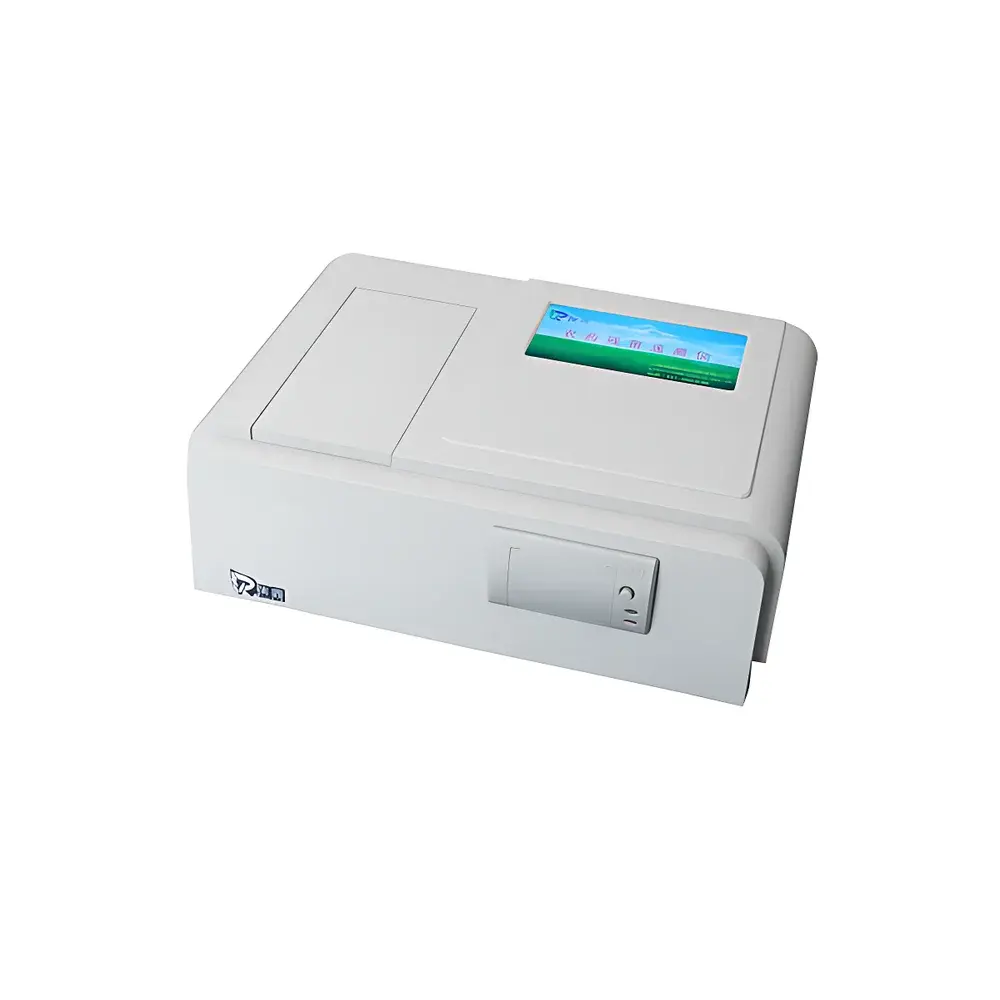
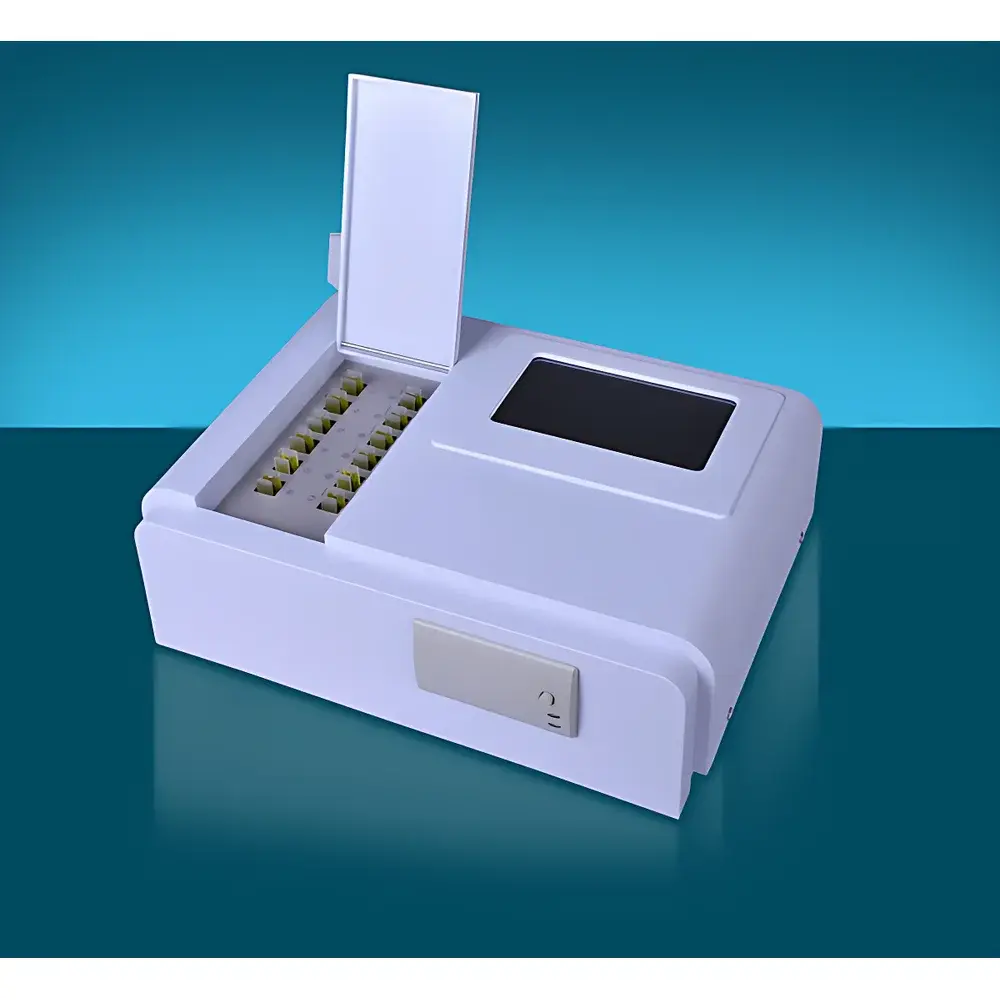
Ruixin SP-B Food Safety Rapid Detector for Diseased and Spoiled Meat
| Brand | Ruixin |
|---|---|
| Origin | Shanghai, China |
| Manufacturer Type | Authorized Distributor |
| Country of Origin | China |
| Model | SP-B |
| Price | USD 1,800 (approx.) |
| Function Type | Multi-analyte Detection Platform |
| Sample Compatibility | Universal for Fresh and Processed Meat Samples |
| Wavelength Range | 410–630 nm |
| Assay Time | ≤ 3 min per sample |
| Photometric Repeatability | ≤ 0.2% |
| Detection Channels | 8 independent optical channels |
Overview
The Ruixin SP-B Food Safety Rapid Detector is an integrated photometric analyzer engineered for on-site, multi-parameter assessment of meat hygiene quality in regulatory, slaughterhouse, cold-chain logistics, and food processing environments. It operates on the principle of visible-spectrum absorbance spectroscopy (410–630 nm), enabling quantitative determination of three critical food safety biomarkers: histamine (HIS), total volatile basic nitrogen (TVB-N), and nitrite (NO₂⁻), alongside a proprietary optical index for detecting pathological tissue signatures associated with diseased or non-ambulatory livestock origin. Unlike traditional microbiological culture methods—requiring 24–72 h incubation and laboratory infrastructure—the SP-B delivers actionable results within 180 seconds using pre-calibrated reagent kits and standardized 10-mm pathlength cuvettes. Its design aligns with international rapid screening paradigms used in EU Regulation (EC) No 2073/2005 and Codex Alimentarius CAC/RCP 58-2005, supporting preliminary compliance verification prior to confirmatory testing.
Key Features
- Eight parallel detection channels enable batch analysis of up to eight samples simultaneously—critical for high-throughput inspection at abattoirs or wholesale markets.
- High-stability imported LED light source ensures consistent spectral output over >10,000 hours; eliminates warm-up drift and reduces calibration frequency.
- 320 × 240 backlit monochrome LCD interface with intuitive Chinese-language prompts simplifies operation for field personnel without technical training.
- Dual-mode operation: fully autonomous instrument mode or PC-controlled mode via USB/RS232 interfaces—ensuring flexibility across infrastructure tiers.
- Onboard data logging stores ≥1,000 test records with timestamp, sample ID, operator code, and raw absorbance values; supports GLP-compliant audit trails.
- Integrated thermal printer outputs hard-copy reports including assay parameters, measured concentrations, pass/fail flags, and QC status—all compliant with internal QA documentation requirements.
- Photometric performance validated to ISO 10993-12:2021 specifications: transmittance accuracy ±2.0%, repeatability ≤0.2%, and 3-minute baseline stability ≤0.5%.
Sample Compatibility & Compliance
The SP-B is validated for homogenized aqueous extracts from pork, beef, mutton, chicken, and duck tissues—covering both raw and thermally processed products. Sample preparation follows AOAC Official Method 2005.03 (for TVB-N) and ISO 19040:2016 (for histamine), adapted into rapid extraction protocols requiring <5 min hands-on time. The instrument’s optical algorithm incorporates matrix-matched calibration curves to mitigate interference from myoglobin, hematin, and lipid oxidation byproducts. Regulatory alignment includes support for China’s GB 2707–2016 (fresh/frozen meat standards), GB 5009.228–2016 (nitrite), and GB 5009.227–2016 (TVB-N). While not a definitive diagnostic tool under FDA 21 CFR Part 11, its data output meets ALCOA+ principles for attributable, legible, contemporaneous, original, and accurate records required in GMP-aligned facilities.
Software & Data Management
The bundled Ruixin Food Analysis Management Software (v3.2) provides secure local database management compatible with Windows 10/11. Functions include automated report generation (PDF/CSV), trend charting across batches, user role-based access control (admin/operator), and QC limit configuration per analyte. Data export supports integration with municipal food surveillance platforms via TCP/IP or serial gateway—enabling real-time upload to provincial-level monitoring networks such as China’s National Food Safety Risk Assessment Center (CFSA) interface architecture. Audit logs record all modifications to calibration files or result edits, satisfying traceability requirements under ISO/IEC 17025:2017 Clause 7.10.
Applications
- Frontline inspection at live animal markets and slaughterhouses to screen carcasses for systemic infection markers prior to evisceration.
- Routine QC in chilled meat distribution centers verifying freshness thresholds (TVB-N ≤ 15 mg/100g for pork; HIS ≤ 50 mg/kg for fish-derived contamination risk).
- Regulatory enforcement during unannounced audits targeting illegal use of nitrite masking agents in spoiled or diseased meat.
- Training laboratories teaching rapid food safety methodology in vocational colleges accredited under China’s “1+X” certification framework.
- Export preparation labs validating pre-shipment compliance with importing countries’ residue limits (e.g., ASEAN MRLs for nitrite in processed meats).
FAQ
Is the SP-B suitable for quantitative analysis or only qualitative screening?
It performs semi-quantitative to quantitative analysis within defined linear ranges: histamine (10–200 mg/kg), TVB-N (20–100 mg/kg), nitrite (1–100 mg/kg), and disease index (0.05–2.0 arbitrary units), verified against NIST-traceable reference materials.
Does the instrument require daily recalibration?
No—factory-installed wavelength and photometric calibration remain stable for ≥3 months under routine use; optional monthly verification using neutral density filters is recommended per ISO/IEC 17025.
Can third-party reagents be used with the SP-B?
Only Ruixin-certified reagent kits are validated for optical path compatibility and reaction kinetics; substitution may compromise accuracy and void regulatory acceptance of results.
What is the minimum sample volume required per test?
Each assay requires 1.0 mL of clarified extract prepared from 5 g homogenized tissue + 20 mL extraction buffer, following standardized AOAC-accelerated protocols.
Is remote firmware update supported?
Yes—via USB drive or network-connected PC using signed firmware packages; version history and update logs are retained in device memory for audit purposes.




