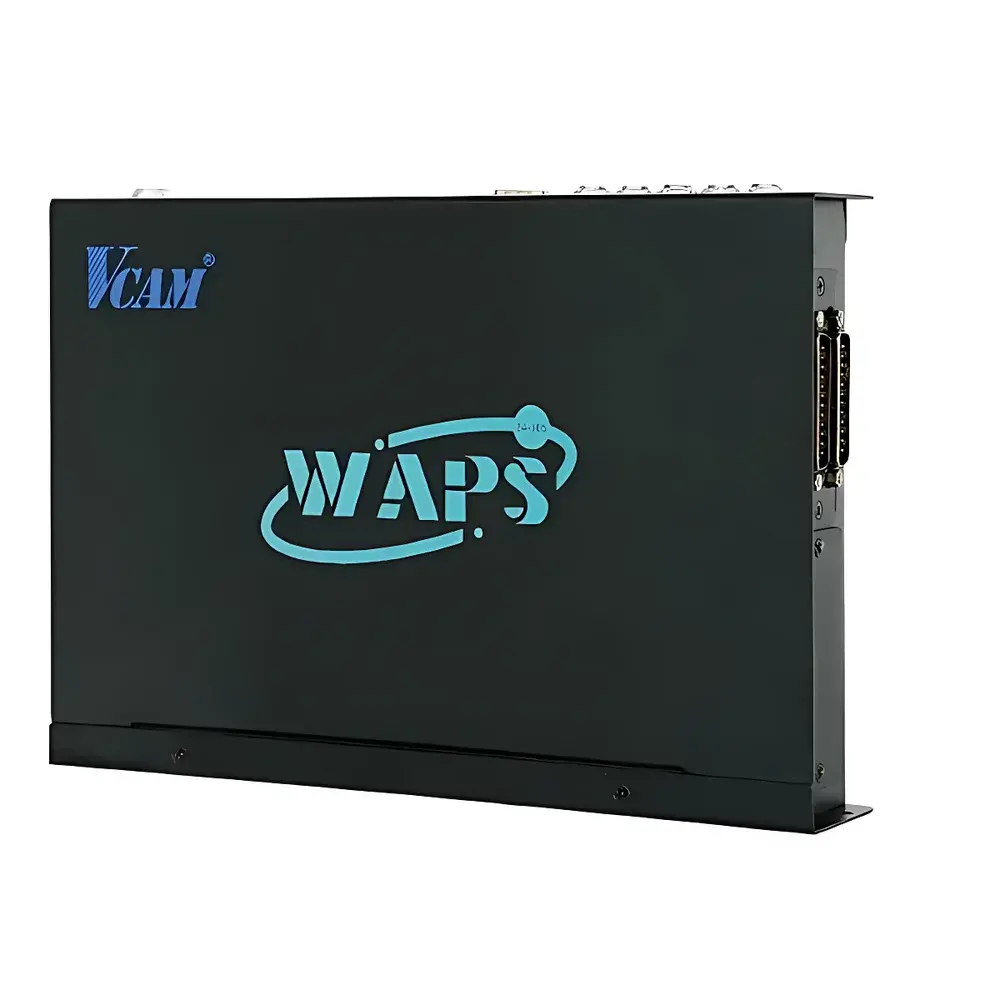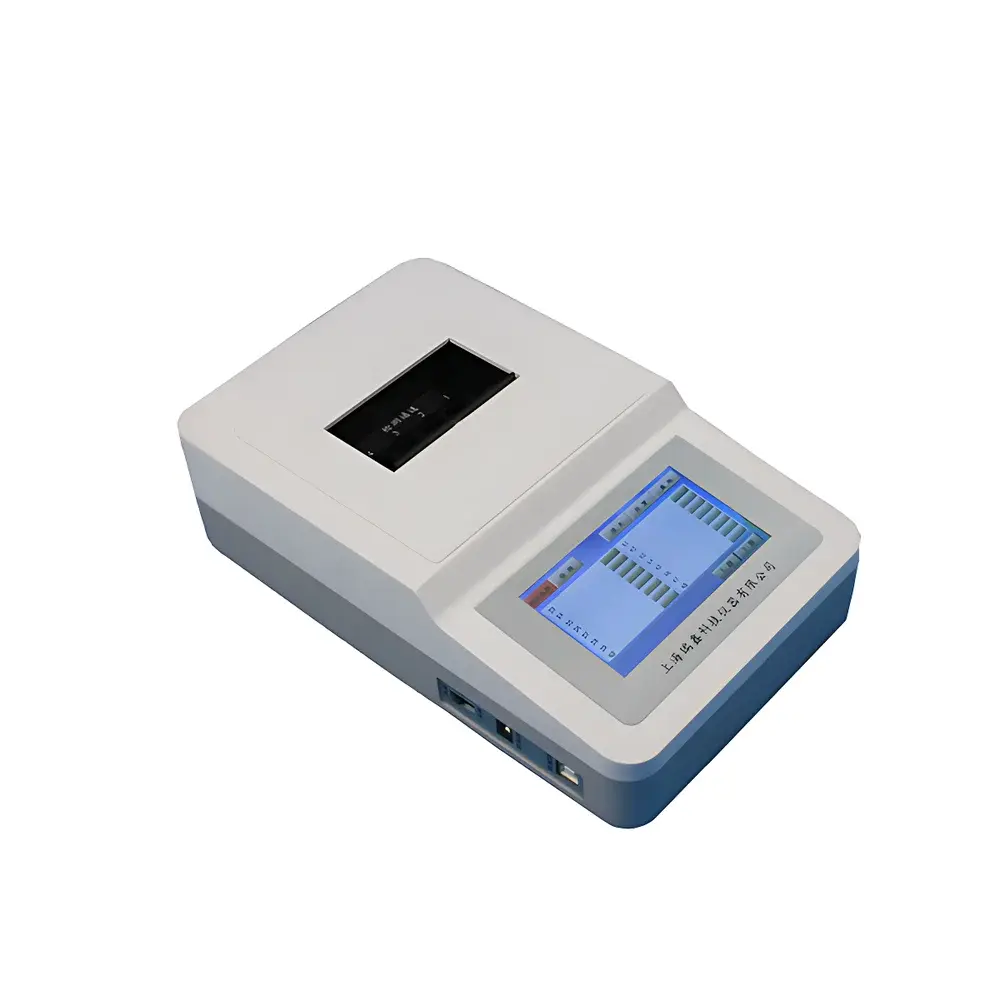
Ruixin SPb-GY2 Peroxide Value Analyzer for Edible Oils
| Brand | Ruixin |
|---|---|
| Origin | Shanghai, China |
| Manufacturer Type | Authorized Distributor |
| Country of Manufacture | China |
| Model | SPb-GY2 |
| Price Range | USD 4,200 – 7,000 |
| Function Type | Single-Analyte Dedicated Instrument |
| Sample Type | Edible Oil Samples Only |
| Wavelength | 540 nm |
| Assay Time | ≤ 3 min per sample |
| Photometric Repeatability | ≤ 0.5% |
| Absorbance Range | 0–2.500 A |
| Detection Limit | 0.3 mmol/kg |
| Measurement Range | 0–11 mmol/kg |
| Photocurrent Drift | ≤ 0.002 A (within 3 min) |
| Data Interface | RS-232 |
| Power Supply | 9 V DC battery / 9 V DC adapter / 220 V AC input |
| Dimensions | 175 × 100 × 85 mm |
| Net Weight | < 0.8 kg |
| Detection Channel | 1 |
Overview
The Ruixin SPb-GY2 Peroxide Value Analyzer is a compact, field-deployable photometric instrument engineered for the rapid quantification of peroxide value (PV) in edible oils and fats. It operates on the standardized iodometric principle—where peroxides in the oil sample oxidize iodide ions (I⁻) to elemental iodine (I₂) under acidic conditions, and the liberated iodine is then quantified spectrophotometrically at 540 nm via reaction with starch to form a blue complex. This method aligns with internationally recognized protocols including ISO 3960:2017, AOAC Official Method 965.33, and GB 5009.227–2016. Designed for regulatory compliance and routine quality control, the SPb-GY2 delivers traceable, reproducible results within three minutes per test—enabling real-time assessment of lipid oxidation status during storage, transportation, or retail inspection.
Key Features
- Portable benchtop architecture with integrated optical path and fixed-wavelength photometer (540 nm), optimized for stability and minimal environmental interference.
- Single-channel detection system with high-precision analog-to-digital conversion and auto-zeroing function to compensate for baseline drift.
- Dual-mode power operation: rechargeable 9 V battery (≥8 hrs continuous use), regulated 9 V DC input, and standard 220 V AC mains—ensuring uninterrupted functionality across mobile labs, market surveillance vehicles, and fixed-site laboratories.
- Embedded LCD interface with intuitive menu navigation; displays absorbance, calculated PV (mmol/kg), and pass/fail status relative to user-defined thresholds.
- Onboard memory stores up to 500 test records with timestamp, sample ID, and operator code—supporting GLP-compliant documentation requirements.
- RS-232 serial interface enables direct data export to LIMS or desktop software for audit trail generation and statistical process control (SPC) analysis.
- Includes calibrated cuvettes, reagent kits (KI/acetic acid/chloroform solvent system), pipettes, and extraction tools—validated for consistency across soybean, peanut, sunflower, palm, and blended cooking oils.
Sample Compatibility & Compliance
The SPb-GY2 is validated exclusively for liquid edible oils and refined fats with low particulate content and viscosity < 100 cSt at 40 °C. It is not suitable for emulsified products (e.g., mayonnaise), solid fats (e.g., lard at room temperature), or highly pigmented oils without prior decolorization. All reagents conform to ACS-grade specifications. The instrument’s performance meets repeatability criteria (<0.5% absorbance CV) and detection limit (0.3 mmol/kg) as defined in ISO 3960 Annex B. Its design supports adherence to national food safety monitoring frameworks—including China’s SAMR “Food Safety Sampling Inspection Plan” and EU Regulation (EC) No 853/2004 for edible oil quality verification. Data integrity complies with ALCOA+ principles when used with traceable calibration logs and version-controlled firmware.
Software & Data Management
The analyzer does not require proprietary PC software for basic operation but supports optional Windows-based Ruixin DataLink v2.1 for advanced reporting. This application imports .csv files via RS-232, generates PDF certificates compliant with CNAS-CL01:2018 reporting requirements, and exports summary statistics (mean, SD, %RSD, trend charts). Audit trails record all parameter changes, calibration events, and result modifications with user login timestamps—meeting FDA 21 CFR Part 11 expectations when deployed with electronic signature configuration. Firmware updates are delivered via secure USB dongle and include cryptographic checksum validation.
Applications
- Routine screening of bulk cooking oils at distribution centers and wholesale markets to verify shelf-life compliance before release.
- On-site verification by municipal food safety enforcement teams during unannounced inspections of catering suppliers and street vendors.
- Quality assurance testing in edible oil refineries to monitor oxidation kinetics post-deodorization and during tank storage.
- Academic and vocational training labs for teaching redox titration fundamentals and photometric assay validation protocols.
- Integration into centralized food safety surveillance networks via API-enabled middleware for real-time dashboard visualization of regional PV trends.
FAQ
What standards does the SPb-GY2 comply with for peroxide value determination?
It follows ISO 3960:2017, AOAC 965.33, and GB 5009.227–2016 methodologies, with optical and metrological validation performed per ISO/IEC 17025:2017 clause 5.5.
Can the instrument be calibrated using certified reference materials (CRMs)?
Yes—NIST-traceable PV reference oils (e.g., FAPAS® CRM 12345) are supported for multi-point calibration verification; calibration curves are stored separately per lot number.
Is method validation documentation provided with the unit?
Each shipment includes a Factory Performance Verification Report covering linearity (r² ≥ 0.999), LOD/LOQ, intermediate precision (n=6 replicates over 3 days), and ruggedness testing per ICH Q2(R2).
Does the device support multi-language UI or regulatory language localization?
The base firmware supports English and Simplified Chinese interfaces; additional languages (Spanish, Vietnamese, Arabic) are available upon request with validated terminology mapping.
How is firmware updated, and is version history retained?
Updates are applied via encrypted USB drive; the system maintains a read-only changelog (date, version, modification scope) accessible through service mode—retained across power cycles.