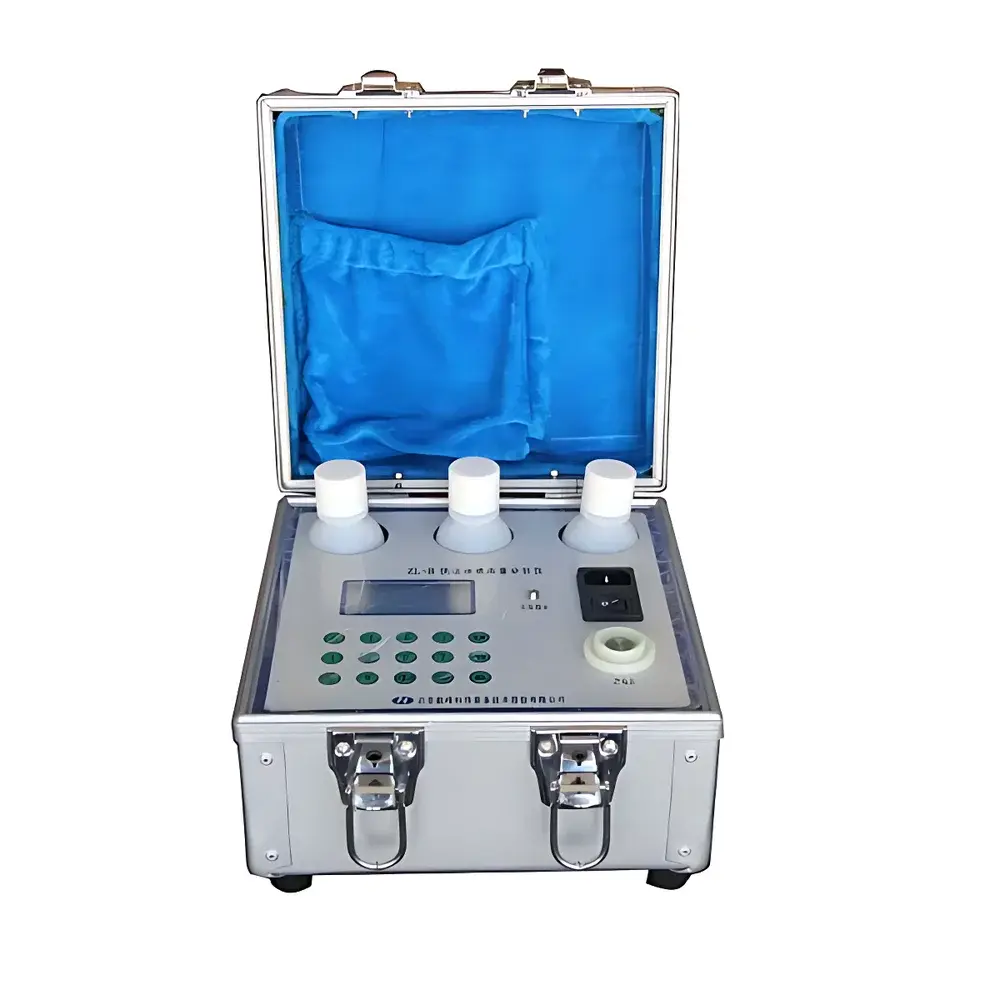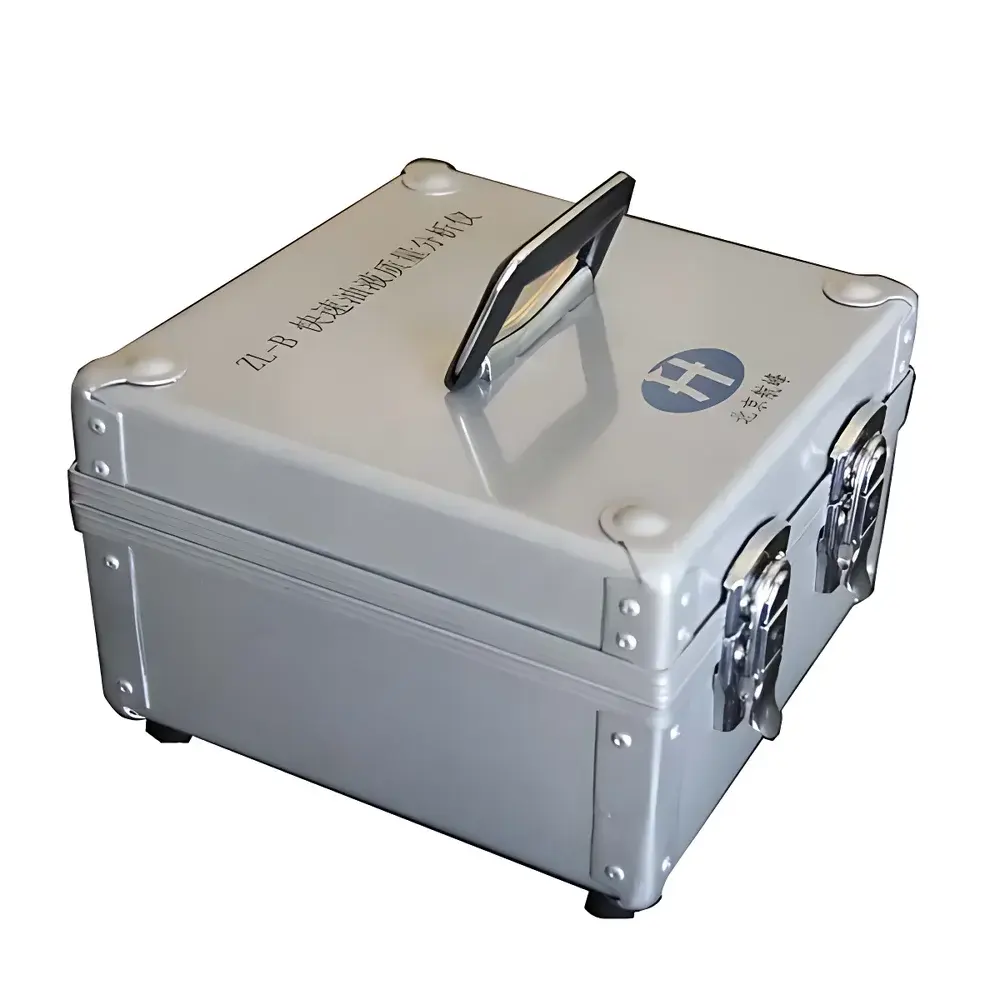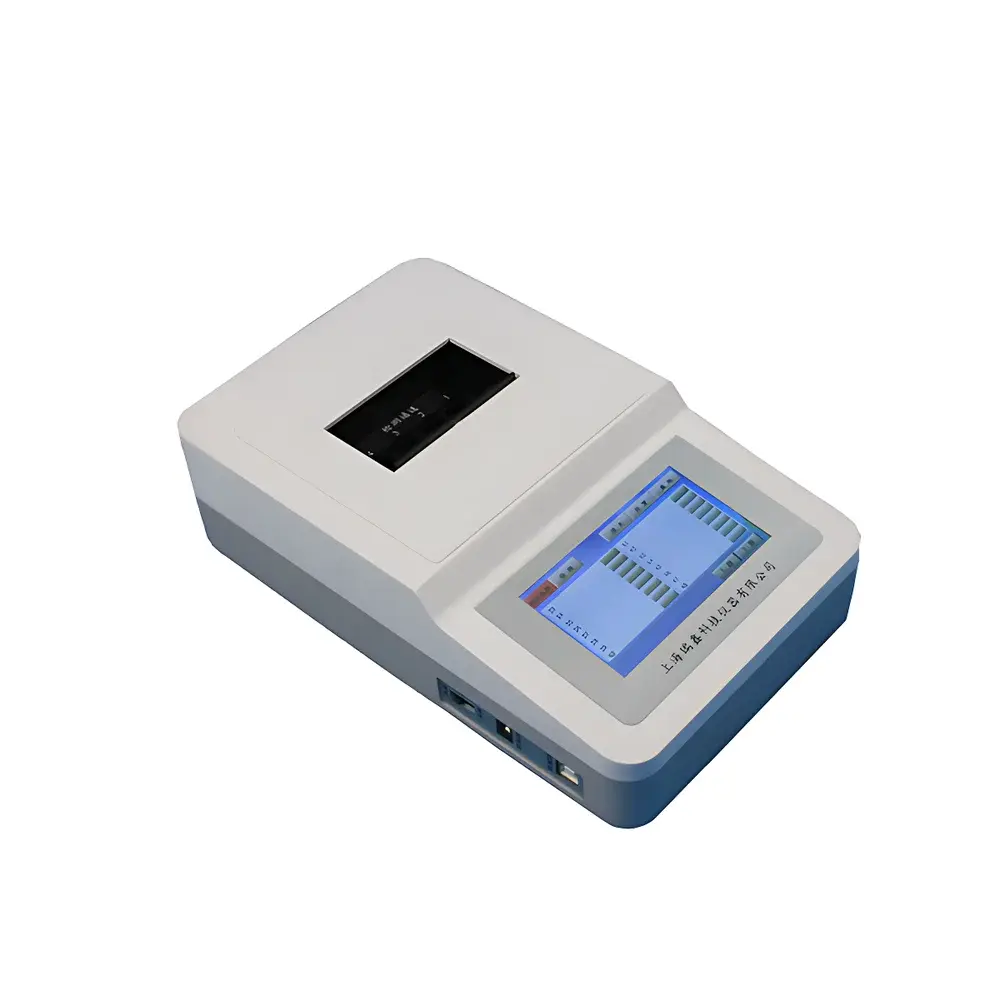
Ruixin SPb-SY2 Hydrogen Peroxide Rapid Detection Analyzer
| Brand | Ruixin |
|---|---|
| Origin | Shanghai, China |
| Manufacturer Type | Authorized Distributor |
| Country of Origin | China |
| Model | SPb-SY2 |
| Price Range | USD 4,200 – 7,000 (FOB Shanghai) |
| Functionality | Single-Analyte Detection |
| Sample Type | Dedicated Single-Sample Format |
| Wavelength | 410 nm |
| Detection Time | ≤ 180 seconds |
| Repeatability | ≤ 0.2% (RSD) |
| Detection Channels | 1 |
Overview
The Ruixin SPb-SY2 Hydrogen Peroxide Rapid Detection Analyzer is a compact, field-deployable photometric instrument engineered for quantitative determination of hydrogen peroxide (H₂O₂) residues in food matrices—including dairy products, meat, aquatic products, and fresh produce—where unauthorized or excessive H₂O₂ use poses regulatory and safety concerns. It operates on the principle of spectrophotometric quantification via a standardized colorimetric reaction: residual H₂O₂ catalyzes the oxidation of a chromogenic substrate (e.g., titanium sulfate or peroxidase-mediated TMB), generating a stable colored complex whose absorbance at 410 nm is linearly proportional to H₂O₂ concentration. Designed in strict alignment with Chinese GB 5009.227–2016 and internationally referenced AOAC Official Method 2005.02 for peroxide residue screening, the SPb-SY2 delivers laboratory-grade reliability in non-laboratory environments without requiring solvent extraction, derivatization, or cold-chain sample handling.
Key Features
- Portable architecture with integrated rechargeable lithium-ion battery (up to 8 hours continuous operation), enabling deployment in mobile food inspection vehicles, farmers’ markets, cold-chain logistics hubs, and border inspection checkpoints.
- 4.3-inch high-resolution TFT-LCD capacitive touchscreen with full Chinese GUI—supporting stylus-based input and predictive Chinese character entry for real-time annotation of sample names, operator IDs, and inspection notes.
- Self-calibrating optical path system: automatic zero- and span-adjustment at power-on eliminates manual blanking and standardization steps, reducing operator dependency and inter-user variability.
- Dual-mode photometric display: simultaneous readout of absorbance (0.000–4.000 AU, resolution 0.001) and transmittance (0.00–100.00%, resolution 0.01%), facilitating method validation and cross-platform data reconciliation.
- Embedded thermal printer outputs compliant test reports containing analyte concentration (mg/kg), Chinese sample descriptor, date/time stamp, operator ID, testing unit, and instrument serial number—each report includes a unique audit trail identifier.
- Optical stability ≤ 0.3% over 3 minutes (drift test per ISO 17025 Clause 5.9.1), ensuring reproducible measurements under ambient temperature fluctuations (10–35°C).
Sample Compatibility & Compliance
The SPb-SY2 is validated for direct analysis of homogenized aqueous extracts from solid and semi-solid food samples following standardized pre-treatment protocols (e.g., centrifugation, filtration, dilution). It complies with national food safety enforcement requirements in China (GB 2760–2024 Annex A.2, GB 5009.227–2016), and its operational parameters meet critical performance criteria outlined in ISO/IEC 17025:2017 for rapid screening devices used in official control laboratories. While not certified to FDA 21 CFR Part 11 out-of-the-box, its data export functionality supports integration into GLP/GMP-compliant LIMS environments when paired with validated secure transfer protocols.
Software & Data Management
The analyzer stores ≥ 1,000 test records locally with time-stamped metadata. Data export is supported via RS-232 serial interface (for legacy lab networks) and USB 2.0 (for mass storage or PC synchronization). Raw absorbance values, calculated concentrations, and operator logs are exportable in CSV format—enabling traceability, statistical process control (SPC) charting, and trend analysis. Optional firmware upgrade enables TLS 1.2-secured HTTP POST transmission to centralized food safety surveillance platforms (e.g., provincial SAMR monitoring systems), satisfying China’s “Internet + Food Safety Supervision” policy framework.
Applications
- Routine surveillance of H₂O₂ adulteration in sterilized milk, tofu, and seafood intended for retail distribution.
- On-site verification of sanitation efficacy in food processing facilities—monitoring residual H₂O₂ on surfaces post-rinse cycles.
- Regulatory field testing by municipal market supervision bureaus during routine inspections and recall investigations.
- Quality assurance screening in cold-chain logistics centers prior to warehouse release.
- Method correlation studies against reference techniques (e.g., iodometric titration, HPLC-UV) in accredited laboratories.
FAQ
What is the detection limit and linear range for hydrogen peroxide using the SPb-SY2?
The instrument achieves a limit of detection (LOD) of 10 mg/kg and a linear dynamic range of 0–500 mg/kg in food extracts, as verified per ICH Q2(R2) guidelines using spiked recovery experiments.
Does the SPb-SY2 require external calibration standards for daily use?
No—its built-in self-calibration system performs optical path normalization at startup; however, periodic verification with NIST-traceable H₂O₂ reference standards (e.g., 50 mg/kg and 200 mg/kg) is recommended every 48 hours for regulatory audit readiness.
Can the device be operated without AC power?
Yes—the integrated lithium-ion battery supports uninterrupted operation for up to 8 hours, including screen use, thermal printing, and data transmission.
Is raw absorbance data accessible for method development?
Yes—CSV exports include raw absorbance (A), transmittance (%T), calculated concentration, and timestamped metadata, permitting third-party statistical analysis and SOP customization.
How is instrument performance validated for compliance reporting?
Users may generate internal validation reports using stored calibration history, repeatability logs (≤0.2% RSD), and stability drift records—documentation aligned with CNAS-CL01:2018 requirements for rapid screening instruments.