
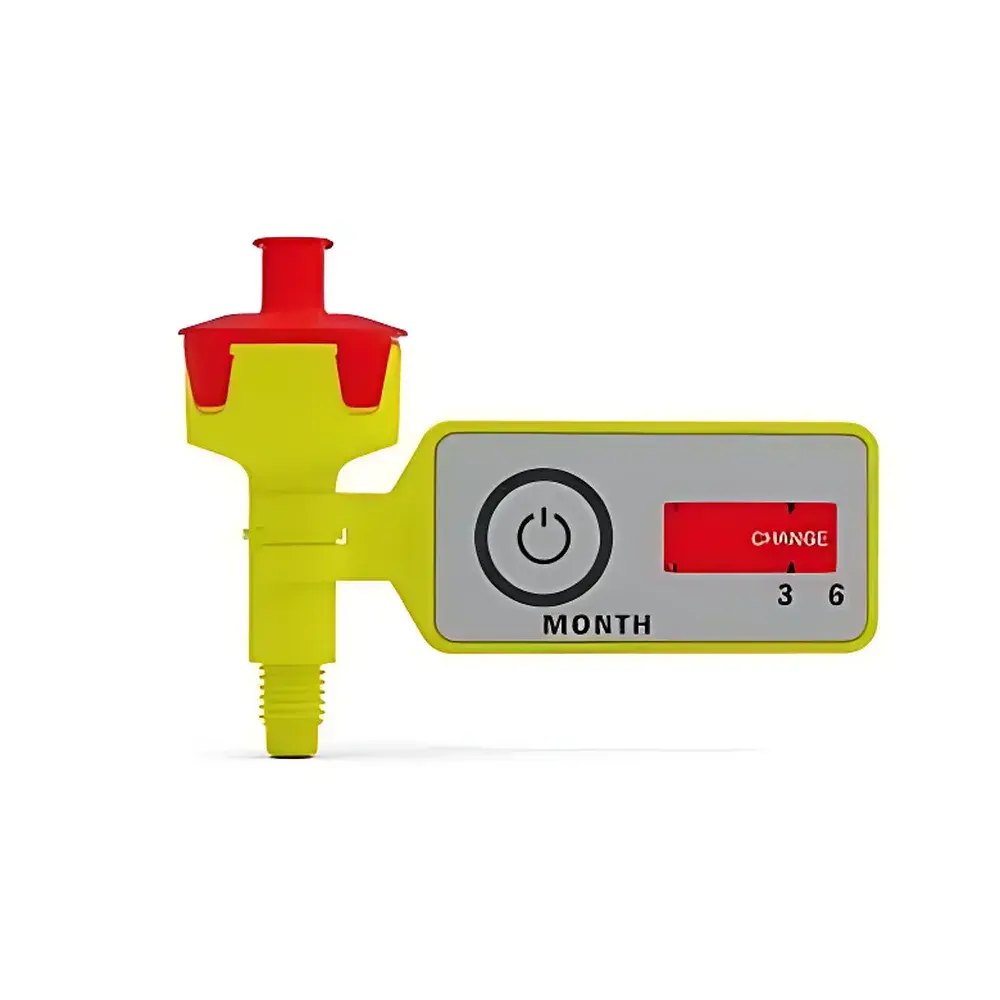
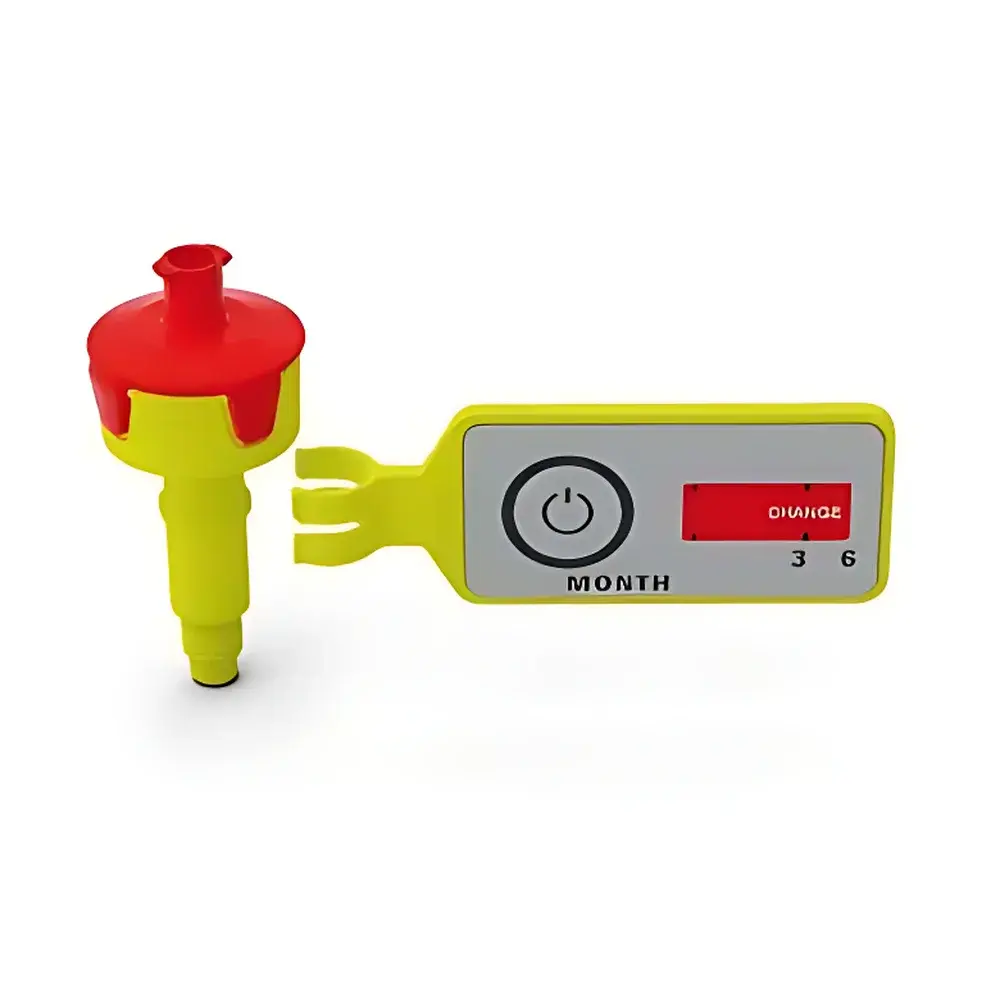
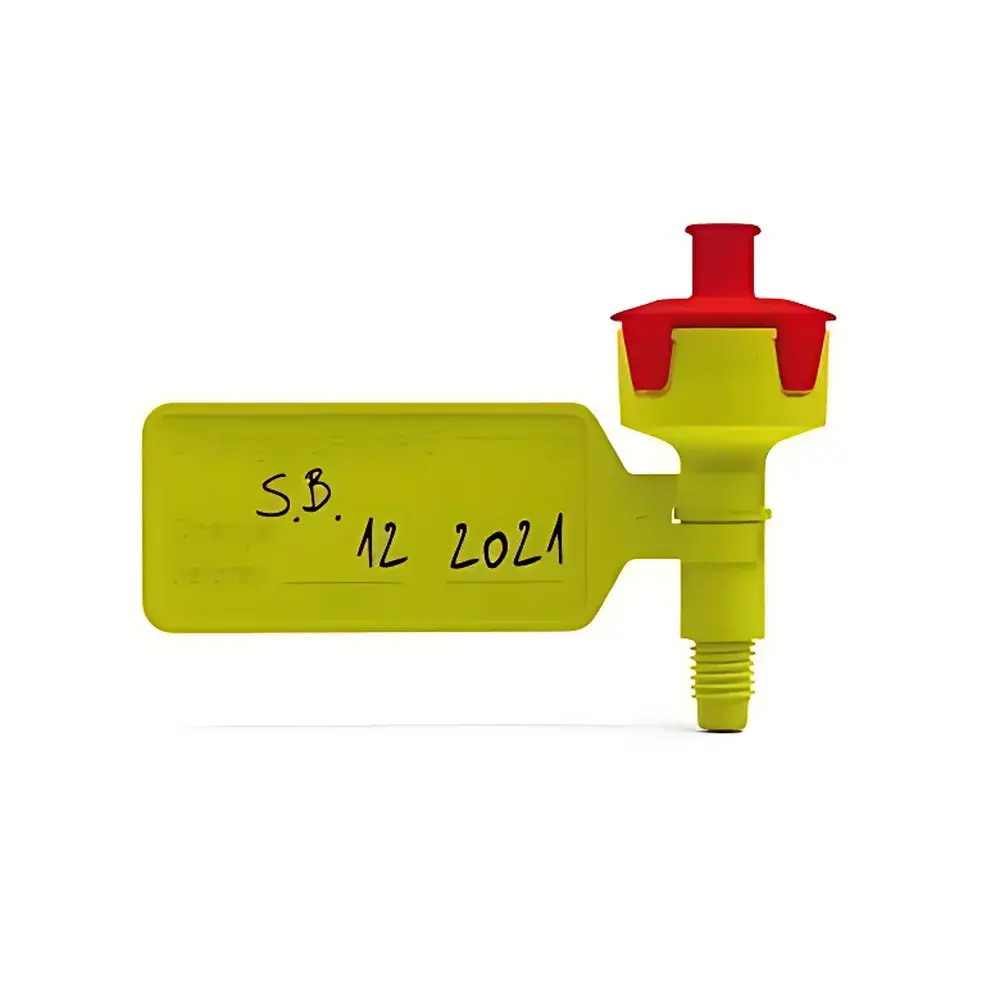
B.safe Air Vent Valve
| Brand | b.safe |
|---|---|
| Origin | Germany |
| Manufacturer Type | Authorized Distributor |
| Origin Category | Imported |
| Model | B.SAFE |
| Pricing | Upon Request |
| Material | Polypropylene (PP) |
| Temperature Range | 0 °C to +110 °C |
| Chemical Resistance | Excellent (++) |
| Flame Rating | UL 94 V-0 |
| Membrane Pore Size | 1 µm |
| Service Life | 6 months |
| Connection | Luer Lock |
| Packaging Units | 2 pcs (M 505-01), 10 pcs (M 505-02), 50 pcs (M 505-03) |
Overview
The B.safe Air Vent Valve is a precision-engineered, manually operated venting device designed for controlled atmospheric equilibration in sealed solvent storage and dispensing systems. It operates on the principle of selective gas permeation through a hydrophobic, chemically inert PTFE membrane (1 µm pore size), enabling pressure compensation during liquid withdrawal while preventing ingress of airborne particulates, moisture, and microorganisms. Unlike passive vent caps or unfiltered openings, the B.safe valve maintains sterility and chemical integrity by combining mechanical sealing integrity with validated filtration performance—critical for long-term solvent stability in analytical, pharmaceutical, and R&D laboratories. Its design supports closed-system handling under GMP/GLP-aligned workflows, minimizing operator exposure and contamination risk during routine transfers.
Key Features
- Integrated 1 µm hydrophobic PTFE membrane ensures continuous particulate and microbial barrier protection over the full 6-month service life.
- Visual service-life indicator activated via tactile button press or configurable label block—enabling traceable maintenance logging per laboratory SOPs.
- Luer Lock interface (ISO 594-1 compliant) allows secure, leak-tight attachment to standard solvent bottles, drying tubes, inert gas manifolds, or nitrogen purging assemblies.
- Chemically resistant polypropylene (PP) housing rated UL 94 V-0 for flame retardancy; stable across 0 °C to +110 °C, compatible with common organic solvents, acids, and bases.
- Ergonomic, glove-friendly actuation mechanism—no tools required for installation or replacement; optimized for use in laminar flow hoods and safety cabinets.
- Validated airflow rate ensures sufficient headspace replenishment during moderate-volume solvent withdrawal without inducing turbulence or foaming.
Sample Compatibility & Compliance
The B.safe Air Vent Valve is intended for use with glass or HDPE solvent reservoirs (e.g., volumetric flasks, reagent bottles, and intermediate bulk containers) where headspace pressure management and environmental isolation are essential. It complies with ISO 8536-4 (infusion equipment) dimensional standards for Luer connections and meets material biocompatibility requirements per USP and for non-implantable devices. While not a medical device, its construction supports alignment with GMP Annex 1 (sterile manufacturing), ICH Q5C (stability testing), and ASTM D4536 (chemical resistance of plastics). Documentation packages—including CoA, RoHS, and REACH declarations—are available upon request for audit readiness.
Software & Data Management
As a purely mechanical, non-electronic component, the B.safe Air Vent Valve requires no firmware, drivers, or software integration. Its operational status is tracked manually via the integrated service-life indicator and logged in laboratory notebooks or electronic lab notebooks (ELNs) using standardized templates. For facilities implementing 21 CFR Part 11–compliant systems, the valve’s batch-specific catalog numbers (e.g., M 505-01, M 505-02, M 505-03) support unique item-level traceability, expiration tracking, and change-control documentation within LIMS or QMS platforms.
Applications
- Solvent storage and dispensing in HPLC, GC, and ICP-MS laboratories where oxidation-sensitive reagents (e.g., tetrahydrofuran, diethyl ether, or sodium borohydride solutions) require inert gas overlay.
- Moisture-sensitive applications including Karl Fischer titration reagent handling, anhydrous reaction setups, and hygroscopic standard preparation.
- GMP-compliant raw material quarantine and release workflows, where documented venting integrity supports stability-indicating storage conditions.
- Automated liquid handling systems integrating manual venting points prior to robotic aspiration cycles.
- Academic and industrial synthetic chemistry labs managing multi-solvent libraries under controlled atmosphere protocols.
FAQ
What is the functional lifetime of the PTFE membrane under continuous use?
The membrane is validated for uninterrupted performance over six months when used within specified temperature and chemical exposure limits—verified via accelerated aging and particulate challenge testing per ISO 11140-1.
Can the valve be sterilized using autoclaving?
No. Autoclaving exceeds the PP housing’s thermal limit (+110 °C max); dry heat up to 100 °C for ≤30 min is permissible but not recommended for routine reuse—intended as a single-use, replaceable component.
Is the Luer Lock connection compatible with ISO 594-2 syringe tips?
Yes. The internal thread conforms to ISO 594-1, ensuring interoperability with all ISO-standard Luer Lock accessories, including gas dispersion needles and desiccant adapters.
Does the valve meet USP Class VI requirements?
While the PP housing and PTFE membrane individually satisfy USP cytotoxicity screening, full USP Class VI certification applies to finished devices under specific extractables protocols; contact technical support for application-specific validation data.
How is lot-to-lot consistency ensured during manufacturing?
Each production batch undergoes membrane bubble point testing, visual inspection, and dimensional verification against DIN EN ISO 13485–certified quality management procedures at the German manufacturing facility.



