
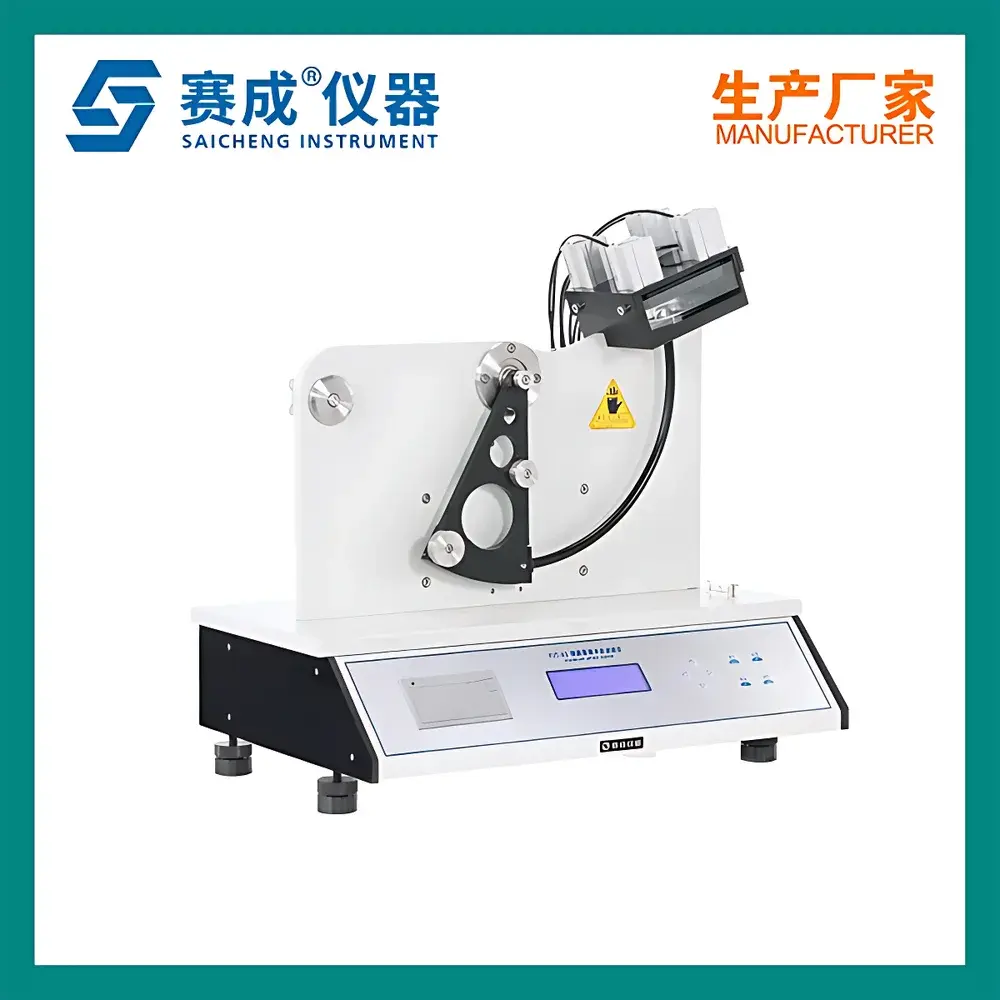
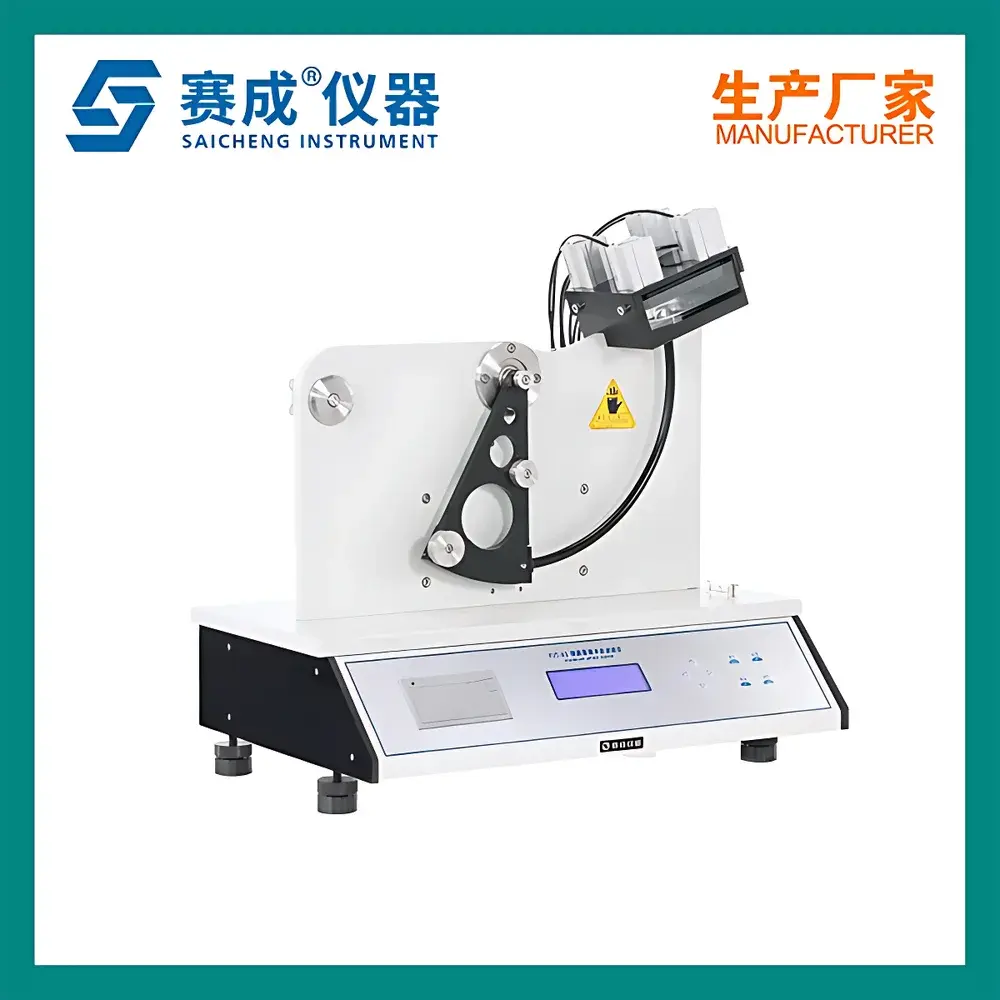
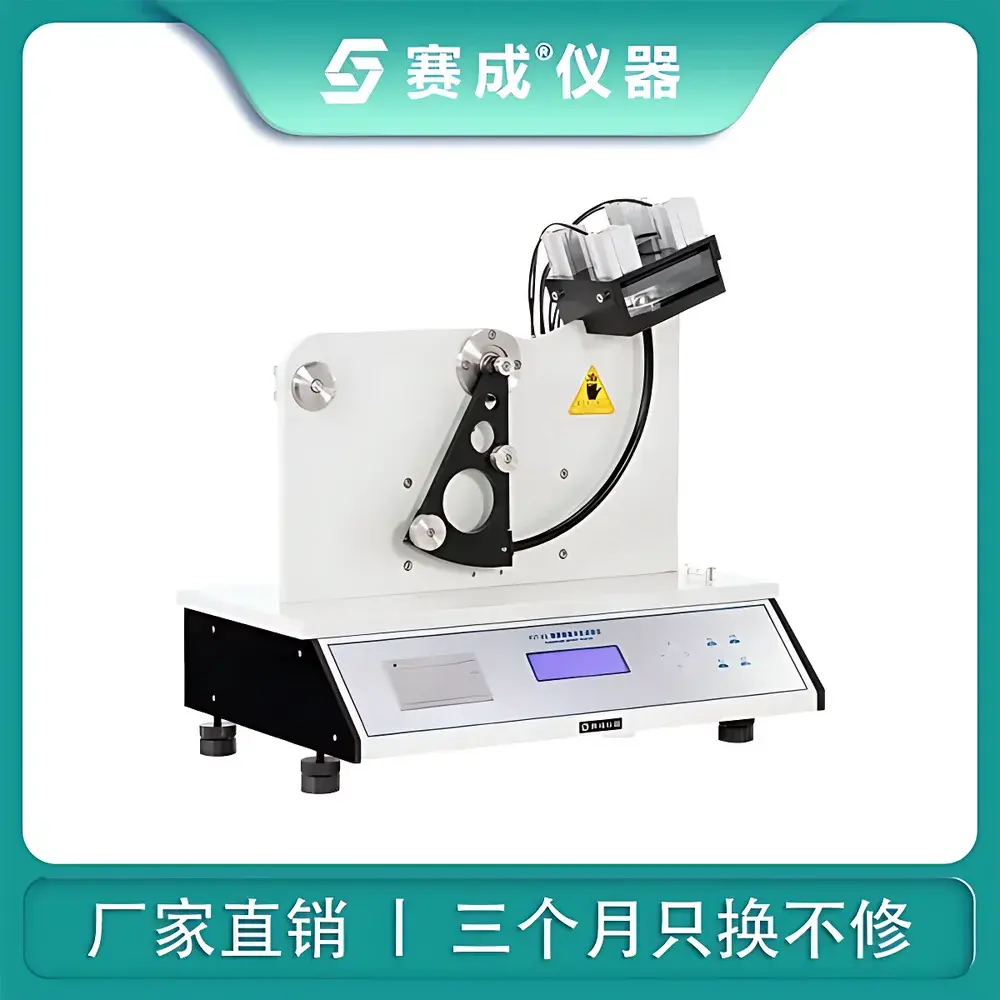
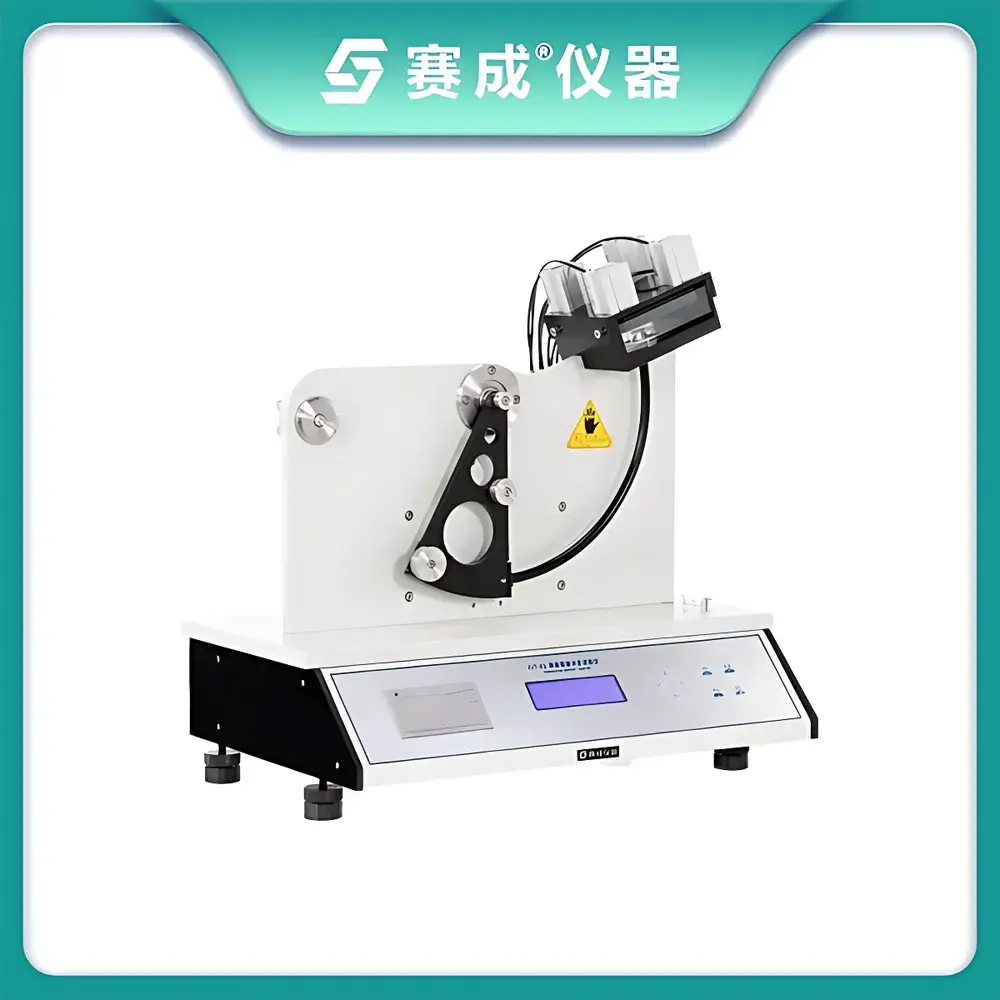
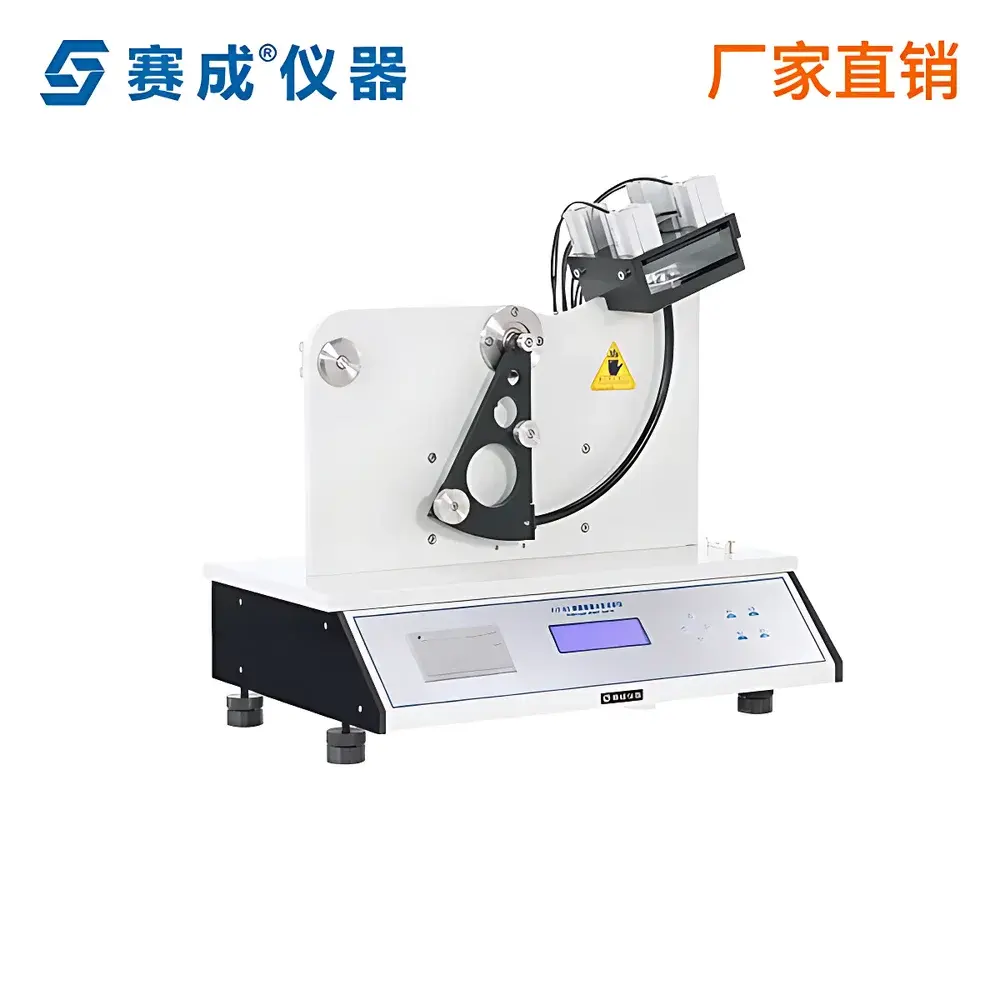
Saicheng FIT-01 Horizontal Pendulum Impact Tester for Thin Films
| Brand | Saicheng |
|---|---|
| Origin | Shandong, China |
| Manufacturer Type | Direct Manufacturer |
| Country of Origin | China |
| Model | FIT-01 |
| Compliance | ASTM D3420, GB 8809–1988, NF T54-116 |
| Impact Energy Range | 1 J, 2 J, 3 J (standard) |
| Resolution | 0.001 J |
| Indenter Diameter Options | Ø25.4 mm, Ø19 mm, Ø12.7 mm (customizable) |
| Clamp Aperture | Ø89 mm, Ø60 mm |
| Specimen Size | 100 mm × 100 mm or Ø100 mm |
| Pneumatic Supply | 0.6 MPa (user-supplied, Ø6 mm polyurethane tubing) |
| Dimensions (L×W×H) | 600 mm × 390 mm × 600 mm |
| Power Supply | AC 220 V, 50 Hz |
| Net Weight | 64 kg |
| Control System | Microprocessor-based with LCD interface, PVC membrane keypad |
| Data Output | Integrated thermal mini-printer, RS232 serial port |
| Software Compatibility | Optional dedicated PC software with audit trail and data export (CSV, PDF) |
Overview
The Saicheng FIT-01 Horizontal Pendulum Impact Tester is an engineered solution for quantifying the dynamic puncture resistance of thin, flexible packaging materials under standardized impact loading conditions. It operates on the principle of pendulum impact mechanics: a calibrated arm—fitted with a hemispherical indenter—is released from a fixed height to strike a horizontally clamped specimen. The energy absorbed during penetration is calculated from the residual swing angle of the pendulum, providing a direct measure of material toughness under high-strain-rate deformation. This method aligns with established mechanical testing paradigms used in packaging R&D and quality control, where resistance to drop-induced puncture, sealing integrity failure, or transport-related damage must be objectively benchmarked across material batches and formulations.
Key Features
- Pneumatically actuated specimen clamping and pendulum release eliminate manual intervention, ensuring consistent preload application and timing accuracy—critical for minimizing operator-induced variability in low-energy impact measurements.
- Modular energy configuration: Standard 1 J, 2 J, and 3 J impact capacities are achieved via interchangeable calibrated weights; optional 5 J extension supports higher-toughness substrates such as multilayer barrier laminates or reinforced metallized films.
- Interchangeable hemispherical indenters (Ø25.4 mm, Ø19 mm, Ø12.7 mm) allow adaptation to ISO/ASTM-defined test geometries and enable comparative analysis across thickness-dependent deformation modes.
- Dual clamp aperture options (Ø89 mm and Ø60 mm) accommodate standard specimen formats per ASTM D3420 and GB 8809–1988, while integrated O-ring sealing ensures uniform clamping pressure distribution across the specimen perimeter.
- Microprocessor-controlled operation with backlit LCD display and tactile PVC keypad enables rapid parameter selection, real-time energy readout, and on-device statistical summary (mean, SD, CV%) without external hardware.
- RS232 serial interface and built-in thermal printer support traceable data capture—fully compatible with laboratory information management systems (LIMS) and compliant documentation workflows.
Sample Compatibility & Compliance
The FIT-01 is validated for use with polymeric films (e.g., LDPE, BOPP, PET, PA), metallic foils (aluminum, aluminized PET), laminated composites (Alu/PET/PE, PA/Alu/CPP), and coated papers (metallized cigarette packaging, aseptic carton substrates). Its mechanical design and energy calibration conform to three internationally recognized standards: ASTM D3420 (Standard Test Method for Impact Resistance of Plastic Film by the Pendulum Method), GB 8809–1988 (Chinese national standard for film impact testing), and NF T54-116 (French standard for plastic film puncture resistance). All critical components—including pendulum moment of inertia, indenter geometry, and release mechanism—are traceably calibrated against NIST-traceable reference standards. The system supports GLP-compliant operation when paired with optional audit-trail-enabled software, fulfilling data integrity requirements under FDA 21 CFR Part 11 for regulated packaging validation environments.
Software & Data Management
An optional Windows-based software package extends the FIT-01’s functionality beyond standalone operation. It provides full instrument control, automated test sequencing, and secure data storage with user-level access permissions. Each test record includes timestamp, operator ID, environmental metadata (optional humidity/temperature input), raw energy values, and statistical summaries. Export formats include CSV for spreadsheet integration and PDF for audit-ready report generation. The software maintains immutable audit trails for all data modifications, meeting ALCOA+ principles (Attributable, Legible, Contemporaneous, Original, Accurate, Complete, Consistent, Enduring, Available) required in pharmaceutical and food packaging QA/QC labs. Data synchronization with enterprise LIMS is supported via configurable API endpoints or flat-file batch import.
Applications
- Quality assurance of food and pharmaceutical blister packaging films, evaluating seal integrity and pouch puncture resistance prior to sterilization or filling.
- R&D screening of novel biodegradable films (PLA, PHA, starch blends) for mechanical robustness under simulated distribution shock events.
- Comparative assessment of metallization adhesion strength in vacuum-deposited AlOx or SiOx barrier coatings on PET substrates.
- Validation of hot-fill or retort-resistant laminate structures subjected to thermal expansion-induced internal stress during processing.
- Regulatory submission support: Generating reproducible impact datasets referenced in packaging technical files for FDA, EFSA, or CFDA submissions.
FAQ
What standards does the FIT-01 comply with?
ASTM D3420, GB 8809–1988, and NF T54-116 — fully documented in the instrument’s compliance certificate and test method library.
Is pneumatic supply included with the system?
No. A clean, oil-free compressed air source delivering 0.6 MPa through Ø6 mm polyurethane tubing must be provided by the user.
Can test data be exported to Excel or LIMS?
Yes — via RS232 serial connection using optional software, supporting CSV and PDF export with embedded metadata and digital signatures.
What maintenance is required for long-term accuracy?
Annual verification of pendulum calibration and indenter geometry is recommended; Saicheng provides certified recalibration services and NIST-traceable reference kits.
Is the system suitable for ISO 17025-accredited laboratories?
Yes — when operated with validated software, documented procedures, and traceable calibration records, it meets ISO/IEC 17025:2017 clause 6.4 (equipment) and 7.7 (result reporting) requirements.





