
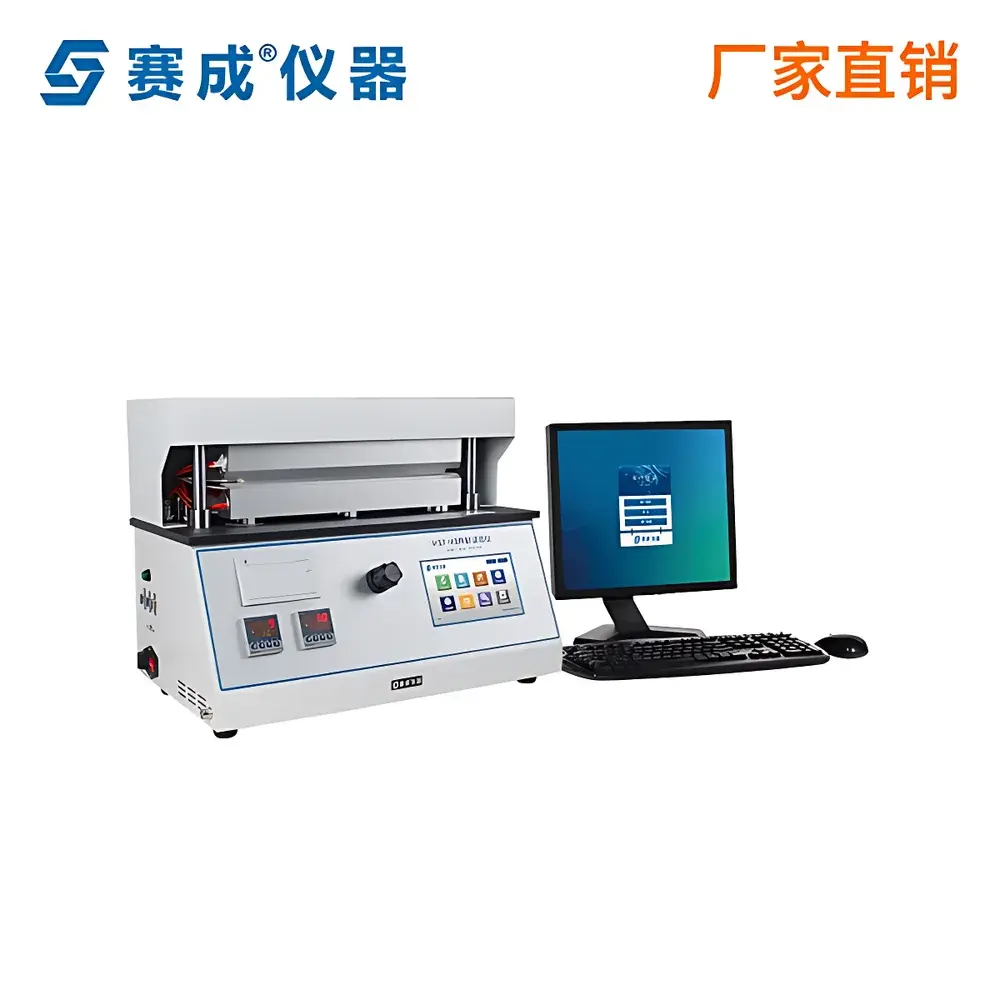
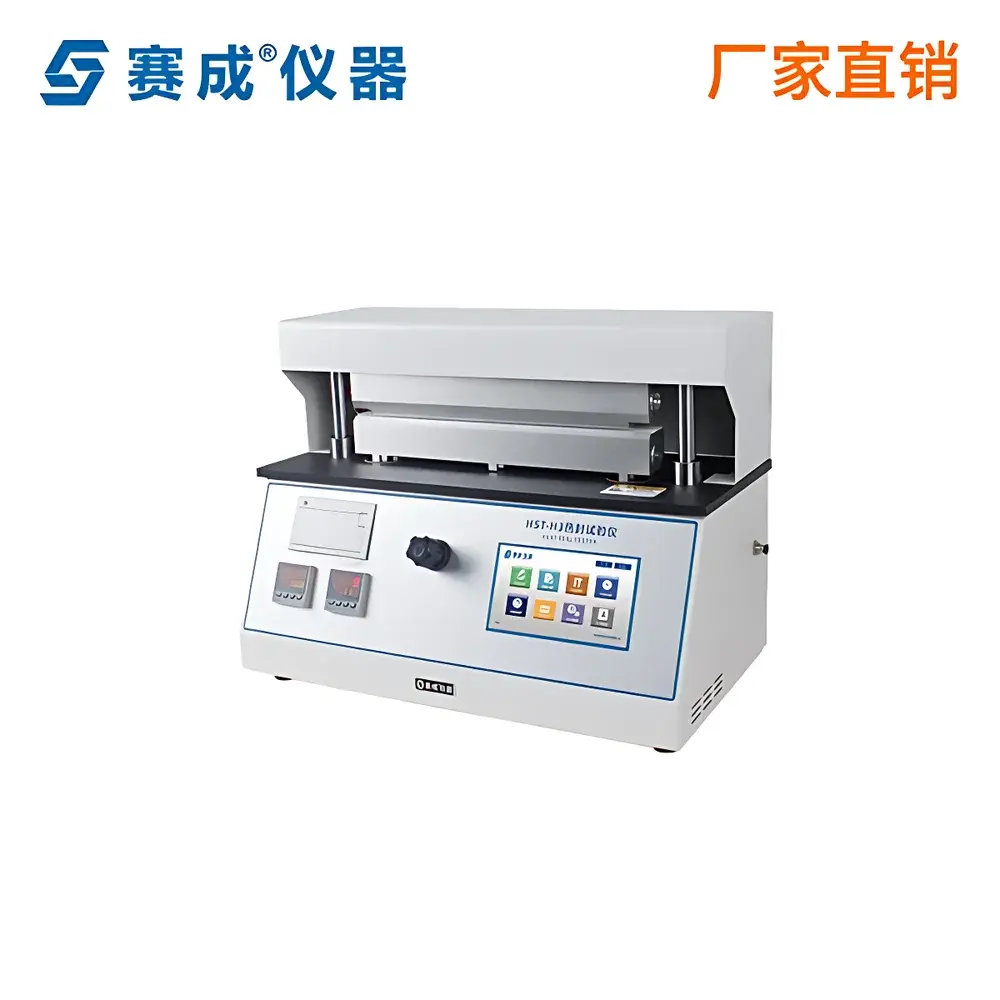
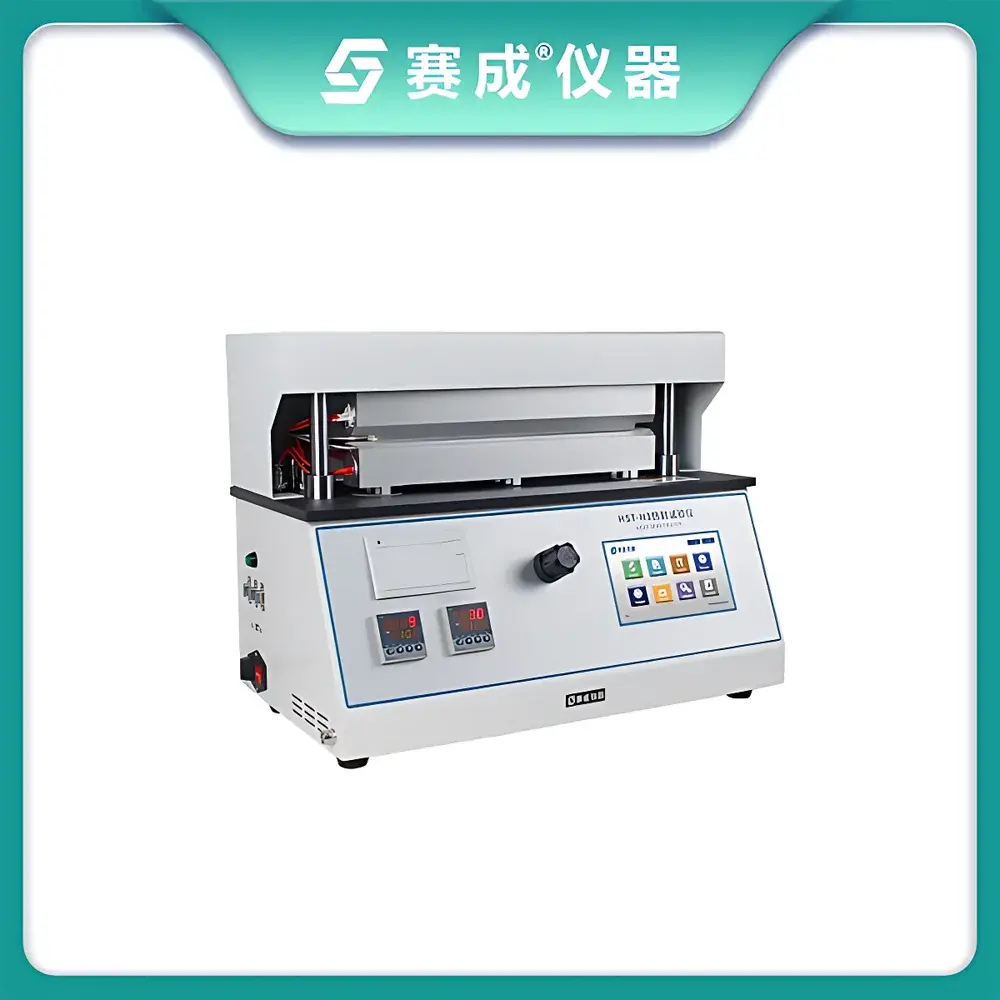
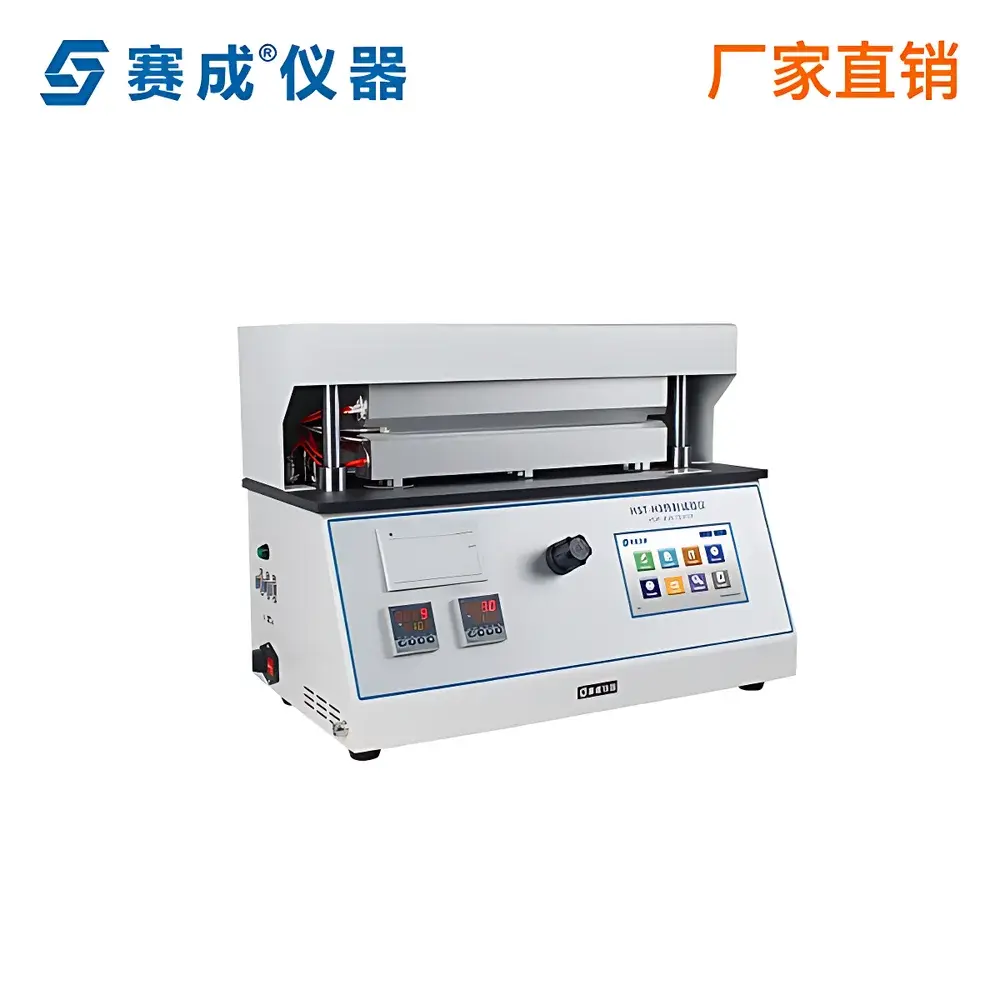
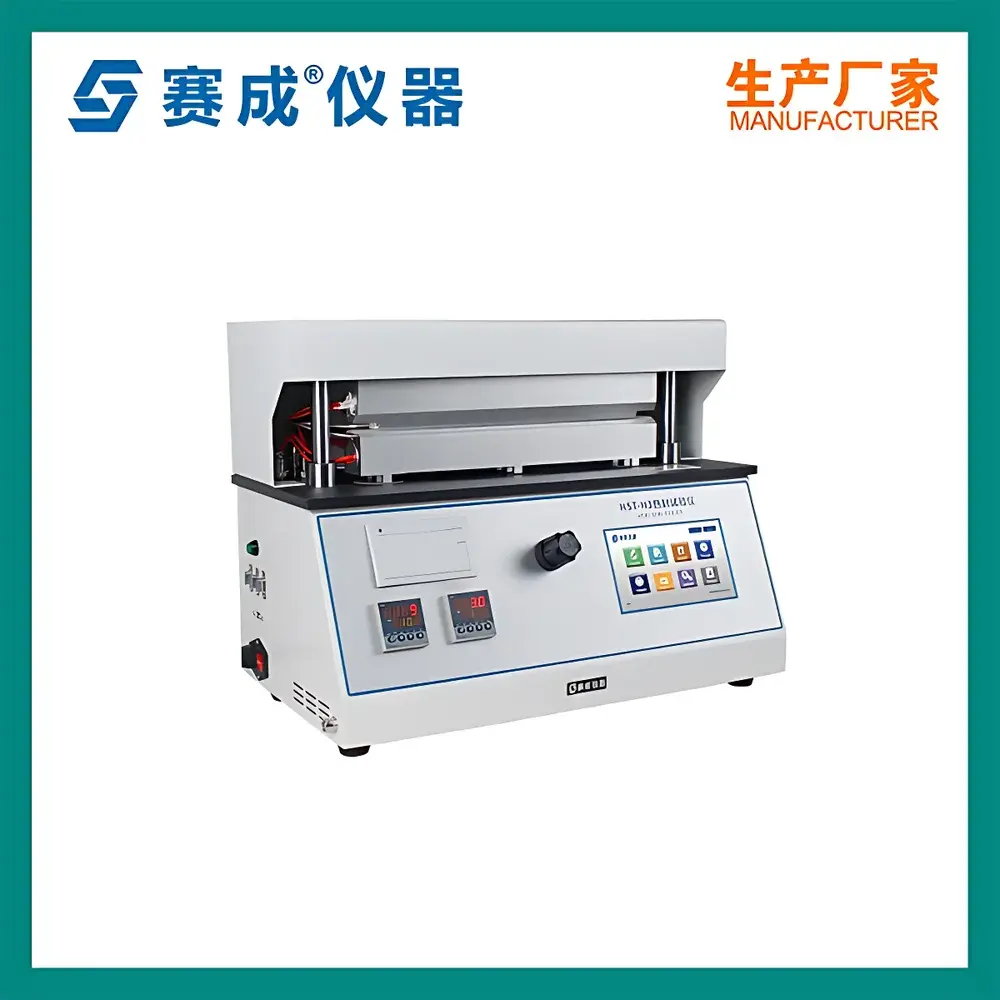
Saicheng HST-H3 Heat Sealing Tester for Flexible Packaging Films
| Brand | Saicheng |
|---|---|
| Origin | Shandong, China |
| Manufacturer Type | OEM/ODM Manufacturer |
| Country of Origin | China |
| Model | HST-H3 |
| Temperature Range | Ambient to 300 °C |
| Temperature Control Accuracy | ±0.2 °C |
| Sealing Time | 0.1–999.9 s |
| Sealing Pressure | 0.05–0.7 MPa |
| Sealing Surface Dimensions | 330 mm × 10 mm (customizable) |
| Heating Configuration | Dual-zone independent heating (single-zone optional) |
| Pneumatic Supply Requirement | 0.05–0.7 MPa via Ø6 mm polyurethane tubing |
| Power Supply | AC 220 V, 50 Hz |
| Dimensions (L×W×H) | 305 mm × 550 mm × 421 mm |
| Net Weight | 40 kg |
| Compliance Standards | QB/T 2358, ASTM F2029, YBB 00122003 |
Overview
The Saicheng HST-H3 Heat Sealing Tester is an engineered laboratory instrument designed for precise, repeatable thermal sealing parameter optimization and validation in flexible packaging R&D, quality control, and process development environments. It operates on the principle of controlled heat-pressure-time (HPT) application via dual-zone resistive heating and pneumatically actuated compression, enabling users to empirically determine optimal sealing conditions for a wide range of thermoplastic films and laminates. Unlike empirical trial-and-error methods, the HST-H3 delivers traceable, reproducible sealing events under programmable boundary conditions—critical for establishing validated sealing protocols compliant with packaging integrity standards in food, pharmaceutical, and personal care industries.
Key Features
- Microprocessor-controlled operation with large-backlit LCD display and intuitive PVC membrane keypad interface, supporting menu-driven parameter entry and real-time status feedback.
- Dual independent temperature zones with aluminum-encapsulated sealing bars ensure uniform thermal distribution across the full 330 mm sealing length—minimizing edge-to-center temperature gradients that compromise seal consistency.
- Dynamic temperature compensation algorithm enables rapid thermal stabilization (<60 s from ambient to 200 °C) and maintains setpoint accuracy within ±0.2 °C—essential for distinguishing narrow thermal process windows in high-barrier or multi-layer coextruded structures.
- Bottom-mounted dual-piston pneumatic system with synchronized actuation and closed-loop pressure replenishment guarantees uniform compressive force distribution (0.05–0.7 MPa), eliminating localized over- or under-compression artifacts.
- Modular sealing surface design accommodates both smooth and embossed configurations; standard 10 mm width is field-adjustable or custom-fabricated to match specific package geometry requirements (e.g., pouch flanges, lidding seals).
- Dual activation modes—manual button and footswitch—with integrated thermal cutoff and mechanical interlock safeguards prevent operator contact with heated surfaces during cycle execution.
Sample Compatibility & Compliance
The HST-H3 supports thermal sealing evaluation of monolayer and multilayer flexible packaging substrates including polyethylene (PE), polypropylene (PP), polyester (PET), nylon (PA), metallized films (VMPET, VMCPP), aluminum foil laminates, paper-plastic composites, and coextruded structures (e.g., PE/PA/PE, PP/EVOH/PP). Its configurable sealing interface allows adaptation to non-planar geometries—including thermoformed cups, stand-up pouches, laminated tubes, and modified-atmosphere trays—via application-specific tooling kits (available upon request). The instrument conforms to internationally recognized test methodologies: QB/T 2358 (Chinese national standard for plastic film heat seal strength), ASTM F2029 (Standard Test Method for Making Heat-Sealed Packages for Testing), and YBB 00122003 (Chinese pharmaceutical packaging standard for heat-seal integrity). All calibration and operational procedures are documented to support GLP-compliant lab workflows and internal audit readiness.
Software & Data Management
While the HST-H3 operates as a standalone benchtop unit with embedded firmware, its parameter logs—including temperature ramp profiles, actual pressure traces, dwell time verification, and cycle timestamps—are exportable via RS232 serial interface for integration into LIMS or electronic lab notebooks. The system supports user-defined test templates with up to 20 programmable presets, each storing complete HPT parameters and operator ID tags. Audit trail functionality records all parameter modifications, cycle initiations, and fault events with timestamp and user attribution—aligning with FDA 21 CFR Part 11 data integrity expectations when used in regulated environments. Firmware updates are delivered through secure authenticated channels and include version-controlled release notes traceable to ISO 9001:2015 design change protocols.
Applications
- Establishing thermal sealing process windows during new packaging material qualification.
- Validating seal integrity robustness across storage temperature excursions (e.g., frozen, ambient, accelerated aging).
- Comparing heat seal performance between alternative resin grades or additive packages (e.g., slip agents, antistats).
- Supporting root-cause analysis of seal failures (leakage, delamination, channeling) observed in production line trials.
- Generating reference data for correlation with downstream peel strength (ASTM F904) or burst testing (ASTM F1140).
- Training production technicians on optimal sealer setup using standardized lab-scale replication.
FAQ
What pneumatic supply specifications are required for stable operation?
A clean, oil-free compressed air source delivering 0.05–0.7 MPa at ≥10 L/min flow rate is required. A standard Ø6 mm polyurethane tube connects to the rear-mounted quick-coupler. An inline filter-regulator-lubricator (FRL) unit is recommended for long-term valve longevity.
Can the HST-H3 be used to generate data for regulatory submissions?
Yes—when operated under documented SOPs with calibrated transducers and maintained logbooks, its output meets evidentiary requirements for packaging validation dossiers submitted to FDA, EMA, or NMPA. Full traceability of calibration certificates (temperature, pressure, timer) is provided with each unit.
Is customization available for non-standard sealing widths or patterns?
Yes. Saicheng offers OEM engineering services for custom sealing bar geometries, embossed surface tooling, and fixture adapters for 3D-shaped substrates. Lead time and NRE fees apply per project scope.
How does the dual-zone heating improve experimental reliability compared to single-zone systems?
Independent top/bottom thermal control eliminates thermal lag asymmetry—particularly critical when sealing dissimilar materials (e.g., PET/PE laminate) where optimal interface temperature differs from bulk melting points. This enables true interfacial fusion optimization rather than bulk-melt approximation.
What maintenance intervals are recommended for sustained accuracy?
Annual verification of temperature sensors (per ASTM E74), pressure transducer calibration, and pneumatic valve function testing are advised. Preventive maintenance kits—including replacement sealing gaskets, O-rings, and thermal interface compounds—are available under part number HST-MK-01.




