
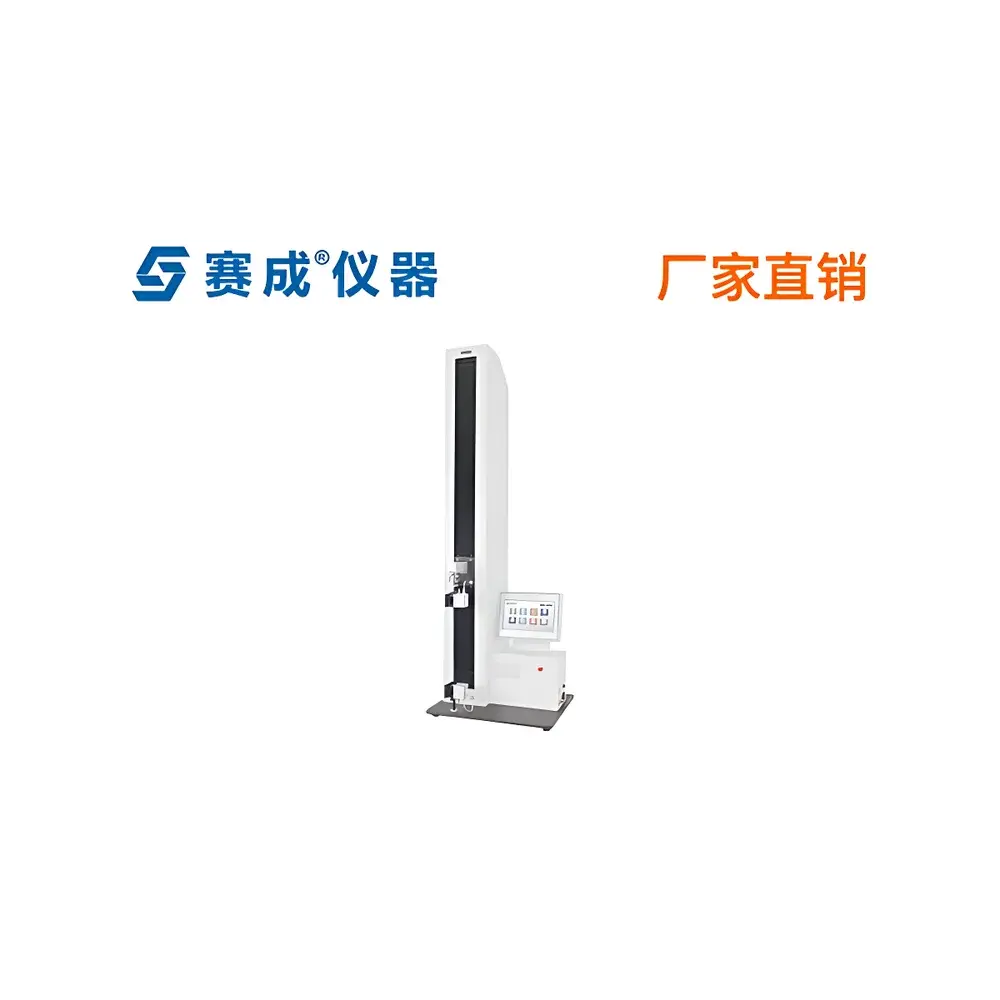
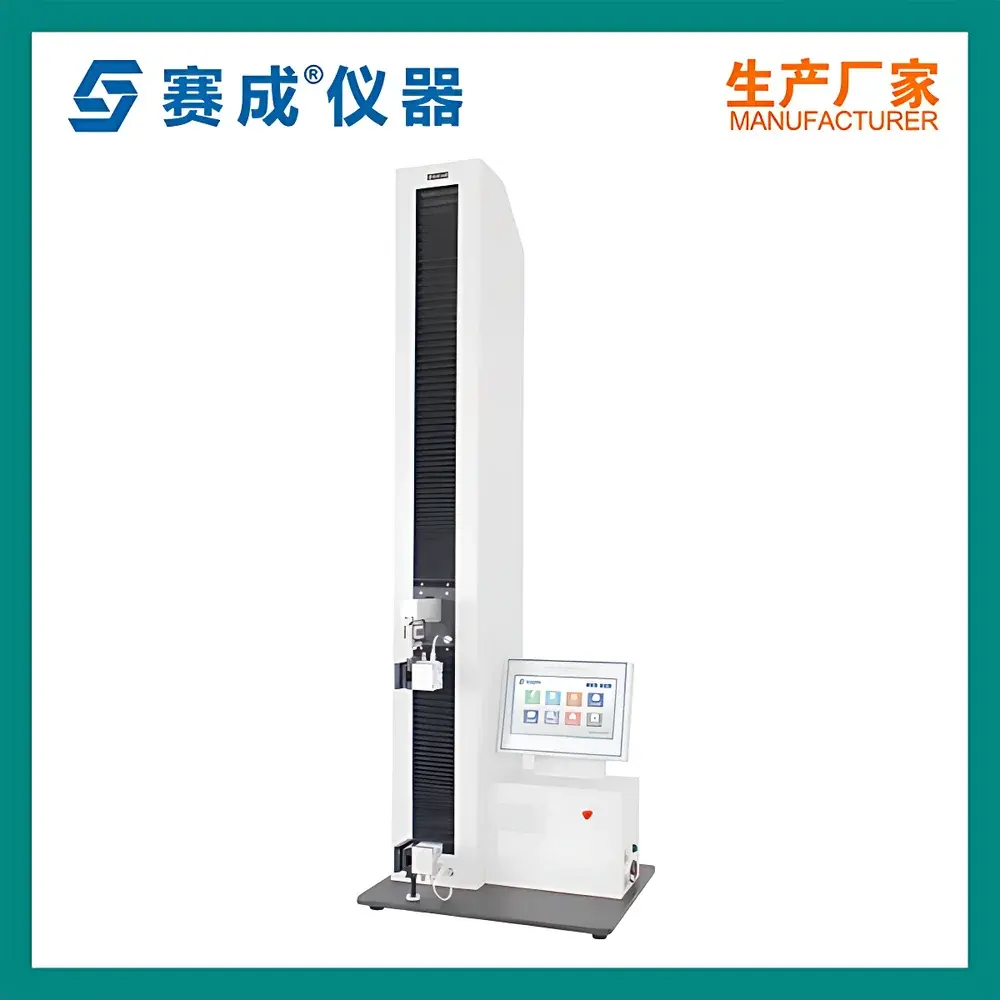
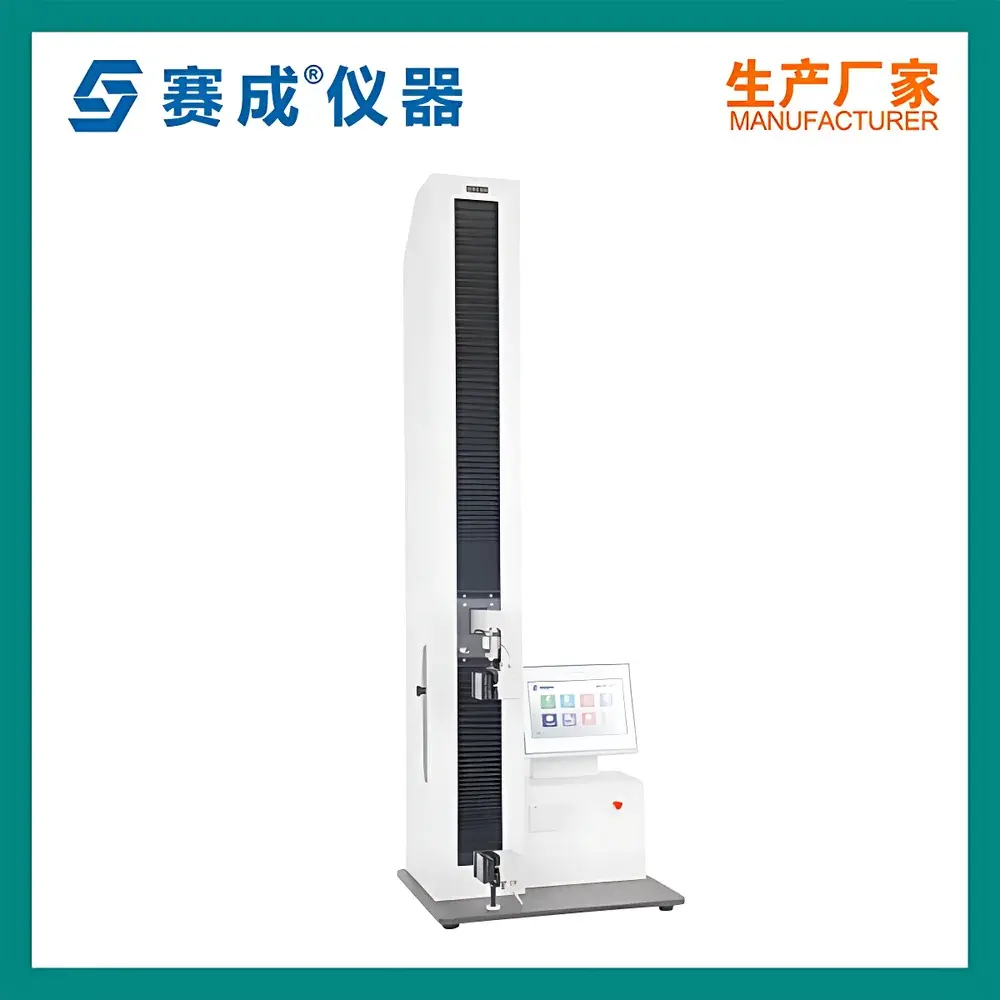
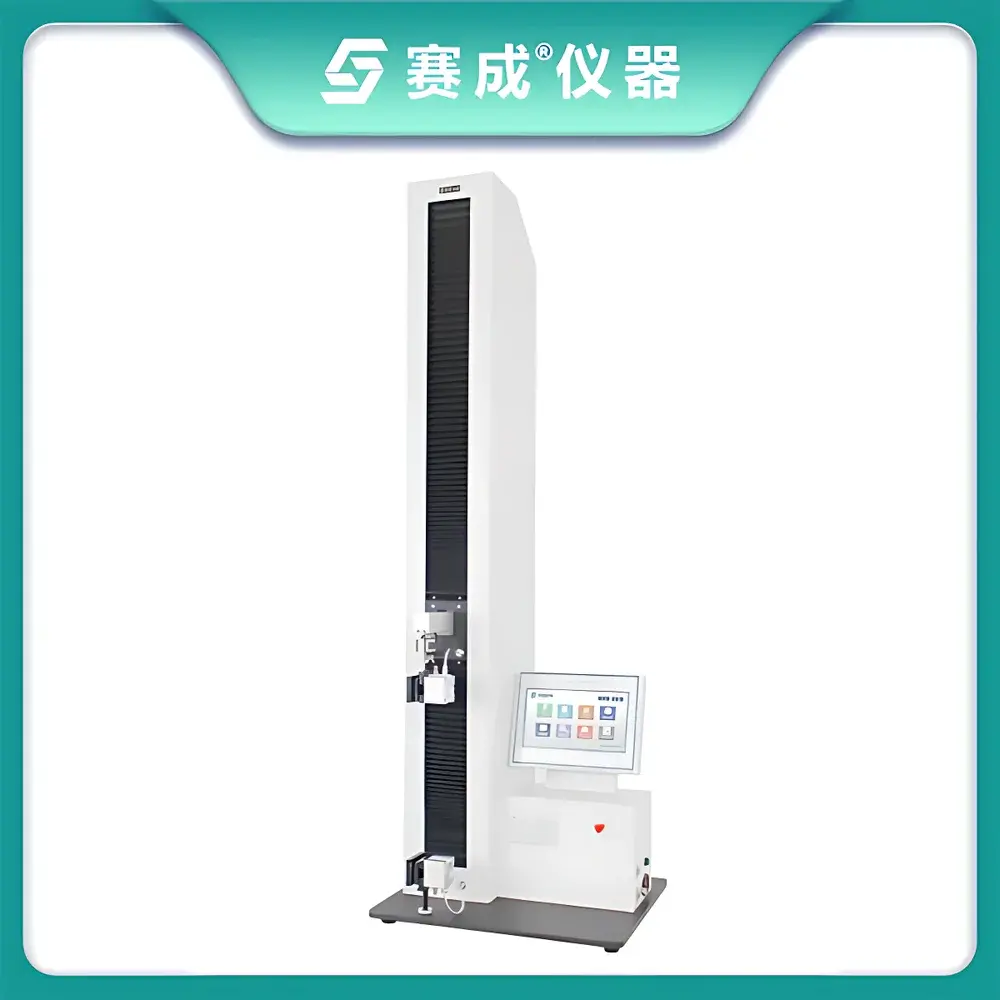
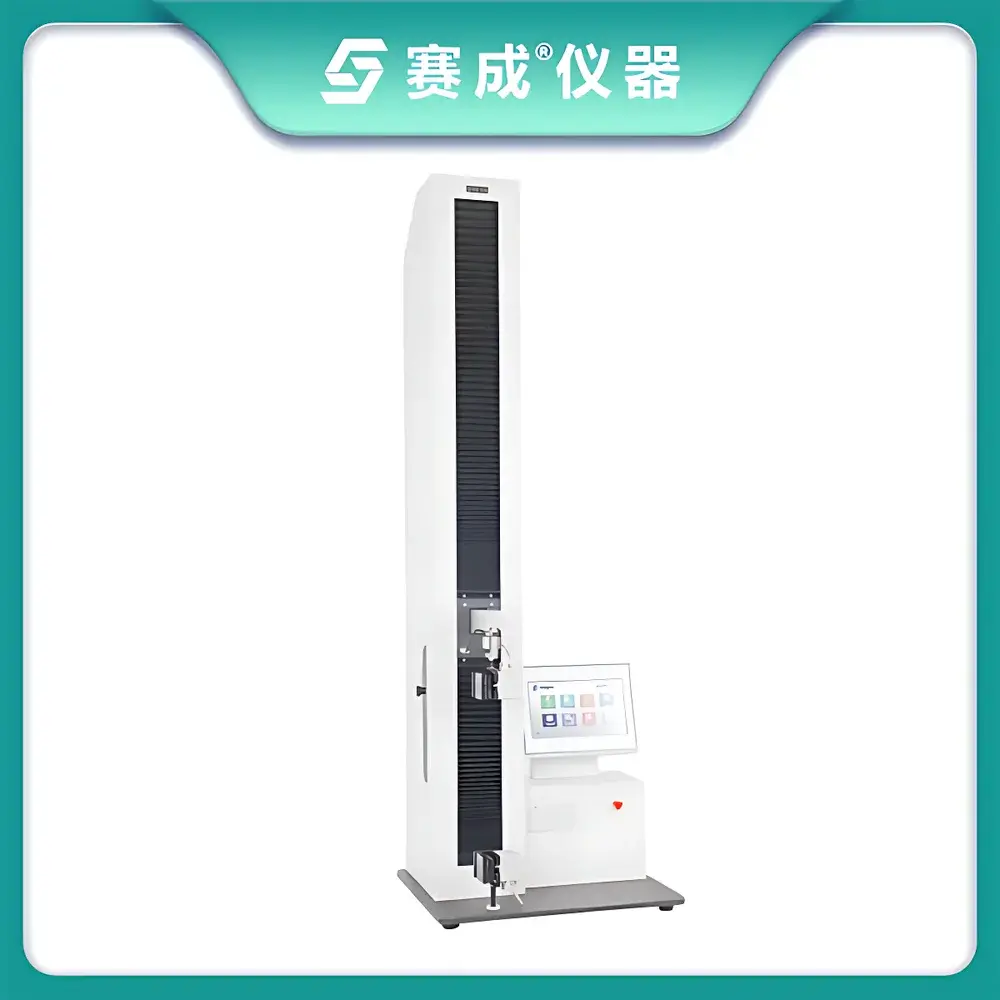
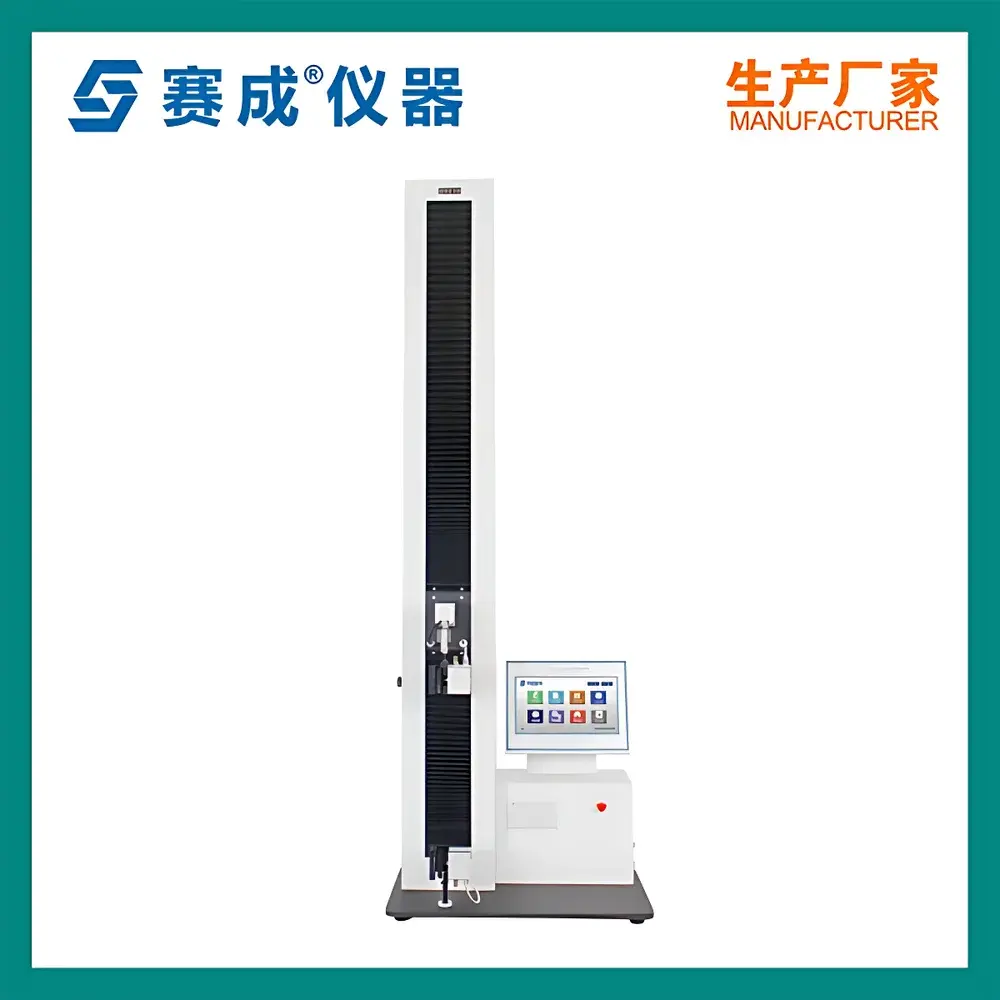
Saicheng XLW-H Intelligent Microcomputer-Controlled Tensile Strength Tester
| Brand | Saicheng |
|---|---|
| Origin | Shandong, China |
| Manufacturer Type | Direct Manufacturer |
| Country of Origin | China |
| Model | XLW-H |
| Force Capacity Options | 30 N, 100 N, 500 N, 1000 N |
| Force Accuracy | Class 0.5 |
| Force Resolution | 0.001 N |
| Displacement Accuracy | Class 0.5 |
| Displacement Resolution | 0.1 mm |
| Test Speed Range | 1–800 mm/min (infinitely variable) |
| Maximum Travel | 800 mm (optional 1000 mm) |
| Power Supply | 220 V / 50 Hz / 60 W |
| Dimensions (W×D×H) | 520 × 380 × 1400 mm |
| Net Weight | 72 kg |
| Operating Environment | 10–40 °C, 20–80 % RH |
| Compliance Standards | GB 13022, GB 8808, GB 1040, GB 4850, GB 7753, GB 7754, GB 453, GB/T 17200, GB/T 16578, GB/T 7122, GB/T 2790–2792, ASTM E4, ASTM D828, D882, D1938, D3330, F88, F904, ISO 37, JIS P8113, QB/T 2358, QB/T 1130, YBB pharmaceutical packaging standards (2002–2015 series) |
Overview
The Saicheng XLW-H Intelligent Microcomputer-Controlled Tensile Strength Tester is a precision electromechanical instrument engineered for standardized mechanical property evaluation of flexible packaging materials and related soft substrates. It operates on the fundamental principle of uniaxial tensile testing per ASTM E4 and ISO 37, wherein a specimen is clamped between two grips—typically one stationary and one motor-driven—and subjected to controlled, linear displacement. Force is measured in real time via a high-fidelity load cell mounted on the moving grip, while displacement is tracked by an integrated high-resolution encoder. The system computes critical parameters including tensile strength, elongation at break, yield point, modulus of elasticity, tear resistance, peel adhesion, puncture force, and seal integrity—all traceable to internationally recognized test methods. Designed specifically for the packaging, pharmaceutical, medical device, and adhesive industries, the XLW-H delivers metrologically sound data under GLP- and GMP-aligned operational frameworks.
Key Features
- 10-inch capacitive touchscreen HMI with intuitive navigation, multi-language support, and responsive graphical interface
- Class 0.5 force accuracy with 0.001 N resolution and Class 0.5 displacement accuracy (0.1 mm resolution)
- Infinitely variable crosshead speed from 1 to 800 mm/min, enabling compliance with both slow-peel (e.g., ASTM F88) and high-speed tear (e.g., ASTM D1938) protocols
- Integrated safety architecture: overload protection, dual mechanical limit switches, automatic return-to-start, power-loss memory, and auto-zero calibration at startup
- GMP-compliant user access control with three-tier permission levels (Administrator, Supervisor, Operator), supporting audit-ready role-based workflows
- Real-time force–displacement curve visualization during test execution, with dynamic scaling and cursor-based data interrogation
- Onboard thermal mini-printer for immediate hardcopy output of individual or grouped test reports
- Standard USB 2.0 interface and optional Ethernet/Wi-Fi module for cloud-based data synchronization and remote monitoring
- Expandable fixture ecosystem: over 100 application-specific夹具 configurations—including pneumatic clamps, floating roller peel fixtures, puncture probes, and angular peel jigs—validated per ASTM D3330, ISO 8510, and YBB pharmacopeial requirements
Sample Compatibility & Compliance
The XLW-H accommodates a broad spectrum of low-stiffness, thin-gauge specimens common in regulated packaging environments: plastic films (LDPE, PET, BOPP), laminates, aluminum foils, medical tapes, transdermal patches, blister lidding, IV bag membranes, pre-filled syringe plungers, and elastomeric closures. Its mechanical design and software logic conform to essential regulatory expectations—including FDA 21 CFR Part 11 readiness (electronic signatures, audit trail logging), ISO/IEC 17025 traceability pathways, and full alignment with Chinese Pharmacopoeia YBB standards for packaging component mechanical validation. All test methods executed on the XLW-H are directly mapped to referenced clauses in GB/T, ASTM, ISO, JIS, and QB/T documents—ensuring method equivalence across global quality systems.
Software & Data Management
The proprietary Saicheng TensileTest Pro software provides full bidirectional communication with the instrument via USB or TCP/IP. It enables real-time graphing, customizable report templates (PDF/CSV/XLSX), statistical analysis (mean, SD, CV%, min/max, trend charts), and batch-level pass/fail evaluation against user-defined specification limits. Audit trails record every operator action—including method edits, calibration events, result modifications, and user logins—with immutable timestamps and digital signatures. Data archives are encrypted and stored locally or synchronized to secure cloud repositories compliant with ISO 27001 information security controls. Optional LIMS integration supports automated data ingestion into enterprise quality management systems.
Applications
The XLW-H serves as a primary mechanical characterization platform across packaging R&D, QC release testing, and stability studies. Routine applications include tensile strength and elongation of pouch films (GB 1040), heat seal strength of flexible packaging (ASTM F88), 90°/180° peel adhesion of labels and laminates (ASTM D903), puncture resistance of vial stoppers (YBB00212005), tear propagation in medical bags (ASTM D1938), opening force of child-resistant closures (ISO 8317), and peel integrity of sterile barrier systems (ISO 11607-2). Extended configurations support specialized assays such as catheter bond strength (ISO 10993-18), adhesive shear retention (ASTM D1002), and elastic recovery of stretch films (ASTM D882 Annex A4).
FAQ
Does the XLW-H comply with FDA 21 CFR Part 11 requirements?
Yes—the system implements electronic signature enforcement, audit trail generation with tamper-evident hashing, and role-based access control aligned with Part 11 Subpart B expectations.
Can test data be exported to external LIMS or ERP platforms?
Yes—via CSV/Excel export, ODBC connectivity, or RESTful API integration (available under enterprise licensing).
Is calibration traceable to national metrology institutes?
All factory calibrations are performed using NIST-traceable deadweight standards; calibration certificates include uncertainty budgets per ISO/IEC 17025.
What is the maximum specimen width supported without custom fixtures?
Standard wedge grips accommodate widths up to 30 mm; wider specimens (up to 100 mm) require optional wide-specimen fixtures.
How is mechanical safety ensured during high-force testing?
Dual hardware interlocks (mechanical end-stop switches + software-defined force ceiling) prevent overtravel or overload beyond rated capacity, with automatic shutdown and audible alert.





