
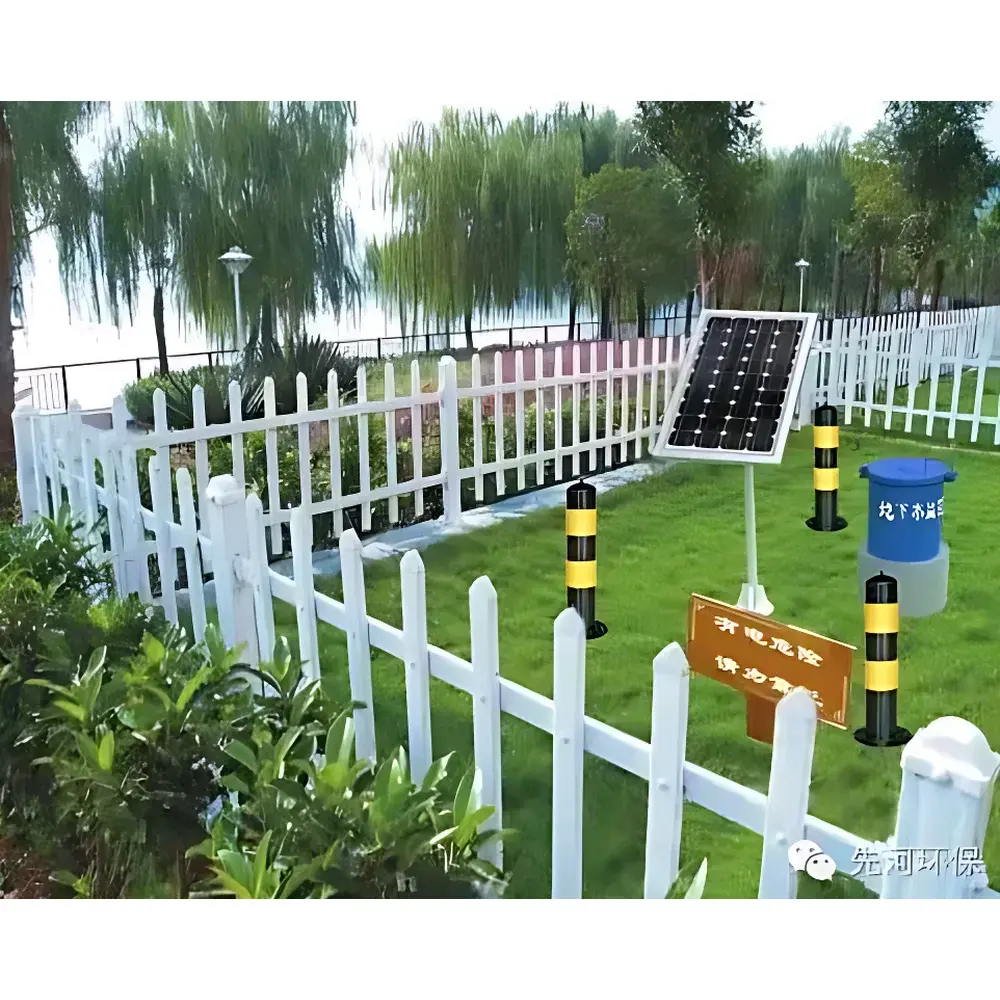
SAIL HERO Groundwater Automatic Monitoring System
| Brand | SAIL HERO |
|---|---|
| Origin | Hebei, China |
| Manufacturer Type | Manufacturer |
| Origin Category | Domestic |
| Model | Groundwater Automatic Monitoring System |
| Price Range | USD 42,000 – 70,000 |
Overview
The SAIL HERO Groundwater Automatic Monitoring System is an integrated, solar-powered, in-situ environmental monitoring platform engineered for long-term, unattended operation in remote or off-grid groundwater monitoring wells. It employs a submersible, reagent-free multi-parameter water quality probe—designed specifically for continuous deployment in saturated zones—to measure critical hydrochemical parameters including water level (via pressure transducer), electrical conductivity (EC), pH, oxidation-reduction potential (ORP), dissolved oxygen (DO), temperature, turbidity, and optionally nitrate or chloride via ion-selective electrodes. The system operates on the principle of real-time physical–electrochemical sensing combined with hydrostatic pressure-based level determination, enabling simultaneous assessment of both hydraulic and geochemical dynamics. Its architecture supports regulatory-grade data acquisition at configurable intervals (15 min to 24 h), with timestamped, calibrated measurements traceable to NIST-traceable reference standards. Designed for compliance with national groundwater monitoring guidelines—including China’s HJ 164-2020 and aligned with international frameworks such as ISO 5667-11 (water sampling) and ASTM D5092 (groundwater monitoring well design)—the system delivers foundational data for aquifer vulnerability assessment, contaminant plume tracking, and source water protection planning.
Key Features
- Solar-battery hybrid power system with intelligent charge management, enabling >12 months of autonomous operation under typical insolation conditions in temperate continental climates
- Submersible multi-parameter sensor module rated IP68, with corrosion-resistant titanium housing and ceramic diaphragm pressure transducers for long-term stability in aggressive groundwater matrices
- Wireless telemetry via LTE-M/NB-IoT or LoRaWAN, supporting encrypted bidirectional communication (MQTT/CoAP protocols) for remote firmware updates and sensor configuration
- Onboard data logger with 16 GB internal flash memory and automatic local buffering during network outages; data retention exceeds 18 months at 15-minute sampling resolution
- Modular probe design allows field-swappable sensors without recalibration; factory calibration certificates provided per sensor channel, compliant with ISO/IEC 17025 requirements
- Environmental hardening: operating temperature range −20 °C to +60 °C; anti-fouling coating on optical and electrochemical surfaces reduces maintenance frequency in high-organic or iron-rich aquifers
Sample Compatibility & Compliance
The system is validated for use in unconfined and confined aquifers across diverse lithologies (sand, gravel, fractured bedrock, clay–silt interbeds). Sensor response characteristics are characterized for common groundwater constituents including Fe²⁺/Fe³⁺, Mn²⁺, H₂S, humic acids, and colloidal iron oxyhydroxides. All electronic components meet IEC 60529 (IP68) and IEC 61000-4 electromagnetic immunity standards. Data integrity protocols conform to GLP principles: full audit trail (user actions, calibration events, data edits), digital signatures, and time synchronization via NTP or GPS. Optional FDA 21 CFR Part 11-compliant software modules available for regulated environments requiring electronic records and signature validation.
Software & Data Management
The system integrates with SAIL HERO’s cloud-based Water Intelligence Platform (WIP), accessible via secure HTTPS portal or RESTful API. WIP provides automated QA/QC flagging (e.g., drift detection, sensor saturation, temporal consistency checks), configurable alerting (SMS/email/webhook) based on user-defined thresholds, and GIS-enabled spatial visualization of multi-well networks. Raw sensor data are stored in Parquet format with embedded metadata (sensor ID, calibration date, depth, well construction details). Export options include CSV, NetCDF, and WaterML 2.0 for interoperability with national monitoring databases (e.g., China’s National Groundwater Monitoring Network) and third-party modeling tools (MODFLOW, PHREEQC). Audit logs record all data access, modification, and export events for regulatory review.
Applications
- Long-term trend analysis of groundwater level decline or recovery in response to climate variability and abstraction pressures
- Early warning detection of contamination events from landfills, industrial sites, or agricultural runoff using multi-parameter anomaly detection algorithms
- Supporting managed aquifer recharge (MAR) projects through real-time monitoring of infiltration efficiency and water quality evolution
- Validation of numerical groundwater flow and transport models with high-resolution field observations
- Compliance monitoring for Class II and III groundwater protection zones under national environmental protection statutes
- Baseline characterization prior to infrastructure development (e.g., rail corridors, pipeline routes) in accordance with EIA requirements
FAQ
What is the maximum deployment depth for the submersible probe?
Standard configuration supports up to 100 m below ground surface; custom pressure ranges available upon request.
Can the system operate in saline or brackish groundwater?
Yes—the EC sensor is calibrated for 0–100 mS/cm range, and ORP/pH electrodes feature double-junction reference systems resistant to chloride interference.
Is remote calibration possible?
Field calibration requires physical access; however, zero/span verification and diagnostic self-tests can be initiated remotely via command interface.
How is data security ensured during wireless transmission?
All communications use TLS 1.2+ encryption; device authentication employs X.509 certificates; no credentials are stored in plaintext on the edge device.
Does the system support integration with SCADA or existing municipal water management platforms?
Yes—through standardized OPC UA and MQTT interfaces, with documented data mapping templates for common SCADA vendors (Siemens Desigo, Schneider EcoStruxure, Honeywell Experion).
Related Products







