
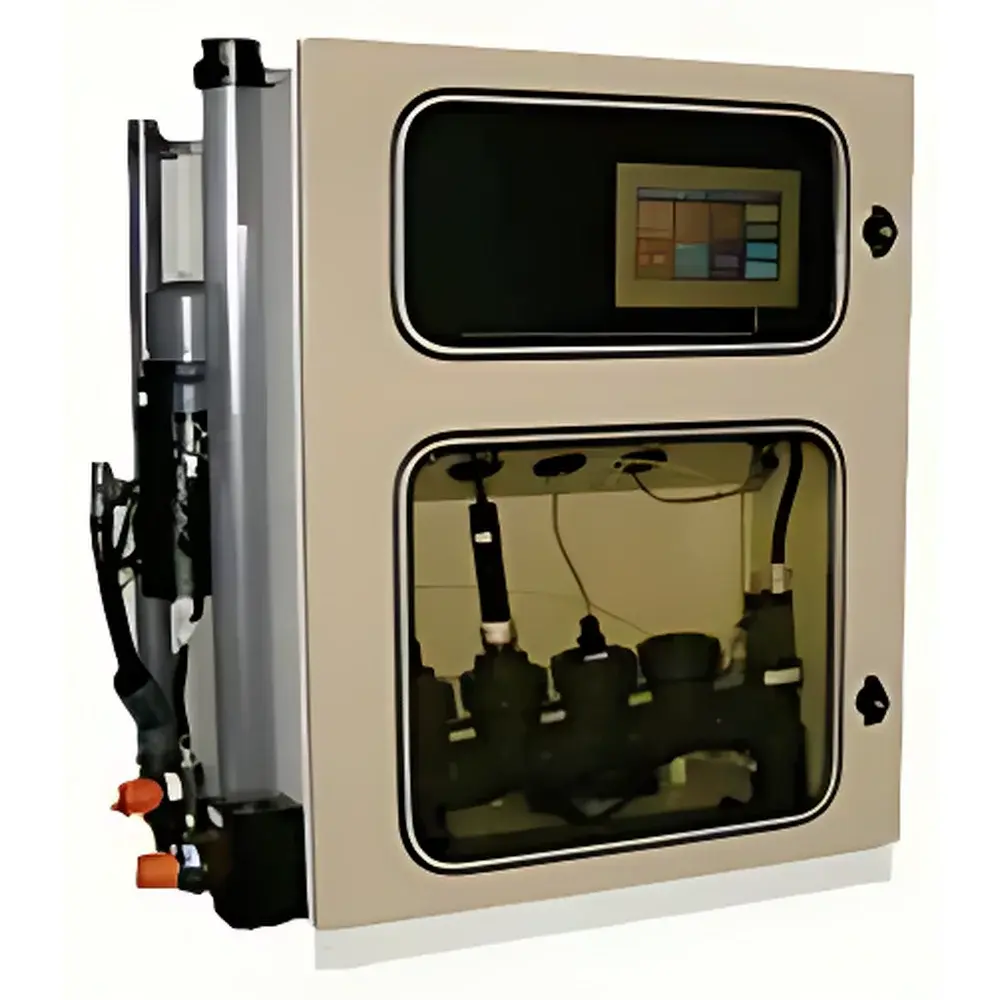
SAIL HERO SERES 2000 Multi-Parameter Online Water Quality Analyzer
| Brand | SAIL HERO |
|---|---|
| Origin | France |
| Manufacturer | SAIL HERO Environmental Technology Co., Ltd. |
| Product Type | Imported Online Water Quality Analyzer |
| Model | SERES 2000 |
| Measurement Parameters | Temperature, Dissolved Oxygen (DO), pH, Electrical Conductivity (EC), Turbidity |
| Measurement Principles | pH – Glass Electrode Method |
| Operating Environment | 0–40 °C, IP65 Enclosure |
| Power Supply | 24 VDC / 220 VAC Optional |
| Output Interfaces | RS485 Modbus RTU, 4–20 mA Analog Outputs (per parameter), Ethernet (optional) |
| Compliance | ISO 7027 (turbidity), ISO 5814 (DO), ASTM D1293 (pH), ASTM D5391 (conductivity), EN ISO 5667-22 (online monitoring) |
Overview
The SAIL HERO SERES 2000 Multi-Parameter Online Water Quality Analyzer is an engineered solution for continuous, real-time monitoring of critical physicochemical parameters in potable water distribution systems, surface water bodies, and pre-treatment influent streams. Built upon a modular sensor architecture and grounded in internationally recognized measurement principles, the SERES 2000 implements five core parameters—temperature, dissolved oxygen (DO), pH, electrical conductivity (EC), and turbidity—within a single, compact, field-deployable platform. Its operational foundation relies on standardized physical methods: pH is determined via high-stability glass electrode potentiometry compliant with ASTM D1293; temperature is measured using calibrated Pt1000 or NTC thermistors traceable to ITS-90; EC employs a four-electrode conductivity cell to eliminate polarization errors and ensure accuracy across wide salinity ranges (ASTM D5391); DO utilizes optical fluorescence quenching—a drift-free, membrane-less technique meeting ISO 5814 requirements for long-term stability and minimal maintenance; and turbidity follows the 90° light scattering principle per ISO 7027, using an 860 nm infrared LED to minimize color interference and enhance reproducibility in colored or organically rich waters.
Key Features
- Integrated multi-sensor design housed in a chemically resistant, IP65-rated stainless steel enclosure optimized for outdoor and wet-location deployment
- Independent measurement chambers for each sensor to prevent cross-contamination and enable simultaneous, non-interfering readings
- Self-diagnostic firmware with real-time status reporting—including sensor health, calibration validity, signal integrity, and power stability—via embedded event logging
- Low-power electronics architecture featuring galvanically isolated analog outputs and RS485 Modbus RTU communication, ensuring electromagnetic compatibility in industrial SCADA environments
- Extended sensor service life: pH electrodes with double-junction reference system (>12 months typical in drinking water), fluorescence-based DO sensors with >24-month photodiode and LED lifetime, and turbidity optics with anti-fouling hydrophobic coating
- Minimal consumables and no reagents required—reducing total cost of ownership and eliminating chemical handling hazards
Sample Compatibility & Compliance
The SERES 2000 is validated for use with low-turbidity (<100 NTU), low-conductivity (<2,000 µS/cm), and near-neutral pH (6.0–8.5) aqueous matrices typical of municipal drinking water supplies and clean surface water sources (e.g., reservoirs, rivers upstream of intakes). It complies with EN ISO 5667-22 for performance criteria of online water quality monitoring systems and supports audit-ready data integrity through time-stamped measurement records. All sensor modules are CE-marked and conform to EMC Directive 2014/30/EU and Low Voltage Directive 2014/35/EU. The system supports GLP/GMP-aligned operation when configured with optional secure data logging and user-access controls.
Software & Data Management
The analyzer interfaces natively with industry-standard SCADA and telemetry platforms via Modbus RTU over RS485. Optional Ethernet connectivity enables integration with cloud-based water intelligence platforms using MQTT or HTTP(S) protocols. Local configuration and diagnostics are performed via a web-based interface accessible through any modern browser—no proprietary software installation required. All measurements include embedded timestamps, sensor-specific metadata (e.g., calibration date, slope, offset), and diagnostic flags. Data export supports CSV and JSON formats, and historical logs retain ≥30 days of second-resolution data onboard. For regulated environments, optional firmware extensions support FDA 21 CFR Part 11-compliant electronic signatures and audit trails.
Applications
- Real-time surveillance of drinking water quality at treatment plant effluent points and distribution network nodes
- Early-warning detection of contamination events (e.g., pH shifts indicating acid intrusion, DO depletion signaling organic loading)
- Compliance monitoring for national and regional regulatory frameworks including EU Drinking Water Directive (2020/2184) and China’s GB 5749-2022
- Performance verification of UV disinfection units via correlated turbidity and UV transmittance estimation
- Baseline characterization and trend analysis in watershed management programs and source water protection initiatives
FAQ
What is the recommended calibration frequency for each parameter?
pH and conductivity sensors require quarterly two-point calibration under routine operation; DO and turbidity sensors typically maintain accuracy for 6–12 months without recalibration in stable drinking water matrices, though verification against certified standards is advised before critical compliance reporting.
Can the SERES 2000 operate unattended for extended periods?
Yes—the system is designed for autonomous operation up to 12 months between routine maintenance interventions, supported by self-diagnostics, low-power electronics, and robust sensor materials suitable for ambient outdoor conditions.
Is remote firmware update capability available?
Firmware updates can be performed remotely via secure HTTPS or local USB, with version rollback and checksum validation to ensure integrity and traceability.
Does the analyzer support alarm output for out-of-specification conditions?
Yes—configurable digital relay outputs and Modbus register flags trigger on user-defined thresholds for any measured parameter, enabling direct integration with PLCs or audible/visual alert systems.
How is sensor fouling mitigated in long-term deployments?
Turbidity optics feature hydrophobic anti-fouling coatings; pH and conductivity sensors incorporate automatic cleaning cycles via integrated air-pulse or mechanical wiper options (accessory); DO sensing elements are inherently immune to biofouling due to optical measurement principle.







