
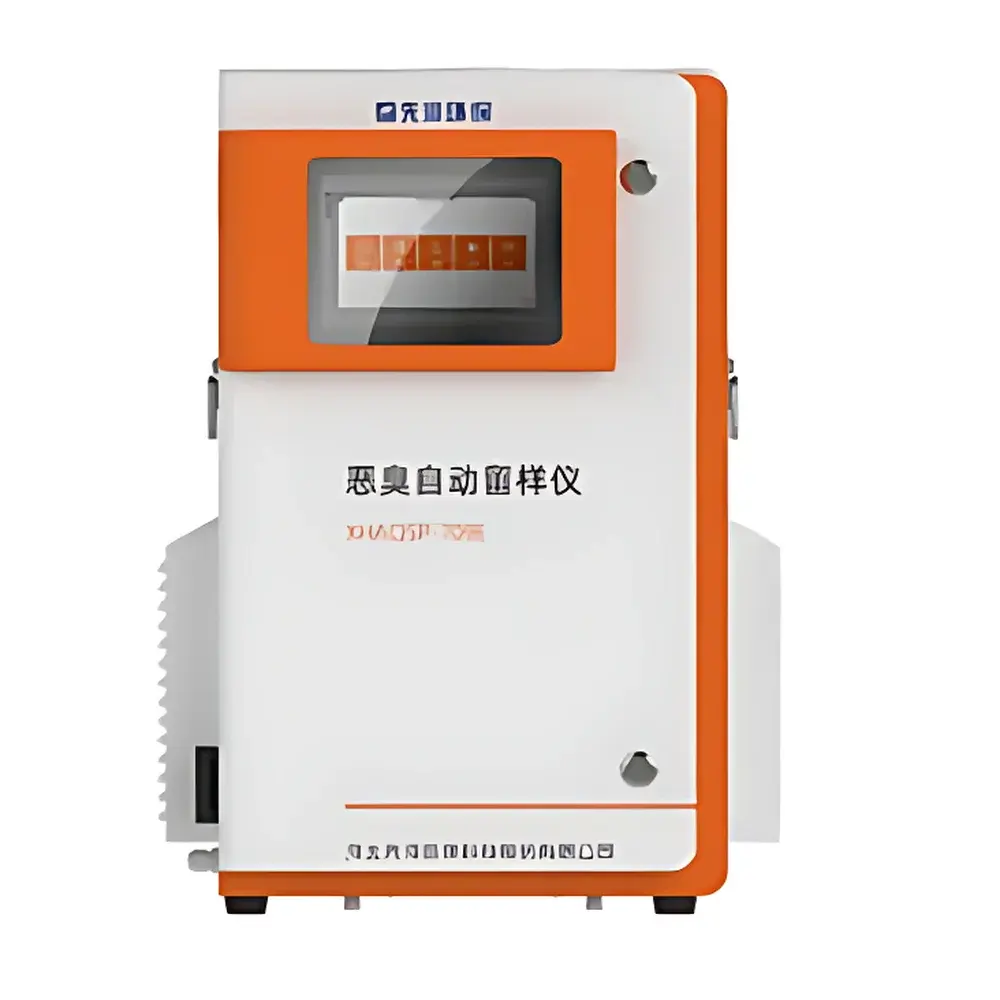
SAIL HERO XHAQSP-709E Automated Odor Sample Retention System
| Brand | SAIL HERO |
|---|---|
| Origin | Hebei, China |
| Manufacturer Type | Direct Manufacturer |
| Product Category | Domestic |
| Model | XHAQSP-709E |
| Instrument Type | Online |
| Detection Principle | Multi-sensor Array (Electrochemical, Metal Oxide Semiconductor, Photoionization Detector PID) |
| Sampling Method | Negative-pressure Vacuum Sampling |
| Sample Container | Polyester Gas Sampling Bags (Low Adsorption, Low Permeability, Low VOC Background) |
| Deployment Flexibility | Ambient Air or Integrated Monitor Inlet Sampling |
| Bag Capacity & Quantity | Configurable (Standard Options: 1–6 bags × 0.5–3 L each) |
| Compliance Context | Designed to support GB/T 14675–2023, GB/T 14678–1993, HJ 905–2017, and ISO 16000-6 for odor sample integrity and traceability |
Overview
The SAIL HERO XHAQSP-709E Automated Odor Sample Retention System is an online-integrated environmental sampling platform engineered for regulatory-grade retention of malodorous and hazardous gaseous emissions. It operates on a negative-pressure vacuum sampling principle, ensuring zero positive-pressure contact between the sample stream and internal components—thereby eliminating cross-contamination risks and preserving chemical integrity during capture. Unlike passive grab samplers or time-weighted integrators, the XHAQSP-709E is designed as a triggered retention system: it initiates sample collection upon real-time concentration exceedance (via upstream odor monitoring instruments) or upon remote command via Modbus TCP or RS-485 protocol. This enables precise temporal correlation between field measurement events and retained samples—critical for forensic odor source attribution, laboratory confirmation analysis, and human olfactometry validation per national standard methods.
Key Features
- Negative-pressure sampling architecture with inert PTFE-lined tubing and stainless-steel flow path—prevents adsorption loss and catalytic degradation of sulfur compounds, amines, volatile organic sulfur species (VOS), and short-chain carboxylic acids.
- Modular polyester gas sampling bags (certified per ASTM D5466 and ISO 16000-6) featuring <0.5 ng/L background VOC emission, <1×10⁻⁹ cm³·cm/cm²·s·Pa permeability for H₂S and NH₃, and <0.1% adsorption loss for thiols at 1 ppb levels.
- Configurable bag station supporting 1 to 6 independent sampling bags; individual bag volumes selectable from 0.5 L to 3.0 L—optimized for dilution requirements in dynamic olfactometry (e.g., EN 13725:2022) and GC-MS quantification workflows.
- Dual-sampling mode: direct ambient air intake (with integrated particulate and moisture filtration) or seamless integration with upstream SAIL HERO odor analyzers (e.g., XH-Odor 3000 series) via standardized 6 mm OD sampling interface.
- Onboard event logging with UTC timestamping, bag ID tracking, pressure/temperature monitoring, and failure diagnostics—all stored in non-volatile memory with optional SD card backup for audit trail compliance.
Sample Compatibility & Compliance
The XHAQSP-709E maintains sample fidelity for key odorants regulated under Chinese national standards: hydrogen sulfide (GB/T 14678–1993), ammonia (GB/T 14675–2023), methyl mercaptan, dimethyl sulfide, trimethylamine, and volatile fatty acids. Its sampling bag material and flow path meet ISO 16000-6 requirements for low-emission sampling media and are validated for compatibility with EN 13725:2022 dynamic dilution olfactometry protocols. The system supports full chain-of-custody documentation required under HJ 905–2017 (Environmental Odor Monitoring Technical Specification) and aligns with GLP principles for sample handling traceability—including operator ID, trigger condition, ambient T/P, and bag seal verification timestamps.
Software & Data Management
The embedded firmware supports dual communication modes: local configuration via 4.3-inch capacitive touchscreen (with password-protected admin access), and remote supervision via Ethernet or optional 4G LTE module. All sampling events—including trigger type (threshold-based or manual), bag assignment, start/stop times, and environmental parameters—are exported in CSV format compliant with EPA Method TO-15 metadata conventions. Optional integration with SAIL HERO’s Centralized Environmental Data Platform (CEDP) enables automated linkage between real-time odor index values and corresponding retained samples—facilitating root-cause analysis and regulatory reporting under China’s “Dual Control” emission management framework.
Applications
- Fixed-source emission monitoring at wastewater treatment plants, composting facilities, rendering plants, and petrochemical refineries—where episodic odor spikes require forensic sample archiving.
- Boundary-line (fenceline) monitoring in industrial parks to correlate off-site odor complaints with on-site process events and retained analytical evidence.
- Urban ambient odor mapping campaigns—deployed alongside mobile odor monitoring units to archive representative samples during high-odor episodes for subsequent GC-MS or sensory panel evaluation.
- Method validation studies comparing instrumental odor index outputs against EN 13725-compliant olfactometric results—leveraging retained samples for inter-laboratory round-robin testing.
FAQ
What standards does the XHAQSP-709E support for odor sample retention?
It complies with sampling integrity requirements in GB/T 14675–2023, HJ 905–2017, and ISO 16000-6, and enables downstream analysis per EN 13725:2022 and US EPA Method TO-15.
Can the system retain samples during power interruption?
Yes—the internal supercapacitor buffer sustains critical control functions for ≥120 seconds, allowing safe bag sealing and data write-back before shutdown.
Is bag replacement possible in the field without tools?
Yes—each bag mount uses a quick-release bayonet coupling; full swap takes <60 seconds with no calibration revalidation required.
Does the system support third-party analyzer integration?
Yes—via analog 4–20 mA alarm output, digital dry-contact relay, or Modbus RTU/TCP for triggering from external gas analyzers or SCADA systems.
How is sample contamination prevented during long-term deployment?
All wetted surfaces use electropolished 316L SS and fluoropolymer seals; the negative-pressure design ensures no ambient air ingress, and automatic purge cycles (configurable) clear residual vapor between sampling events.
Related Products







