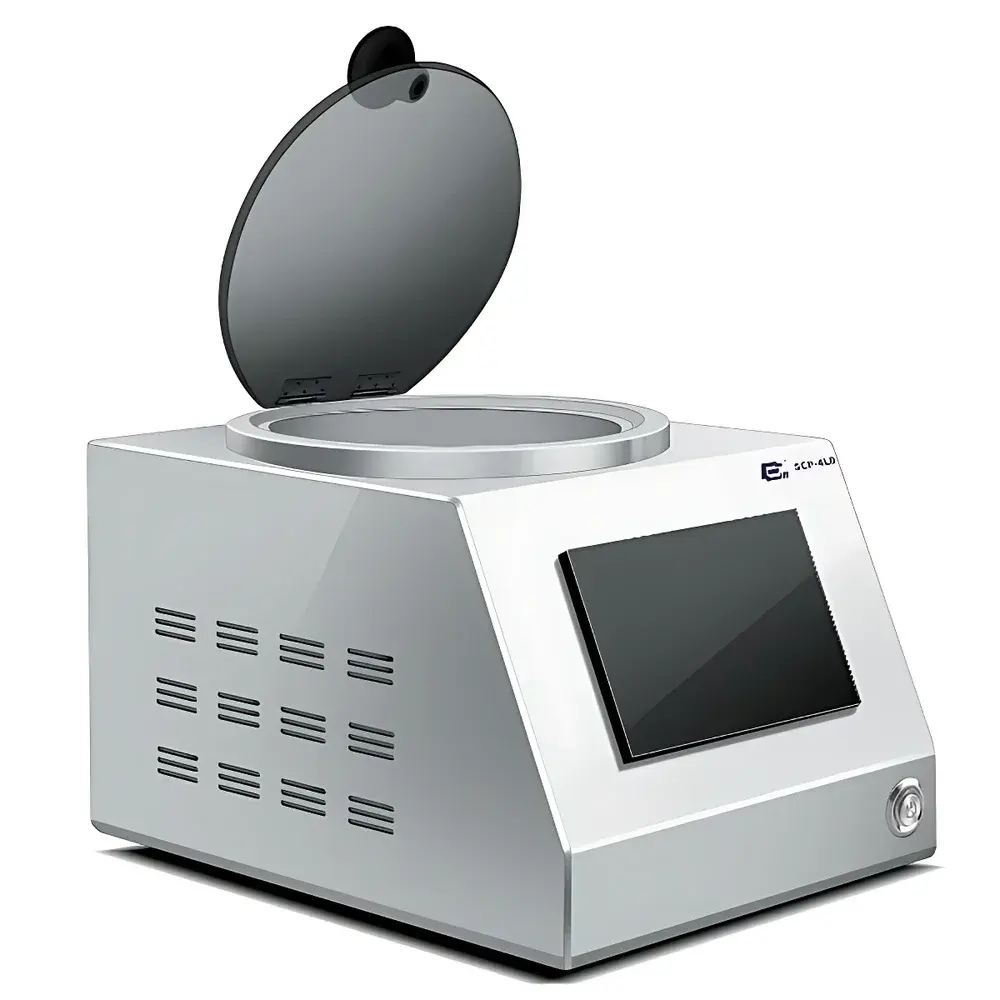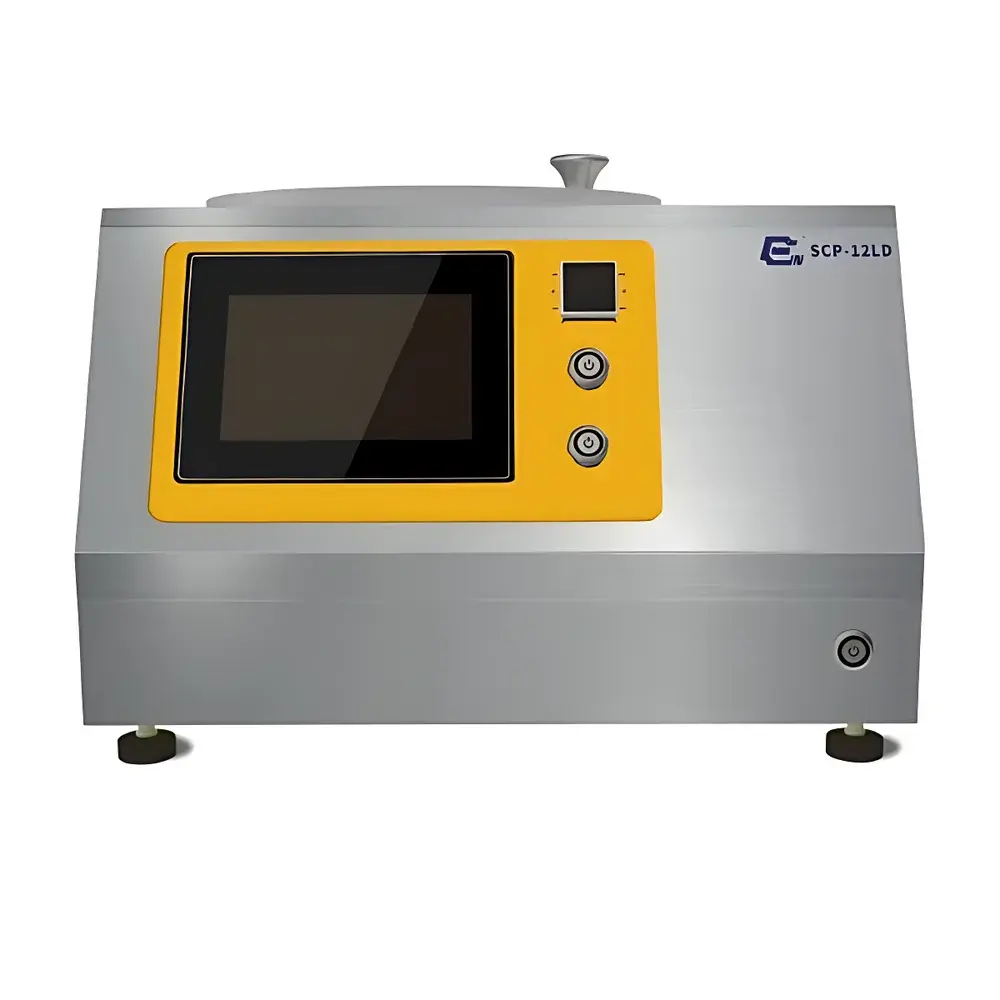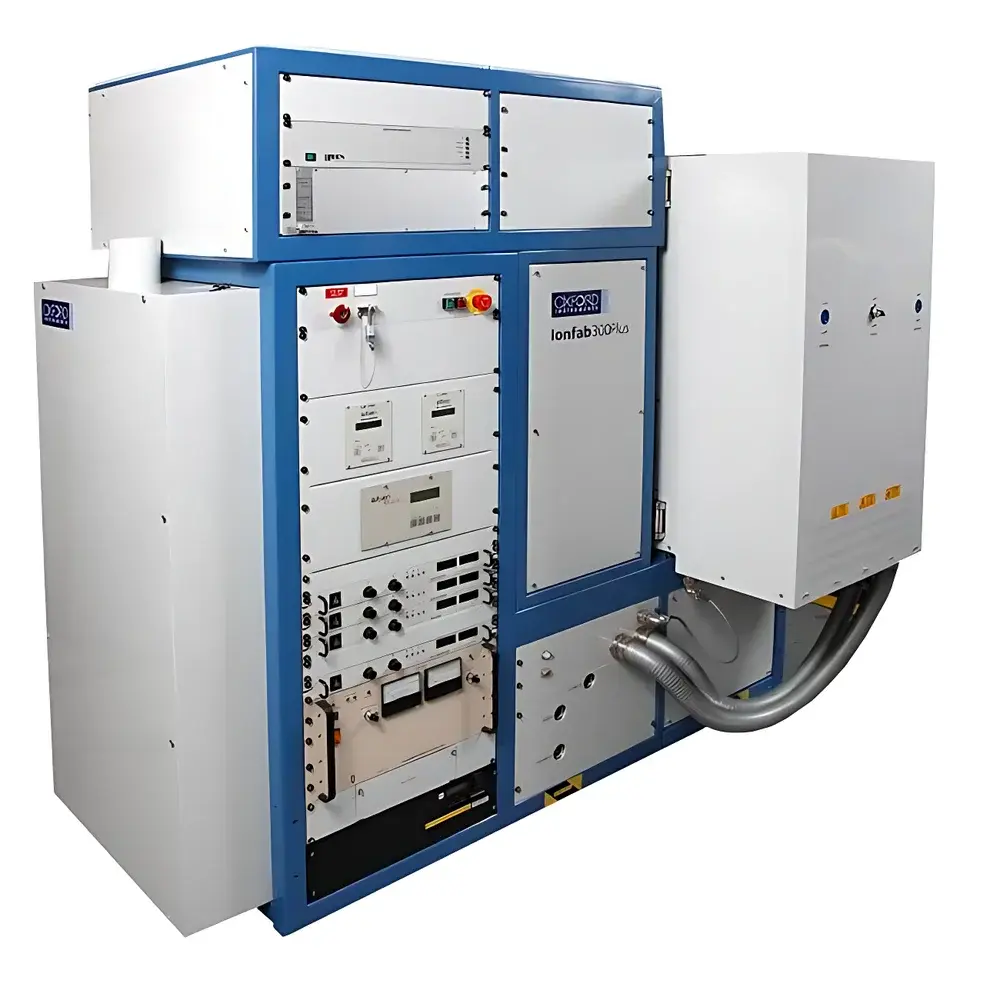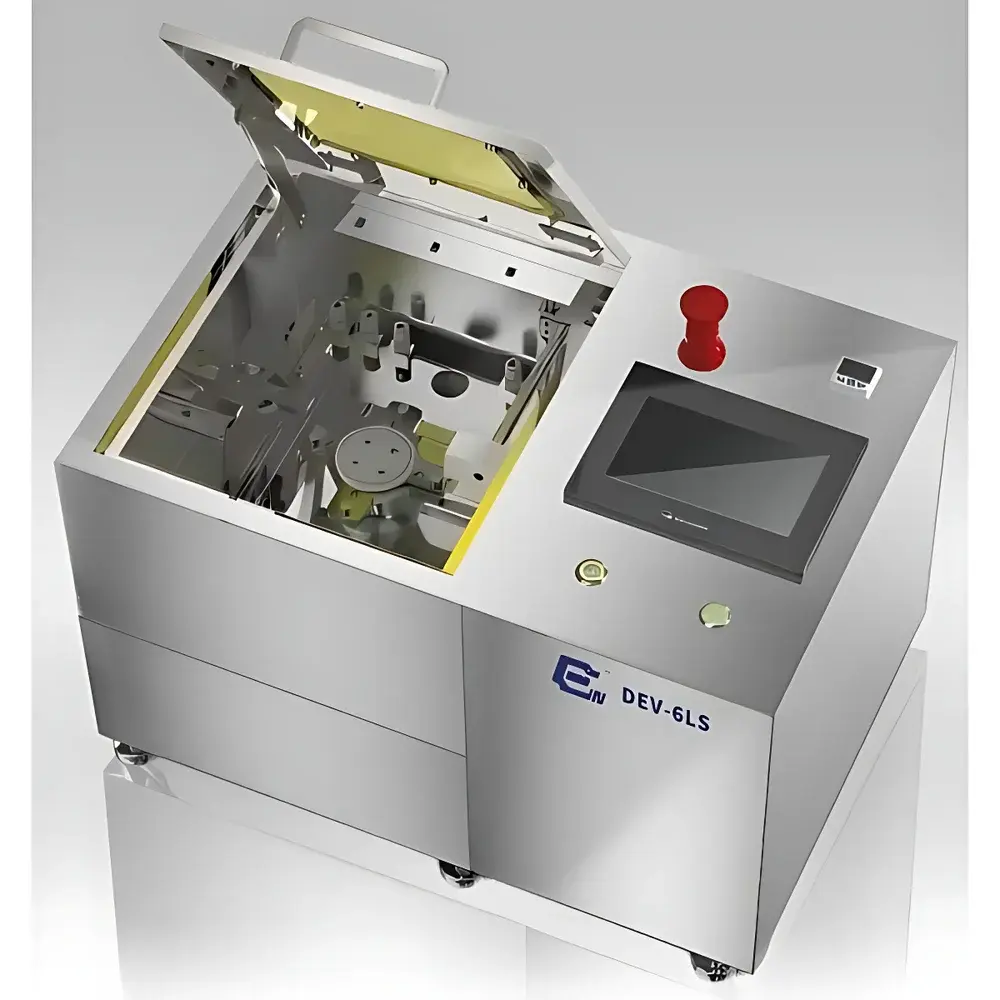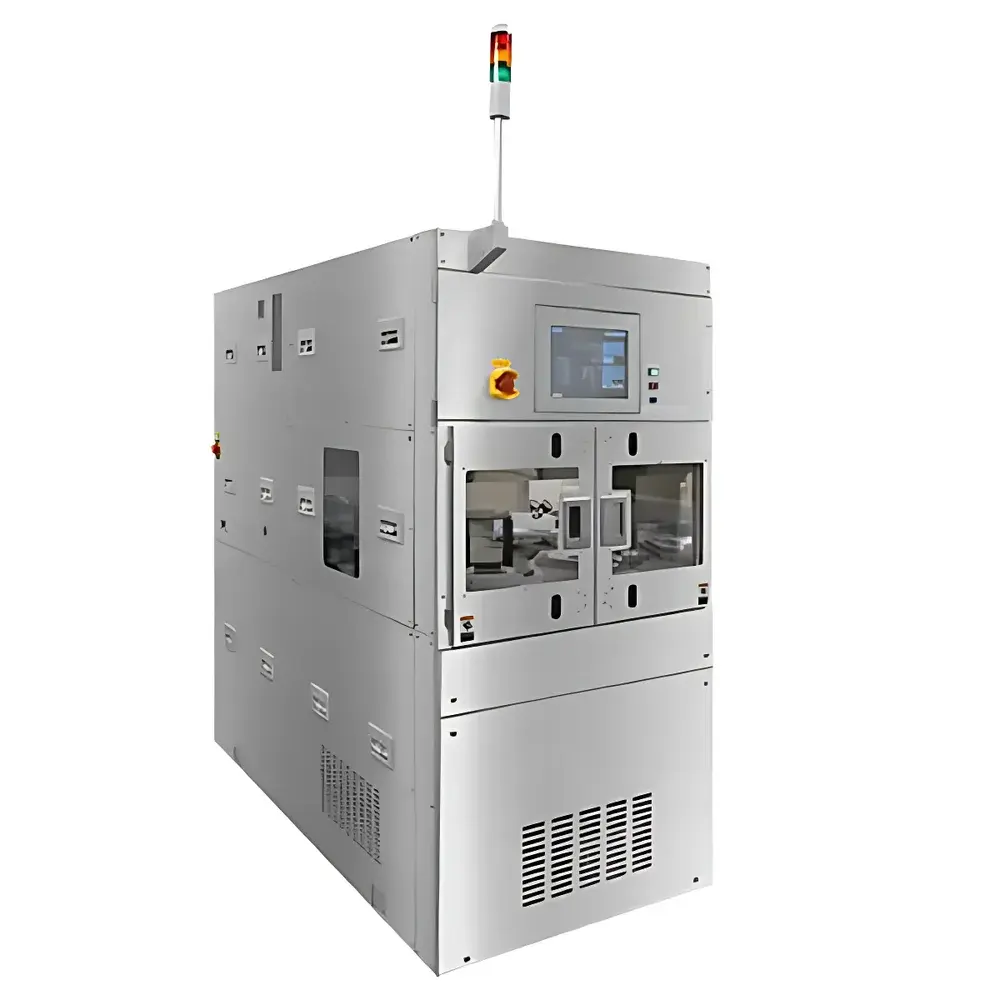
SAMCO RIE-200C Reactive Ion Etching System
| Brand | SAMCO |
|---|---|
| Origin | Japan |
| Model | RIE-200C |
| Etching Principle | Capacitively Coupled Plasma (CCP) Reactive Ion Etching |
| Uniformity | ±2% across 200 mm wafer |
| Configuration | Direct-Load, Parallel-Plate Electrode Architecture |
| Upgrade Options | Endpoint Detection, High-Capacity Vacuum Pumping, Load Lock Integration, Multi-Gas Delivery System |
| Control Architecture | Client-Server Software with PLC-Based Real-Time Hardware Control |
| Compliance | Designed for ISO Class 5 cleanroom integration and compatible with SEMI S2/S8 safety standards |
Overview
The SAMCO RIE-200C Reactive Ion Etching System is a compact, direct-load, capacitively coupled plasma (CCP) etcher engineered for high-precision dry etching of microelectronic and MEMS substrates up to 200 mm in diameter. Based on a parallel-plate electrode configuration, the system generates directional ion bombardment and chemically active neutral species under controlled RF power (13.56 MHz), enabling anisotropic material removal with sub-micron critical dimension control. Its design balances process fidelity—commonly required in R&D, pilot-line fabrication, and low-volume production—with operational efficiency and footprint optimization. The RIE-200C operates in the medium-vacuum range (typically 1–100 mTorr), supporting both physical sputtering and chemical etching mechanisms depending on gas chemistry (e.g., CF4, SF6, O2, Cl2, BCl3). It is not intended for high-throughput manufacturing but rather for applications demanding reproducible, recipe-driven etch performance under GLP-aligned laboratory conditions.
Key Features
- Direct-load chamber architecture minimizes particle generation and reduces cycle time between wafers without requiring vacuum break.
- Parallel-plate RF electrode assembly with grounded lower electrode and powered upper electrode ensures stable plasma ignition and uniform power coupling.
- Integrated 13.56 MHz RF generator with impedance-matching network optimized for 200 mm substrate processing.
- Modular gas delivery system supporting up to four independently mass-flow-controlled gas lines with digital valve actuation.
- High-reliability programmable logic controller (PLC) providing deterministic real-time sequencing, interlock monitoring, and fault logging compliant with IEC 61508 functional safety principles.
- Front-panel emergency stop, pressure interlocks, RF power cutoff, and door-safety switches aligned with SEMI S2-0216 and S8-0716 requirements.
Sample Compatibility & Compliance
The RIE-200C accommodates bare and patterned wafers (Si, SiO2, SiNx, GaAs, InP, AlGaN, quartz, fused silica, polyimide, and thin-film metals including Al, Ti, Ni, and Cr). Substrate clamping is achieved via electrostatic or mechanical means depending on configuration. Process uniformity of ±2% (1σ) is verified using blanket etch rate mapping per ASTM F1937–22. The system meets electromagnetic compatibility (EMC) requirements per CISPR 11 Group 1, Class A and is certified for use in ISO Class 5 (Class 100) cleanrooms. All software operations support audit trail generation, user-level access control, and electronic signature capability—enabling alignment with FDA 21 CFR Part 11 when deployed in regulated development environments.
Software & Data Management
Control is executed via SAMCO’s proprietary SIA (System Integration Architecture) software—a client-server application built on Windows OS with native OPC UA connectivity. The GUI provides real-time display of chamber pressure, RF forward/reflected power, gas flow rates, and substrate temperature (via optional thermocouple or pyrometer interface). Recipes are structured hierarchically (process → step → parameter set) and stored in encrypted SQLite databases with SHA-256 hashing. All process events—including start/stop timestamps, parameter deviations, alarm triggers, and manual overrides—are logged with millisecond resolution. Data export supports CSV, XML, and HDF5 formats; historical logs can be queried via SQL-based reporting tools integrated into the server module.
Applications
- Development of silicon-based MEMS structures (e.g., accelerometers, gyroscopes, micromirrors) requiring high aspect-ratio etching in Bosch or cryogenic processes.
- Device prototyping for compound semiconductor photonics (e.g., ridge waveguides in InP, etched facets for laser diodes).
- Maskless patterning of dielectric layers (SiO2, SiNx) for CMOS-compatible back-end-of-line (BEOL) integration studies.
- Surface functionalization and resist stripping using O2/Ar plasma prior to metallization or bonding steps.
- Research into novel 2D material (MoS2, h-BN) etch selectivity and damage mitigation under low-bias RIE conditions.
FAQ
What wafer sizes does the RIE-200C support?
The system is configured for 100 mm, 150 mm, and 200 mm wafers; chuck and shielding components are mechanically interchangeable without tool downtime.
Is endpoint detection available as a factory option?
Yes—optical emission spectroscopy (OES) with wavelength range 200–800 nm and 0.5 nm resolution is offered as an upgrade, with real-time spectral acquisition synchronized to RF phase.
Can the RIE-200C operate under automated cluster tool integration?
It supports SECS/GEM communication via RS-232 or Ethernet TCP/IP; hardware-level handshake signals (start, ready, error) are provided through opto-isolated I/O ports.
What maintenance intervals are recommended for the RF matching network?
Capacitor calibration and vacuum feedthrough inspection are scheduled every 500 operating hours; full RF subsystem validation is performed annually per SAMCO Technical Bulletin TB-RIE-200C-MNT-03.
Does the system include compliance documentation for EU CE marking?
Yes—the delivered package includes Declaration of Conformity (DoC), risk assessment report per ISO 14121-1, and test reports from a Notified Body accredited to EN 61000-6-2/6-4 and EN 61000-6-3.