
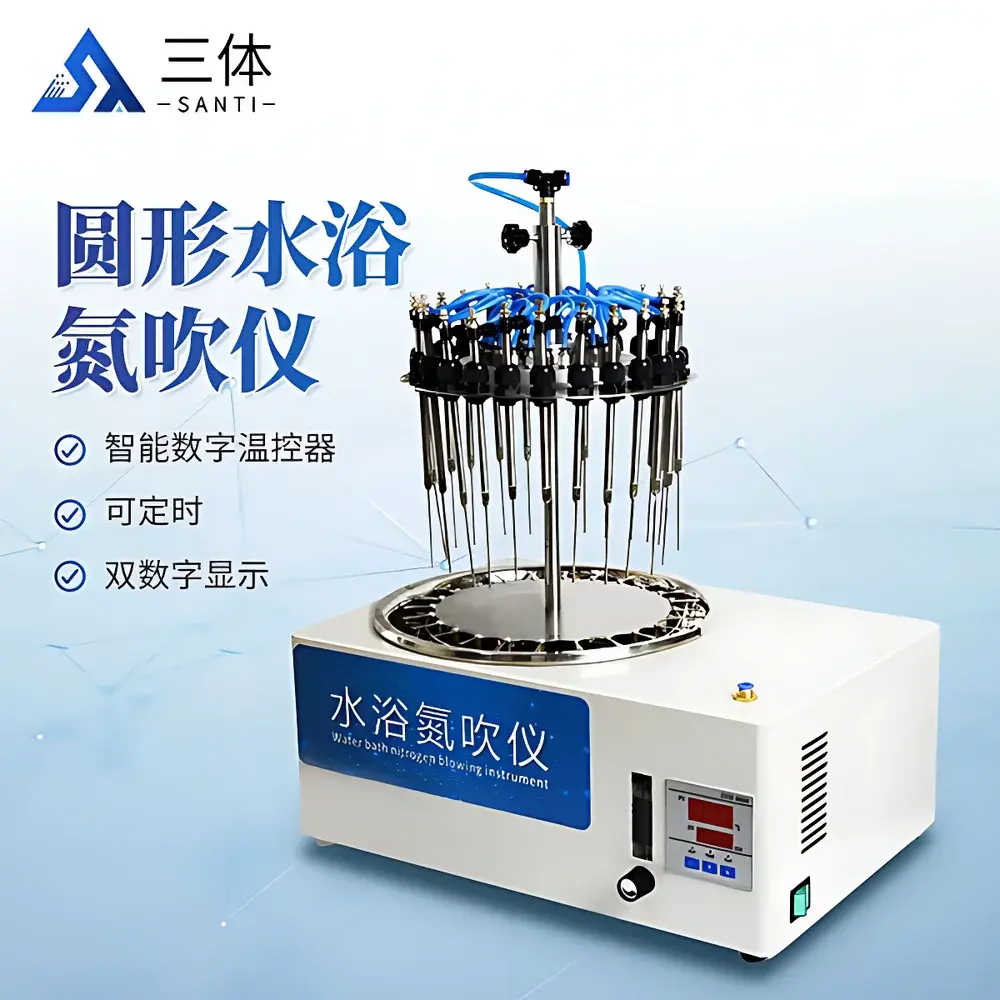
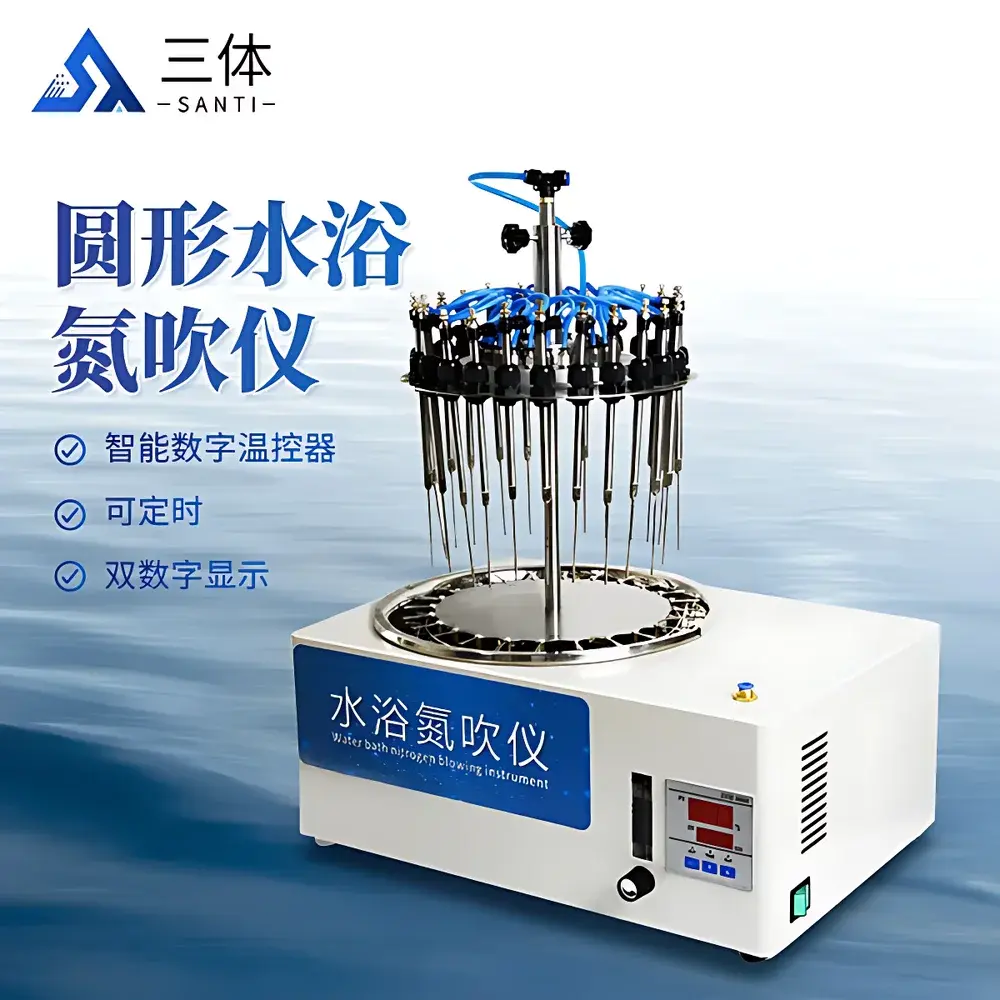
Santiyiqi ST-D12SY Circular Water Bath Nitrogen Evaporator
| Brand | Santiyiqi |
|---|---|
| Origin | Shandong, China |
| Manufacturer Type | Direct Manufacturer |
| Product Origin | Domestic (China) |
| Model | ST-D12SY |
| Heating Method | Water Bath Heating |
| Sample Capacity | 12-position |
| Construction Material | Stainless Steel (304) |
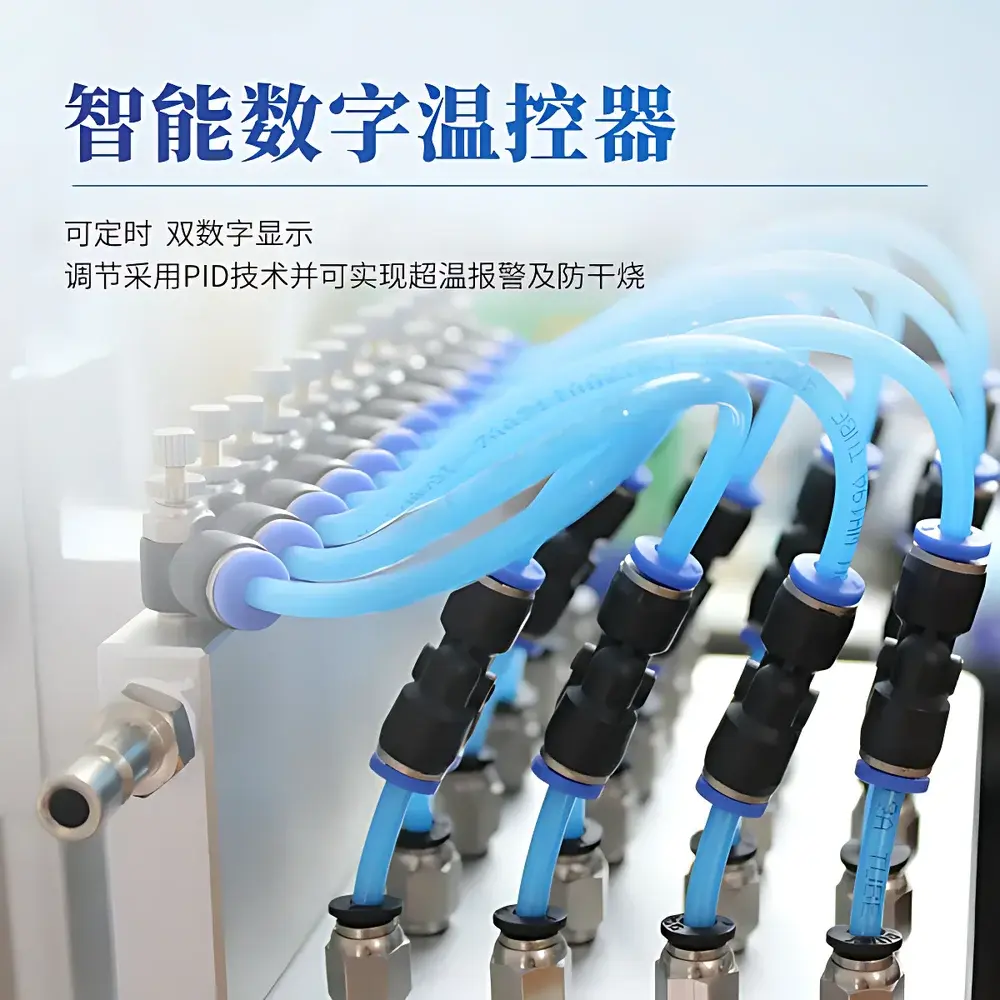
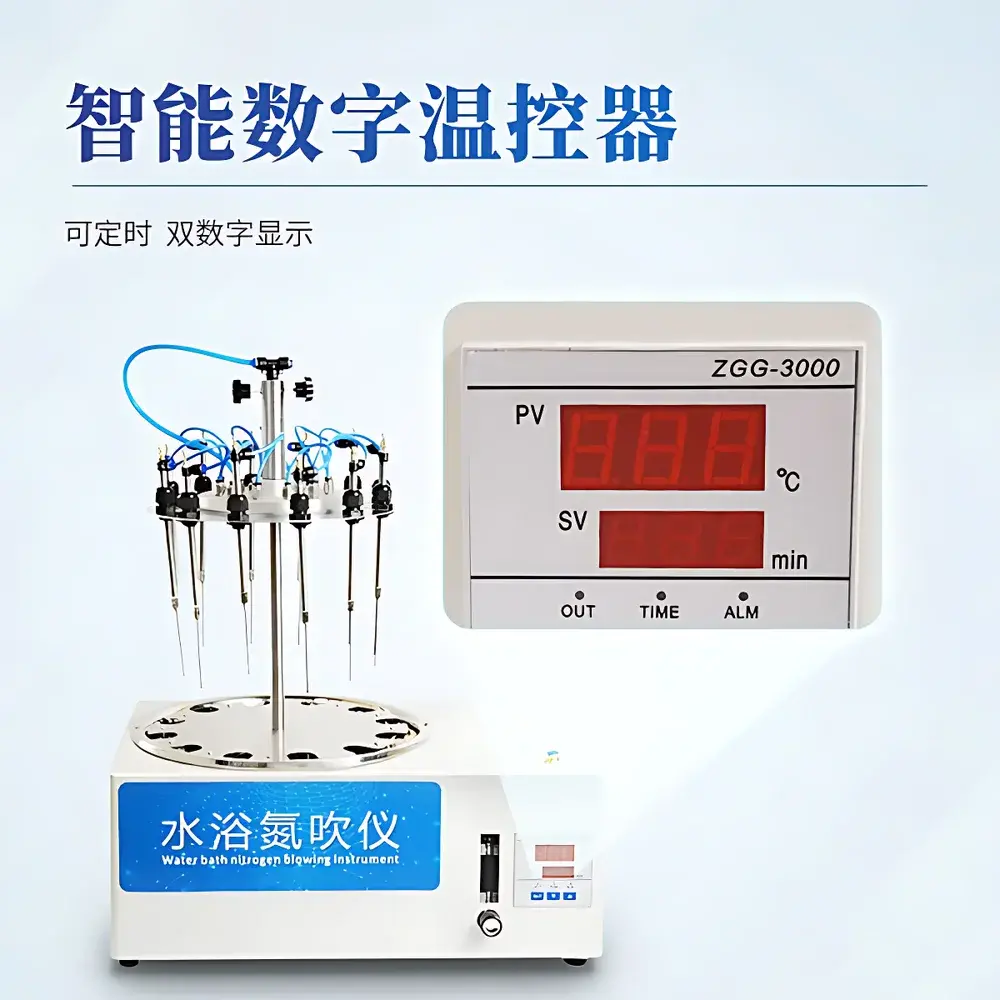
| Temperature Control | PID Digital Controller with Dual LED Display, Timer Function, Over-Temperature Alarm & Dry-Run Protection |
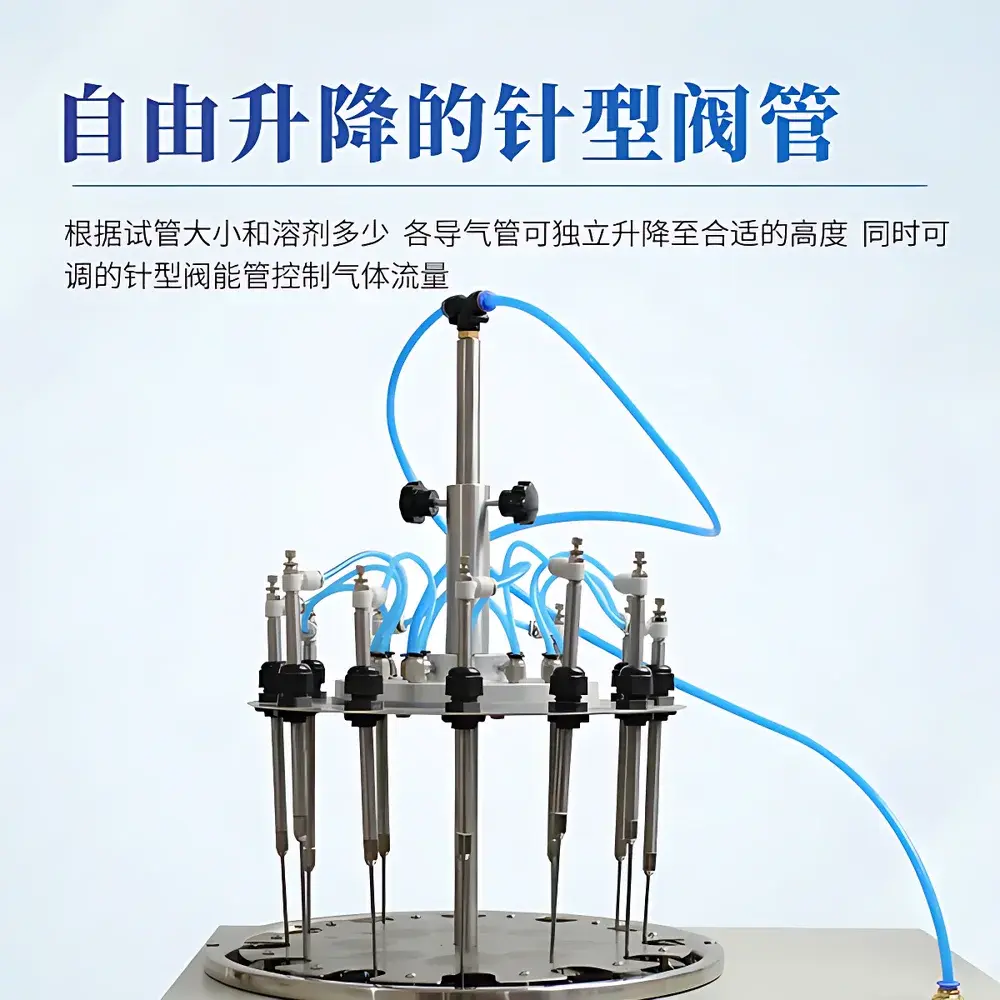
| Gas Flow Control | Individual Adjustable Needle Valve per Channel |
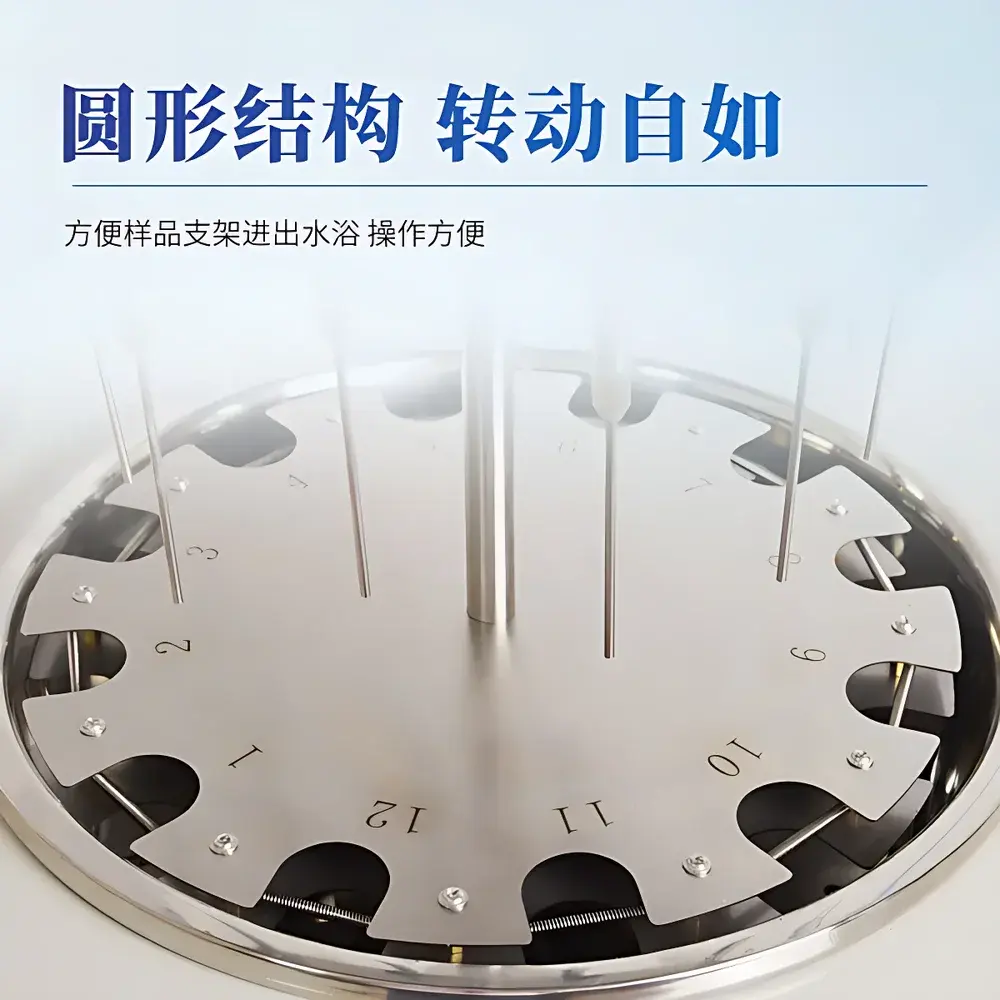
| Sample Holder | Spring-Loaded Tube Clamps with Numbered Positions & Height-Adjustable Support Plate |
| Structural Design | Rotatable Circular Base for Easy Access to Water Bath |
| Safety Compliance | Compatible with Fume Hood Operation for Toxic Solvent Concentration |
| Gas Compatibility | Optimized for High-Purity Nitrogen (N₂) Delivery |
Overview
The Santiyiqi ST-D12SY Circular Water Bath Nitrogen Evaporator is a precision-engineered sample concentration system designed for reproducible, low-temperature solvent removal in analytical laboratories. It operates on the principle of gentle nitrogen gas sweeping combined with uniform water bath heating—enabling controlled evaporation without thermal degradation of thermolabile analytes. Unlike dry-block or air-bath alternatives, the water bath configuration delivers exceptional temperature homogeneity (±0.5 °C across the bath surface at setpoints between 30–99 °C), minimizing inter-sample variability and supporting compliance-critical workflows in pharmaceutical QC, environmental residue analysis, and clinical toxicology. The circular platform rotates smoothly on a low-friction bearing assembly, facilitating rapid insertion and retrieval of sample racks while maintaining consistent alignment with the gas delivery manifold.
Key Features
- 12-position stainless steel sample holder with engraved numeric identifiers for unambiguous traceability—compatible with standard 10–16 mm OD test tubes, conical centrifuge tubes, and small-volume vials.
- Spring-loaded, height-adjustable tube clamps secured to a corrosion-resistant support plate—accommodates variable tube lengths without tooling or reconfiguration.
- Individually articulating gas delivery needles with precision-machined stainless steel needle valves—each channel offers independent vertical positioning (0–150 mm travel) and fine-tuned N₂ flow control (0–10 L/min range, calibrated via integrated rotameter).
- Dual-display PID temperature controller featuring real-time setpoint/actual temperature readout, programmable timer (1–999 min), over-temperature cutoff (adjustable up to 105 °C), and automatic dry-run shutoff upon water level depletion.
- Full 304 stainless steel construction—including bath tank, support frame, gas manifold, and sample tray—resistant to repeated exposure to acetonitrile, methanol, chloroform, ethyl acetate, and other common organic solvents.
- Integrated fume hood compatibility: compact footprint (Ø320 mm) and low-profile design allow full enclosure within standard laboratory ventilation cabinets during hazardous solvent evaporation.
Sample Compatibility & Compliance
The ST-D12SY supports routine use with glass and polypropylene consumables meeting ISO 8573-1 purity class 2 for compressed gas applications. Its mechanical stability and thermal uniformity align with ASTM D5504–21 requirements for sulfur compound analysis by GC–PFPD, where consistent solvent removal directly impacts detection limit reproducibility. The unit’s passive safety architecture—including non-electric gas shutoff, grounded chassis, and absence of exposed heating elements—meets IEC 61010-1:2010 criteria for laboratory electrical equipment. While not certified under FDA 21 CFR Part 11, its deterministic operation (no embedded software logic or user-modifiable firmware) permits straightforward validation per GLP Annex 15 and ISO/IEC 17025:2017 clause 5.5.2 for instrument qualification.
Software & Data Management
The ST-D12SY operates as a stand-alone analog-digital hybrid instrument with no onboard data logging or network interface. All operational parameters—including set temperature, elapsed time, and alarm status—are displayed locally via dual 4-digit LED indicators. For regulated environments requiring audit trails, external USB or RS-232 data loggers (e.g., Omega OM-DAQPRO-5300 series) may be connected to the controller’s analog output port (0–5 V DC proportional to bath temperature) to record time-stamped thermal profiles. No proprietary drivers or cloud services are required; raw CSV exports from third-party loggers satisfy ALCOA+ data integrity principles when paired with documented SOPs.
Applications
- Preparative cleanup prior to LC–MS/MS analysis of pesticide residues in food matrices (AOAC 2007.01).
- Concentration of derivatized fatty acid methyl esters (FAMEs) in biodiesel quality control per ASTM D6584.
- Post-extraction solvent reduction in EPA Method 525.3 (drinking water contaminants) and Method 8270 (semivolatile organics in soil).
- High-throughput sample prep for clinical urine drug screening using immunoaffinity extraction followed by GC–MS quantification.
- Stabilization of unstable metabolites in pharmacokinetic studies where elevated temperatures induce epimerization or hydrolysis.
FAQ
What is the maximum operating temperature of the water bath?
The unit is rated for continuous operation up to 99 °C, with factory-set over-temperature protection activated at 105 °C.
Can the ST-D12SY accommodate 24 samples?
No—the ST-D12SY is configured exclusively for 12-position operation. A separate 24-position variant (ST-D24SY) is available under distinct model numbering.
Is nitrogen gas purity specified for optimal performance?
Yes—use of ≥99.998% pure nitrogen (Grade 5.0, ISO 8573-1 Class 2) is recommended to prevent oxidation of sensitive analytes and minimize moisture carryover into concentrated extracts.
Does the device include a drain valve for bath water replacement?
Yes—a front-mounted brass drain valve with silicone gasket enables rapid, spill-free bath fluid exchange without disassembly.
How is calibration verified during IQ/OQ protocols?
Calibration is performed using NIST-traceable PT100 probes placed at three radial positions (center, mid-radius, edge) and one depth position (bath bottom); deviation must remain ≤±0.5 °C across all points at 40 °C, 60 °C, and 80 °C setpoints.



